My sourdough spinach pasta is light and springy, made with fresh spinach, Italian 00 flour, sourdough starter, and eggs. Choose from a quick same-day option or ferment overnight to deepen the flavor. Serves 4.
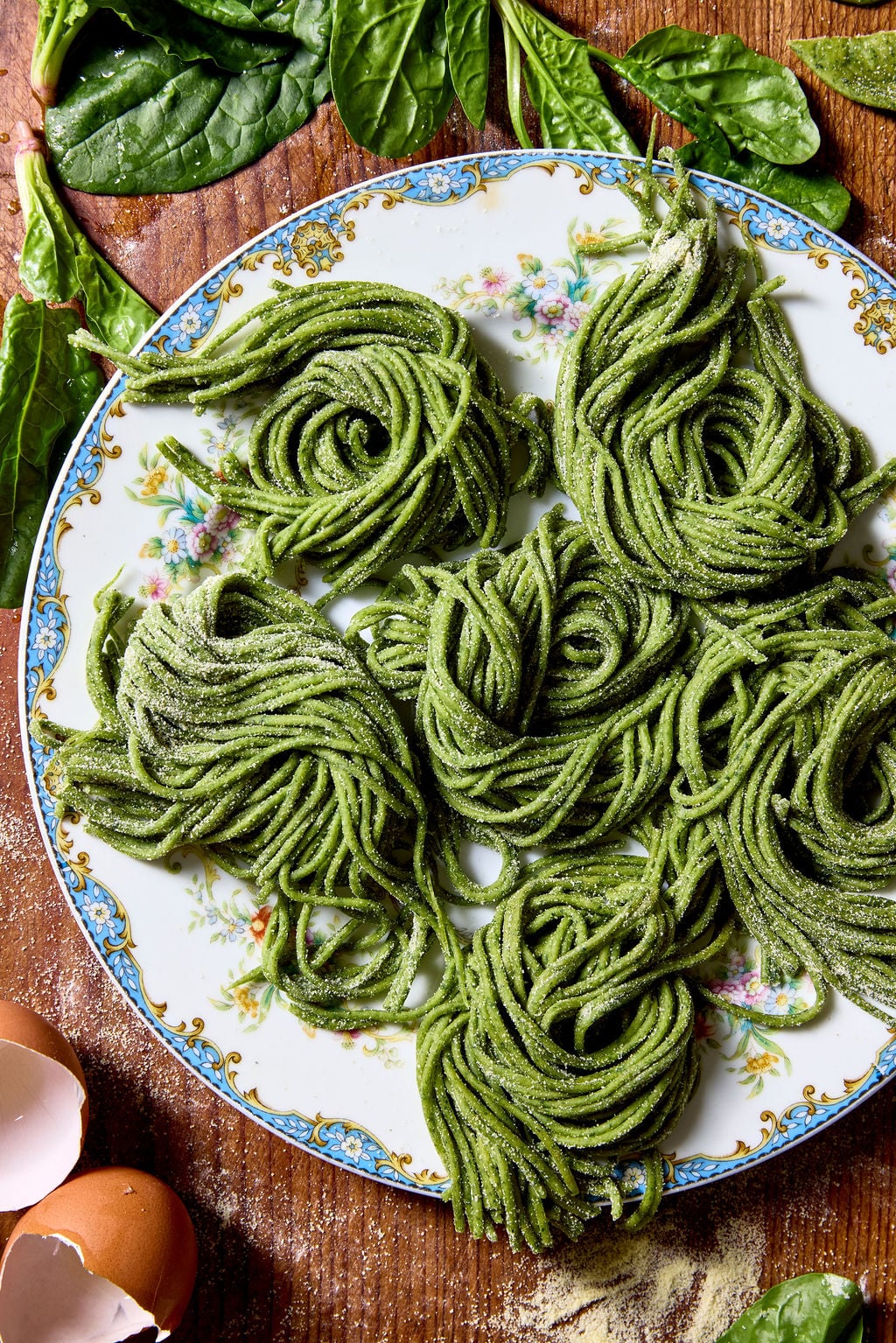
Properly prepared spinach (blanched, cooled, and well drained) is the secret to mastering this sourdough spinach pasta recipe, ensuring the dough is soft and malleable, never dry and crumbly. Isn’t that green color gorgeous?
I make most of my sourdough pasta in the food processor these days because it’s quick, less messy, and ideal for handling stiff, hard-to-knead dough. I have zero patience for flour all over the floor! Plus, the blade makes it easier to chop the spinach into little pieces.
For timing, you can make and cook this pasta on the same day, or ferment overnight for more flavor. Just don’t ferment for too long. The dough will oxidize and turn swamp brown (then black).
I use recently fed and collapsed starter. Its rising power is not as strong as active starter which is fine because we don’t need the dough to rise – we’re not making sourdough bread. Good quality sourdough discard can be used too.
Sourdough Spinach Pasta {Step-By-Step Recipe}
Step 1: Blanch The Spinach
This takes less than 30 seconds. Sometimes, I’ll do it ahead of time while washing and prepping other greens at the sink (lettuce, chard, herbs etc.) and chill in a container until ready to use.
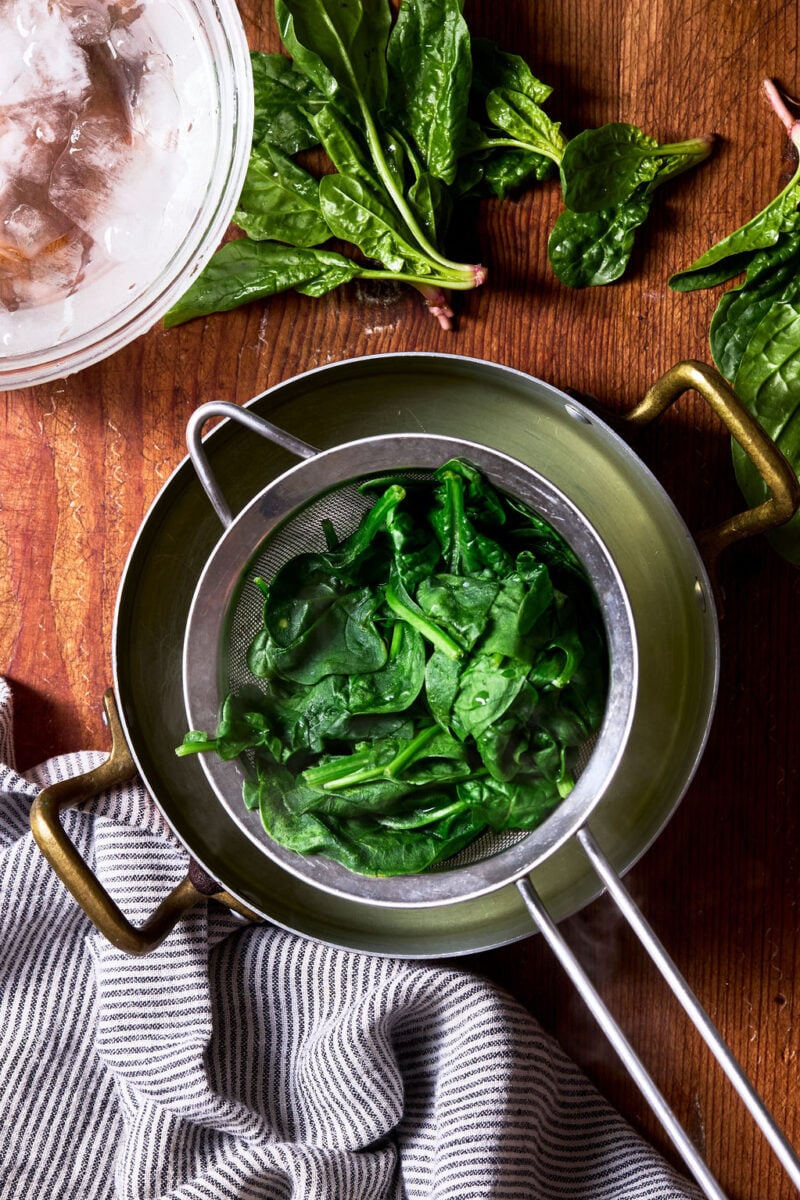
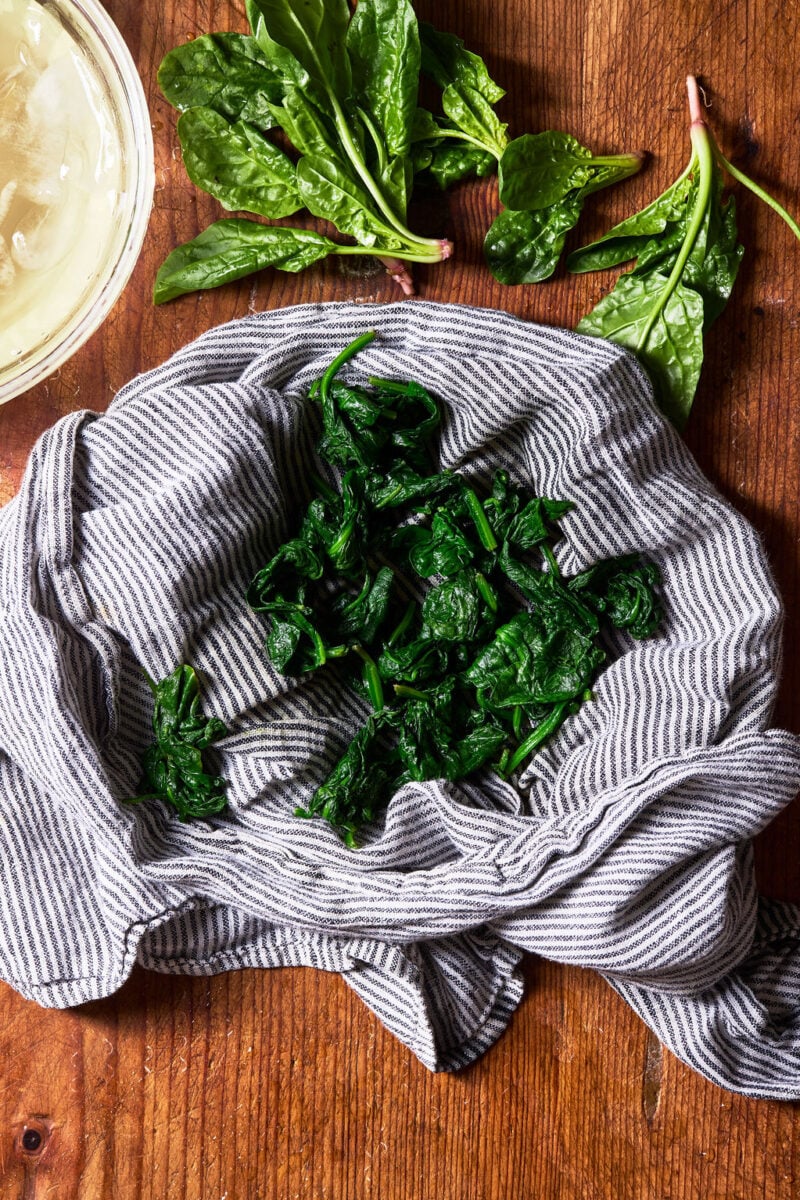
To start, cook your cleaned and trimmed spinach in boiling water until just wilted. Then submerge the leaves into an ice bath (this stops the cooking process which keeps the spinach bright green). Squeeze-dry. The goal is to end up with 50 g drained spinach. I measured this out for you so there’s no guesswork. Use a scale.
Step 2: Make The Pasta Dough
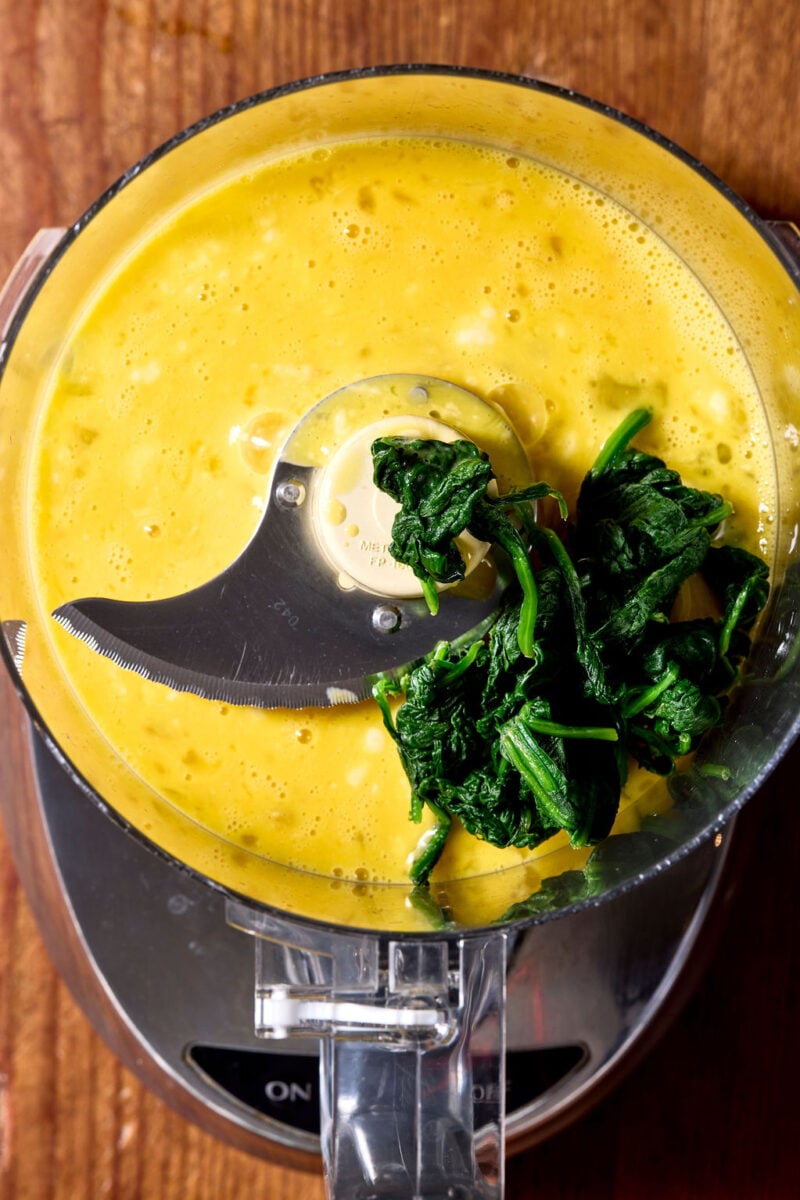
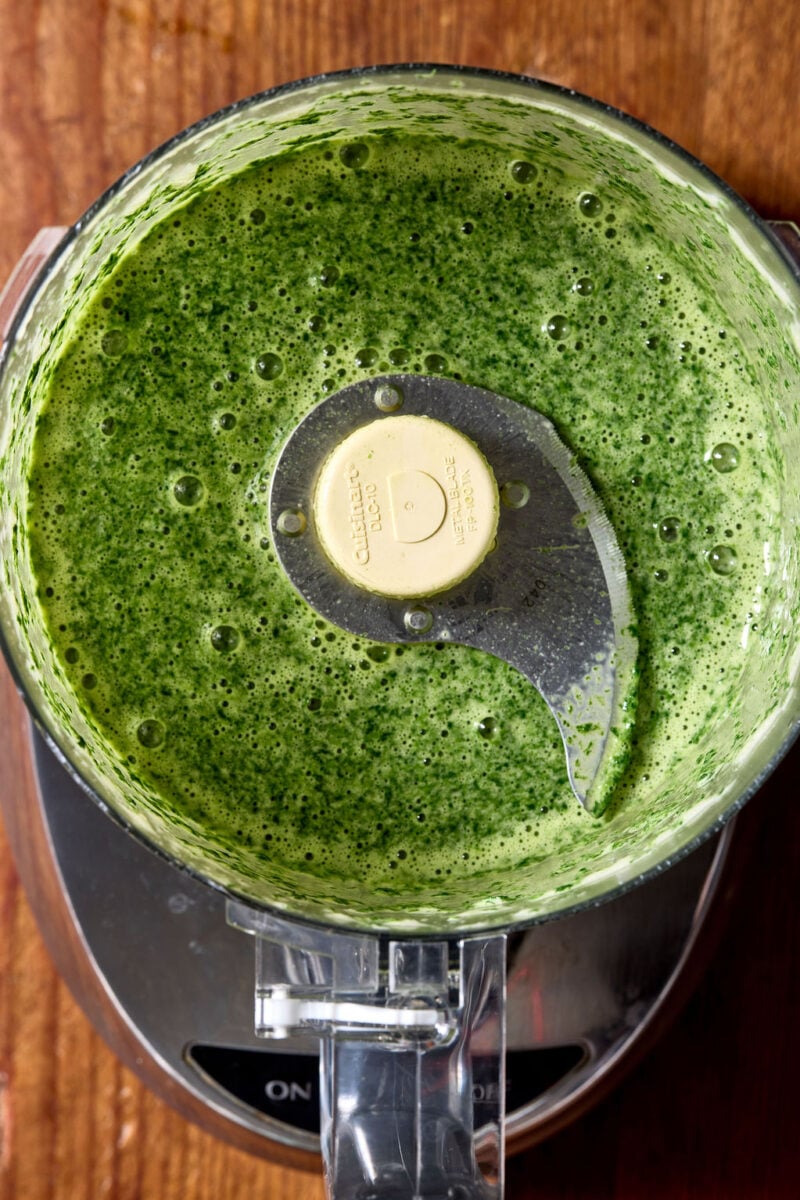
Lightly beat your eggs and sourdough starter together, then add to a food processor along with your drained spinach. Process until the spinach is finely chopped. The mixture won’t be completely smooth.
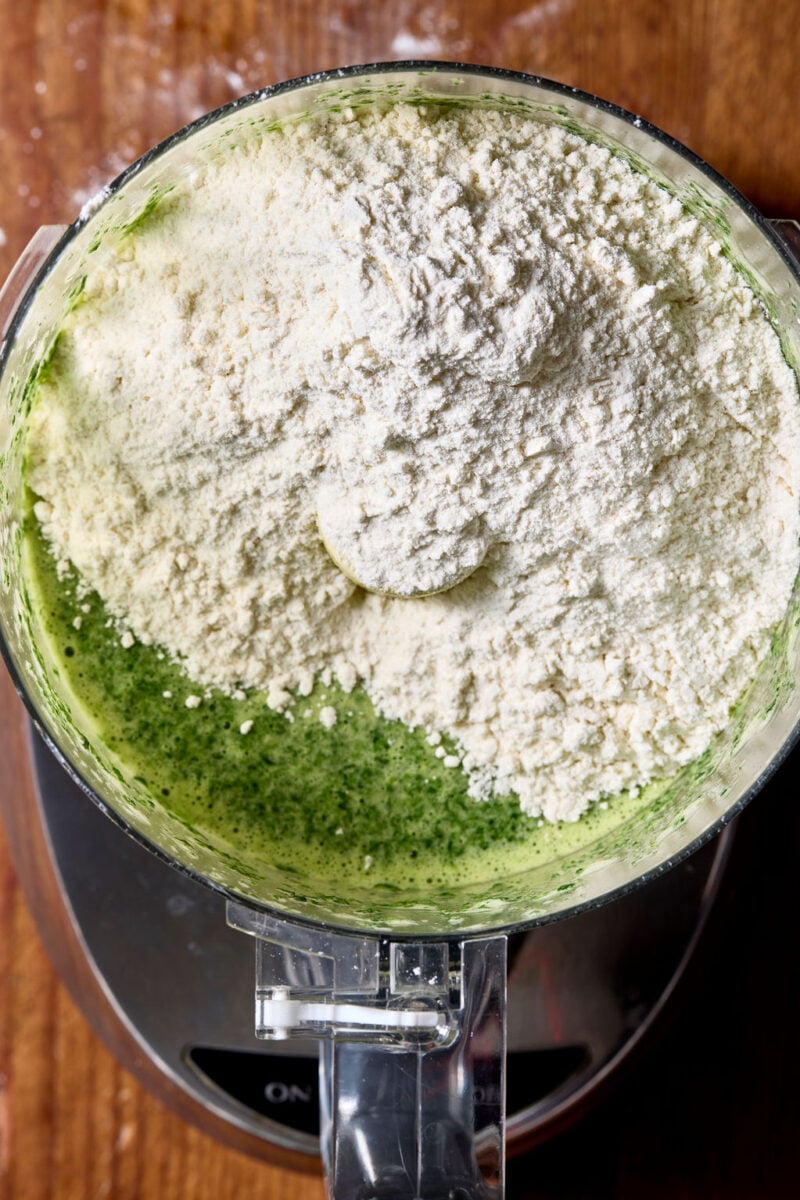
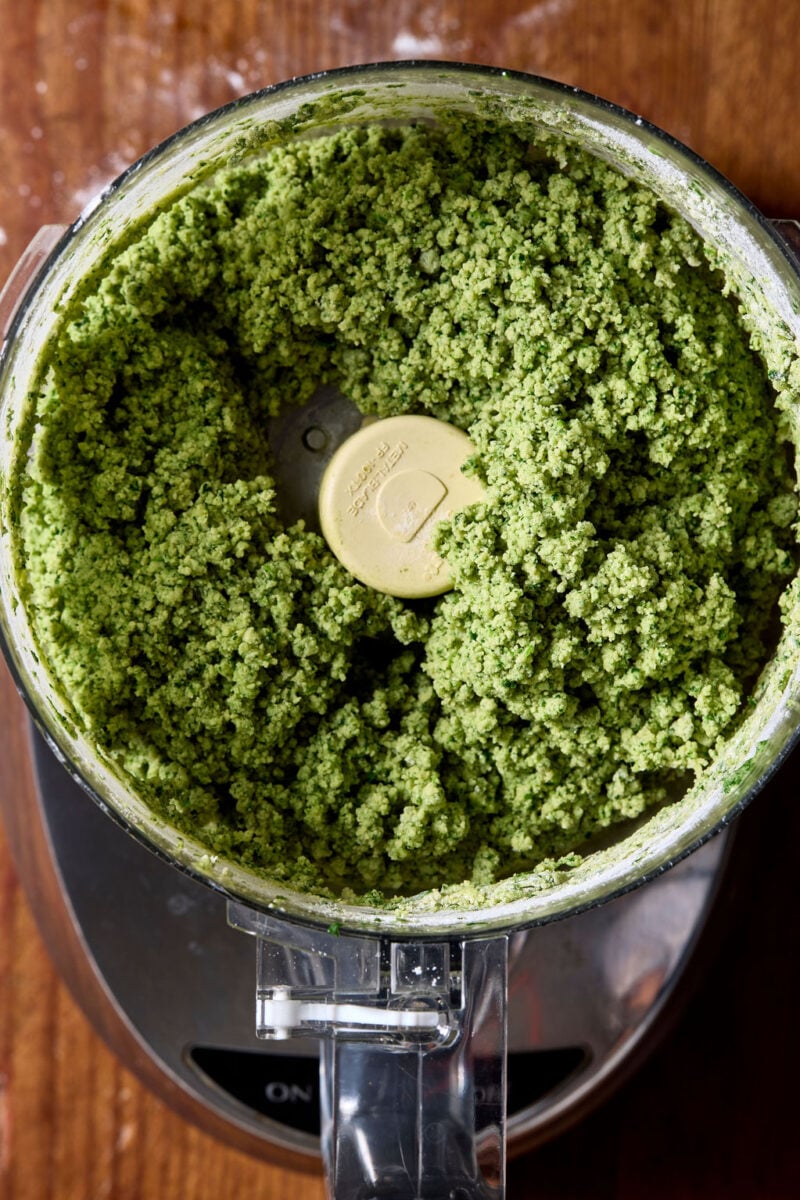
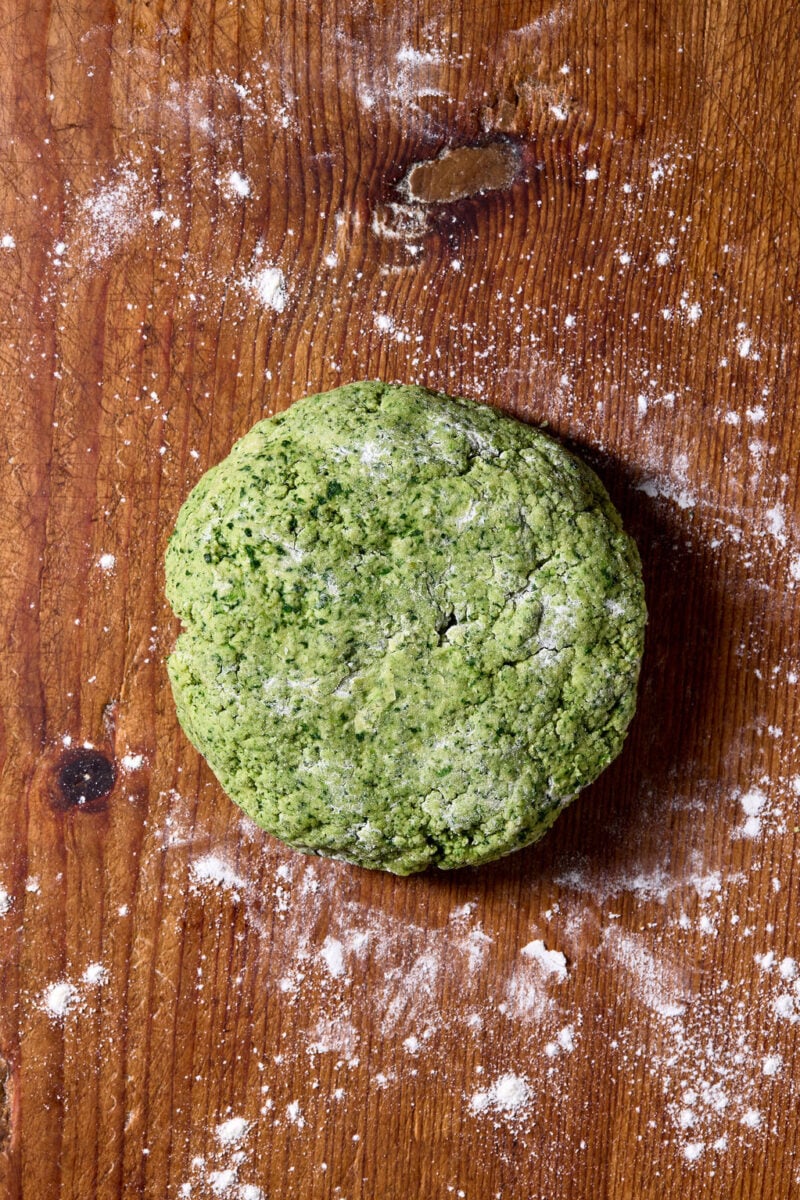
Add the flour and process to form dough. Pinch the doughy bits together with your fingertips to feel the texture: if it sticks together, you’re good to go. If it’s too dry, add a tiny splash of water and process again.
Knead The Dough
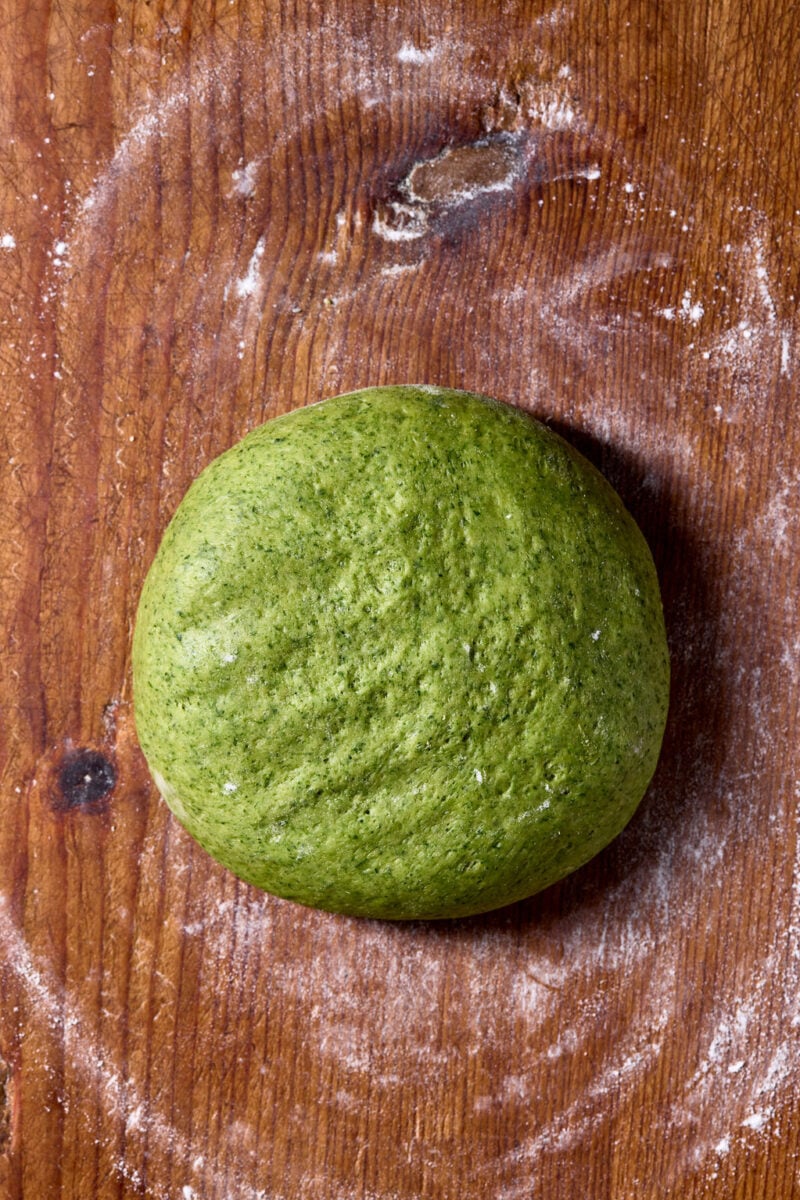
Now, dump the dough onto your work surface and smush it together with your hands. Cover and let rest for 15 minutes. Then knead until soft, about 2-3 minutes.
Wrap tightly in plastic wrap and rest for 1 hour at room temperature, or chill overnight.
Step 3: Roll Pasta Sheets & Semi-Dry
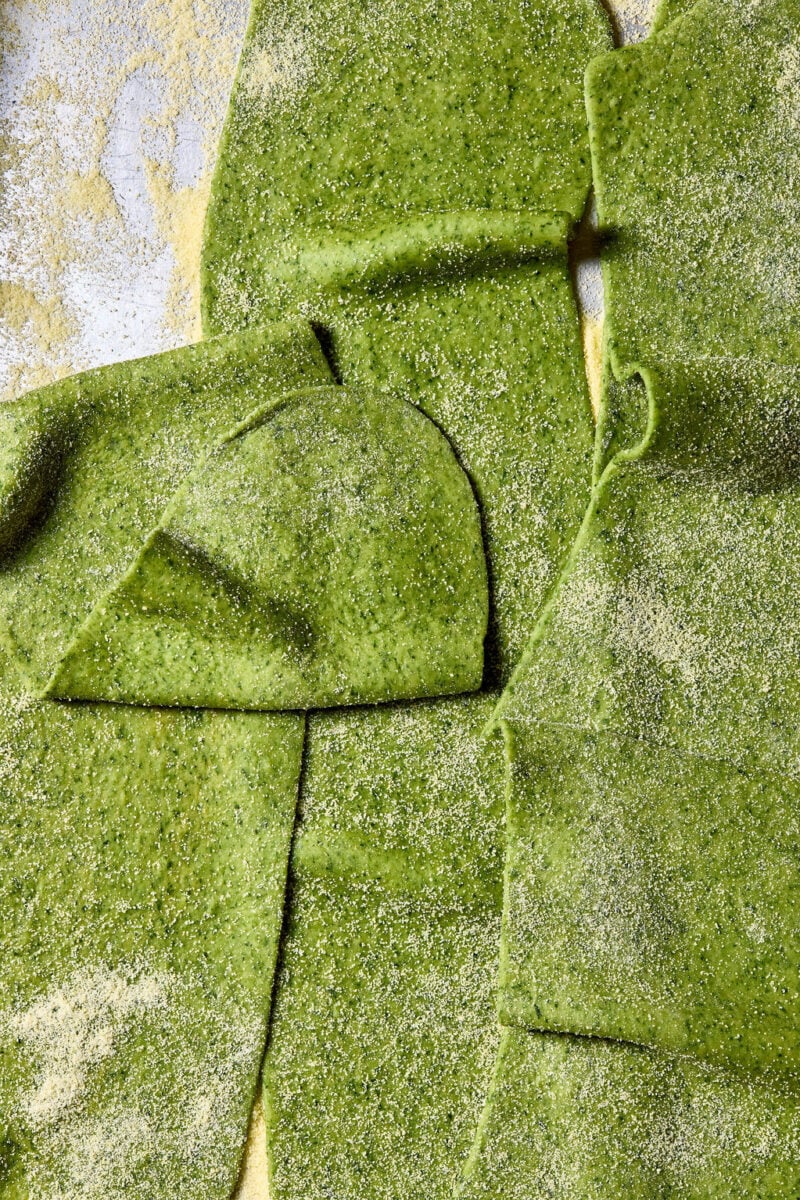
I use the KichenAid roller attachment to roll consistently thin pasta sheets. A hand-crank pasta machine works too. I don’t recommend a rolling pin unless you’re experienced rolling pasta dough by hand.
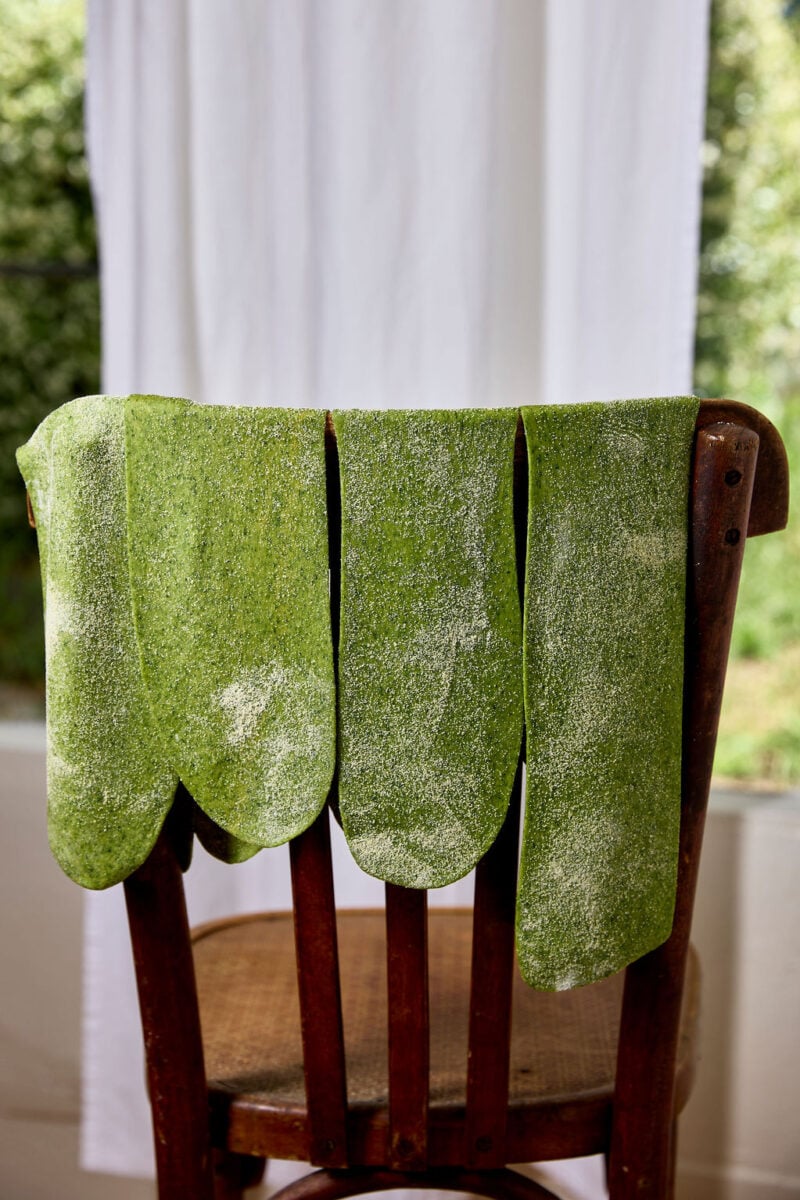
Then semi-dry the pasta sheets by hanging them over the back of a clean chair. This makes the texture go from soft to slightly leathery, helping the pasta strands to hold their shape.
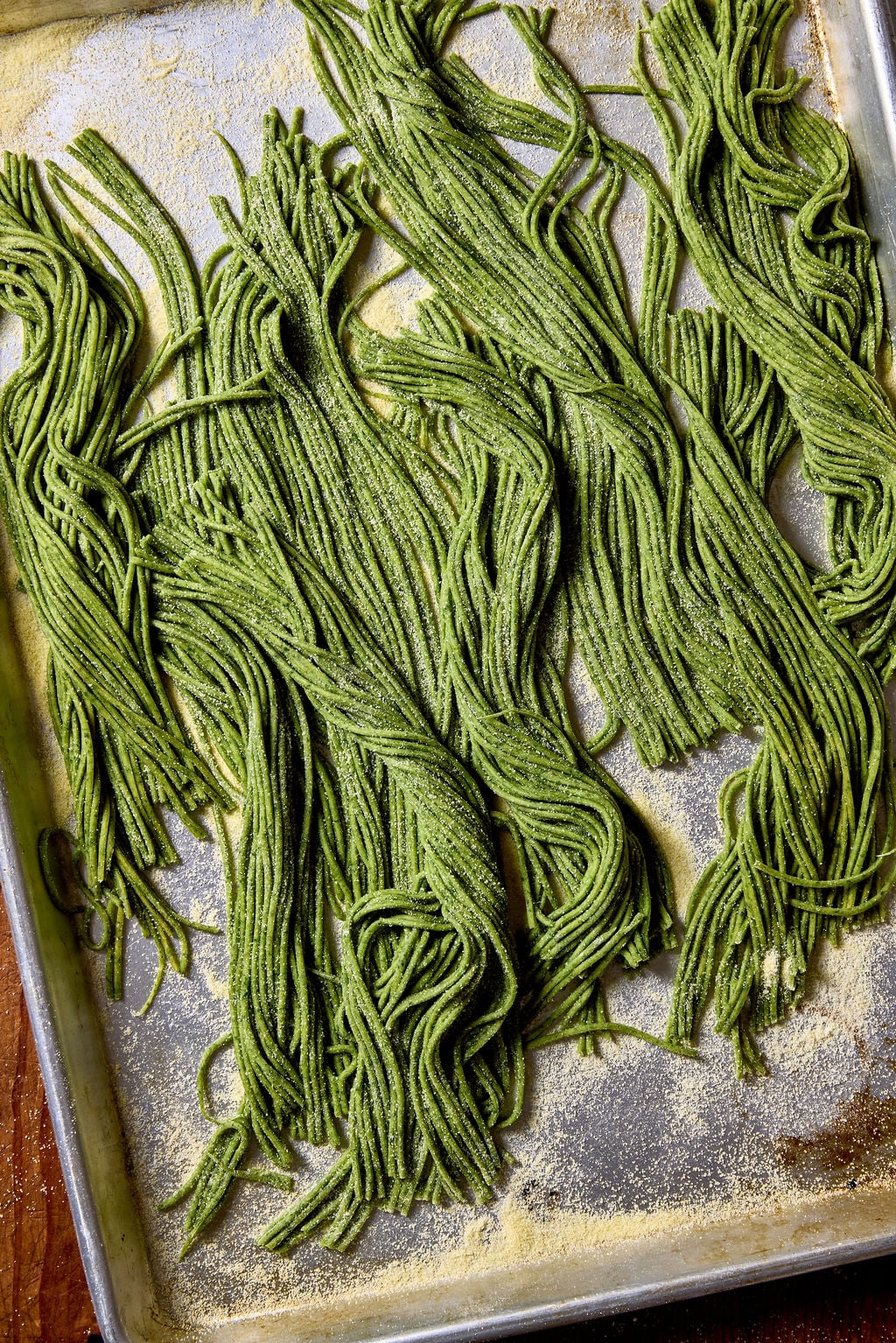
Step 4: Cut Pasta
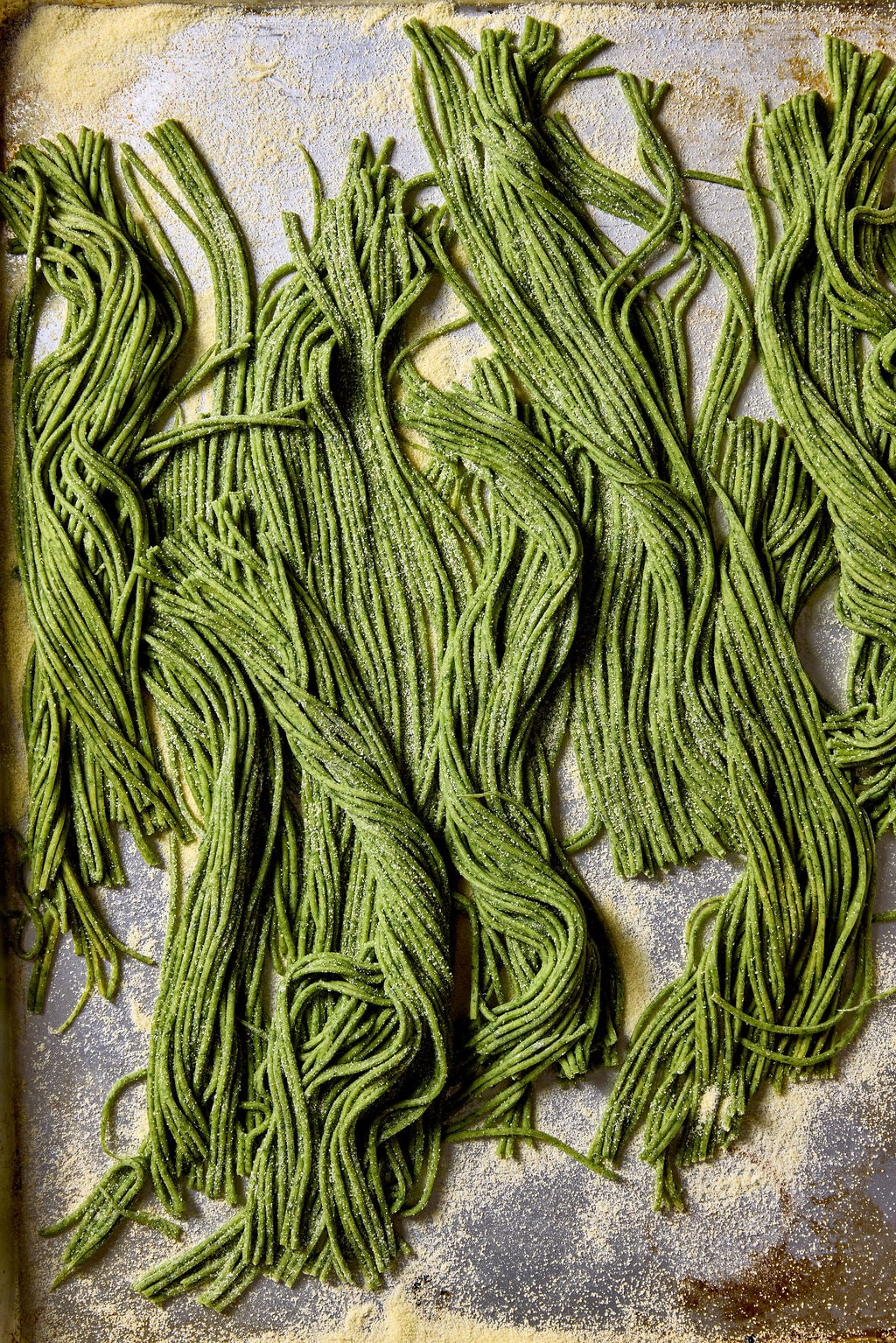
Take one of your pasta sheets and run it through a spaghetti pasta attachment. If you don’t have a spaghetti cutter, either use a different attachment or cut the pasta by hand. Note: you’ll need to make pappardelle or tagliatelle instead, since cutting spaghetti by hand is very difficult! Follow my tutorial here.
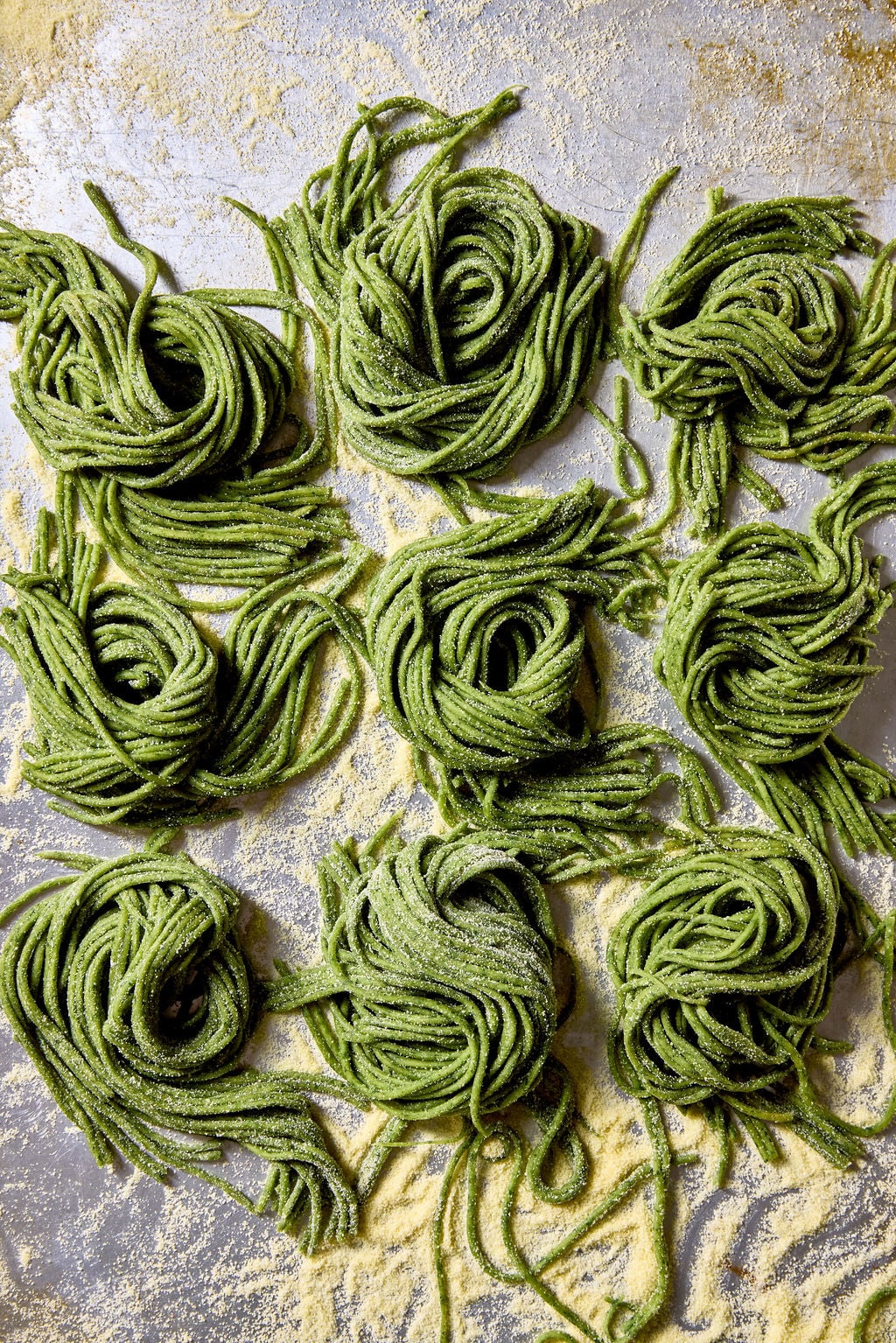
How To Serve It
The light and fresh taste of sourdough spinach pairs well with my Ragù Bolognese or this chunky pomodoro sauce with fresh or canned tomatoes. I’ll even use this dough to make classic lasagna with homemade béchamel sauce. So good! I trust you’ll find many ways to use it.
Food Styling & Photography: Saltwater Studio
By signing up, you agree to receive emails from The Clever Carrot. Unsubscribe at any time.
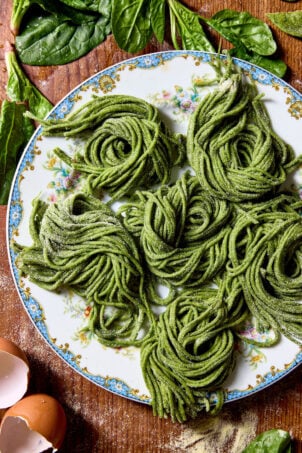
Homemade Sourdough Spinach Pasta (Same day or Overnight)
- Prep Time: 2 hours
- Cook Time: 2 minutes, depending on thickness
- Total Time: 0 hours
- Yield: Serves 4
- Category: Homemade Pasta, Sourdough Discard Recipes
- Method: Handmade
- Cuisine: Italian
Description
My sourdough spinach pasta is light and springy, made with fresh spinach, Italian 00 flour, sourdough starter, and eggs. Choose from a quick same-day option or ferment overnight to deepen the flavor. Serves 4.
Ingredients
- 50 g blanched and drained spinach (from about 100 g fresh baby spinach leaves)
- 110 g eggs (see Notes)
- 40 g sourdough starter (see Notes)
- 300 g Italian Tipo 00 flour
- Fine semolina flour, for dusting the pasta sheets
Tools & Equipment
- Scale
- Food processor
- Pasta machine or KitchenAid Roller attachment
- Wooden board or surface to work on
- Parchment paper
- Sheet pans
Instructions
Step 1: Blanch The Spinach
- Prepare a small ice bath for the the spinach; set aside. Bring a pot of water to a boil. Add the spinach and blanch until wilted (a few seconds). Remove the spinach and plunge into the ice bath. Strain and squeeze dry in a cloth. The goal is ~50 g drained spinach.
Step 2: Make The Pasta Dough
- In a small bowl, whisk the eggs and sourdough starter together; set aside. Add the spinach to the food processor. Pour the egg mixture on top. Process until the spinach becomes finely chopped; it will not be smooth like green purée. Scrape down the sides of the bowl.
- Add the flour and process again until the dough comes together (it might look like doughy crumbs – this is OK. It should stick together when pinched with your fingertips). If it’s too dry, add water, 1 tsp at a time to bring the dough together. Or, add more flour if it’s too sticky. The variance in texture depends on your sourdough starter and the moisture in the spinach.
- Remove the dough to a lightly floured surface. Push it together to form a rough ball. Cover with an upturned bowl and let rest for 15 minutes.
- Knead the dough by hand for 2-3 minutes. It should feel smooth, supple, and chalky on the surface when finished. You’ll see specks of spinach throughout the dough, however the spinach should not cut and tear through the dough.
- Form the dough into a ball, cover tightly with plastic wrap, and rest for 1 hour at room temperature or chill overnight.
Step 3: Roll Pasta Sheets & Semi-Dry
- Note: if you have chosen to ferment the dough overnight in the fridge, rest at room temperature for at least 30-45 minutes before rolling.
- Cut the dough into quarters (wrap the remaining pieces).
- Working with one dough at a time: roll it into a 6-8 inch oval disc with a rolling pin. You want it the approximate width of your pasta machine. Send the disc through the roller attachment (3x) on setting #1, then (2x) on #2-4 (do not go up to #5 – it will be too thin for spaghetti).
- To semi-dry: Dust the pasta sheet on both sides with semolina flour to prevent sticking. Drape over the handle on your oven (or on the back of a clean chair), about 10 minutes or so, until it feels less doughy and more leathery but not dried out. This step helps the pasta to hold its shape.
Step 4: Cut Pasta
- Take a pasta sheet and cut it in half. Trim the ends. Run the sheet through the spaghetti pasta cutter attachment to create strands. Alternatively, cut the dough by hand.
Notes
For the Eggs: the total cracked weight should be 110 g. If you are short, use a portion of another whole egg (lightly beaten) to make up the difference.
For the Starter: use active sourdough starter, sourdough discard, or recently fed & collapsed starter feed with all white flour.
How To Store, Freeze & Cook Sourdough Pasta
To Store (Short Term):
Toss freshly cut pasta with semolina flour and arrange on a sheet pan in a single layer. Cover with plastic wrap, inverted sheet pan, or store in an airtight container. Leave at room temperature if cooking within 1–2 hours, or refrigerate for up to 12 hours. The flavor will continue to deepen when the cut noodles are chilled. Note: fresh pasta might oxidize and stick together if chilled past 24 hrs.
To Freeze:
Air-dry pasta in a single layer for 15–20 minutes first (uncovered) to reduce sticking. Transfer to an airtight container and freeze for up to 1 month (any longer and it might dry out and break). No need to thaw; cook straight from frozen.
To Cook:
Bring 4-6 quarts of generously salted water to a boil. I don’t give exact amounts for the salt, because the flavor of salt varies considerably. Add the pasta and cook for 2 minutes, depending on the thickness. Always taste it. It should be al dente- tender with a slight bite. Use tongs to transfer pasta directly to your sauce.

Comments
Robert says
Homemade Sourdough Spinach Pasta (Same day or Overnight). Carbohydrates would be a nice addition to recipes. As a diabetic I’m always looking for ways to reduce glucose via carbohydrates.
The sourdough pumpkin bread was fantastic!
Thanks
A says
I know it’s not the same, but can I use bread flour? It’s what I have at the moment. Thanks! Been using your Sourdough recipie for a long time now!
Emilie Raffa says
Hi Amy! What brand do you have? Technically, yes, you can use bread flour. Heads up: the pasta dough will be a touch drier (you can add a drop or two of water, or as needed to get it going in the food processor). And, the final texture of the cooked pasta might be a bit chewier. Other than that, let me know how it goes! 🥰
Patricia Watson says
Can I make this with water instead of eggs? Thanks
Emilie Raffa says
Hi Patricia! I haven’t tested this recipe with water only, so I’m unable to advise with specific amounts. Unfortunately, it’s not an even swap. Whole eggs, which include fat from the yolks, hydrate flour differently than pure water. I do have a sourdough cavatelli pasta and a sourdough pici pasta you can check out. Both are made with water only. You can run both doughs through your pasta machine to make spaghetti or fettucine.