Looking to improve your sourdough bread? This technique will do it! Learn how to stretch and fold sourdough with my easy step-by-step instructions and video.
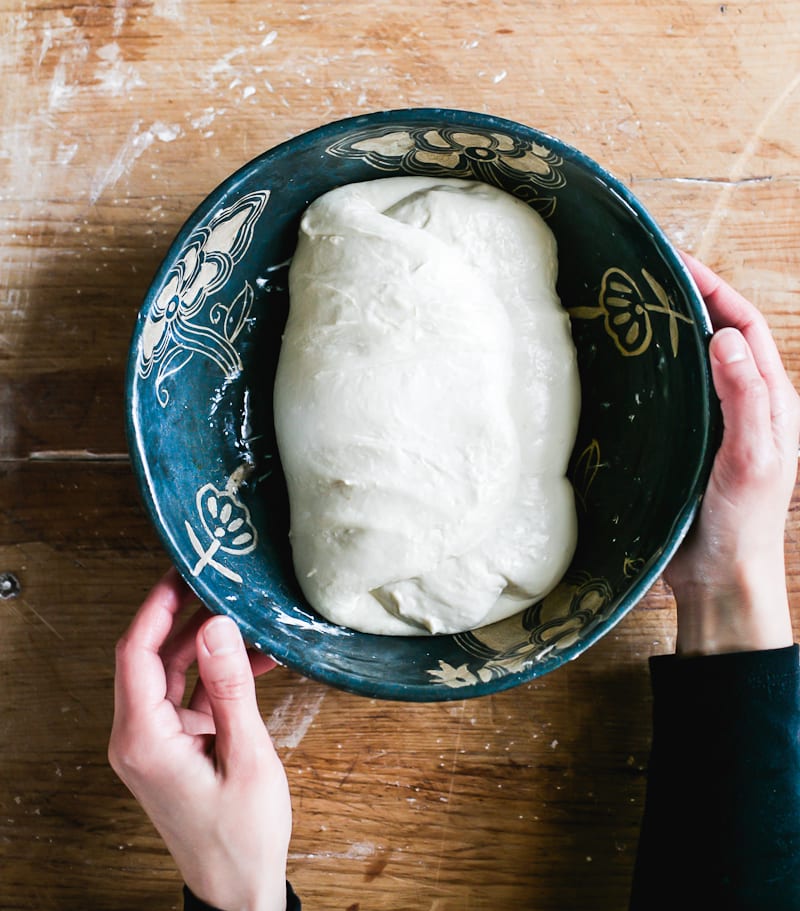
Bakers use the stretch and fold technique to improve the quality of their sourdough bread.
When done correctly, it will strengthen the gluten and gently incorporate air into the dough without kneading. I talk more about this in my book Artisan Sourdough Made Simple. But for now: the benefit is increased volume, a lofty high rise, and if you’re lucky: a more open interior crumb. Plus, it’s the most satisfying sensory experience (who doesn’t love touching bread dough?!).
The technique can be done on the countertop or directly in the bowl; the latter option is what I’m showing you here.
- Stretch the dough upward
With lightly wet fingertips, grab a portion of the dough and stretch it upward.

- Fold the dough
Fold the dough over toward the center of the bowl.
- Stretch and fold
Give the bowl a one-quarter turn and repeat: stretch the dough upward and fold it over toward the center.
- Stretch and fold again
Continue until you have come full circle to complete 1 set, or 4 folds around the bowl.
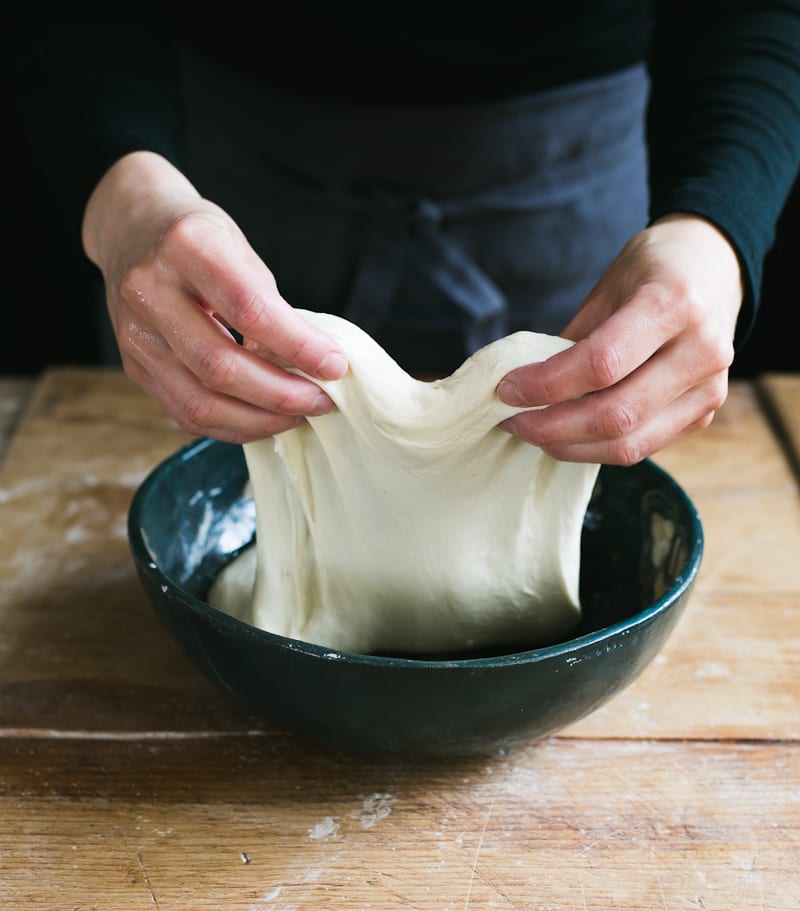
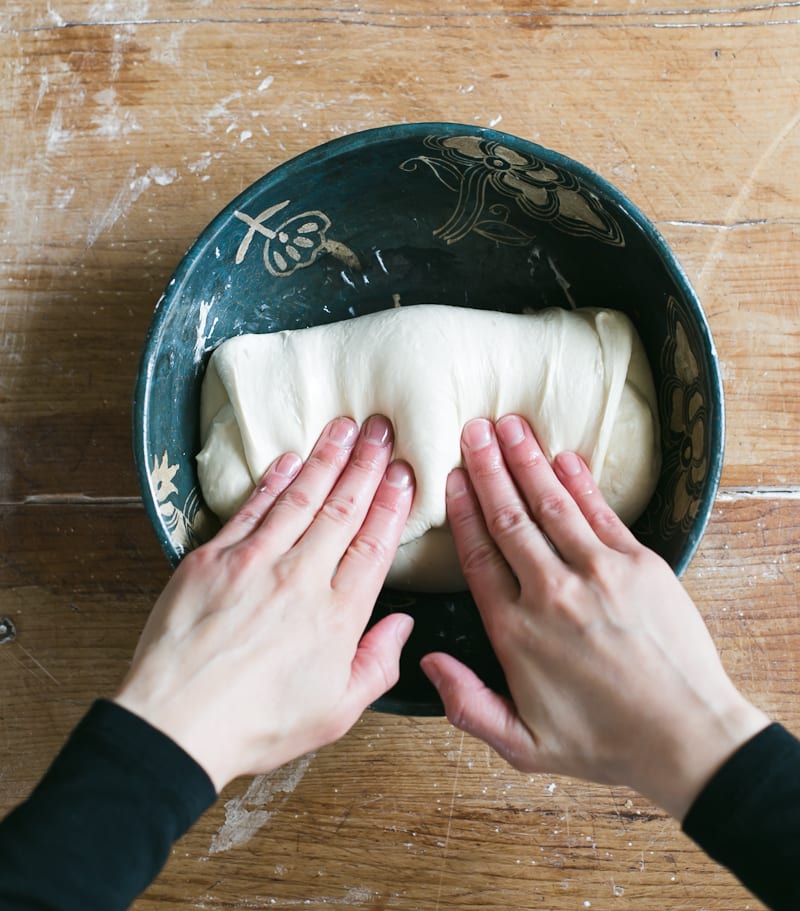
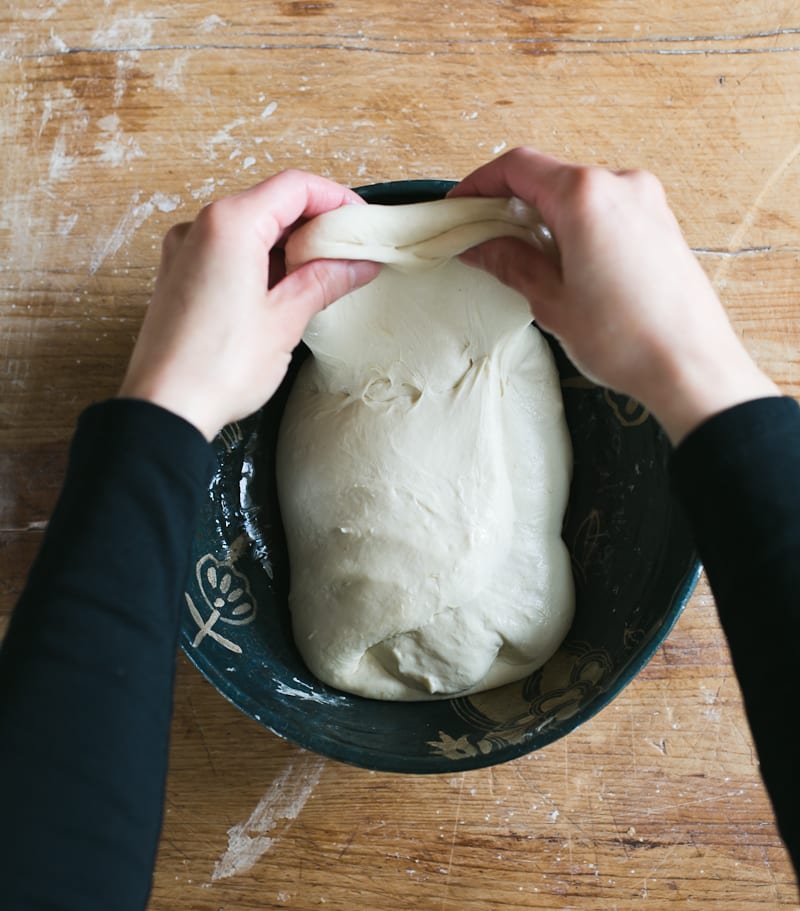
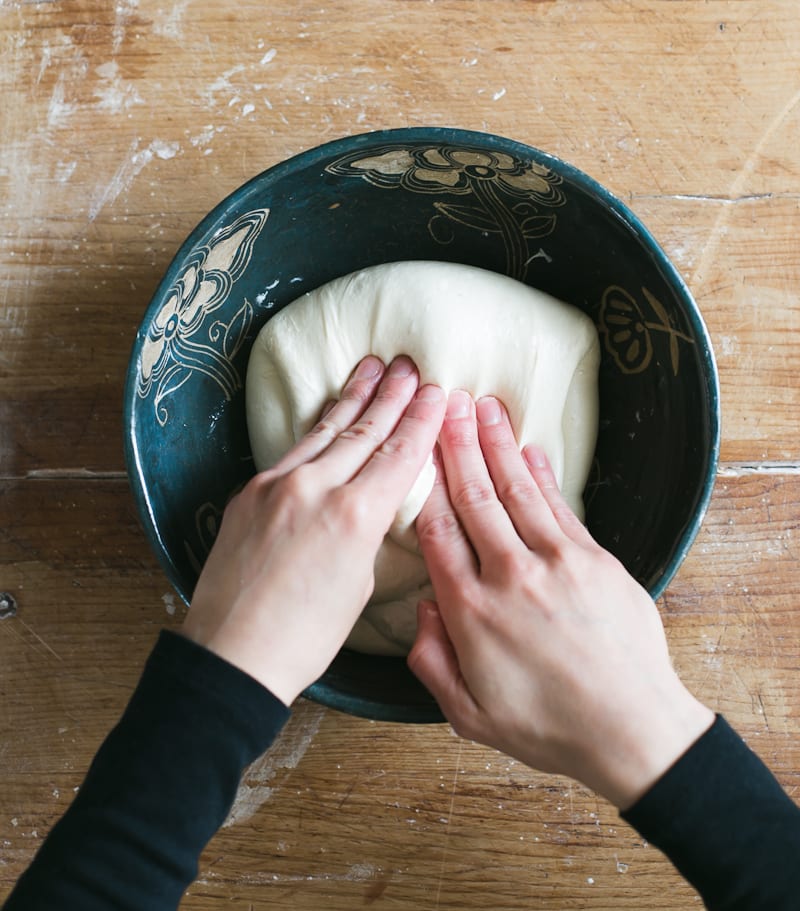
Baker’s Tip: When you do the first fold, the dough will feel loose and elastic. As you continue, the dough will start to tighten up, usually around the 3rd or 4th fold. After about 2-4 sets, the dough will go from flat and dense to plump and jiggly. That’s how you’ll know the technique is working.
How Many Times Should You Stretch And Fold the Dough?
Stretch and folds are completed in sets. The first set is usually done about 30 minutes into the bulk rise. Then, you’ll complete up to 4 additional sets spaced about 15 minutes to 1 hour apart, depending on the dough’s flexibility and your own personal baking schedule.
Baker’s Tip: As a general rule of thumb, the sets for high hydration doughs (wet dough) can be spaced closer together because the dough is slack; about 15-30 minutes apart. For low hydration doughs (dry, stiffer dough), the gluten will need more time to relax, about 30 minutes to 1 hr. Otherwise it won’t stretch properly. As always, these are suggested timeframes. Watch the dough and not the clock!
So, Is It Worth it?
Absolutely! Once you get the hang of it, you’ll find ways incorporate the stretch and fold technique into your baking routine. And with practice and repetition, you’ll notice changes in the look, taste and feel of your sourdough bread. Just remember: not all doughs require it. However, it’s easy, practical and super effective when applied as an optional step.
Baker’s Tip: When you stretch and fold the dough it may (or may not) look similar to mine. This is normal. It might be stiffer or even looser; it all depends on the specific recipe you’re following. For reference in the video above, I’m using a dough that is approximately 70% hydration.

Comments
Lewis W says
Learned a lot very helpful information thanks for sharing
Kim Farrell says
Ciao Emilie,
Kim Christina from Hervey Bay Australia see you have touched base with Celia from Australia.
Recently spent 7 weeks in UK with husbands family as laid him to rest in Tingewick Garden of Remembrance. Louise his youngest sister does sour dough showed me her method while there, I snuck small container starter back here in my bag have it in fridge is growing
only Question, I have is glass jars the best? As mine in plastic and started rye flour one from THE BREAD EXCHANGE BOOK by Malin Elmlid in stainless steel bowl which put in oven and forgot it {can tell l have no Bambinos} when remembered it had formed mold discarded it as humid here tropical area.
Louise named her starter MOTHER MARY after her MUM named Mine WEST HAM after husband’s London soccer team, will bake one soon see how turns out
have Italian bloodlines dad Italian Giuseppe MAFFINA I make a joke that I mash my potatoes with my feet! Mother Irish/Australian
hence Potato famine Ireland and Grape mashing Italian’s with feet
take one F and N out of MAFFINA have Mafia is how arrived at my email name friend used to call me mad mafia in younger days.
Arrivederci
Kim C. Farrell
Mandy says
Thankyou Emilie
I have taken on board your information on the Biginners guide to cooking sourdough bread.
Years ago I made bread, had many failures, but some ok.
I am trying again, but now I am gluten intolerant, and I find its different cooking with gf flour.
I am still trying to decide on which pan is better for me, but I guess its all up to what bread I am cooking.
I will keep trying.
See how I go.
Tammy Holmgren says
Your tips and technique are “SPOT ON!!!” Thank you so much. I have used your recipe for years
Suzy says
I’ve been baking sourdough on and off. Today I got back into it and accidentally used AP flour! Your video and advice kept me from feeling too bad about myself! Your dough looks far more smooth and compliant than mine, but I’ll keep trying!
Leona says
In your everyday sour dough recepie and others you don’t mention to do the series of 5 stretch and folds
The everyday recepie for example indicates only one ?
Bethan says
So clear and helpful
Terri says
Very helpful! Just received your book today, Artisan Sourdough made Simple!
Deb says
my dough is very sticky I followed your instructions for the low moisture but it is very sticky what am I doing wrong please help
Emilie Raffa says
Hi Deb! It sounds like your dough is over proofed (rose for too long) and/or your current ambient temperature is warm. If this resonates, you might want to shorten the bulk rise and find a cooler spot for the dough to rest. And don’t forget to weigh your ingredients for best results. Hope this helps!
vicky oliver says
First time trying to bake sourdough today. I decided to try this recipe and method. I’m doing my stretch and folds now will bake later or in the morning I’ll see how it is looking
Anissa says
I need to make my bread dough now because my starter has peaked and I have enough time to let it rest for an hour (this is what I usually do) before starting to stretch and fold every 30 minutes. I have an appointment in between that time though, so I will have to do my first stretch and fold (after letting it rest for 1 hour) and then I can only do the next set an hour afterwards. Does this matter? To clarify I usually wait 1 hour after forming the dough, then at 1 hour I do the first set of stretch and folds, 30 min later I do the second set of stretch and folds, 30 min after that I coil fold, and 30 min after that I coil fold for the last time.
Tasha says
Thank you! First time making sourdough. Would I have started this project if I knew how much work it is?! I truly appreciate those of you who have mastered the art and the science of sourdough!!! I dream of the day I don’t have to research every step and just do it with my eyes closed ;) Really appreciate your tips!!!
Patricia says
I really enjoyed all your baker’s tips for a beginner sourdough baker!👩🏻🍳
April Wiley says
Hello im a newbie when it comes to sourdough or any bread making ,and im having problems with getting my sourdough ready to bake i get to were im doing strech and folds and right now my dough seems to be rising and then I do another strech and folds but once im finished and im ready to shape my dough I can’t score it right unless I put it in the refrigerator and when I take it out of fridge and try to transfer and scoured it , it always goes flat and so I try to redo it again but im just not getting it ! What am I doing wrong please help
Jill Keesee says
Hi, your recipe for Cinnamon raisin Sourdough Bread is for one loaf? It does not need a dutch oven, just a loaf pan? No pan of water for steaming in the oven?
Thank you so much.
Jill – I am a newbie at this