Learn how to make soft, silky sourdough pasta with my easy recipe- just 3 ingredients: flour, eggs, and sourdough starter (active or discard). Choose a quick 1-hour same-day dough or a 24-hour slow ferment for deeper flavor and digestibility. Perfect for pappardelle, ravioli, lasagna noodles and more. Step-by-step instructions and video below.
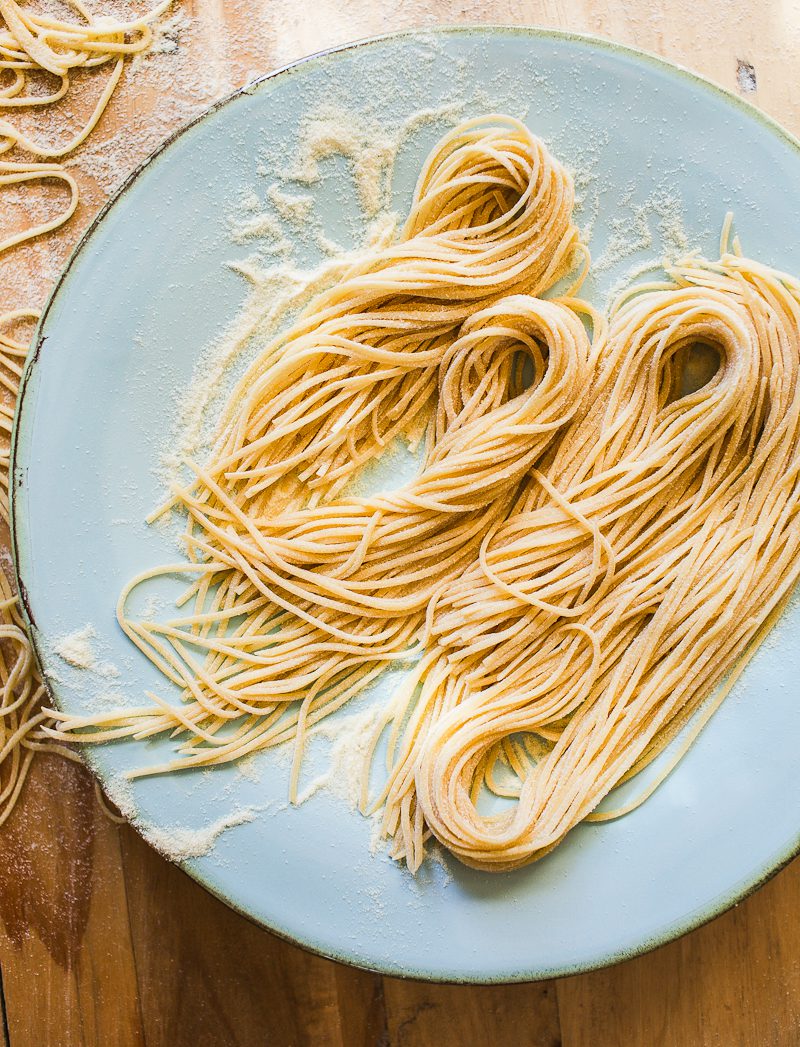
Sourdough pasta? Admittedly, I wasn’t into it because “sour” pasta sounds awful. Even tangy pasta sounds awful. But when enough people asked if my homemade pasta recipe would work with sourdough, I thought: could I create a sourdough pasta recipe without sacrificing quality and taste?
Turns Out, It Works.
Three simple ingredients, that’s it. The texture? Soft and silky like traditional fresh pasta, with subtle flavor complexity enhanced by the characteristics of your sourdough starter (some days, mine smells nutty like brown butter!).
Toss it with my simple pomodoro sauce or even a rich Ragù Bolognese, and you’ll genuinely surprise yourself. It’s that good! I’ll show you how to make it step-by-step, with storage options to make it ahead.
Before You Start: Quick Tips for Success
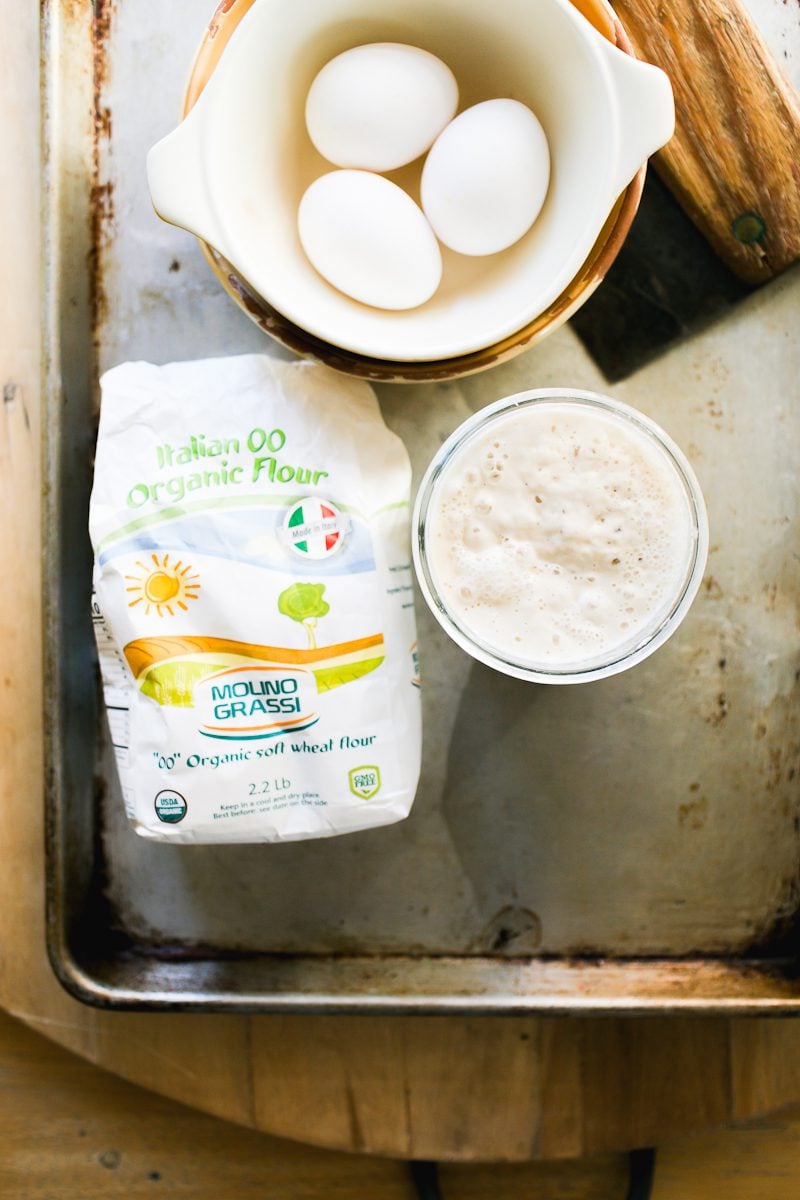
- Sourdough Starter: Fresh, active starter is best. Sourdough discard can work if it’s recently fed and collapsed, not 3 months old sitting in the fridge (it’s too pungent and too sour).
- Flour Selection: I love Italian 00 flour for homemade pasta. It’s a fine-milled, soft wheat variety that feels like baby powder.
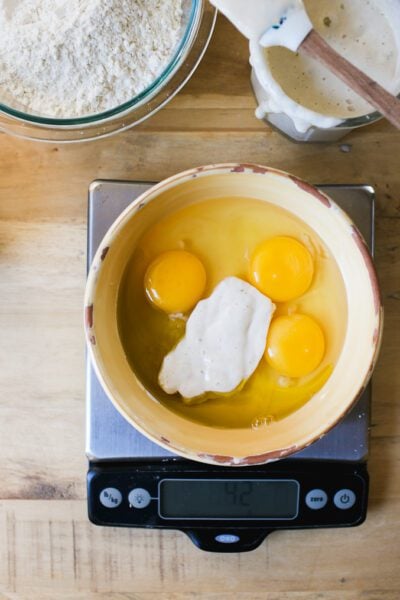
- Weigh everything (especially the eggs). When your amounts are exact, you’ll get a soft and pliable dough. Too little egg = dry, crumbly dough that’s impossible to work with. Use a digital scale for accuracy. I don’t recommend measuring cups.
How To Make Sourdough Pasta {Step-By-Step Recipe}
Step 1: Make The Pasta Dough
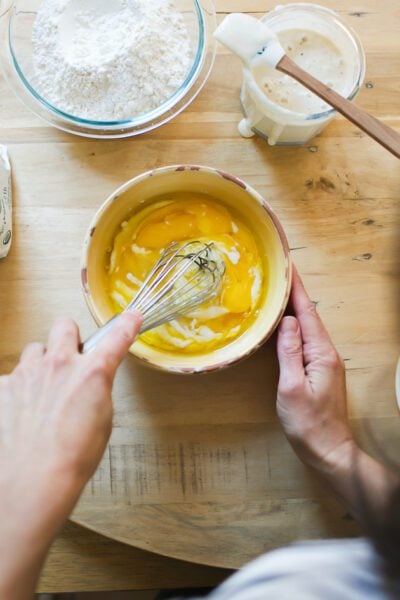
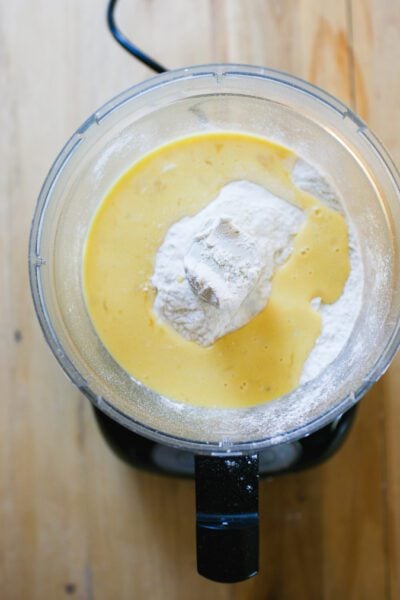
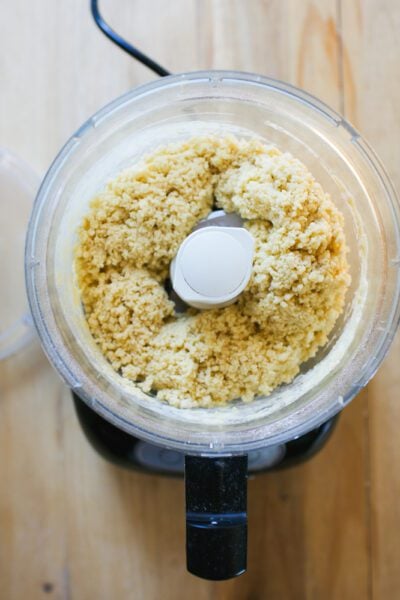
I do this in the food processor. It’s the fastest method. Whisk your eggs and sourdough starter together; pour over the flour. Process until the dough comes together. It might look like “crumbs” at first, which is fine.
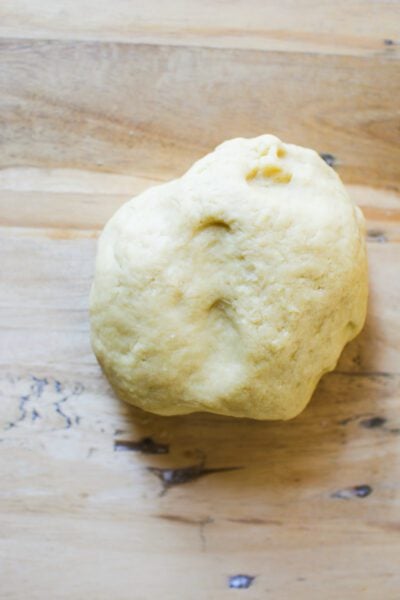
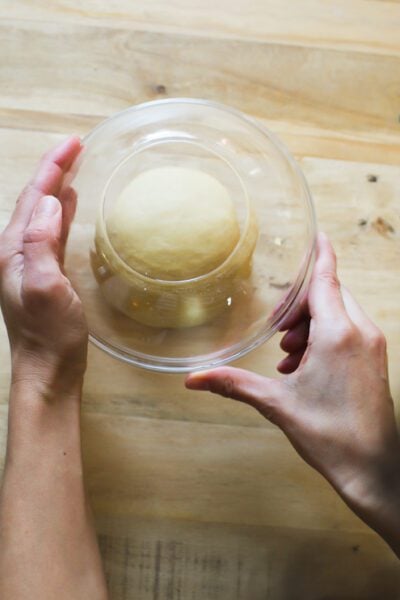
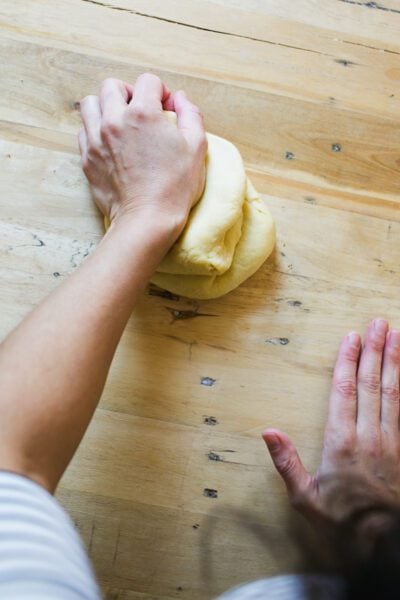
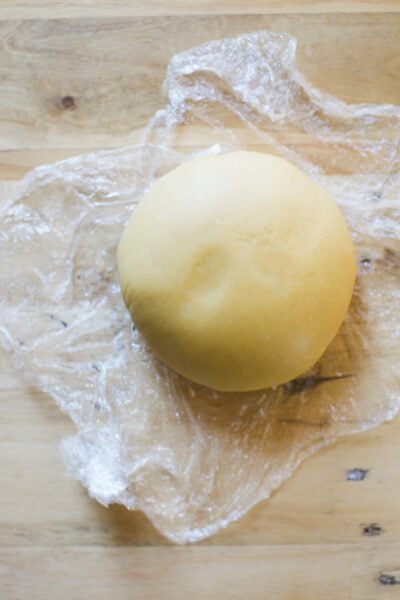
Bring the dough together on your work surface. Cover and rest briefly, then knead until smooth and elastic (see video at 1:50 mark). The dough should feel soft, but not sticky. You can add more flour now if you need to. Wrap tightly in plastic wrap and choose a fermentation option below.
How To Ferment Sourdough Pasta
- 1 Hour at Room Temperature (68- 75 F): Choose this method for fast “same day” sourdough pasta. Keep an eye on the dough as it rests; it will puff up slightly. The sourdough flavor is very mild.
- 24 Hour Overnight Option: Rest the dough at room temperature first, for 1-2 hours. Chill overnight, up to 24 hours (I’ve done up to 48 hrs. without the dough deteriorating). Make sure the dough is wrapped very tightly, double layer if you have to, because the dough will puff up.
Step 2: Roll The Dough Into Sheets
Dust your work surface, sheet pan, and pasta machine with semolina flour to prevent sticking.
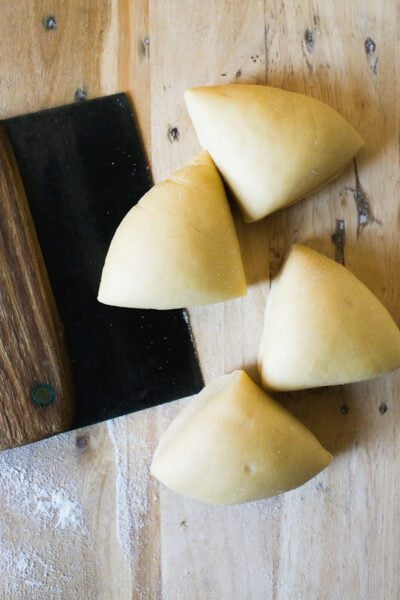
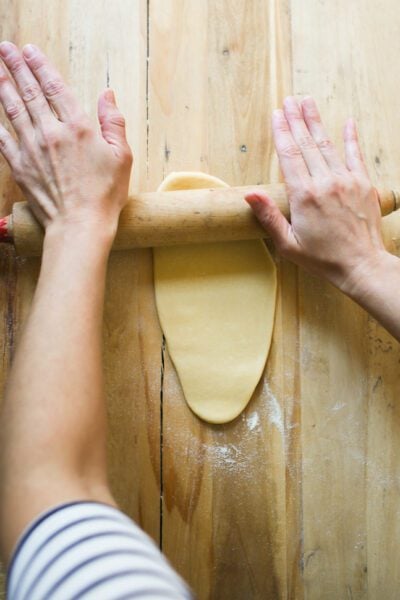
Cut the dough into 4 equal pieces. Roll one piece into an oval disc (keep the rest covered- pasta dough dries out quickly). The goal is to get it thin enough to fit through the widest setting on your pasta machine, otherwise the dough will get smushed. Not fun!
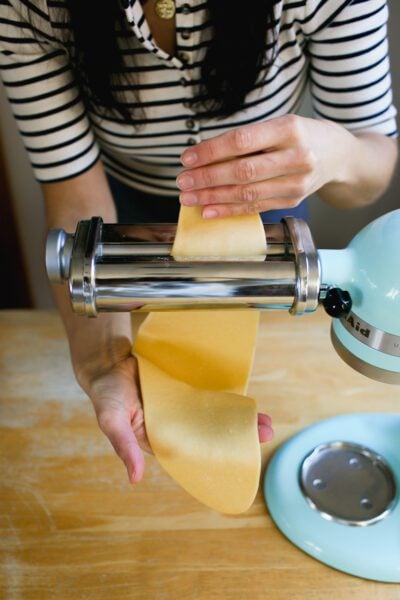
Send the disc through the pasta machine on the widest setting. This is “#1” on the Kitchen Aid attachment. Send it through a second or third time to smooth it out.
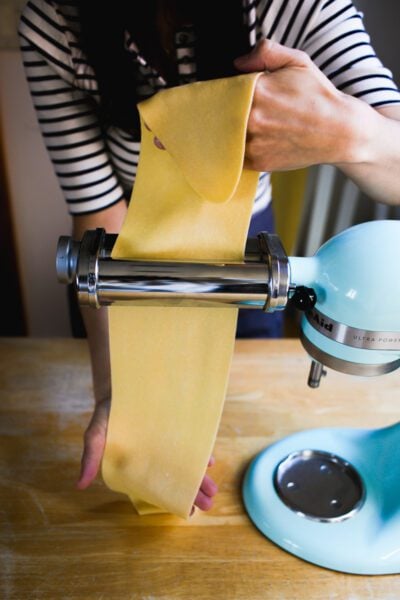
Continue to roll through settings #2-4 (2x on each setting) for spaghetti, fettuccine, pappardelle and tagliatelle. For homemade ravioli, the dough needs to be thinner, go up to #5.
Your pasta sheet is ready when it’s slightly translucent and you can see your hand underneath.
Step 3: Cut Sheets Into Pasta
Before cutting, I like to semi-dry the pasta sheets for about 5-15 minutes on the back of a chair to slightly firm up the texture. Not everyone does this. This technique prevents the pasta strands from sticking together later on, which is very convenient. It’s saved me many times.
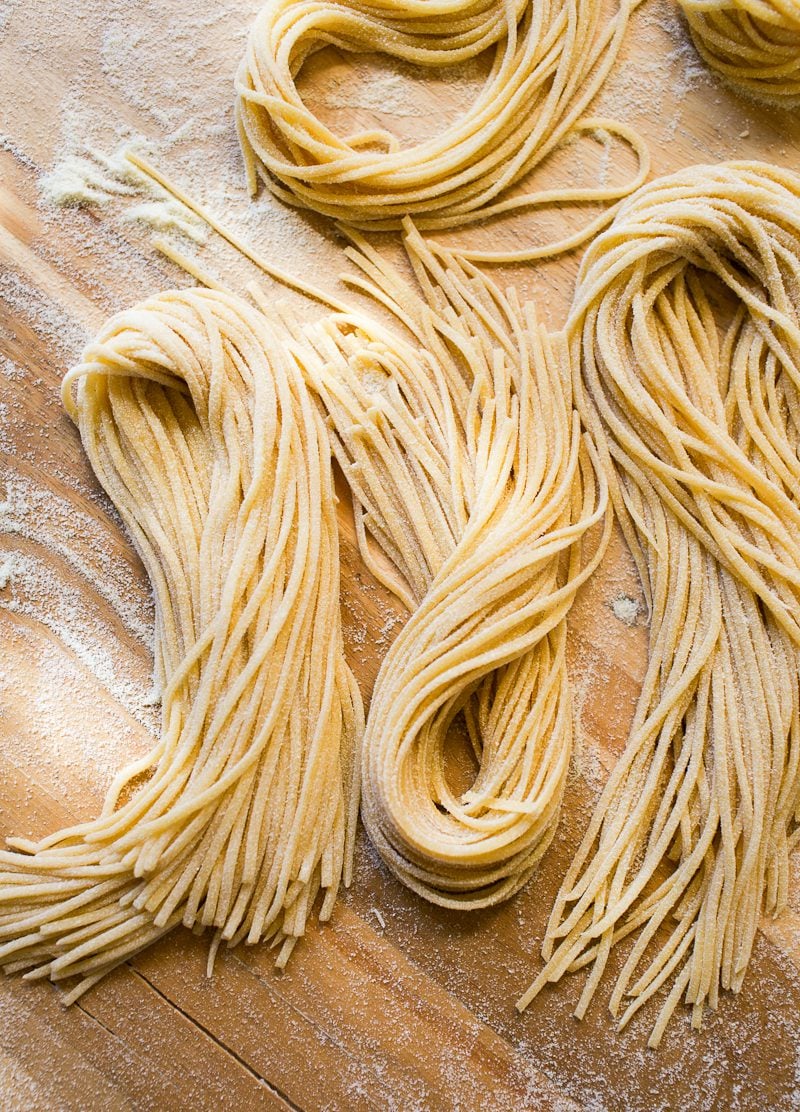
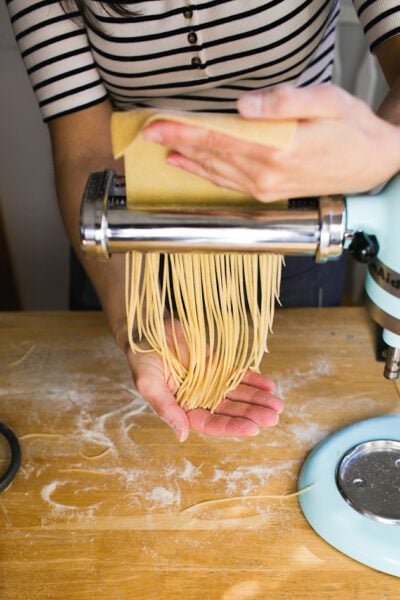
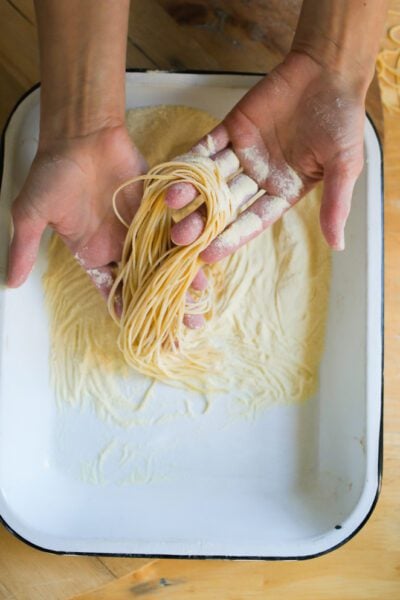
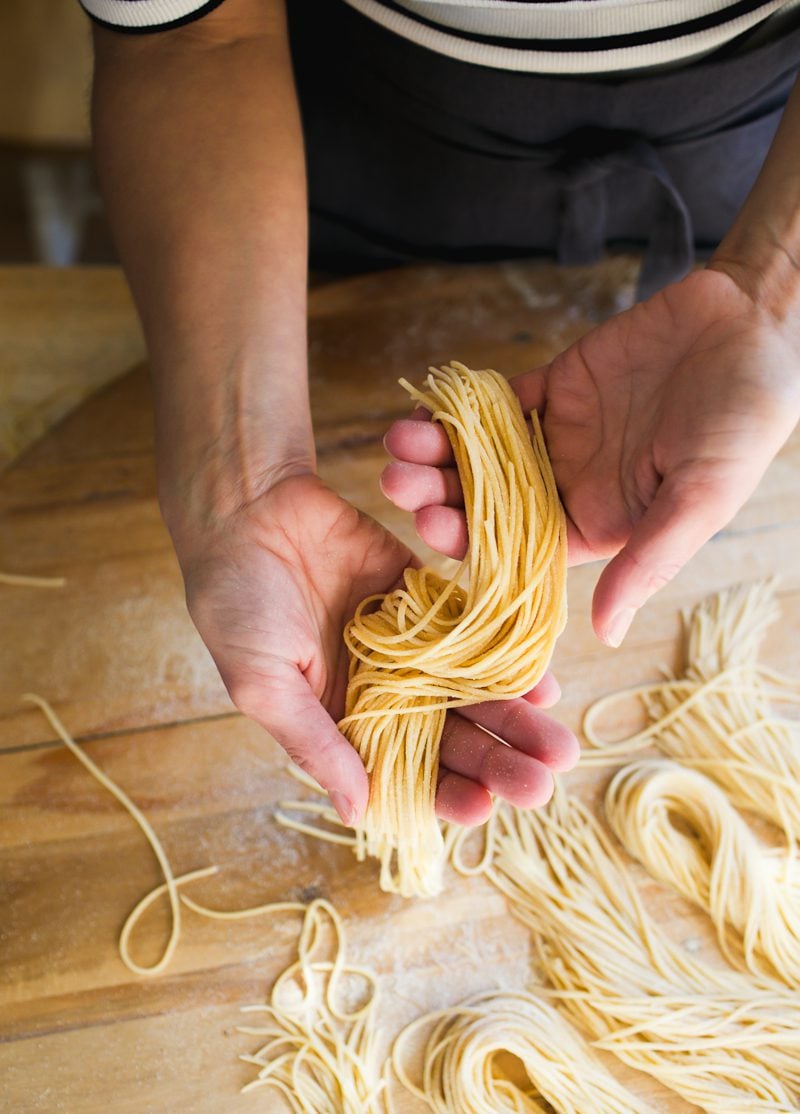
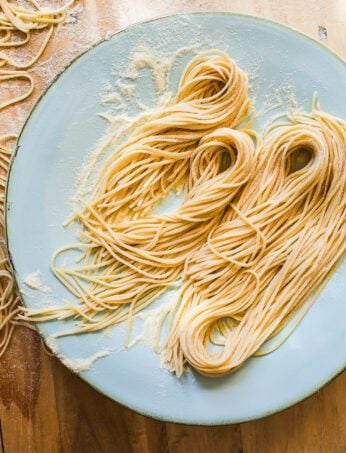
Once lightly cured, cut the pasta using your preferred attachment (I chose spaghetti). Toss the strands in semolina flour so they don’t stick and lay them out loosely on a tray.
How To Store Sourdough Pasta
Sourdough pasta can be stored at room temperature for 1–2 hours, or refrigerated for up to 12 hours (I use this high-sided pan w/ lid). In my experience, the flavor becomes more pronounced after it has been cut and chilled. I rarely go past 24 hrs. Feel free to experiment with your timing here if you want a deeper flavor.
You can also freeze sourdough pasta, although it’s not my favorite. Long strands tend to become brittle, dry and can break easily if frozen past 1 month. Freezing tends to be the better option for shaped and filled pasta like sourdough tortellini.
By signing up, you agree to receive emails from The Clever Carrot. Unsubscribe at any time.
Best Sourdough Pasta {1-Hour or Overnight}
- Prep Time: 1 hour
- Total Time: 1 hour
- Yield: Serves 4–6 (500 g dough) 1x
- Category: Sourdough Discard Recipes
- Method: Boil
- Cuisine: Italian
Description
My homemade sourdough pasta recipe requires only 3 ingredients: flour, eggs and active sourdough starter (or fresh sourdough discard). Please, do not use discard that’s 3 months old from the fridge! I’ve also included 2 pasta dough options: a same day “1 hour dough” and a longer, 24 hour fermented pasta to optimize sourdough’s natural digestibility. The dough can be made in a food processor, stand mixer or by hand (see all options below).
A few helpful tips:
- Make sure to weigh your ingredients, including the eggs to ensure the pasta dough is the correct texture.
- Flour: Italian Tipo 00 is considered “the best” for homemade pasta. It’s a fine-milled, soft wheat flour that feels like baby powder. Try Molino Grassi or Caputo. Substitute with King Arthur all purpose flour for similar results.
- Use a food processor (if you have one) for speedy results (the dough comes together in 10-15 seconds).
- Use a hand-crank pasta machine or KitchenAid pasta attachments to easily roll out the dough.
- Don’t forget to watch the video!
Ingredients
- 300 g Tipo 00 or all purpose flour (I recommend King Arthur flour)
- 165 g eggs, cracked weight, about 3 large US eggs (*see Notes)
- 40 g active sourdough starter or fresh sourdough discard
- Olive oil (*see notes)
- Semolina flour, for dusting
Instructions
Step 1: Make The Pasta Dough {Food Processor Method}
- Weigh the eggs (cracked) in a small bowl. If the weight is less than 165 g, use olive oil to make up the difference.
- Add the sourdough starter to the eggs; whisk thoroughly to combine.
- Add the flour to a food processor fitted with a metal blade. Pour the egg mixture on top.
- Process the ingredients (no need to pulse) until a dough forms, about 10-15 seconds. If the dough doesn’t form into a ball, and looks “crumbly” it’s OK. Unplug the food processor and pinch the dough together; if it sticks, it’s fine.
- Remove the dough to your work surface. Form into a rough ball. Cover with an upturned bowl and let rest for 5-10 minutes before kneading. It will be easier to work with.
- After resting, knead the dough (see video at 1:50 mark). Do this by pushing the heel of your hand into the dough, and then turning the dough over itself. Repeat this technique several times, in a continued rocking motion, until a smooth ball forms, about 1-2 minutes. If the texture is sticky as you knead the dough, add a sprinkle of flour. When finished, wrap the dough very tightly in plastic wrap.
- Now the dough needs to rest. Choose a fermentation option: for a same day dough, rest at room temperature (68- 75 F) for 1 hour. Alternatively, to maximize fermentation and digestibility, rest at room temperature for 1-2 hours, and chill overnight, up to 24 hrs. Whichever option you choose, the dough must be wrapped tightly; it will rise slightly. Note: before rolling, chilled dough must rest for 30 minutes to 1 hour at room temperature. Otherwise, it will be too stiff.
Stand Mixer Instructions:
Whisk the eggs and sourdough starter together; set aside. Add the flour to the bowl of a stand mixer. Add the flour. Add the egg mixture. Mix with the dough hook until combined. Knead on speed #1 or #2, about 4-5 minutes. Form the dough into a ball and cover tightly with plastic wrap.
By Hand Instructions: (click here)
Step 2: Roll The Dough Into Pasta Sheets
- Set up your station: Dust your work surface, a sheet pan, and the pasta machine with semolina flour to prevent sticking.
- Cut the dough into 4 equal pieces; flatten one piece into a thin 6-8-inch oval disc (re-wrap the remaining pieces so they don’t dry out). Use a rolling pin.
- Send the disc through the roller on the lowest/widest setting. This is “#1” on the Kitchen Aid attachment. Now, send it through a second or third time to smooth it out. Note: if using a hand-crank pasta machine, refer to their specific instructions for rolling the dough. The settings are different, but the rolling process is the same.
- Continue to roll the dough through settings #2-4 (2x on each setting) for spaghetti, fettuccine, pappardelle and tagliatelle. For homemade ravioli, the dough needs to be thinner- go up to #5. The higher the number, the thinner the dough will become. That’s the goal. The pasta sheet is ready when it’s slightly translucent and you can see your hand underneath.
- When finished, fold the pasta sheet in half, place onto a tray and cover.
- Repeat the rolling process for the remaining 3 pieces of dough.
Step 3: Cut Sheets Into Pasta
- Before cutting, semi-dry or “cure” the pasta sheets ever so slightly. This gives the cut pasta strands a more firm and “leathery” finish, rather than a soft and doughy feel (this helps to prevent the strands from sticking together later on).
- To semi-dry: Hang the pasta sheets over the back of a chair or on a rod for about 5-15 minutes. Keep your eye on the time; you don’t want the sheets to dry out completely. Touch them occasionally. You will feel the difference in texture as time goes by.
- To cut: Take a pasta sheet and cut in half. Send it through your preferred cutter attachment.
- Dust the pasta noodles liberally with semolina flour to prevent sticking- don’t skimp here. Arrange strands loosely on a tray.
- Repeat the cutting process for the remaining pasta sheets.
How To Store, Freeze & Cook Sourdough Pasta
To Store (Short Term):
Toss freshly cut pasta with semolina flour and place it on a sheet pan. Cover with plastic wrap, inverted sheet pan, or store in an airtight container. Leave at room temperature if cooking within 1–2 hours, or refrigerate for up to 12 hours. The flavor will continue to deepen when the cut noodles are chilled. Note: fresh pasta might oxidize and stick together if chilled past 24 hrs.
To Freeze:
Air-dry pasta for 15–20 minutes first (uncovered) to reduce sticking. Portion into zip-top bags and freeze for up to 1 month (any longer and it might dry out). No need to thaw; cook straight from frozen.
To Cook:
Bring 6 quarts of generously salted water to a boil. I don’t give exact amounts for the salt, because the flavor of salt varies considerably. Add the pasta and cook for 2–7 minutes, depending on the thickness. Always taste it. It should be al dente- tender with a slight bite. Use tongs to transfer pasta directly to your sauce.
Notes
Here’s the deal with eggs: size varies. A large, US egg can weigh between 49- 55 g depending on the brand (and the chicken, obviously). The variance, which might seem nominal, is crucial. Pasta dough is not forgiving and can be too dry. So, I’ve taken out the guesswork and designed this recipe to go by total egg weight (not quantity). If 3 large eggs does not equal 165 g, add olive oil to make up the difference.


Comments
Sheila says
It doesn’t say how much sourdough starter to use? Am I missing that?
Emilie Raffa says
Hi there! 40 g sourdough starter. It’s listed in the recipe above the comment section :)
Hannah Finley says
LOVE LOVE LOVE this recipe, it worked well for my kitchenaid attachment, I made spaghetti :)
Emilie Raffa says
Yay! I’m so thrilled. Thanks for your feedback Hannah!
Denise says
Not sure what I did wrong. My dough looked like a pile of rocks. I actually added five extra grams of sourdough starter by accident and thought it was gonna be too wet. Well, it was dry as anything I’ve ever seen and I make pasta dough for gnocchi and cavatelli a lot. I wanted to try sourdough to see how that went. . Everything out as suggested, and I did use my KitchenAid stand mixer and followed those directions, and it was a big crumbled mess. so dry so I added a teaspoon of olive oil, but that made no difference. Not sure what I did wrong. Maybe I’ll try it again you made it look so easy.
Emilie Raffa says
Hi Denise! We don’t want rocks ;) The dryness could be due to the thickness of your sourdough starter and/or a miscalculation of ingredients. Either way, the flour to liquid ratio of off. You weighed out all of your ingredients, correct? Including the eggs (cracked weight)? If the egg weight was correct, let’s look at your sourdough starter. What flour is it made of? Is the texture very runny or thick? Lastly, what brand of flour did you use for the pasta dough? Any additional info. you can provide would be really helpful. Thank you.
Denise Bullock says
My sourdough starter is made with unbleached all purpose flour, and it’s fed each time I use and once a week I add a quarter cup of rye flour mixed in. my sourdough starter is more on the liquidy side then on the batter side. I have been using this starter since . I do have to tell you this, I just could not find it in my heart to throw it away and I opted to put the dough into a plastic bag and let it sit in the refrigerator overnight and then got it out next day and let it get to room temperature. It was still very, very firm but softer than before and slightly manageable. I went through the whole process of rolling the pasta on each setting on kitchen aid. It was very difficult to press and roll, but I must tell you it was out of this world delicious. The pasta sheets had the rippled edge like you showed in your video right out of the press. I let them dry for about 30 minutes before cutting and I can’t tell you how perfect this pasta turned out. I just don’t know why it was so hard to work with and crumbly. I am going to try it again today and be very mindful that I’m weighing it correctly. I use double zero flour when I made it Saturday And will use double zero again. I’ll let you know how it turns out the second try!
Jiahui Cui says
Hi
Thank for the recipe!! It takes amazing. I’m wondering if you can help me with what to do if I want to add spinach to the recipe. How much more flour would I need to balance out the ratio? What is the ratio of flour to liquid that I would neeed? I made it with spinach and this recipe and it turned out to be too wet. Thanks so much!!
Emilie Raffa says
Hi there! Unfortunately, I haven’t tested it yet… so I don’t know the answer off the top of my head. I’ll update this post with a variation when I do :) In the meantime, for reference, you might want to check out my regular fresh spinach pasta dough (linked below).
https://www.theclevercarrot.com/2022/05/fresh-spinach-pasta-dough/
Lien says
Hi!
I am also having a hard time trying to find a sourdough pasta recipe that includes spinach. Is this not a thing? I already have a recipe for spinach pasta without the sourdough.
Thanks!
Stephanie says
Can this stay in the fridge for over 24 hours and still be good?
Emilie Raffa says
Yes. When ready to continue with the recipe, be sure to rest the cold dough at room temperature for 30 minutes- 1 hour before rolling. Otherwise it will be very stiff.
Tahsha Lundberg says
Hi there. Would this be OK in a pasta maker?
Tahsha
Emilie Raffa says
Yes. You should be able to adapt this recipe in a pasta maker.
Marrianne says
Hello Emilie,
I’m having great fun making sourdough pasta noodles!
My noodles fall apart easily when nearly dried and impossibly so when dried. I have measured everything with a scale and tried twice. The second time I kneaded them more by hand, but still, same result. (00 & semolina are lower in gluten of course.)
Is this why it’s recommended to freeze or store them in the refrigerator?
With thanks,
Marrianne
Emilie Raffa says
Hi Marrianne! This is very interesting. To clarify, a few questions: What shape pasta are you trying to dry? How thin are you rolling the pasta sheets (before cutting into pasta shapes)? And what method are you using to dry the pasta? I just want to make sure I have the correct visual. For storage, in the fridge is best (for up to 1 day). When frozen, the noodles actually become quite dry, brittle and break easily when stored for too long.
Marrianne says
Hi Emilie,
I am using half 00 and half semolina (both reputable Italian brands) to make my pasta dough.
I’m rolling the dough to almost translucent, but not quite, and I’m cutting them into pappardelle width noodles. I hang them on a plastic pasta drying rack.
Aside from them being brittle when fresh, once they are cooked, they are beautiful! They hold together well, and taste amazing! I haven’t frozen them, or even refrigerated them. I figured if store bought egg noodles are stored dry in plastic bags on shelves, I could do the same. 😉
Emilie Raffa says
Thanks for the info. You are doing everything right. I’m leaning towards pasta thickness & storage as the culprit. Too thin = too delicate. Next time, roll the dough out a little thicker if you prefer. Once dried, store flat in a shallow airtight container (no bag) so the ribbons stay protected. I hope this helps!
Sarah says
Hi there! This recipe is awesome! Simple and delicious. I was wondering if you’ve ever tried it with 100% whole wheat flour and if so do you need to change anything? Thanks!
Emilie Raffa says
This sounds wonderful! I haven’t tried 100% whole wheat yet. Please let me know if you experiment :)
Emily Sauerman says
Hi! Can I fully dry this pasta to give as gifts, or do they need to be used or frozen?
Thanks!
Emilie Raffa says
Hi Emily! Yes- fully dried would be best to give as gifts. Fresh pasta doesn’t last too long when frozen- it becomes dry and brittle and prone to breaking!
shannon says
Is it possible to freeze the dough before cutting? And would semolina flour work?
Emilie Raffa says
Hi there! For best results, I wouldn’t freeze this pasta dough. I would make it fresh. If you’re short on time, you can always chill the dough overnight and proceed with the rolling and cutting steps the next day :)
Stacey Viviano says
I made this and it was amazing. When I carried my pasta maker back to Michigan from Sicily 25 years ago…my in laws told me I would need it one day with a twinkle in their eye. And yes it took me 25 years to properly use it!
Emilie Raffa says
I LOVE this! I’m literally picturing this in my head right now… I’m glad you liked the recipe :)
Annette says
How would you adjust recipe for a kitchen aid extruder which requires slightly dryer dough.
Emilie Raffa says
Great question! This is on my list of things to test… I haven’t done so yet. I’ll update this post with instructions when I do. In the meantime, a few people in this space reported using this dough in their pasta extruder successfully, without changes. If you want to experiment, keep extra four on hand to prevent sticking.
Annette Fries says
I just tried the recipe for the extruder. I used half 00 and half semolina. I added just a bit more flour and it made the best pasta. Would love to send a pic . Also made your delicious ricotta. Created a delish pasta bake.
Emilie Raffa says
Hi there! I haven’t used this particular appliance before. However, there shouldn’t be any issues with my pasta dough recipe (I’d double check the instructions/call to make sure). If you experiment, please let me know.
Victoria says
Coujd you advise the instructions for the Philips Pasta Maker? Thank you
Micheline says
I was wondering the same since I have the Emeril pasta machine
Zoey says
For me I made the dough like the recipe says, then put it in the Phillips machine with the “extrude only” setting on. I had to cut the dough up into lots of small balls and feed the balls into the machine one by one to get the dough to come out, but it turned out great! Also make sure to constantly sprinkle the bowl where your cut pasta comes out with flour or the noodles will stick to each other.