This post will teach you how to make a beginner sourdough starter at home, step-by-step. All you need is flour, water and a little bit of patience. Before you know it, you’ll have your very own bubbly, active sourdough starter to make my best sourdough bread recipe, sourdough focaccia and more! Grab your personal sourdough starter feeding chart.
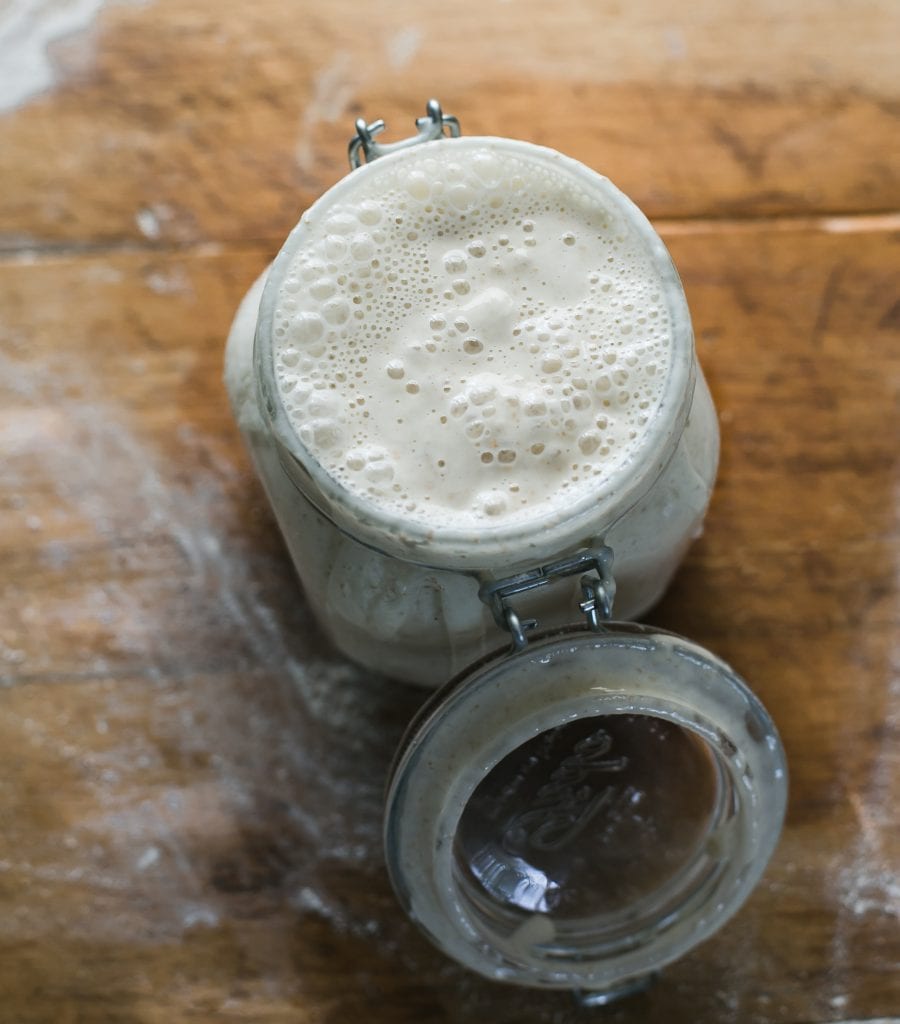
Looking to bake sourdough bread? First: you’ll need a sourdough starter. Without it, your bread won’t rise. It’s the absolute heart and soul of sourdough baking. Creating a sourdough starter from scratch is not hard to do. However, the process is intimidating, especially for beginners. Let’s change that.
Adapted from my bestselling book Artisan Sourdough Made Simple, I will demystify and simplify the process with step-by-step recipe instructions. In approximately 7+ days (yes, it takes that long- there are no shortcuts) you’ll get approximately 1 cup of bubbly, active sourdough starter which is more than enough to make bread, including my best sourdough bread recipe with olive oil (most popular recipe on my blog!). More sourdough bread recipes here.
Sourdough is more than just a recipe; it’s an understanding. So before we dive in, let’s define.
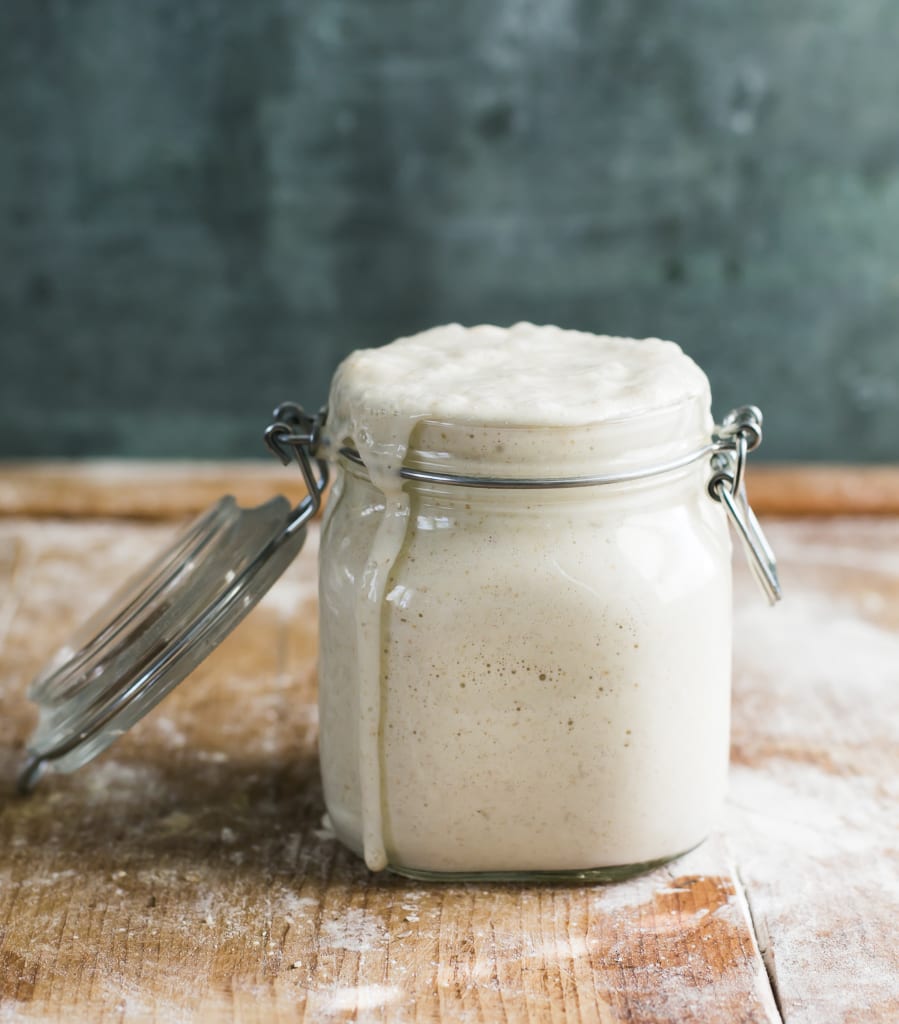
What Is Sourdough Starter?
A sourdough starter is a live, fermented culture of flour and water filled with wild yeast and bacteria from our environment. A small portion is added to sourdough bread dough to make it rise. Commercial yeast IS NOT required.
Sounds a bit weird, right? Of course it does. Know this: natural “wild” yeast is all around us. It can be found in a bag of flour, in the air, on your hands etc. Just because you can’t see it, doesn’t mean it’s not there and doing its thing. It’s like magic.
How Long Will It Take?
To create a sourdough starter from scratch, the overall process will take 7 days (or more) from start to finish. It’s not instant. First, you’ll create the starter with whole wheat flour to jumpstart fermentation. Then, you’ll continue to feed it with regular all purpose flour or bread flour to cultivate the wild yeasts and friendly bacteria. Once it’s created, you’ll keep it alive with ongoing feedings and care, which you can read about here.
When Will It Be Ready To Use?
Your starter is ready to use when it has doubled in size, with plenty of bubbles on the surface and throughout the culture.
NOTE: It’s not uncommon for it to take up to two weeks or more for the starter to become active. It all depends. I know this timeframe sounds a bit vague, but growing yeast in a jar (that’s basically what you’re doing) can be unpredictable at times. Please be patient if the process takes time for you- it’s normal.
Is It Difficult To Do?
Absolutely not! In short: you’re basically adding flour and water to a jar, feeding it with more flour and water and waiting for it to become bubbly, active and double in size. That’s it. Most of your time involvement is hands-off. Can I ask you a favor though? Don’t overthink it. There’s a ton of sourdough information out there, and you will fall down a major rabbit hole if you start poking around. Just stick to this tutorial for now, follow the steps as written and just go for it.
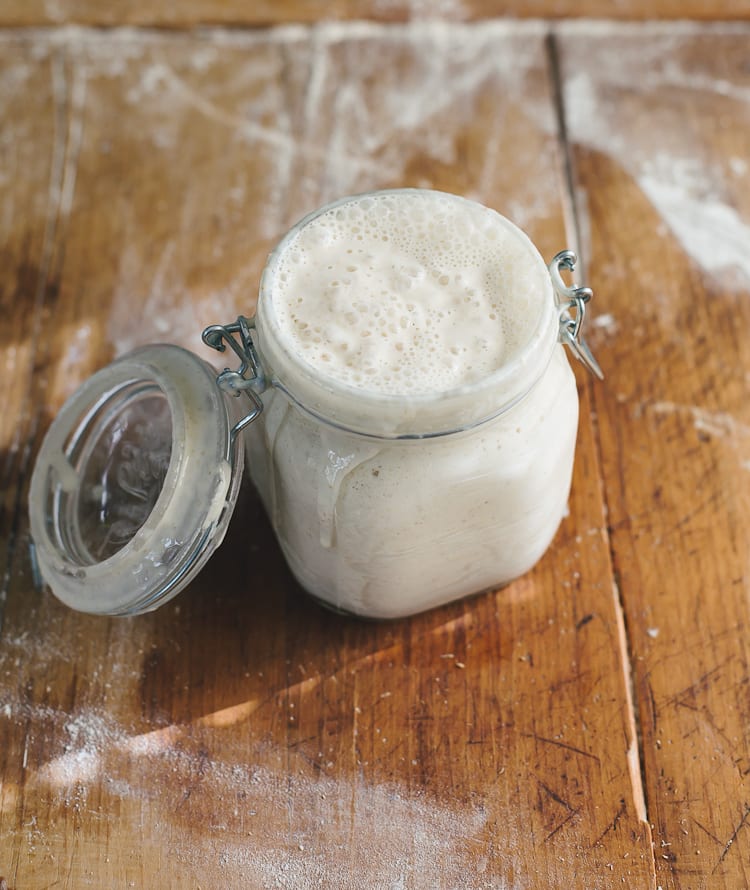
Beginner Sourdough Starter Recipe {Step-By-Step}
You Will Need:
Supplies
- 3/4 L jar (I use this one)
- Digital scale
- Small rubber spatula
Ingredients
To create the sourdough starter on Day 1:
- 60 g (1/2 cup) whole wheat flour
- 60 g (1/4 cup) water
To feed the sourdough starter each day (Days 3-7):
- 60 g (1/2 cup) unbleached all purpose flour or bread flour
- 60 g (1/4 cup) water
NOTE: Use regular, unbleached all purpose flour or bread flour for best results. I use flour from KAF, Trader Joe’s or Whole Foods. As for organic flour, I first learned that it wasn’t always successful when first creating a sourdough starter (sourdough can be finicky). However, due to the widespread use of glyphosate, I’ve been inspired to re-test with organic flour. The results were good. Please experiment with what resonates. For the water, filtered or tap water is fine. Use the latter if you know it’s mostly chemical/chlorine free.
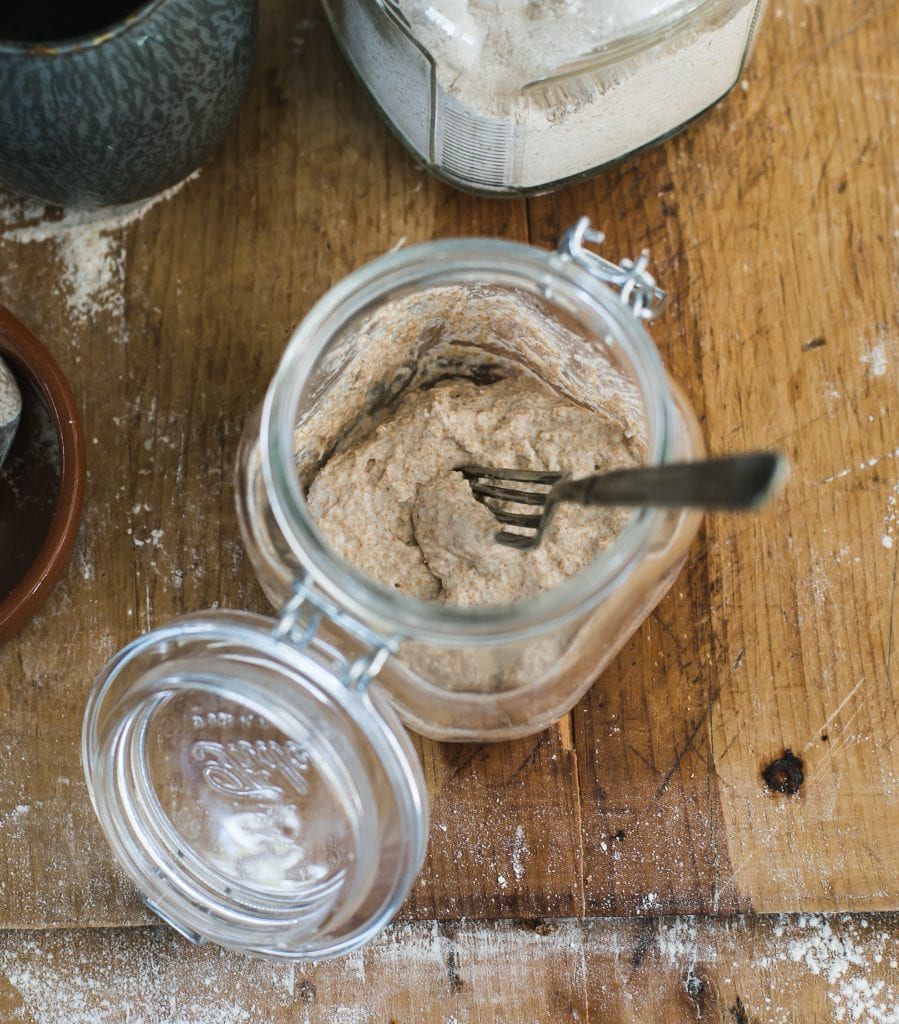
Day 1: Make The Sourdough Starter
- First, download and print out this chart. It’s your daily “at a glance” feeding schedule to keep you on track.
- Add 60 g (1⁄2 cup) of whole wheat flour and 60 g (1⁄4 cup) of water to your sourdough starter jar. Total yield: 120 g sourdough starter.
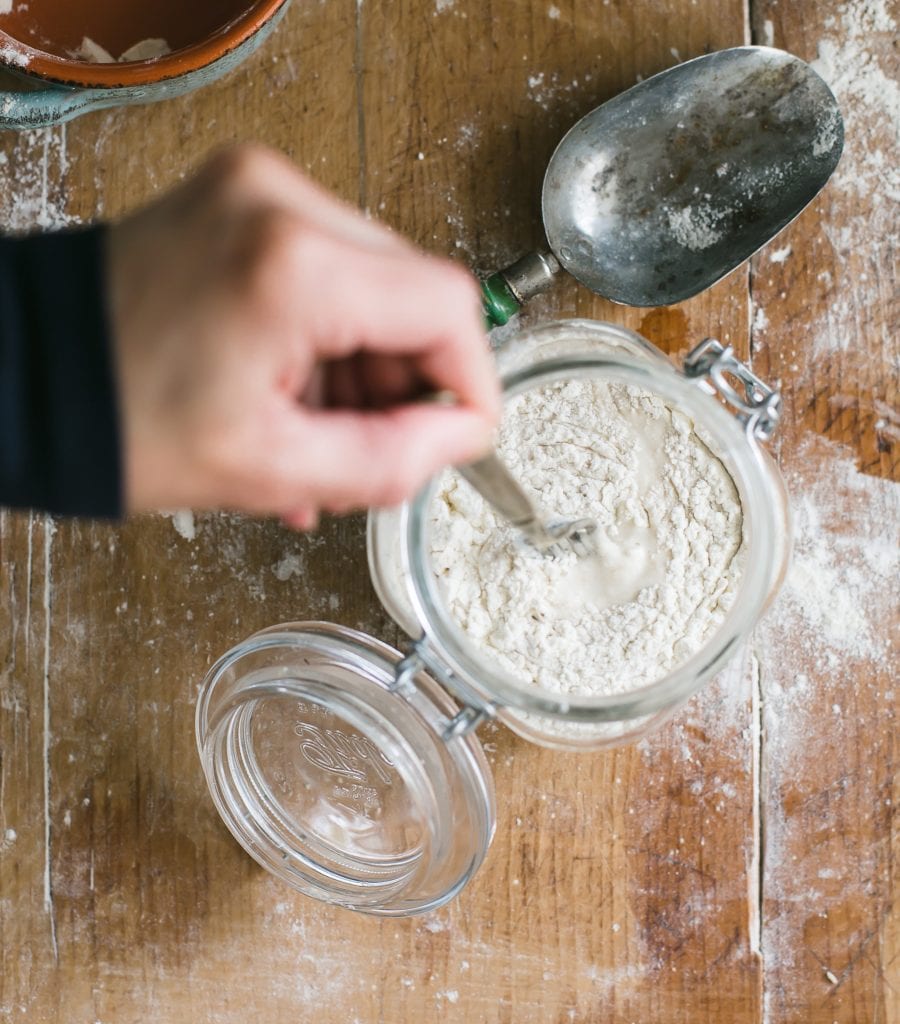
- Mix with a fork until smooth; the consistency will be thick and pasty.
- Cover with plastic wrap or a lid, and let rest in a warm spot, about 75 F for 24 hours.
Temperature Tips: Temperature is very important. If it’s too cold, your starter won’t rise and the process will take longer. Consider the following tips if you’re looking for a warm, 75 F spot. Place your starter on a cookie sheet inside the oven (turned off) with the light on for a only few hours to give it a boost (please don’t leave it there overnight- the environment will become too warm). Monitor the temperature with an oven thermometer. You can also use a proofing box set to your desired temperature, or a microwave with the door ajar and the light on.
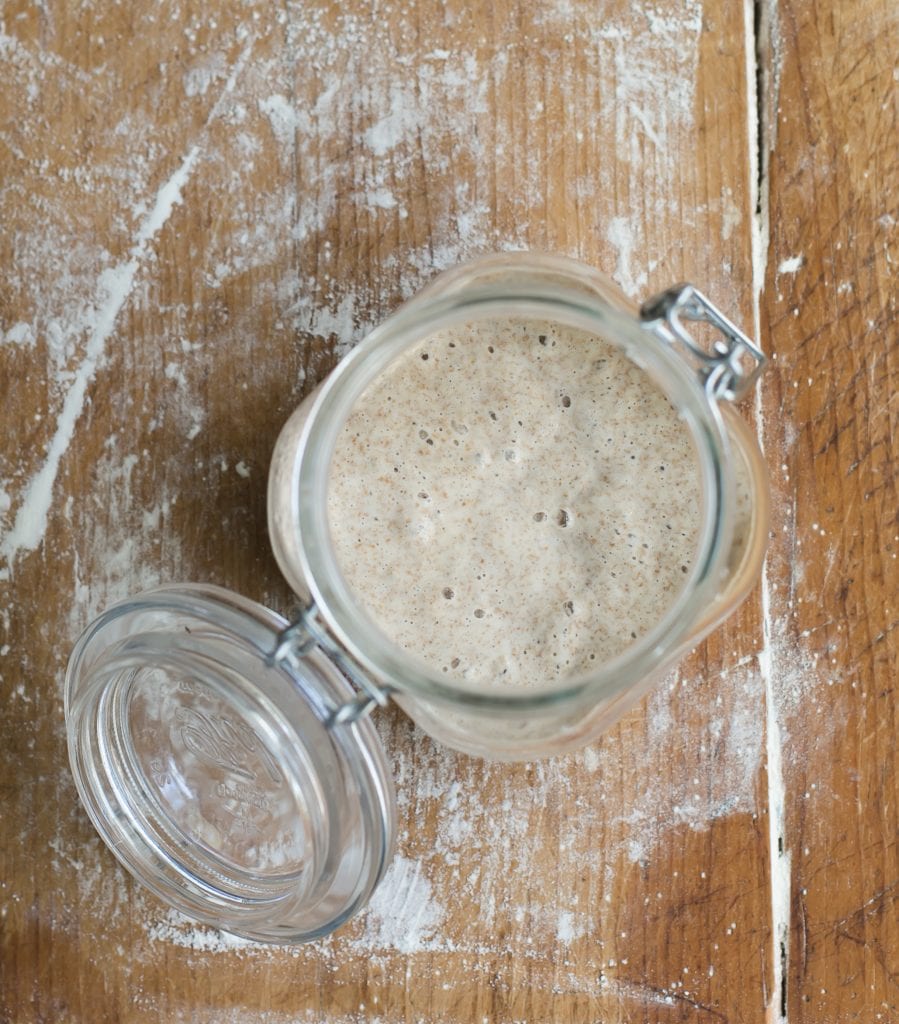
Day 2: Got Bubbles?
- Today, you’re going to check if any small bubbles have appeared on the surface.
- Bubbles indicate fermentation, which is what you want. However, it’s okay if you don’t see anything right away; the bubbles might have appeared and dissolved overnight while you were sleeping. This happens quite often.
- You do not have to do anything else on Day 2. Just let it rest in your warm spot for another 24 hours. Feel free to stir once or twice to oxygenate the mixture.
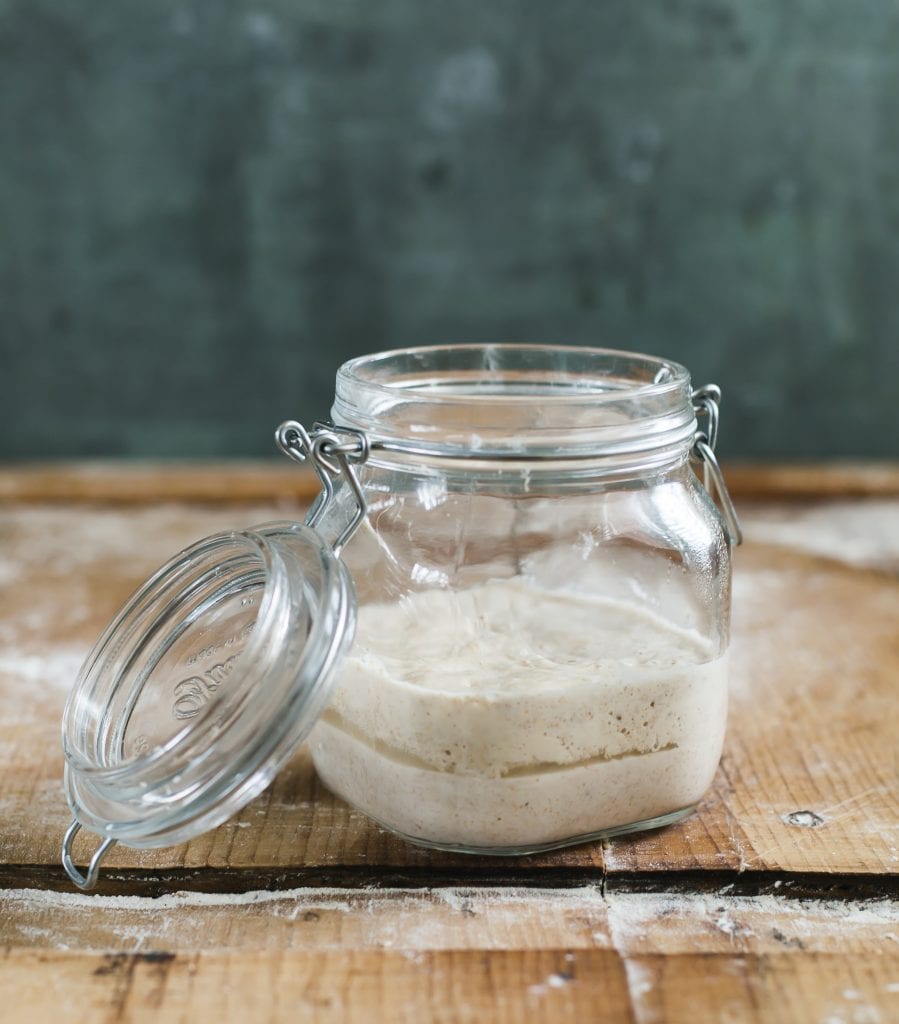
Tip: What’s That Brown Liquid? During the creation process, and even after your starter has been established, a dark liquid might appear on the surface (the image below shows the liquid in the middle of the starter). This liquid is called “hooch” and is an indication that your starter is hungry. It also has a very distinct smell, similar to rubbing alcohol or gym socks. This is normal. Don’t freak out. Any time you see this liquid, it’s best to pour it off before feeding it with fresh flour and water.
Days 3-7: Feed Your Sourdough Starter
Whether bubbles are visible or not, it’s time to start the ongoing feeding process. As the natural yeasts begin to develop, your starter will rise. Bubbles will form on the surface. Eventually, your starter will fall back down or “collapse” indicating that it’s time to feed it again. The goal: is to increase the total quantity to about 236 g (1 cup) following the specific feeding ratio outlined below on each day.
Before you begin, a few tips for success:
- Establish a feeding schedule. Feed your starter at the same time each day. This will train your starter to rise and fall predictably, which is what you want. Consider feeding your starter in the morning when you wake up. Again, this is where my feeding chart comes in handy.
- Track the growth. Place a rubber band or piece of masking tape around the jar to measure the starter as it rises. When it falls, you’ll see streaks of starter on the sides of the jar.
- Keep your jar clean: Use a small rubber spatula to scrape down the sides of the jar to prevent mold growing up the sides.
- Be patient. This is a slow, gradual process. Remember: temperature (75 F) and consistency (daily feedings @ approximately the same time each day) is key.
Day 3:
- Remove and discard half (60g) of your sourdough starter from the jar. To do so: use a spoon to scoop it out, or pour the starter directly into a bowl to weigh (you can also just eyeball it- the amount doesn’t have to be exact). The texture will be very stretchy.
- To the jar: Add 60 g (1⁄2 cup) of all-purpose flour + 60 g (1/4 cup) of water. Mix with a fork until smooth. Scrape down the sides with a small rubber spatular. The texture should resemble thick pancake batter or plain yogurt at this point.
- Cover and let rest in a warm spot, 70-75 F for 24 hours.
- Total yield: 180 g starter.
Day 4:
- Remove and discard half (90 g) of the sourdough starter.
- To the jar: Add 60 g (1⁄2 cup) of all-purpose flour + 60 g (1/4 cup) of water to the jar. Mix well and scrape down the sides.
- Cover and let rest in a warm spot for 24 hours.
- Total yield: 210 g starter.
- Note: The growth of your starter might appear to slow down on Days 3-4, after switching to all purpose or bread flour for the ongoing feedings. This is normal. Your starter needs more time to adjust. Be patient.
Day 5:
- Remove and discard half (105 g) of the sourdough starter.
- To the jar: Add 60 g (1⁄2 cup) of all-purpose flour + 60 g (1/4 cup) of water. Mix well.
- Cover and let rest in a warm spot for 24 hours.
- Total yield: 225 g starter
Day 6:
- Remove and discard half (112 g) of the starter.
- To the jar: Add 60 g (1⁄2 cup) of all-purpose flour + 60 g (1/4 cup) of water. Mix well and scrape down the sides.
- Cover and let rest in a warm spot for 24 hours.
- Total yield: 232.5 g starter
Day 7:
- Remove and discard half (116.25) of the sourdough starter.
- To the jar: Add 60 g (1⁄2 cup) of all-purpose flour + 60 g (1/4 cup) of water. Mix well, and scrape down the sides.
- Cover and let rest in a warm spot for 24 hours.
- Total yield: 236 g starter
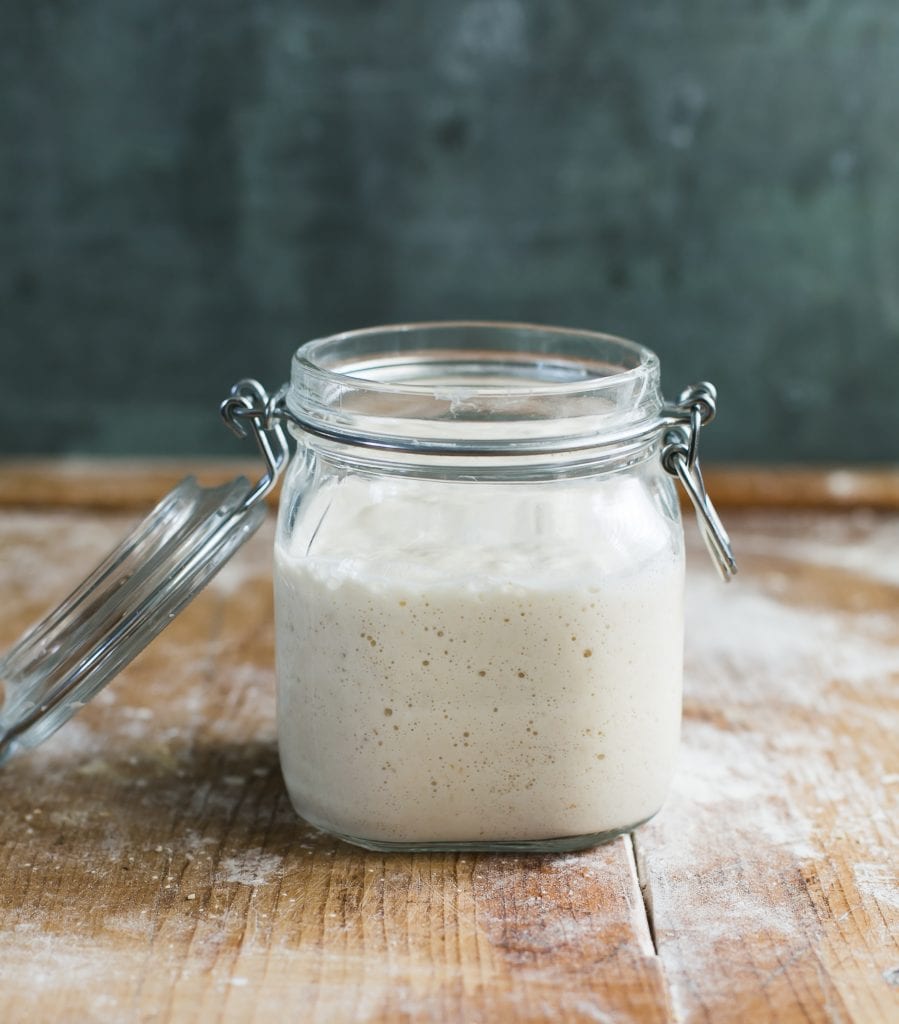
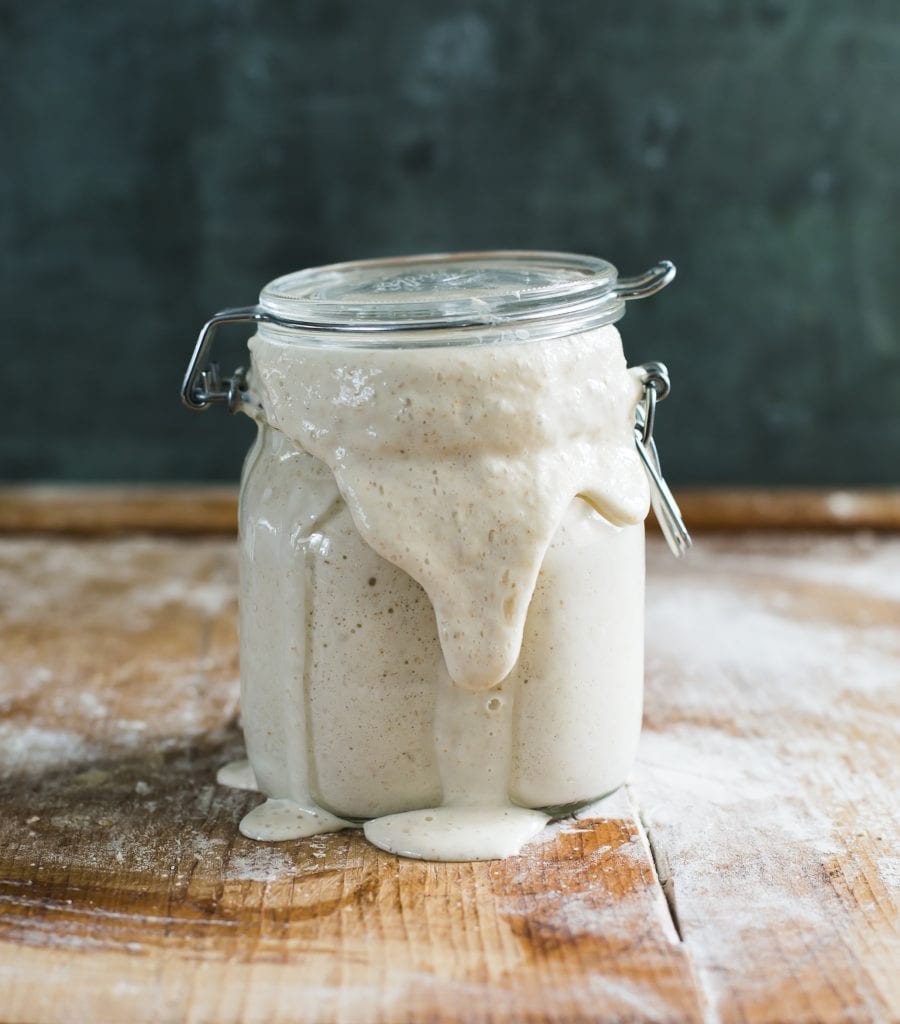
Day 7-8: A Sourdough Starter Is Born!
- By now, your sourdough starter should have doubled in size. You should see plenty of bubbles, both large and small. The texture will now be spongy, fluffy, and similar to roasted marshmallows (think: s’mores). It should also smell pleasant and not like stinky gym socks. If these conditions are met, your starter is now active.
- The very last step is to transfer your sourdough starter to a nice, clean jar. Do this only if your current jar needs a good scrub. Otherwise, leave it as is.
- In keeping with tradition, you can also name your sourdough starter (and please do). My starter is called Dillon after my oldest boy. It’s bright and bubbly, just like him ;)
- Now you’re ready to bake. Start with my beginner sourdough bread recipe- you’re going to love it!
Feeding & Maintaining Sourdough Starter For Ongoing Care
So you’ve created a sourdough starter! Now what? Just like any living creature, your starter must be kept alive with regular feedings, proper storage, and ongoing care to keep to maintain its strength. If your starter is not strong, your bread will not rise. Once you’re starter is established, read my companion article to learn exactly how I do it- Feeding Sourdough Starter: My Best Tips & Tricks. Have more questions? Read troubleshooting your sourdough starter.
Note: You will need to feed your starter every time prior to making bread dough and to maintain it (keep it alive).
How To Store Sourdough Starter
At Room Temperature: If you bake often, let’s say a few times a week, store your starter at room temperature. This will speed up fermentation, making the starter bubbly, active, and ready to use faster. Room temperature starters should be fed one to two times a day, depending on how quickly they rise and fall.
In the Fridge: If you don’t bake that often, store your starter in the fridge covered with a lid. You’ll only need to feed it about once a week or so to maintain its strength when not in use (you can just feed it cold and then pop it back in the fridge right afterwards; no need to warm it up first). When you are ready to make dough, feed your starter at room temperature as needed, to wake it back up.
Frequently Asked Questions & Helpful Info:
1.) What If my starter is not ready after 7+ days?
Feed every 8-12 hours (not 24) and continue the same formula: Discard half starter. Feed (Add): 60g flour & 60g water and store at 70-75°F / 21-24°C. Too runny? Add an additional 1-2 tbs of flour. Note: the most common reason for your starter not starting is cold temperature.
2.) Can this sourdough starter be made with all purpose flour only?
Yes. The process might take a little longer.
3.) Can sourdough starter be made with bread flour only?
Yes. Because it’s more “thirsty” than AP flour, add more water if the texture is too thick.
4.) Can this sourdough starter be made with whole wheat, spelt flour or rye flour only?
Yes. Like bread flour, whole grain flour absorbs more water than all purpose flour, so adjust the texture with additional water your starter is too thick.
5.) Can sourdough starter be made with bleached flour?
Yes. But it’s not recommended. The chemicals can throw off the fermentation process. Some readers have reported success, however. Your choice!
6.) Why do you use whole wheat flour in the beginning of the recipe? And then switch to all purpose flour for the ongoing feedings?
Whole wheat flour is used to jumpstart the fermentation process. All purpose flour or bread flour is used for the ongoing feedings because it’s inexpensive, practical and suitable for everyday baking.
7.) On Days 3 & 4, my starter is not as bubbly compared to Days 1 & 2. Growth is slowing down. Why?
As mentioned in question #5, whole wheat flour is used in the beginning to jumpstart fermentation. This is why you saw bubbles right away. When you switch to all purpose or bread flour for the ongoing feedings, growth will inevitably slow down on Days 3-4, as your starter needs time to adjust to the new flour. This is normal. Growth is still happening.
8.) For the daily feedings, you mention to feed your starter “equal parts” flour and water by weight. For example: 60 g (1⁄2 cup) flour + 60 g (1⁄4 cup). But the volume conversions (measuring cups) are not equal. Is this a typo?
No. It’s not a typo. “Equal parts” refers to feeding by weight only. Not measuring cups. Here’s why: different ingredients weigh different amounts based on density. For example 1 cup of flour can weigh anywhere from 125-150 g depending on how it was packed into the measuring cup. 1 cup of water can weigh anywhere between 236-250 g. Because weights are constant, it streamlines the process for accuracy. It is the preferred measuring unit in bread baking. The volume approximates are listed for convenience because not everyone has a scale.
9.) Can I use the sourdough discard from Day 1-7 for something else?
In the beginning, I typically don’t recommend using the discard (it’s usually really smelly and discolored). I recommend using the discard after the starter has been established. However, everyone will have a different experience with this. If it looks good- use it! And yes, you can save it to create a new, separate sourdough starter if you’d like. For more info please read Sourdough Discard 101: Recipes & Faqs Answered.
By signing up, you agree to receive emails from The Clever Carrot. Unsubscribe at any time.
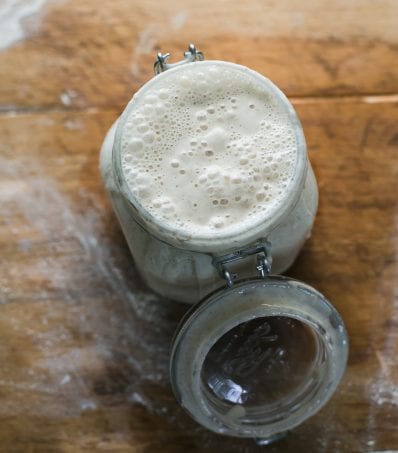
Beginner Sourdough Starter Recipe
- Yield: appx. 236 g (1 cup)
- Category: Sourdough Starter
- Method: 1-Bowl
- Cuisine: American
- Diet: Vegan
Description
Looking for an easy, sourdough starter recipe for beginners? Adapted from my bestselling book Artisan Sourdough Made Simple, follow my no-nonsense, step-by-step guide for practical tips, tricks, and ongoing care- anyone can do it. Use it to make my famous golden, crusty sourdough bread recipe.
Please read my notes below before you begin.
Notes, Tips & Expectations:
- Download & print personal sourdough starter feeding chart {here}.
- The overall process takes ~7+ days, if the temperature is warm enough, ideally 70-75 F. However, it can take up to 2+ weeks or more for a strong starter to become established. Do not ignore the importance of temperature.
- Growth will seem to slow down on Days 3-4. This delay is commonly called a “false” start. It’s also normal- the yeast needs time to cultivate. Please be patient!
- You will need one large 3/4 L jar, or something of similar size (I use this one). Place a rubber band or piece of masking tape around the jar to measure the starter’s growth as it rises.
- To clarify feeding your starter: “equal parts” refers to equal weights only, not measuring cups. Example: 60 g (1/2 cup) flour + 60 g (1/4 cup) water. Same weight. Different volume. Not a typo. Why? Flour is light, fluffy and full of air pockets, so it takes up more space in a measuring cup (but weighs less than water). Water is more dense and compact; it takes up less space but weighs more than flour. That’s why their cup measurements don’t match, even when their weights are identical. Many bakers get confused by this. I’ve included volume measurements for convenience since not everyone owns a scale. But, do choose one measurement system and stick with it for feeding!
Ingredients
Note: Once your starter is established, make your first loaf using my sourdough bread recipe.
- 1x (5lb) bag all purpose flour or bread flour (I use either KAF, Trader Joe’s, or Whole Foods)
- 1/2 cup (60g) whole wheat flour (I use KAF whole wheat)
- Water, preferably warm around 85 F
Instructions
Before you begin: Establish a feeding schedule. Meaning, feed your starter at the same time each day. This will establish consistency, which sourdough starters love. Consider feeding your starter in the morning when you wake up.
Day 1:
- Combine 60 g (1⁄2 cup) of whole wheat flour + 60 g (1⁄4 cup) of warm water in a large jar. Mix with a fork until smooth; the consistency will be thick and pasty.
- Cover with plastic wrap, reusable wax wrap, or a lid and let rest in a warm spot, about 70-75 F for 24 hours. Temperature is important.
- Total approximate yield: 120 g starter
TIP: Looking for a warm, 75 F spot? Place your starter on a cookie sheet inside the oven (turned off) with the light on for only 1-2 hours (it can get hot in there, so keep you eye on it!). Center rack is best. You can also use a proofing box set to your desired temperature, or a microwave with the door ajar and light on.
Day 2:
Check to see if any bubbles have appeared on the surface. If you don’t see anything, it’s okay. The bubbles might have appeared and dissolved overnight while you were sleeping. Feel free to stir once or twice to oxygenate the mixture. Otherwise, you don’t have to do anything else now. Rest the starter for another 24 hours.
TIP: During the creation process, and even after your starter has been established, a dark liquid might appear on the surface and throughout the culture. It has a very stinky smell, similar to rubbing alcohol or gym socks. This liquid is called “hooch” and is an indication that your starter needs to be fed. It’s normal. Any time you see this liquid, it’s best to remove it along with any discolored starter present.
Day 3:
- Remove and discard half (60g) of your sourdough starter from the jar. To do so: use a spoon to scoop it out, or pour it directly into a bowl to weigh (you can also just eyeball the amount- it doesn’t have to be exact). The texture will be very stretchy.
- To the jar: Add 60 g (1⁄2 cup) of all-purpose flour + 60 g (1/4 cup) of water. Mix with a fork until smooth. Scrape down the sides with a small rubber spatular. The texture should resemble thick pancake batter or plain yogurt at this point.
- Cover and let rest in a warm spot, 70-75 F for 24 hours.
- Total yield: 180 g starter
Day 4:
- Remove and discard half (90 g) of the sourdough starter.
- To the jar: Add 60 g (1⁄2 cup) of all-purpose flour + 60 g (1/4 cup) of water to the jar. Mix well. Scrape down the sides.
- Cover and let rest in a warm spot, 70-75 F for 24 hours.
- Total yield: 210 g starter
Note: The growth of your starter might appear to slow down on Days 3-4, after switching to all purpose or bread flour for the ongoing feedings. This is normal. Your starter needs more time to adjust. Be patient.
Day 5:
- Remove and discard half (105 g) of the sourdough starter.
- To the jar: Add 60 g (1⁄2 cup) of all-purpose flour + 60 g (1/4 cup) of water. Mix well. Scrape down the sides.
- Cover and let rest in a warm spot, 70-75 F for 24 hours.
- Total yield: 225 g starter
Day 6:
- Remove and discard half (112 g) of the sourdough starter.
- To the jar: Add 60 g (1⁄2 cup) of all-purpose flour + 60 g (1/4 cup) of water. Mix well. Scrape down the sides.
- Cover and let rest in a warm spot, 70-75 F for 24 hours.
- Total yield: 232.5 g starter
Day 7:
- Remove and discard half (116.25) of the sourdough starter.
- To the jar: Add 60 g (1⁄2 cup) of all-purpose flour + 60 g (1/4 cup) of water. Mix well. Scrape down the sides.
- Cover and let rest in a warm spot, 70-75 F for 24 hours.
- Total yield: 236 g starter
Day 8:
When your starter is fully active, do the float test. Feed your starter, wait for it to double in size, and then drop a teaspoon of bubbly starter into a jar of water; if it floats to the top it’s ready to use.
Storage Options
If you bake often, store your starter at room temperature (feed it 1x-2x a day to keep it active). If you plan to bake only once in a while, store it in the fridge to preserve its strength (feed it 1x a week). When storing your starter in the fridge, there’s no need to bring it to room temperature first before feeding it. Just give it some flour and water and pop it back in the fridge.


Comments
Emilee Johnson says
Recipe is easy to follow, but I need help. I followed the recipe exactly. Day 3 it had doubled and was very active and bubbly. But after I started the daily feedings it has since fallen flat. It maybe rises a tad over the rubber band mark and smells very much like nail polish remover. It has bubbles on top, but not many at all. It is in a warm area, so I know temp isn’t the issue. Help please.
Emilie Raffa says
Hi there! This is normal. Whole wheat flour jumpstarts the fermentation which is why you saw activity on Day 3. When you switch to white flour for the ongoing feedings, your starter needs time to adjust to the new flour from Day 3-4 onwards. If it smells off, make sure to feed your starter at the same time each day to keep the time in between feedings consistent. If the texture is too runny, switch to bread flour and/or cut back on the amount of water.
Emilee Johnson says
What amount of water would you recommend? I’ve been using King Arthur Bread flour.
Emilie Raffa says
If using bread flour which absorbs more water than all purpose flour, keep the amounts the same for now. Comparatively speaking, the mixture will be on the thicker side (if necessary, loosen the texture with 1 tbsp of water as needed to achieve a thick, batter-like texture). There’s a bit of back and forth involved, but once you get the hang of what the texture should look like, the amounts become more flexible.
Natalie says
Hi, I made my sourdough starter, and it’s perfect. Thank you for your recipe. However, I’m going away for 16 days and I’m worried if it’s going to survive in the fridge without feeding for so long.
Emilie Raffa says
It will be fine! Give it a fresh feeding of flour and water before you leave. Feed it again upon returning. I do this all the time with successful results. Keep in mind, you’ll have to feed it a few times at room temperature before using (and to perk it back up!).
Deanna says
At day three my starter has doubled in size as if it’s going to overflow by tomorrow. Should I keep the schedule you provided or?
Emilie Raffa says
Yes. Follow the instructions as written for the full 7 days. Your starter needs additional time to develop, cultivate and strengthen yeast production. Note: I’ve mentioned this in the post, but it’s worth revisiting here: growth will slow down on Day 3 onwards when you switch to white flour for the ongoing feedings. This is normal. Just try to feed your starter at the same time each day to promote consistency.
Jehanne says
I followed your directions. Day 7 and my starter has doubled. Thank you. I will look for discard recipes now and make a boule this weekend.
Emilie Raffa says
Congrats! This is SO great to hear. You’re well on your way :) For sourdough discard recipes, have a look at the link below for inspiration:
https://www.theclevercarrot.com/category/sourdough-discard-recipes/
Michael Neilson says
I’ve always wanted to bake sourdough, but thought it was way too complicated.
This starter worked first time ,and helped make my first loaf of sourdough.
Great recipe, be patient and follow The process.
Emilie Raffa says
Excellent advice. Thank you Michael!
Penny Miller says
I greatly apologize re: my previous comment regarding 60 grams of flour/60 grams of water ~ I FINALLY figured out why 60 grams of flour is 1/2 cup and 60 grams of water is 1/4 cup. So sorry!! Starting my “starter” tomorrow and hoping for the best.
Emilie Raffa says
No worries. I appreciate the follow up :) The weight to volume “conversion” is actually the hardest concept for most people to grasp because here in the US, we don’t work with the metric system. So naturally, it doesn’t click. Conversions are only approximate and not exact. Measuring by weight, with a kitchen scale, is the way to go with bread baking. You’ll get the most accurate results. Good luck with your starter!
Penny Miller says
60 g (1/2 cup) unbleached all purpose flour or bread flour
60 g (1/4 cup) water
Repeatedly throughout “sourdough starter” recipe, you note 60 g (1/2 cup) flour and 60g (1/4 cup) of water.
Pls. advise so I can get started.
Benji's Mum says
My starter, Benji, stopped growing after his first feed. I’ve discarded and fed him 2 nights now, and he hasn’t grown. Should I be worried about Benji? He was growing and so bubbly before the feeds.
Looking to hear back!
Love,
Benji’s worried Mum
Phoebe says
I’m 7 days in and my starter smells really bad, it has since yesterday. It’s doubled in size and has lots of bubbles on top but it stinks. Yesterday when I put it little in a water filled glass it sank so I fed it and it still stinks today. Do I need to start over or is it ok?
Emilie Raffa says
I think your starter is fine, since it’s showing signs of activity. However, it sounds like it needs a fresh feeding of flour and water. At the same time each day: feed your starter to refresh the acidity levels. The aroma should balance out in a few days. Consistency is key.
Austin A. says
Hiii did you happen to change the Grams? I swear last night it was 113 grams of each n today it says 60 am I just blind haha if so do I just dump half of what I have n keep going?
Emilie Raffa says
Hi there! Are you on Day 6? If so, you should have approximately 112 g sourdough starter in your jar, to be fed with 60 g flour + 60 g water. Hope this helps ;)
Raegan says
This worked amazingly! Both are 7 days old and bubbling, going to attempt something with it 👌
Emilie Raffa says
Fantastic. Thanks for sharing your feedback!
Anthony-Héctor says
Hey y’all thought I’d leave a running commentary as an encouragement 2 anyone who’s sourdough starter has a mind of its own and won’t b tamed.
Day 2: got a rise out of Ellie but being coy proffered only a modest rise with bubbles and some frothing. Nothing overly exuberant. Not did she offer up any hooch. Thusly, left her 2 her own devices wrapped up in a thick cotton handtowel. No, I don’t know the threadcount per sq inch. Nor if it’s made from Egyptian cotton.
What I do know is that after a night’s swaddling in front of a space heater Ellie bloomed and reawarded me more than 2-fold.
Day 3: feeding at established hour. No hooch.
Ellie was a hungry girl bcuz after 5 hours she has tripled in size from her modest beginnings. Nearly convinced I’m on the right track.
So peeps for anyone disheartened by slow or appearingly non-existent results, patience. Some levains r more accommodating, like my Ellie, while others b like wild stallions. In the end y’all show ’em who’s head of the kitchen!
Emilie Raffa says
Love this thorough feedback. Thank you for taking the time to comment! PS: you have the concept nailed down to a T: patience is key. For some bakers, the process will be super quick and for others, it’s slow. It’s just the way it is. And when you finally accept this, something just clicks, and the process takes off.
Labone says
Hi, after the starter has been made and established, will it continue to grow if not used regularly? Or will we have to keep up regular bakes?
Many thanks!
Emilie Raffa says
No. It won’t grow unless it’s fed, which is something you have to do every time prior to using it AND for ongoing care. You don’t have to keep up with regular bakes. In fact, you can store your starter in the fridge until ready to use again. There’s an art to this, which is why I’ve written a separate article with more helpful details. See below:
https://www.theclevercarrot.com/2021/01/feeding-sourdough-starter-my-best-tips-tricks/
Dakota says
Look, I’ve tried to make sourdough starter so many times and NEVER once has it worked out.
I followed your recipe and instructions to a T – I read this entire post 3 times top to bottom, well let me tell you it’s day 7 and I went to feed her (she is now named Martha) she was ALIVE doubled in size perfect. I almost cried, this is the best step by step instructions. Trust it, follow it, it’s the bible of sourdough.
Emilie Raffa says
I’m crying with you! Welcome to the world Martha. And please give yourself some credit too! You get the concept of sourdough which is more than just a recipe, it’s an understanding. Well done.
AC says
Yes you can.
Elaine Owens says
When feeding the starter do you always have to dump out half of the old?
Emilie Raffa says
This helps to refresh and rebalance the acidity levels within the starter (think: sour vs. fruit aroma), while preventing it from growing exponentially in size.
Kate says
After day 7 and starter is ready, you mention keep feeding it daily (If using it often). Does that mean that we need to also keep discarding half each day as well when adding the flour and water? Thank you!
Maranda says
I’m on day 4. Last night my starter “fell” but I waited until this morning to feed it so the schedule wouldn’t be “off”… it smells cheesy. I went ahead and fed as I did on day 3. Am I ok to continue with this? Or do I need to start fresh? And if it falls (during the first 7 days) prior to the normal feeding time …should I go ahead and feed it then? Thanks!
Jenn says
In the first week feed it on schedule. It’ll work itself out!
Laurie says
My starter is in day 14 and I just can’t get it to double in size. It is finally rising slightly above the start line… I have been consistent with temp, flour, warm water…. It smells kind of like wine, not alcoholic, more fruity? Lots of bubbles throughout now…I feel like it is getting close to being active, and read that maybe I should feed twice a day… does this mean I need to discard half of the starter when I go to feed it again? Also 60 g warm water and 60 g flour? I wasn’t sure if I am just supposed to feed again without discarding…it will fit in the jar, so wasn’t sure either way… I have about 116 starter plus the 60/60 I added this morning. Maybe slow ramp to 1:1:1 ratio now that I’m close to it being active? Any thoughts would help!! Thanks!
Tamera says
How many total days is the starter kept in the oven with the light on? How many hours per day should we keep the oven light on?
Thank you!
Laurie says
I am new to this, but I think the goal is to maintain consistent temperature within 75-85 oF, so keeping a thermometer in there and checking to see when temp stabilizes (door open/closed, etc) is probably best bet! I have been using my microwave and keep a portable thermometer in there…. I figured out after a week that if I leave the light under the microwave on the low setting with door closed it keeps at 79-80 oF perfectly… just have to watch out when cooking in stove as it gets much hotter… not a big hassle but I am looking into getting/building a little box with a temp regulator so I don’t have to move everything when I need to use the microwave or stove…
I’m on day 15 of starter creation in very chilly area, and my starter is close to being active… I used the discard yesterday and it worked great for what it’s worth! Good luck!!!
Lauren says
I’m on day four and just fed started. It’s been rising like crazy everyday but man it smells horrendous. Is this normal?
Tamera says
My daughter and I just started this starter recipe yesterday (2/18/24), we have kept in in the oven with the light on, only turning the light off when we sleep. It has been almost 24 hours, and has tons of bubbles, a little hooch on the bottom, and it has already doubled in size. My question is, because it has already doubled in size, is it ready to use, or do we continue the schedule to day 7 as explained?
ANY HELP WOULD BE Apreciated!!
Thanks.
Martin Hewitt says
Continue the schedule to day 7 as explained
Tamera says
Thank you!
Lamb says
Hello, i’m only 36 hours into making the starter but it has doubled in size with lots of bubbles. It smells strange though. I’m to feed it now instead of waiting the full 48 hours as it seems hungry. Please let me know if this is normal! Thank you!
Martin Hewitt says
This is normal
Phoebe says
Help, it got very cold, 50’s, in my house overnight, starter day 1. Should I start over?
Coco says
Once it is active do you still discard when feeding?
Annie N says
In looking at the glass container you use: Do you clamp the lid down or leave it slightly open (i.e., ajar, and sorry for the pun). I’m on my third attempt (the other two tries did not make it), and hoping the third time will be the charm versus a grim demise. Thanks!
Tamra says
I can’t wait to try this; it doesn’t sound as foreboding as I would have thought. I eat less gluten in my diet (for inflammation reasons), and have been told that sourdough bread has less gluten / is better for low-gluten diets. Is that true? Can a gluten-free flour be used instead of whole wheat or all-purpose flour? Thanks!
Dawn Mohler says
Estela says
I’m in my 4th day of feeding but I cannot see the starter raising at all. What Am I doing wrong?
Emilie Raffa says
Give it more time! Your starter needs a full 7 days or more to activate. Continue to follow the directions, making sure to feed your starter at the same time each day and let it rest in a warm spot ideally, 75 +.
Shirley Lang says
hello- I am “newish” to sourdough bread making- received a starter from a friend maybe 9 months ago, who gave me a recipe and a King Arthur information sheet. I have been mostly successful, but I think I recently killed my starter. The bread did not rise, and when I tried to feed the remaining starter, it bubbles but does not rise. IS it dead? AND CAN I revive it?
I just dumped all but 1/2 cup of the starter, adding 1/2 cup each all-purpose flour and reverse osmosis drinking water from the water store. I have an upside down coffee filter over the top (of a 1 qt Mason jar), and it is sitting on top of my stove with the stove top light on. Your observation/suggestions are appreciated!
Thank you,
Shirley ~
Laurie says
I was so excited that I had finally done this right… the whole wheat flour to start made it rise crazy… but after day 3 feed with plain Jane KAf (all-purpose), it hasn’t risen at all :(. Some bubbles, but not a ton…Wondering if I could have possibly put in too warm of water and killed it? I was just gauging by hand, but I measured one day and it was definitely warmer than 90F…. Im on day 11
Im thinking of trying to start another one with whole wheat… and then feed it the white whole wheat instead of the all-purpose… every all-purpose and bread flour at the store has “enzyme” in ingredient list, but both full germ whole wheat and white whole wheat do not. Any thoughts on that?
Tammy M Thomas says
I tried another recipe and it didn’t turn out very well. I am so excited to say that it is day 7 and my sourdough starter rose almost to the top of the jar and smells fantastic. I am curious about the continuation process however because days 4 through 7, you recommend a little more sour dough each day, but the water and flour ratios stay the same. What do you do after day 7? You recommended on your other page to always keep the rations the same. So in continuing the process, do I use 60 grams of starter, 60 grams of water, and 60 grams of flour? Thank you so much for sharing this starter recipe. I am looking forward to trying some of your recipes.
Tammy M Thomas says
Estela says
I am in my 4th day but I cannot see increase the size I can see bubbles tough, Is this normal? Any advices?
Emilie Raffa says
Yes. It’s normal. Starters take time to become established, approximately 7 days or more. Continue following the directions as written, making sure it’s resting in a warm spot for best results!
Betty Rubble says
This is a terrific guide on sourdough starter. I’m very excited to try it, because I am even more excited to try your sourdough focaccia recipe!
I do a lot of dying and processing of natural fibers, and I have a suggestion that may help your readers. Many municipal water supplies include chemicals in trace amounts that can easily kill microbes, including good ones, like bread yeast. The solution is simple: draw the water into a deep pot, and let it sit overnight. The chemicals evaporate out.
You can ditch this bit of the review, but I thought you personally might be interested to know that I use a method to scour smelly, scungy raw sheep fleeces that literally ferments the dirt out of them. The wool comes out clean and ready for carding and spinning. It won’t work with water right out of the tap.
Natalie says
Thank you so much for this beginner friendly recipe & clear guide. I followed your starter recipe + sourdough recipe and everything turned out so well. My shaping skills could use some work but I’m very grateful for a successful first go at sourdough and am so excited to continue baking and learning!
Shannon says
When I want to store in the fridge do I feed it first then put in the fridge or just put existing starter in fridge?
Emilie Raffa says
Feed it first, and then store in the fridge.
Andrea says
Hi! I’m trying this for the first time but I have a question…why not put the half you discard in another jar so you have multiple starters if we can keep them in the fridge? How long is a starter good for? I was thinking come the holidays gifting people with a ready to go starter and ingredients to make some bread…so I’m really just curious! TIA
Emilie Raffa says
Great idea! When creating a starter for the first time, I do not recommend using the discard to create multiple starters; the quality is not the great. However, once it’s established feel free to do so. You’ll have better results this way. A sourdough starter can last forever with proper care and consistent feedings. For long term storage, store in the refrigerator and feed weekly or dry some out on a parchment-lined baking sheet to be rehydrated later on (details in my book).
Christine says
This has been an excellent article. I have successfully made my first loaf from my own starter and am very happy with the results. Still learning, not perfect yet, but getting there.
I have used some of the discard (day 5) adding some yeast to it, to make pizza dough and also to make a flatbread. The pizza dough was amazing, very crispy crust and a great chew. The flatbread was amazing as well. What a fun ride.
Emilie Raffa says
This sounds great! Thanks for sharing your tips Christine!
Tina Saxby says
If feeding starter after 7 days because it hasn’t reached desired criteria do I still discard half then feed it
Emilie Raffa says
Yes, continue to feed it until it becomes active. For best results, read the following articles below for ongoing feeding care and trouble shooting:
https://www.theclevercarrot.com/2021/01/feeding-sourdough-starter-my-best-tips-tricks/
https://www.theclevercarrot.com/2018/03/troubleshooting-your-sourdough-starter/
alice says
Hi there. Is it ok to dump out the contents into a paper bowl, when getting rid of half, to measure? Should it be so precise?
Claude Hale says
Could I use my discard to make more bread?
Mimi says
If I fed it half a day late on Day 4 should i just start over?
Emilie Raffa says
No need to start over! Just keep feeding it per the recipe instructions adjusting the total length of time, if needed.
Elisabeth says
Thank you so much for your instructions. You have explained it in such a way that it is easy to understand and so encouraging to me. I look forward to connecting to this site for further instruction. Elisabeth
Ghaniya says
Rick Rupp says
Talk to me about being Gluten Free Thx Rick
Tish says
This was beyond helpful!! I am glad i came across this, i made my first starter with this and have since made English muffins and bagels! Thank you for the awesome explanations and thorough directions!!
Carol says
Easy to follow instructions.
Thank you.
Carol says
Alyssa says
After the starter is active and you can store it in the fridge, do you continue just covering with a towel or do you switch to a lid?
G. MacN says
Storing in fridge requires only 1 to 2 feedings per week as opposed to daily on counter.
Another option is to freeze starter in air tight container for up to a year.
It is only recommended to freeze mature starter.
Once starter is mature, remove amount you would normally use for receipe and freeze, continue step with each additional discard until you have what you feel is an adequate supply of individual frozen starter.
Use frozen starter in future baking( may need a feeding Once thawed before use).
Once you get to final frozen starter, restart the feeding cycle of last batch to create new batches to be frozen (save you the process of waiting a week for mature starter)
Kim says
Help my sour dough isn’t rising. It’s day 8 and it’s doing nothing. I’ve followed all the instructions. I’ve placed it in the oven with the light on and still nothing. It doesn’t rise and has few bubbles. It’s like it’s stuck or something. What should I do? Is it dead? I use filtered water at 85 degrees, and Bob Mills unbleached all purpose flour to feed it.
Barbara says
I had the same problem and tried everything I could think of. So yesterday after feeding I just covered it with a coffee filter instead of the jar lid and this morning it tripled in size. Thinking it didn’t get enough air when lid is screwed on too tide.
Emilie Raffa says
Thank you Barbara! Great advice!
Emilie Raffa says
Moving forward, keep your starter on the kitchen counter so you can see it. Feed it at the same time each day. If the texture is too runny, add more flour to reach a thick, batter-like consistency or use bread flour (and remember to note this consistency for ongoing feedings to get it up to speed). Then, create a hot water bath: place your starter jar in a bowl of hot water (do not submerge) and let it rest at room temp. changing out the water as needed. Bubbles will start to rise from the bottom up. Also: another reader recommended using a coffee filter instead of a lid for more air circulation. Try a combination of these tips!