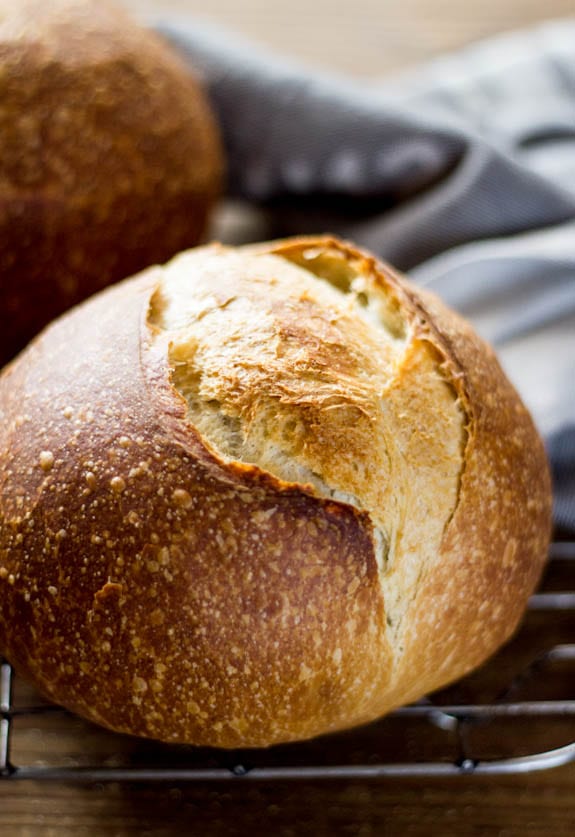
Think you can’t bake fresh, homemade sourdough bread? This easy sourdough bread recipe—trusted by beginner bakers for over a decade—shows you how, step-by-step. No yeast. No kneading. Just simple ingredients and 10 minutes hands on time for soft, crisp sourdough bread at home.
Reader review
“I have tried MULTIPLE sourdough bread recipes and this one has been the very first to make a successful (fully risen) loaf of bread. I am relatively new to sourdough and for some reason, the other recipes just didn’t produce good bread. These instructions and detailed explanations really make a huge difference to someone who is new to the world of sourdough.”
—Savannah
To anyone who thinks their sourdough bread isn’t good enough, I get it. Back in 2013, I set a goal: bake more bread. I tested, failed, succeeded (and tried again). What began with an easy no-knead artisan loaf eventually led to the holy grail: homemade sourdough bread.
Admittedly, I had beginner’s luck. My early scratch-made loaves were light, plump and airy, everything you want sourdough to be! And then? Down the rabbit hole I went: Hydration? Baker’s %? Proofing times?
Now, with 13+ years baking experience and a professional culinary background, I know what holds people back: the confusion, hesitation, comparison. I teach from a straight forward practical perspective because sourdough is not just a written recipe; it’s an understanding.
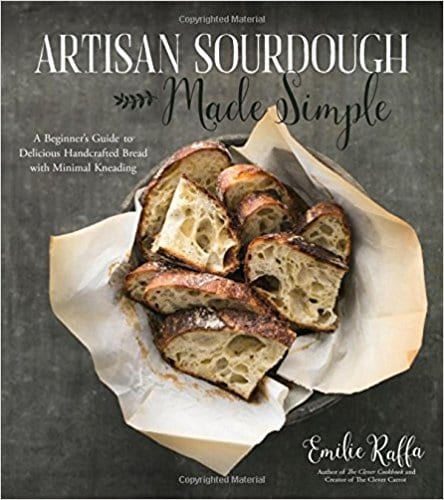
This sourdough bread recipe has been the most popular on my blog for over a decade- millions of views and the inspiration behind my bestselling book Artisan Sourdough Made Simple, a deeper dive into sourdough bread recipes. So, if you’re at the end of your rope (and just want to make good bread), you’ve made it. Welcome to the journey.
What Sets My Recipe Apart:
- One bowl, 5 ingredients
- Olive oil = soft, plush crumb & crisp, golden crust
- No stand mixer
- No bread machine
- Flexible baker’s schedule
- Personalized support in the comments
But before we make bread, let’s discuss what drives it: your sourdough starter. Once you understand what it is, and how it works, your path will be crystal clear. Have questions? Ask in the comment section. I respond with personalized help.
Where To Get A Sourdough Starter
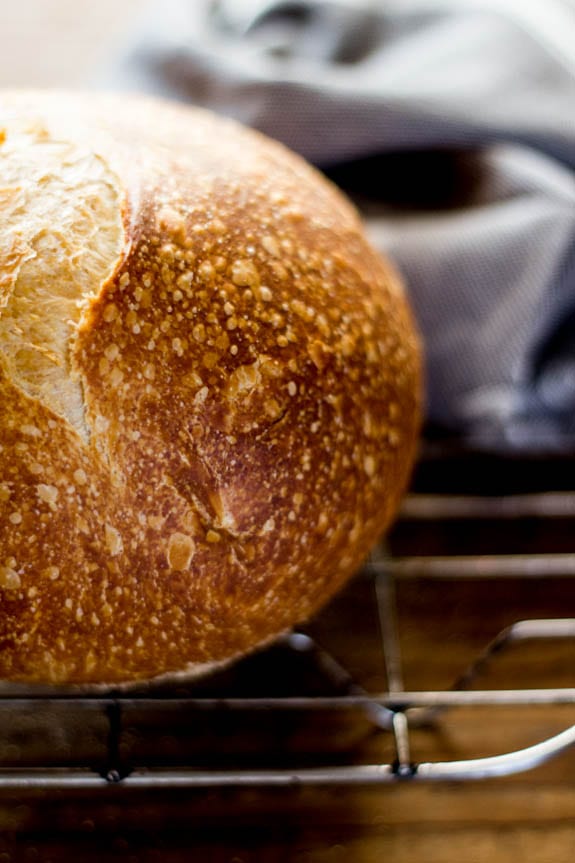
A sourdough starter is a live fermented culture of flour and water. It naturally leavens bread dough without commercial yeast. There are all different types: homemade, purchased or gifted (ask a fellow baker!). I use two different starters at home: one I made myself, and a vibrant Australian starter gifted from my friend Celia.
But is doesn’t stop there. Once your have your own sourdough starter, it must be kept alive and well with regular feedings to maintain its rising power. Sourdough is not static; it’s a living process. Here’s my personal feeding schedule which you can adapt to suit your style:
How To Feed Sourdough Starter
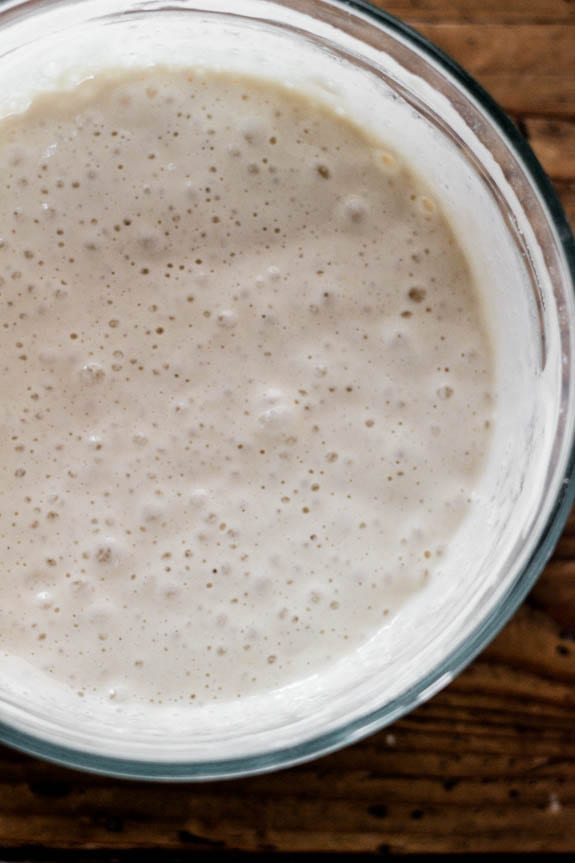
- Remove and discard half of your sourdough starter
- Feed what’s left in the jar with equal parts flour and water by weight (1:1:1 feeding ratio).
- Let rise at room temperature (loosely covered or airtight) ideally 75+F until bubbly, active and double in size (2-12 hrs). I use this sourdough starter jar.
Recommended Reading: Feeding Sourdough Starter: My Best Tips & Tricks
When Is Sourdough Starter Ready To Use?
Your fed starter is ready to use when it’s bubbly, active, and doubles in size. This can take 2-12 hours or more, depending on the temperature of your kitchen and the strength of your starter. My best advice? Be patient, plan ahead, and make sure your starter is in a warm place (ideally 75 F). The process is not instant.
Float Test: If you’re unsure whether your starter is ready, drop 1 tsp at peak height into a glass of water. If it floats to the top it’s ready to use. If it sinks, feed your starter again.
Storing Your Starter
Most people don’t realize that your feeding schedule is directly related to your baking preferences. If you only bake a few times a month, store your starter in the refrigerator and feed it once a week. If you bake often, store it at room temperature and feed it once a day.
How To Make Sourdough Bread: Step-By-Step Recipe
To Start: Feed your starter until it’s bubbly and active first (remember this can take anywhere from 2-12 hours, so plan ahead). Then mix the dough. Detailed instructions follow below. For a printable recipe & sample baking schedule, scroll to the end.
Step 1: Mix The Dough
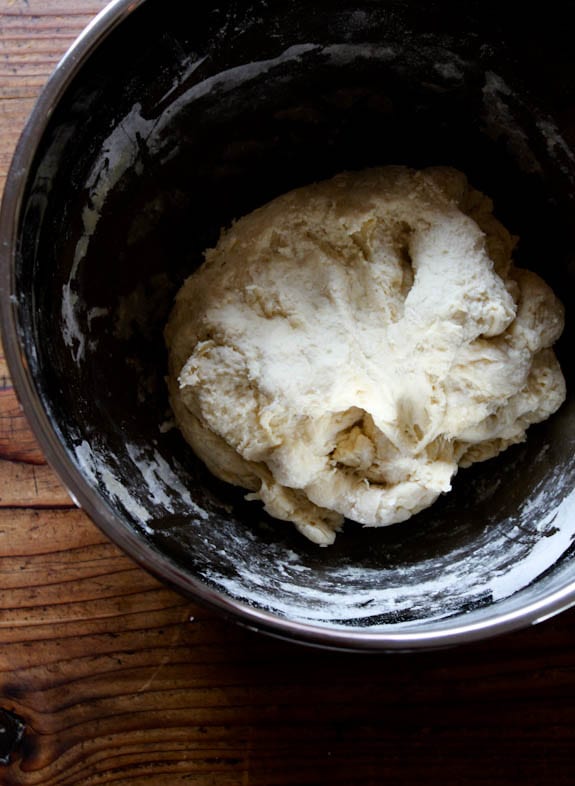
- Add water, sourdough starter, and olive oil to a large bowl. Whisk well to combine, making sure the starter is fully dissolved. Then add the bread flour and salt. Continue mixing (I use a fork at this point) until the flour is absorbed. The dough will feel rough and shaggy, which is normal.
- Cover the bowl and let rest (autolyse) for 30 minutes to 1 hour at room temperature. Then shape the dough into a rough ball. It doesn’t have to look perfect.
Tip: Weigh your ingredients with a digital kitchen scale. Measuring cups vary in size and don’t account for ingredient density which can lead to dry, dense, or overly sticky dough.
Why Autolyse Matters
Autolyse is the first rest after mixing bread dough. It jumpstarts gluten development without kneading, making the dough stronger, stretchier, and easier to shape I never skip it. For this recipe, rest for at least 30-45 minutes (or when time permits, I’ll do 1 hour for an even softer, more manageable dough). To learn more about common sourdough bread terms read my Sourdough Baking Glossary. I’ve included the only 12 you need to know!
A Note on Salt: Some bakers only add salt after autolyse, believing it slows down gluten development. I’ve followed that method for years, but now mix everything at once. It’s simpler, faster, and still makes excellent loaves (plus, you won’t forget to add the salt later on!). I’ll leave the choice up to you.
Want To Add Inclusions?
Mix in flavor additions after autolyse, when the dough is softer and more pliable. This is another reason not to skip the autolyse step. Alternatively, inclusions can be added during the first stretch and fold.
A few ideas:
- Roasted garlic
- Chopped olives
- Fresh or dried herbs (rosemary, thyme)
- Seed or nuts
- Cheese
- Dried fruit (raisins, cranberries)
- Jalapeños

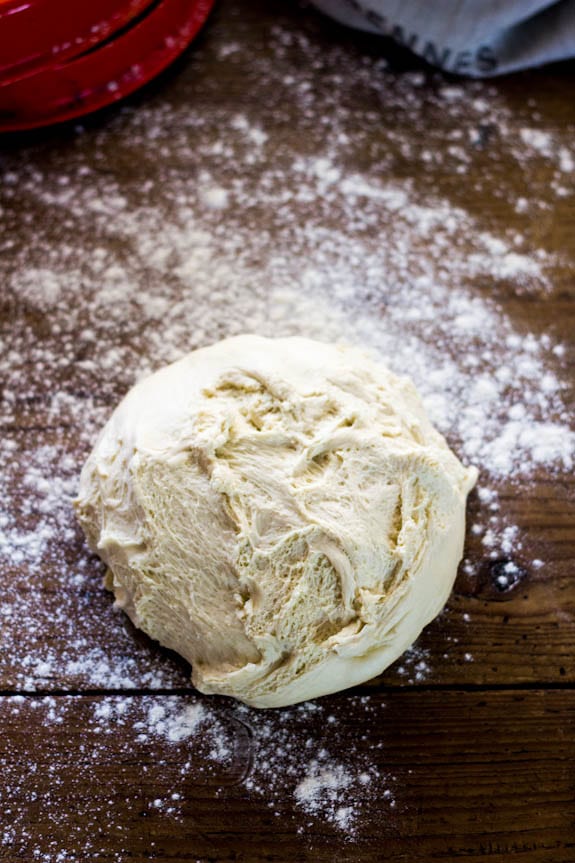
Step 2: Bulk Rise
Now the dough is ready to rise. Cover the bowl with lightly oiled plastic wrap so the dough doesn’t stick to the top, or transfer to a dough tub. Let rise at room temperature, about 68-70 F (20-21 C).
How Long Does It Take For Sourdough Bread To Rise?
The dough is ready when it’s puffy, slightly domed and nearly double in size. This can take 3-12 hours depending on room temperature, the quantity and strength of your sourdough starter, and seasonal conditions. All variables work together. See my example below:
For My Sourdough Bread Recipe (with ~150 g sourdough starter):
- In the summer: ~2-4 hours @ 80 F (26 C)
- In the winter: ~10-12 hours @ 68 F (20 C)
Diving Deeper: Temperature controls time. This is where I see the majority of beginner baker’s make mistakes- the temperature is overlooked. Sourdough takes longer to rise than yeasted bread, and it’s highly dependent on your specific environment. My kitchen might be 75 F. Yours? 68 F. Watch the dough, not the clock. For more details and troubleshooting read my companion article: Why Won’t My Sourdough Bread Rise?
Stretch And Fold The Dough (Optional Step)
About 30 minutes into the bulk rise, you can perform a series of “stretch & folds” to strengthen the bread dough. This step is not mandatory; however it has the potential to add height and structure to the finished loaf. Check out my how to stretch and fold sourdough guide to learn more, step-by-step. It’s easy and fun to do!
Step 3: Divide & Shape The Dough
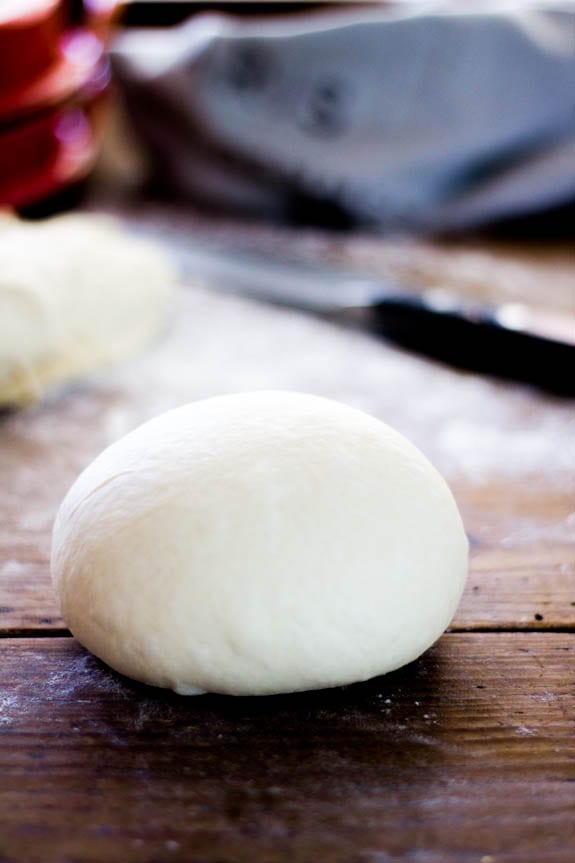
At this stage, remove the dough onto a lightly floured surface. For two smaller loaves, divide the dough in half. For a single, standard size loaf leave it whole.
How To Shape A Round Sourdough Boule (Loaf)
Starting at the top of the dough, fold it over toward the center. Give it a slight turn, and then fold over the next section of dough. Repeat until you have come full circle to form a tight round. This creates surface tension for better oven spring. You can also try the envelope-style fold.
Tip: I used to get so nervous when shaping bread dough because you only had one chance to get it right. So intuitively, I would practice using a piece of Play-Doh or with a kitchen towel to go through the motions at my own pace.
Step 4: Choose The Right Baking Pot
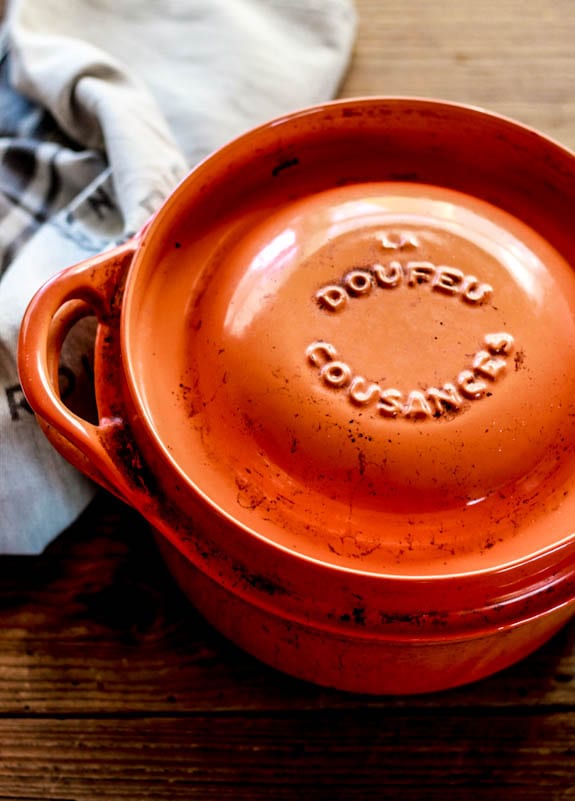
If you want bakery-style results, bake sourdough bread in a Dutch oven. Why? Pots trap steam which is the secret to homemade sourdough with bold rise and golden crust. Without steam, the crust will set too fast casing the loaf to harden, split or bake unevenly. I’ve been there and it’s not pretty.
What If You Don’t Have A Dutch Oven?
You’ll need another oven-safe pot with a lid to create steam. It must be able to withstand up to 450 F/232 C (lid and handles included).
A few options:
- Enamel roasting pan with lid (or sheet pan to cover)
- Cast iron skillet with upside down roasting pan to cover
- Covered sandwich loaf pans
- Clay Baker or Romertopf (soaked first)
- Preheated baking stone w/ metal bowl to cover
Here’s what happened to me: I tried the “no pot” baking route in the past, using just about everything from pizza stones, to baking sheets with no luck! The crust always hardened too quickly. Then I tried various steaming methods to remedy this (e.g. ice cubes in a hot pan, spraying my loaves with water) but my personal oven could not retain enough moisture. The environment was always too dry. For me, using a Dutch oven was the only reliable solution that worked with consistent results.
Step 5: Second Rise (Proofing)
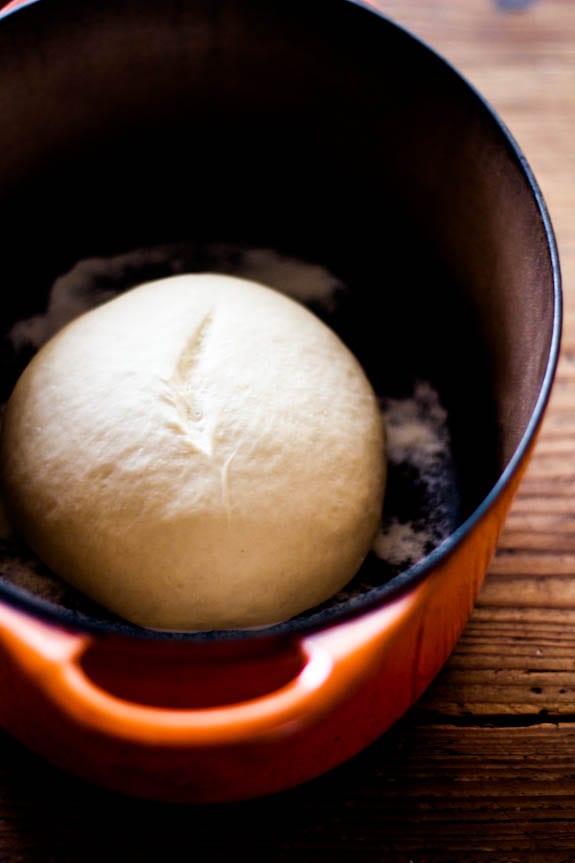
- After shaping, your dough needs to rise again. To do so, generously dust the bottom of your Dutch oven with cornmeal, or line with non-stick parchment paper to prevent sticking. Gently place the dough inside (see tip below)
- Let the dough rise for 30 minutes to 1 hour, or until it’s visibly puffy and no longer feels dense. It doesn’t need to double in size. While the dough proofs, preheat your oven to 450 F (232 C).
Tip: Want better shape and structure? Proof the dough in a floured, cloth-lined, 8-inch bowl or banneton instead of directly in the Dutch oven. This will contain the dough and hold its shape without spreading. Bread flour or rice flour is fine for dusting.
Step 6: Score The Dough
- Right before the dough goes into the oven, make a shallow slash down the center of the dough, about 2-3 inches long. Use a small serrated knife, sharp knife or bread lame. This lets the steam escape, and allows the bread to “bloom” or expand in the oven.
- Admittedly, this step is a bit nerve racking, so I don’t want to gloss over it. Be quick and confident. I’ll share what my sourdough mentor told me: “Slash with panache!”
Step 7: Bake The Bread
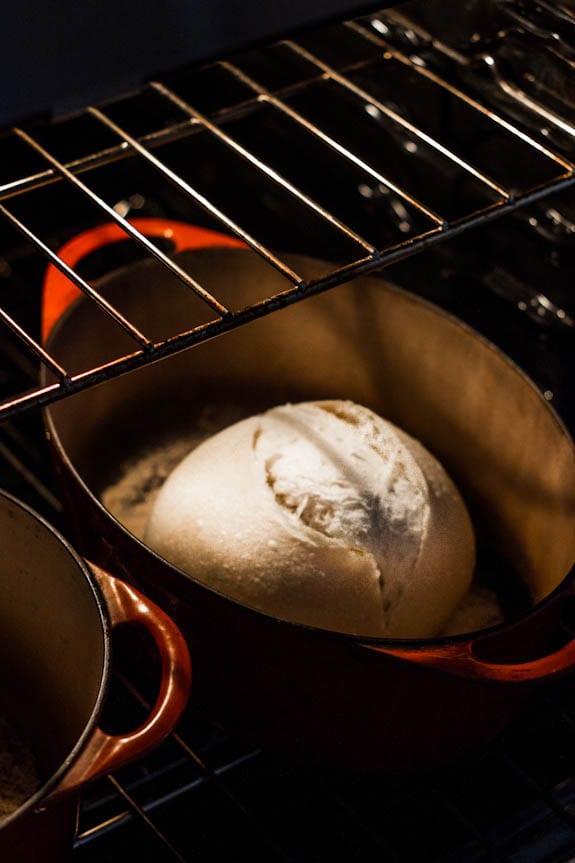
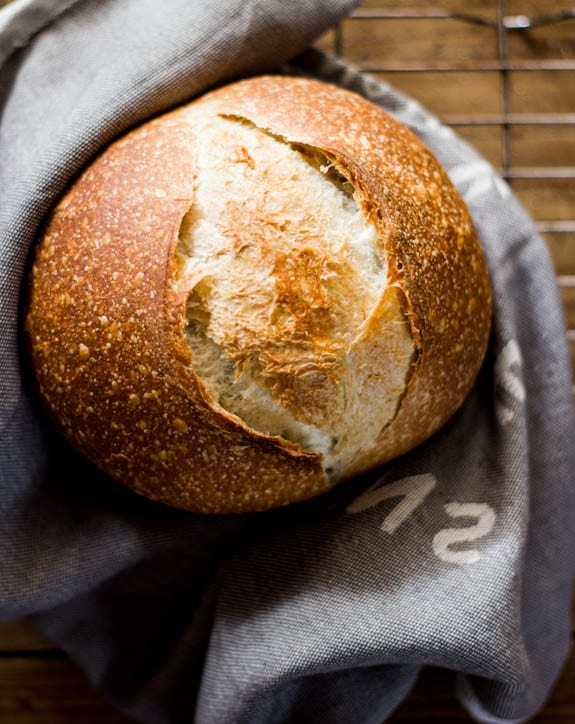
You’re at the finish line now! Bake on the center rack (lid on) for 20 minutes. Then remove the lid. Your bread will look pale and slightly shiny. Then finish baking (uncovered) for 40 minutes or until the crust is deep golden brown. The internal temperature should be 205-210 F/96-98 C.
Tip: During the last 10 minutes of baking, crack open the oven door to let the moisture out. This creates a crispier crust. Or, remove the bread from the hot Dutch oven and bake directly on the oven rack. The latter creates the crispiest finish.
Step 8: Cool & Slice
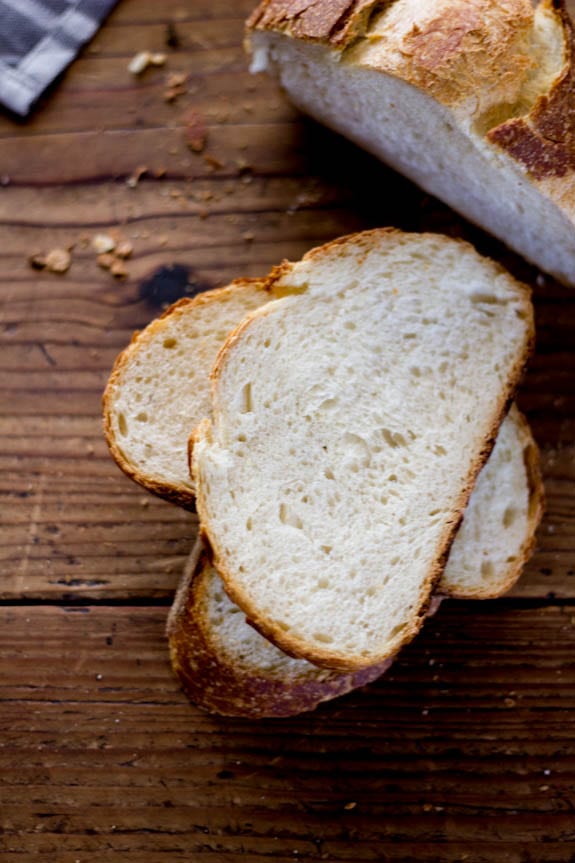
Cool the bread on a wire rack for at least 1 hour before slicing. Be patient! If you cut into it too soon, the texture will be damp and gummy. Life’s too short for sub par bread.
Final Thoughts
There are a gazillion sourdough bread recipes out there. No two loaves look alike. Start with this guide, master the basics and then branch out: try my golden sourdough focaccia recipe, this easy sourdough sandwich bread, or my one-bowl sourdough pancakes for breakfast! Once you have a few loaves under your belt, the process will become an imminent rhythm and you’ll become a sourdough pro in no time.
Sourdough Baking Schedule
- Friday Evening: Feed your starter, cover the jar, and leave it on the counter overnight. If you keep your starter in the fridge, it might need two feedings to perk back up (feed it in the morning & in the evening).
- Saturday Morning: Check your starter: if it’s alive and bubbling, you can make the dough to rise during the day. Or, feed it again in the afternoon to make the dough in the evening for an overnight rise. Remember to use the float test mentioned above to make sure your starter is ready to use.
- Saturday Morning/Evening (or whenever your starter is ready): Make the dough. Leave on the counter to bulk rise at room temperature. In the summer, if your dough rises quickly and you’re not ready to bake, cover the whole bowl with lightly oiled wrap and chill until ready to use.
- Sunday Morning: cut and shape the dough. Place in Dutch oven for second rise. Slash. Bake. Cool. Eat.
By signing up, you agree to receive emails from The Clever Carrot. Unsubscribe at any time.

Sourdough Bread: A Beginner’s Guide
- Prep Time: 13 hours
- Cook Time: 1 hour
- Total Time: 14 hours
- Yield: 1 loaf 1x
- Category: Sourdough Bread Recipes
- Method: Oven-Baked
- Cuisine: American
- Diet: Vegan
Description
New to sourdough? My easy beginner sourdough bread recipe makes the best artisan-style loaf at home with just 5 simple ingredients: bread flour, active sourdough starter, water, salt and olive oil—my signature addition—known for creating a light, plush crumb and a crisp golden crust. Follow my clear, step-by-step instructions and video guidance to bake fresh sourdough bread with confidence (even on your first try!).
Ingredients
- 150g bubbly, active sourdough starter
- 250g warm water (see Note 2)
- 25g olive oil
- 500g bread flour (not all purpose flour)
- 10g fine sea salt
- fine ground cornmeal or non-stick parchment paper
Notes, Tips & Equipment
- Weigh your ingredients with a digital scale for best results
- For a more soft and pliable dough, increase the water up to 300 g- 325 g total. Use a floured, cloth-lined bowl or proofing basket (instead of the Dutch oven) for the second rise.
- You will need a 5 1/2 or 6 quart Dutch oven for baking
- This recipe was tested with King Arthur Bread Flour, Gold Medal Bread Flour, Pillsbury Bread Flour
Instructions
Make The Dough
In a large bowl, add the sourdough starter, water and olive oil. Mix with a fork to combine, then add the flour and salt. Continue mixing until the dough becomes stiff, then squish it together with your hands to incorporate all the flour. The dough will be rough and shaggy.
Cover the bowl with plastic wrap, reusable wrap, or very damp kitchen towel. Let rest (autolyse) for 30 minutes to 1 hour.
After resting, return to the bowl and work the dough into a rough ball, about 15 seconds.
Bulk Rise (First Rise or Bulk Fermentation)
Cover the bowl with lightly oiled plastic wrap. Alternatively, transfer the dough to a high-sided dough tub. Let it rise in a warm place, ideally 70-75 F. The dough is ready when it no longer looks dense and has almost doubled in size.
Note: The bulk rise time will be different for everyone. For example, in the summer, expect ~2-4 hours @ 80 F/ 26 C. In the winter, ~10-12 hours @ 68º F/ 20º C. Watch the dough and not the clock.
Optional Step: Stretch & Fold The Dough
During the bulk fermentation, you can do a series of ‘stretch & folds’ to strengthen the dough. Start 30-45 minutes in: lift a portion of the dough, stretch it upwards, and fold it over itself. Rotate the bowl ¼ turn and repeat until you’ve come full circle (1 set). Do 1-2 additional sets, spaced ~1 hour apart. Click here for a step-by-step video tutorial.
Note: Dough made with 250g water will feel stiffer; 300-325g water will be more stretchy and elastic. Let it rest longer in between sets if it resists stretching.
Shape The Dough
Remove the dough onto a lightly floured surface. Starting at the top, fold the dough over toward the center. Turn slightly, and then fold over the next section. Repeat until you have come full circle. Flip the dough over, seam side down. Gently cup the sides and rotate in a circular motion to tighten the shape. The goal is to build surface tension to create a tight ball (too much flour will cause the dough to slide around).
Second Rise
Now the dough needs to rise again. If you’ve used 250g water, you can do a free-form second rise in the Dutch oven (if not, see note below). Line the pot with a piece of parchment paper (this is what I do) or coat with cornmeal. Place the dough inside, cover and let rise for about 30 minutes to 1 hour. It’s ready when slightly puffy, but not double in size. Preheat your oven to 450 F/ 232 C.
Note: If your dough contains more than 250g water, skip the free-from rise. Your dough will spread. Instead, use a floured, cloth-lined, proofing basket to help hold its shape.
Score The Dough
Right before baking, make a shallow 2-3 inch slash (or longer) in the center of the dough using a bread lame, razor blade, or small sharp knife. The cut should be ~1/4-inch deep.
Bake The Dough
Place the bread in the oven on the center rack (lid on) and reduce the temperature to 400 F/ 204 C. Bake for 20 minutes, then remove the lid, and continue to bake (uncovered) for an another 40 minutes, until deep, golden brown. All ovens are different; feel free to make minimal adjustments to these temperatures.
Check for doneness with a digital thermometer: 205-210 F/ 96-98 C for sourdough.
Remove the bread from the hot Dutch oven, and cool on a wire rack for at least an hour before slicing.


Comments
Candace says
Can you use avocado oil in the same quantities as the olive oil? Will it work the same?
Emilie Raffa says
Hi there! I haven’t tried it, but a few bakers in this space have done so with success. The quantities remain the same.
Stacy says
I just purchased your book and I am making my first loaf. You mention cutting the loaf in half, but you don’t mention the size of the baking vessel that should be used if you are making two loaves. Should the vessels be smaller? Thank you for your wonderful book and instructions!
Emilie Raffa says
Thank you so much, Stacy! 🥰 For half size loaves, the vessels don’t have to be smaller unless you already have them on hand (3 1/2 or 4 quart). Using a standard 5 quart pot, the one you would use for regular size loaves, is fine.
Sallie Wyatt says
Can I use a gluten free flour?
Emilie Raffa says
Hi Sallie! Unfortunately, no. Gluten free bread baking is very specific. You can’t do an even swap. To start, you’ll need a GF sourdough starter. Then, a GF sourdough bread recipe.
Jill Markworth says
Will this recipe work at high altitude? I’m about 7200′ in Colorado. My starter is ready to be used and your recipe sounds a bit less intimidating than others for my first loaf! So excited to try. Also can I bake it on a pizza stone?
Emilie Raffa says
Ooo… high altitude baking! So, I wan’t to say yes, it will work. But you and I both know there are variables with high altitude baking beyond our control. It’s a bit of trial and error with sourdough. What I would say is this: have a go with the recipe as written to establish a baseline for reference. Take notes. Record the temperature. Weigh your ingredients. Then, make changes as needed to accommodate the altitude. Also: for bet results, bake in a covered pot, not uncovered on a pizza stone to start (and then let me know how it goes!).
Rose Barbour says
I I found working with sourdough in high altitude that if you add like a product called vital wheat gluten it seems to help with the rise of the dough. I’m not quite as high as 7200 feet but I’m at 2000 feet. My experience is coming from sea level to altitude when baking sourdough and let me tell you I’ve been through a lot. I had more ammunition a.k.a. failed attempts until I almost perfected it. I found that the flower needs extra protein in order for it to rise. You can buy this product on Amazon so far so good good luck in your adventures and like it was mentioned trial and erro
Trisha Appeldorn says
I made this today turned out PERFECT thank you! Making more tomorrow!
Emilie Raffa says
Excellent, thank you so much Trisha! I appreciate your feedback 🥰
Sara says
What if my dough takes more than 12+ hours to double in size? Can I have it rise overnight? If I do, will I need to put it in the refrigerator?
Emilie Raffa says
Yes, your dough can rise overnight. Going over 12+ hours is fine, if the dough needs it. You can either keep it on the counter, assuming your current ambient temperature is 65-68 F. Or, cover the dough with lightly oiled plastic wrap and store overnight in the fridge. It won’t rise much in the fridge; give it time at room temperature the following day if needed.
Aaron Smith says
Can I add cheddar and jalapeños to this recipe as is?
Emilie Raffa says
Absolutely. Go ahead and add them after the first rest (autolyse). They will be much easier to incorporate.
Aaron Smith says
Ive made this bread several times now and it is wonderful. Question: Could I add cheddar and jalapeños to this recipe during the initial folding in as an alternative? Would it interfere with the 8-12 hour rise before baking?
Emilie Raffa says
Yes. You could add the inclusions during the folding process instead of doing so after the first rest. It depends on how you want to do it, and/or if your schedule permits. Totally fine. As for the rise, anytime you add inclusions especially bulky ones, the dough will look different compared to a plain dough. They will slow down the rise a bit, but fermentation is still happening. Watch the dough and not the clock. Hope this helps!
Diane says
Good evening! I’m super happy to find your site and can’t wait to get started!
I just purchased 25# of Einkorn All purpose flour. It is ground to a fine flour with a little less than half of the bran and germ removed.
I bought this bc I’ve long read that ppl who can not tolerate wheat can actually tolerate einkorn as it is an ancient grain and the gluten level is much lower.
I’m dearly hoping this flour will work with your bread recipes!
Have you any experience with einkorn?
Ps-I will use the flour you suggested to make my starter and then plan to use einkorn to feed the starter.
Emilie Raffa says
Hi there! Love Einkorn. It’s a lovely flour. As you already know, it’s not the same as modern wheat. What this means in bread baking, is that you can’t really swap bread flour for Einkorn without making additional adjustments to the original bread recipe. Trial and error is involved! Jovial has a quick reference guide, which I’ll link below for a few quick tips. This also means your starter will be slightly different too. What has been your experience so far?
https://jovialfoods.com/einkorn-baking-tips/
Adrianne says
This was my third or fourth attempt at making sourdough bread. My last was during COVID, and since many things were hard to come by I had the task of making my own starter which in retrospect was probably not very successful (I should have stopped there). This time around I was gifted a very good starter, and although I would do some things differently when I bake again this week, this bread was fairly decent. Some things I did wrong: I put the dough in one of those battendon (sp?) thingys for the final rise, and when I took it out to transfer to the dutch oven it defininetly deflated some. Then I took what I considered to be a sharp knife to score the top, but it wasn’t sharp enough and the dough got pushed down further. So next time around, I will put it in the vessel that I wish to bake in for the final rise and purchase a razor blade tool to score the top. Stay tunned ….
Emilie Raffa says
Hi Adrianne! Sourdough definitely takes practice. You will learn a lot. With regards to the second rise, sometimes the dough will deflate a bit depending on how much water is in the dough and/or how long it rose for. So for next time, when doing a free form second rise in your baking vessel, make sure to use the smaller amount of water recommended in this recipe (I’ve given a range) otherwise the dough will spread out. You’ll also find that using a lower-hydration dough will be easier to score since the texture is more firm to begin with. Your extra sharp blade should work nicely.
Wendy says
During the autolyze stage, I realized I forgot to add the olive oil. I added it about 20 minutes in and worked the dough with my hands until it was fully incorporated and no longer oily feeling. Will adding the oil late and then working it in affect how I should do any of the next steps?
Emilie Raffa says
Hi there! It really depends- tough to say without seeing the dough! How did it come out?
Social Engagement says
Hey there! Trust in your inner power. You hold the courage to overcome any challenge.
Kayla Jordal says
If i double the recipe for a bigger loaf, how long do i bake with lid on and without?
Lorraine says
Hi, I have been using your recipe with great results for some time now. With family home I would like to make a larger loaf. I have tried making the normal size in my new loaf tin shaped Dutch oven and it is great but the oven is big and the loaf does not fill it as I hoped. I want to double the size so my questions are:
Do I double all ingredient quantities
Water, oil, flour, starter and salt?
How long will the cook time be? Will I still be able to remove lid after 20 minutes or should I leave on longer and what do you think total cook time will be?
Thanks I’m anticipation of your reply!
Steph says
Hi!! I accidentally mixed the starter, water, oil, flour, and salt all together at once (i just got so excited once my starter was ready). Will it be okay??
Kayla Jordal says
Let me know what you find out. I have doubled recipe for two separate loaves, but would love to make a big loaf with double ingredients. Just curious on bake time with lid on and off.
Gordon & Kathy Vogel says
If I leave my sourdough starter in the fridge, should I take it out late the night before. Then feed the starter the next morning. Take out the required amount to make bread when it rises to the max or wait till it drops before I take out what I need.
Miranda says
Thank you for this amazing and detailed recipe! My bread turned out delicious! This will be my go to recipe for sourdough. The bread turned out soft and fluffy with a crisp but soft crust. Thank you!
Lisa says
This was the easiest and best tasting loaf that I have made. I have been on my sour dough journey for just a year now and have struggled. The crumb was outstanding and the flavor…!! It made me feel like I could really make bread
Michelle says
Hi Everyone, first time sourdough starter here and having some issues. i’m already on day 11 and i still get the houch, it is warm enough as i have moved it around the house, by the fireplace, in the oven, using warm water but don’t ever see it rise. I measure it properly with a scale, consistently feed it morning and night, but don’t ever catch the rise to see if it does. it does smell slightly better than before but it hasn’t risen like it did on day 2 and 3. so i’m not sure how much more i need to feed it. the instructions to this starter seem easy but i just don’t know if these little bubbles are enough because i haven’t seen the dough rise after day 3. help!
Emily says
Hi, I just saw your question, I’m not sure if it’s still relevant. I’m a beginner and I also ran into the same problem. What I ended up doing was feeding the starter from peak to peak with the same ratio of starter to flour to water each time. For instance 20g starter + 20g flour (I use 10g rye and 10g bread flour. But I think any flour is okay)+20g water (~90°). Then wait for it to double in size. It doesn’t matter how long it takes, just wait for it to double! That’s the hardest part, waiting. Once it peaks or doubles, dump half of it, so you’ll have 30 g left. To that 30g of starter add 30 g of flour and 30 g of water, wait for that to double or peak, might take 6-12 hours, but wait!
When that does double, take your now 90 g of starter and discard a large amount, I brought mine back down to 30g starter+30g flour+30g water Keep on discarding like this feeding peak to peak and soon you will see starter rise times of about 4-6 hours. When it finally happens it’s a great feeling. I did this and within 2 days I had a ridiculously strong starter. Good luck! Hope something works for you, it was super frustrating 😅 but don’t quit!
Emily says
Quick question- if I want to bulk ferment in a Cambro container, do I flatten the dough down to level it so I can read the volume measurements instead of leaving it in a ball? Same thing after the stretch & folds. I don’t want to mess up the rise. Thanks!
Annie says
Could you give a time line to start this process to have a loaf for breakfast please?
leslie kilcoyne says
Im so bummed…..my bread came out hard as a rock……what did i do wrong?
Courtney Regules says
What are the measurements if I only use 50g of starter?
Katie M says
Hi! I made the mistake of making my dough later in the day and it’ll be ready in the middle of the night… can I cold proof the dough overnight and then do the second rise in the morning after bringing the dough back to room temp?
Emilie Raffa says
Yes, absolutely. Cold proof in the fridge. In the morning, or when you’re ready to continue, assess the dough: does it need more time to rise? Do so at room temperature first, before starting the second rise.
Esther says
Hi Emilie,
I recently purchased your Artisan Sourdough Book, and I absolutely love it! Your guidance has made baking so much more enjoyable. I do have a quick question, though: If I want to increase the amount of sourdough starter, should I adjust the amounts of water and flour also?
Thank you so much for your help, and for creating such an amazing resource!
Emilie Raffa says
Hi Esther! Thank you so much, I appreciate your support. So yes, generally speaking, if you increase the amount of starter in a given recipe, you’ll need to adjust the flour and water to compensate. There are always exceptions to the rule, but this is enough to start with. Also, increasing the starter will increase your rise time if the temperature is on the warm side. Keep your eye on the dough, not the clock.
Cassi says
If I cut the dough after the rise will the 2 loaves be appropriate for an 8 or 9 inch loaf pan? Thanks
Emilie Raffa says
Hi there! I haven’t tested this myself, but I do think it would work.
Courtney Regules says
What is the wrap for the “lightly oiled wrap” I’ve never done this and I’m confused
Emilie Raffa says
This can be plastic wrap (most common) or a re-usable wrap of your choice (such as beeswax wraps).
Linda Erickson says
my first using you for guidance.. I used the 300G of H2O… all went smoothly until putting the nicely formed ball of dough into the proofing basket… Now, 2.5 hours later, no nice height appearing.. the oven in preheated… the parchment paper is ready and the Dutch Oven is ready to transfer the dough into it.. I am thinking this will be a ‘frisbee’ when cooked..
“Note: The “free form” second rise in the pot works best with a dough made with 250 g of water. It won’t spread. If your dough contains more water, skip the free from rise. You’ll need to do the second rise in a cloth-lined, floured proofing basket instead. The basket will hold its shape to prevent spreading.” * I have a half sized round basket and the larger round basket.. (also, a nice oval basket… guessing to be used on a preheated cooky sheet??). I’m looking forward to your response.. Thanks.. Linda
Emilie Raffa says
Hi Linda! If I’m understanding your question correctly, you’d like guidance as to why your dough is not holding its shape (spreading) in addition to not gaining height while doing the second rise in the proofing basket? The first question, is what size is your proofing basket? Too large and/or wide will give the illusion that the dough is not puffing up, while in fact it is. As for spreading, this could be due to multiple things including shaping, over proofed dough, flour type/brand, too long of a second rise etc. Let’s start with the basket size and if there are additional changes you’ve made to the process, please let me know.
Traci Knutson says
I have to say I’m very new on my sourdough journey. You’re recipe saved me and gave me hope. My first loaf was a huge hit! It was so beautiful I didnt want to eat it! Thank you for keeping it so simple!
Emilie Raffa says
Excellent! Thank you so much for sharing your feedback Traci 🥰
Esmeralda says
I made sourdough bread for the first time today. I have made sourdough cinnamon rolls and pancakes. Enjoy working with the starter but my problem is, I have a pint size glass mason jar for discard and a quart size mason jar for starter. I find that to be way too much for a couple of elderly. But I can’t seem to down size the starter.
I don’t want to waste the starter. What do you suggest to help me have a smaller starter.
Emilie Raffa says
Yes, absolutely. Keep your entire jar of starter in the fridge. When ready to make dough, remove and discard a small portion off the very top if your starter is discolored, liquidy or smelly. Use your judgement here. That’s step 1. Then, only take out what you’ll need for your recipe and feed it in a separate bowl to become active. For example, if a recipe calls for 75 g active starter, take out 25 g of dormant starter from the fridge and feed it separately with 25 g flour + 25 g of water. In some cases you might have a bit of sourdough starter leftover, but this method allows you more control over any excess. Don’t forget to feed your fridge starter too, to keep it vibrant and strong. I just feed it with the amount I removed, so in the example above, roughly 15 g flour + 15 g water.
Karen says
Followed your instructions and managed to reinvigorate my starter that had been dormant for years. Have now tried the beginners sourdough recipe twice and also the wholemeal sourdough (made with wheat, spelt and wholemeal flours), with perfect results every time. Thanks for providing easy to follow recipes and instructions!
Emilie Raffa says
This is so great to hear Karen! Thank you for taking the time to share your experience with us! 🥰
Debra Paulson says
I have your cookbook and have made your Sunday morning fruit and nut toast numerous times. I made in with all whole wheat using half kamut and half hard white wheat. It rose beautifully. I did add 10 grams vital wheat gluten and I use the water I drain from soaking my fruit as part of the total water. I then left out the sugar. It is great toasted.
Emilie Raffa says
Oooo, that sounds delicious! Yum! I haven’t made that recipe in a while and now I’m totally inspired to do so. Thanks for the tip about the vital wheat gluten too.
Jennifer Walters says
Can I put this starter in a Cuisnart bread machine?
Emilie Raffa says
Jennifer, I believe it will come out more like a sandwich loaf rather that a round boule as pictured above. If you’re ok with that, then I don’t see why not! Just double check the manufacturer’s instructions for anything extra you might need to know.
Jackie says
I have been making sourdough bread for many years and my recipe is very close to yours. You have obvious worked hard to make the perfect loaf. I bow to you. By the way, my starter Has been going for 152 years.
I have one important addition to add to your blog. Please don’t take offense. For many years, I stored my bread in a Ziploc bag. The next day it was just a little off and I had to toast it to make it taste better. I finally figured out that it was the plastic and I now store it in Bread bags that I ordered online. It makes all the difference.
Emilie Raffa says
Oh my goodness, Jackie, you are so kind. Really, thank you. I can’t believe your starter is 152 yrs. old! Where did you get it from? Re: the ziplock, no offense taken at all. In fact, this can absolutely happen. What brand bread bags do you use? Some are notably different than others- I’m curious. Thanks!
Dianasaurus says
I bought the book and so glad I did. It wasn’t my first book on sourdough, nor the last but I think it has helped me the most because of the way it is written and the instructions provided.
Emilie Raffa says
This is so great to hear, thank you 🥰
Cara says
first time i made this recipe, my bread turned out perfect; it was last year during the summer… i tried again about a week ago and used right at 300 g of water and it was so dry and stretch and folds seemed almost impossible and i forgot to add the salt… i went back and added the salt and did my second rise in the fridge, overnight and baked the next morning. it turned out beautifully and rose so well during baking. i waited an hour before cutting but it was so dense inside and had no “holes” in it but tasted exactly how it was supposed to… can you help me understand why the dough was so dry and stretch and folds were so difficult and why my loaf was so dense? thanks so much! i plan on trying again today or tomorrow!
Emilie Raffa says
Cara, you mentioned something key here: the seasons. So last summer, your bread came out perfect, just the way you wanted. Now it’s winter and the bread is different. This is actually very, very normal (albeit frustrating). Temperature plays a key role in how the flour absorbs the liquid, which can change the texture of the dough and the final bread. To quickly summarize: in the summer, the dough will be softer, whereas in the winter is will be more stiff. Moving forward, first think back to see if you changed anything. For example, are you using a different brand of bread flour now? Weighing or measuring your ingredients? You’ll want to keep these variables constant. Then, I’d recommend using a bit more water in your initial dough mix, warm water actually, around 90 F. Rise the dough in a warm spot (75 F+) and see how it goes. Your stretch and folds should be easier to do with these changes; if not allow for more resting time in between sets. Take note of how the bread comes out after experimenting with these suggestions. It will take some trial and error!
Donna says
Love this recipe! I’m new to sourdough, I line my Dutch oven with parchment, but bottom gets very brown, I just cut it off, but any suggestions? Would cornmeal and parchment together help?
Emilie Raffa says
Welcome Donna! Here’s what I recommend: place a baking sheet on the rack directly below (not underneath) your Dutch oven. This will help shield the heat from the bottom up during baking. A combination of cornmeal and parchment might help; however I think the issue here is heat.
Bianca says
I did your sourdough starter and, with it, made my first sourdough loaf! These recipes are hands down the best recipes I’ve found! I scoured the web looking for a good recipe (with all failed attempts). My husband and toddler love the sourdough bread, and I will be making this for a long time to come! Thanks so much!
Emilie Raffa says
I love this Bianca, thank you so much! I’m super thrilled you are having success (and fun!) with the recipes. 🥰
Dare Edmiston says
Recipe is easy to follow for a sourdough beginner! Bread turned out wonderful!
Emilie Raffa says
Excellent! Thank you!
Kylie says
Delicious and easy recipe to follow! I got my starter from Zourdough. Thank you for the new family staple!
Emilie Raffa says
You are very welcome Kylie! Love the name too!
Rabia says
Hello! I came across your sourdough starter and bread recipe a few of weeks ago and the starter recipe was so easily explained that I decided to finally take the plunge and make my own starter. I love sourdough bread but it has always seemed so complicated and elusive that I have always been so scared of making a starter. Over the years, I’ve watched countless videos, read blogs and it just seemed so complicated. I’m a pretty good cook but baking is not really my forte but when I saw your recipe, I decided to give it a try. I followed your recipe and loved the extra tips and tricks you added that were so simply explained. Once my starter was ready, I printed your bread recipe and super nervously, gave it a try. Baked my first loaf yesterday and it came out nearly perfect!! I put in a little to much salt (my fault) and didnt have as many “holes” but it was not dense and had such a perfect sour flavor!! My family was amazed! Thank you so much for taking the time to help novice bakers like me. Now I feel like I can take on anything!!! lol Thanks again and I hope you and your family have a wonderful Thanksgiving!!
Emilie Raffa says
Hello Rabia! This is very exciting. I’m SO glad you decided to give it a go! Unfortunately, sourdough has become “overcomplicated” mostly because of the way it’s explained. It’s not hard; you just have to recognize and get past the fear mongering! Your first loaf was a success. Don’t worry about the holes. Achieving big open holes is all the rage, yes, but do not move your goal post. Stay focused on building a strong foundation. Also: when using the smaller amount of water, this dough won’t get you big open holes anyway. It’s a low hydration dough, which is easier for beginners to handle. So with that said, give it time, practice and tons of love! Have fun. 🥰
Rob says
I’m so glad I came across your blog. I followed your sourdough starter and bread recipe instructions and was very happy with the results, given this was my first ever attempt at baking a loaf.
I’m so looking forward to more exploration and discovery, thank you so much :)
Emilie Raffa says
Welcome Rob! You are very welcome. It’s my pleasure.
Krista says
Can I leave it in the fridge for the 2nd bulk? I won’t have time in the morning to bake it.
Emilie Raffa says
Yes. To do so: bulk rise to about 75%, shape, and chill in the fridge for the second rise.
Gwen says
Is it correct that I should only be using the starter for a loaf of bread when it is at it’s most active state in the jar? My loaves are coming out flat, for lack of a better word. Good flavor, just not rising like I would expect.
Emilie Raffa says
Yes, you are correct. Use active starter at peak height for best results. With that said, as you continue to bake, you’ll notice that there is some wiggle room with what I just said. But for now, as you get to know your starter, using it at peak height or when it “doubles in size” works really well.
Carol Evans says
Emilie, I want to make the pull-apart rolls recipe but want to double it. Any special tricks or considerations I should be aware of? Many thanks!
Emilie Raffa says
Hi Carol! The recipe from my book, right? You can absolutely double it. You just have to figure out if you want to make a double batch in one bowl or (2x) separate batches. For example, do you have a bowl large enough to accommodate the bulk rise such as a high sided dough tub? If not, you might want to make (2x) batches in two separate bowls.
Steph says
I love this recipe
Emilie Raffa says
Thank you Steph! 🥰
Peggy says
I’ve been trying to use Krusteas Gluten free flour to make my starter, as many recipes say gluten free can be used. I’ve discovered that this particular brand is just too heavy. My starter never doubles or passes the float test. I switched to King Arthur’s gluten free bread flour and finally had success. Any other brands of gluten free flour that you’ve found successful?
Emilie Raffa says
Gluten free baking is very, very specific. And most of the time, you cannot convert a regular bread recipe or sourdough starter recipe to gluten free following the exact same method, amounts etc. (which is why the Krusteas brand didn’t work). I’ve had success with KA GF flour, both the bread flour and the 1:1 Measure for Measure for regular GF baking. Other than that, you can use plain rice flour (brown or white) to create a GF starter.
Kristina says
For my bread I have to add 50g less flour to get my bread texture to look like the picture. Any idea why?
Emilie Raffa says
Yes, great question. It’s because flour is like a sponge, and different types/brands absorb water at different rates. For example, low protein all purpose flour does not absorb as much liquid as high protein bread flour. And as mentioned, this differs from brand to brand too (i.e. King Arthur bread flour is way more “thirsty”than Gold Medal). Additional factors include temperature, and how your ingredients were measured, either weighed on a digital kitchen scale (the most precise) or with measuring cups. If you can remember, think back to your process to see where you can plug in the above info.
Jeanne says
Emilie, I made the Sourdough recipe 4 times and very good! I use the 300g of water. 3rd&4th times I used 1 1/2 – 2 times amount of the starter and amounts for other ingredients as in recipe. I lightly greased my baking dish (Pyrex round bowl w/cover) with little olive oil. 3rd time I baked it w/cover on 30 minutes &off for 2nd 30 minutes for less hard crispy crust. 4th time I used sifted KA Aĺl Purpose flour as what I had, placed in square corningware dish w/cover & skipped the 2nd shaping & rise. I baked it the same as 3rd time. I’m satisfied with your recipe! Thank You very much!!
Emilie Raffa says
You are very welcome, Jeanne! Thanks for the detailed feedback & tips! 🥰
Carol Evans says
I am wondering why this recipe has olive oil in it when the same basic sourdough recipe in your book does not?
Emilie Raffa says
Hi Carol! They’re actually two different recipes, with two different recipe titles, but both beginner level. The olive oil in this recipe changes the interior crumb structure making it plush and tender.
Ora says
Can this sourdough bread recipe be doubled, any adjustments to amounts? Thank you!
Emilie Raffa says
Doubling the recipe as is, is fine. Just make sure you have a large enough vessel for the bulk rise. Otherwise, consider making two separate batches in two separate bowls.