Learn how to make Pasta all’amatriciana the authentic Roman way: crisp guanciale, tomato passata, and Pecorino Romano cheese. This famous recipe was taught to me by chef Giancarla Bordoni at Monteverdi in southern Tuscany. Learn how to do it step-by-step!
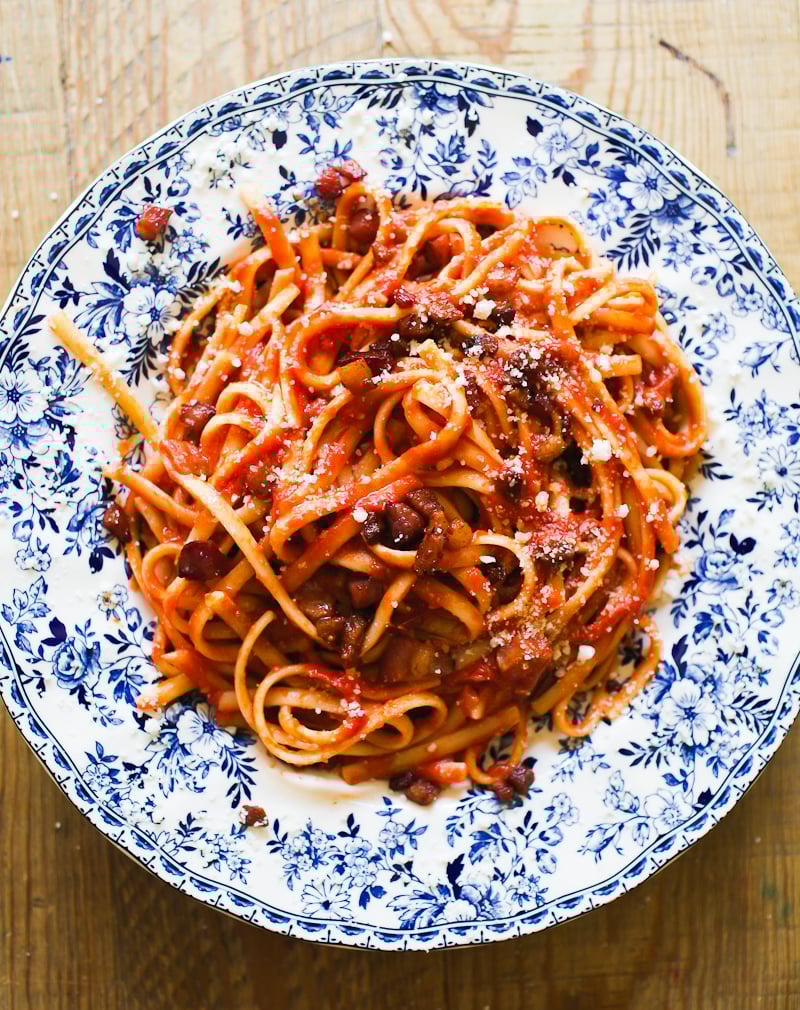
“Amatriciana” is one of the 4 famous Roman pasta dishes, along with cacio e pepe, gricia, and creamy carbonara. It’s made with silky tomato passata, perfectly crisp guanciale (similar to bacon, but not) and salty Pecorino Romano cheese.
There are a few versions of Amatriciana sauce that I know. The most common uses bucatini pasta, a long, thick tubular shape that’s nearly impossible to twirl around a fork with grace. It will literally slap you in the face! Rachel Roddy’s Amatriciana (by way of chef Alessandro Venturi) includes fresh tomatoes instead of canned tomatoes, sliced onions and white wine in the sauce. The restaurant by my house tops the dish with heaping mounds of fresh basil, which I must stress, is not Amatriciana at all.
Turns out, my favorite Amatriciana sauce recipe is the most traditional: a smooth, onion-less tomato sauce that lightly glazes the pasta. I swap bucatini for spaghetti (or thin liguini as pictured here because that’s all I had) which makes for a much better twirling experience. The taste is rich and slightly smoky. I learned how to make Amatriciana from chef Giancarla Bordoni at Monteverdi in Tuscany!
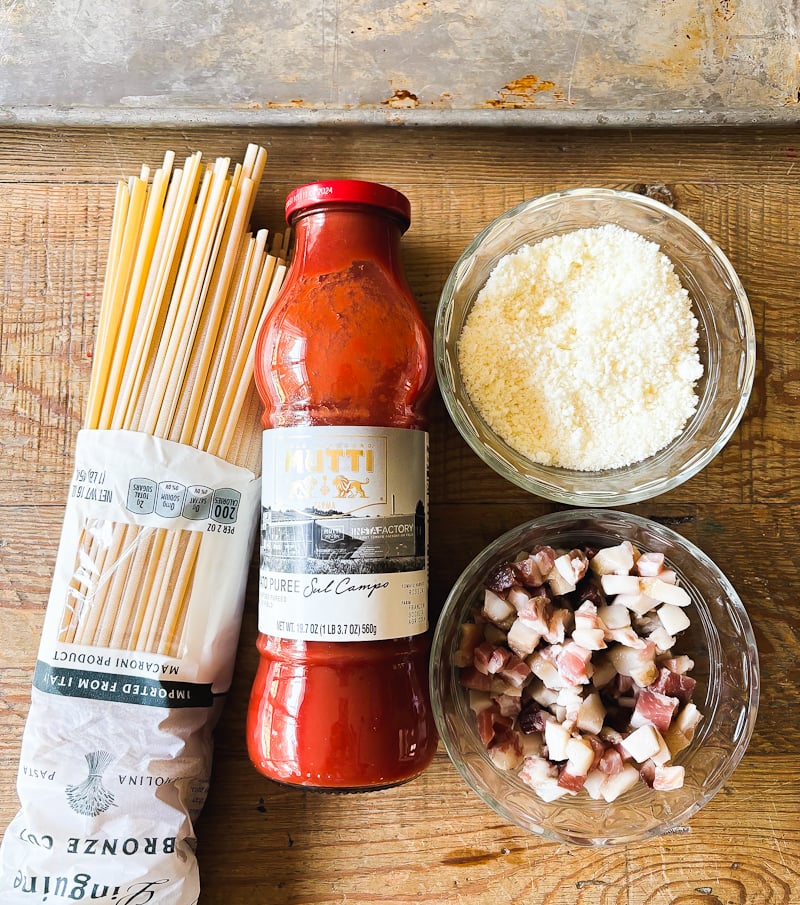
Pasta All”Almatriciana Ingredients:
Experience has taught me that simple recipes require quality ingredients. Quality however, doesn’t necessarily mean expensive. In my opinion, your knowledge of simple ingredients- what and what not to choose- holds more value. Let me expand on this with my recommendations below:
- Guanciale: this is cured pork cheek. It’s also the star ingredient. The taste is similar to bacon, but it’s less salty and more fatty. According to La Quercia, the high collagen content of guanciale lends a rich and silky texture to pasta sauces, soups and sauces. It’s so good. Admittedly, guanciale is not the easiest ingredient to source. You can purchase American guanciale or imported Italian guanciale online. Note the price difference.
- Dry Pasta: Rigatoni or spaghetti are acceptable pasta shapes for Amatriciana sauce. Good-quality brands include De Cecco, Rummo and Delallo. Alternatively, I do like Amatriciana with my sourdough cavatelli and homemade potato gnocchi.
- Tomatoes: You will need tomato passata for this dish. Passata is strained, whole peeled plum tomatoes sold in glass jars or cartons. To make passata yourself, pass whole-peeled plum tomatoes through a food mill (I have this one) and increase the cooking time if the texture is too liquid.
- Pecorino Cheese: I’m referring to Pecorino Romano here, a salty, dry aged cheese available in most grocery stores. If you cannot find it, use Parmigiano Reggiano instead.
- Red pepper flakes: Optional. But if you like a spicy kick, go for it. Just a pinch will do. Dried Calabrian chili is also nice.
How To Make Pasta all’Amatriciana {Step-By-Step Recipe}
Step 1: Cook The Pasta
To start, bring a large pot of salted water to a boil. You’re going to cook the pasta while you make the sauce. Just don’t drain it! You’ll need to reserve some of the pasta water to loosen the sauce (if needed).
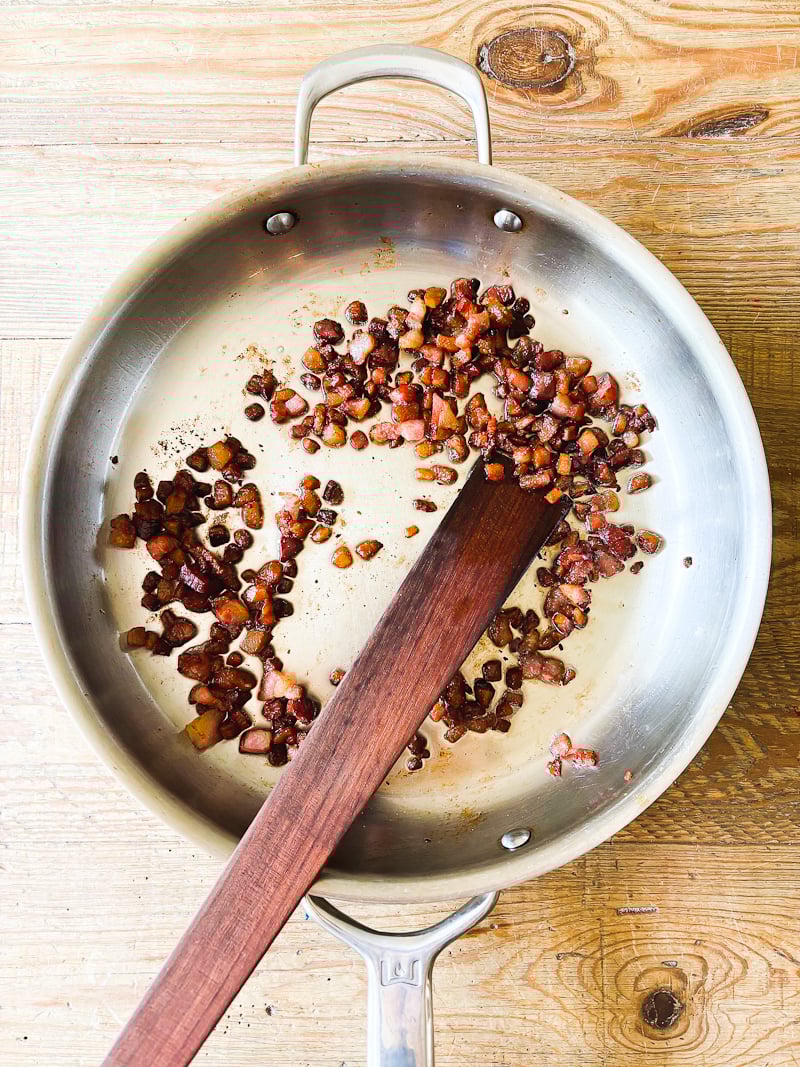
Step 2: Sauté The Guanciale
I like using a large 12-inch skillet or braiser pot for this. The bigger the better (you will toss the pasta directly in the sauce later on). Sauté the guanciale over medium heat until golden and crisp. You don’t need to add any additional oil. Transfer to a paper-towel lined plate. Keep the fat in the pan.
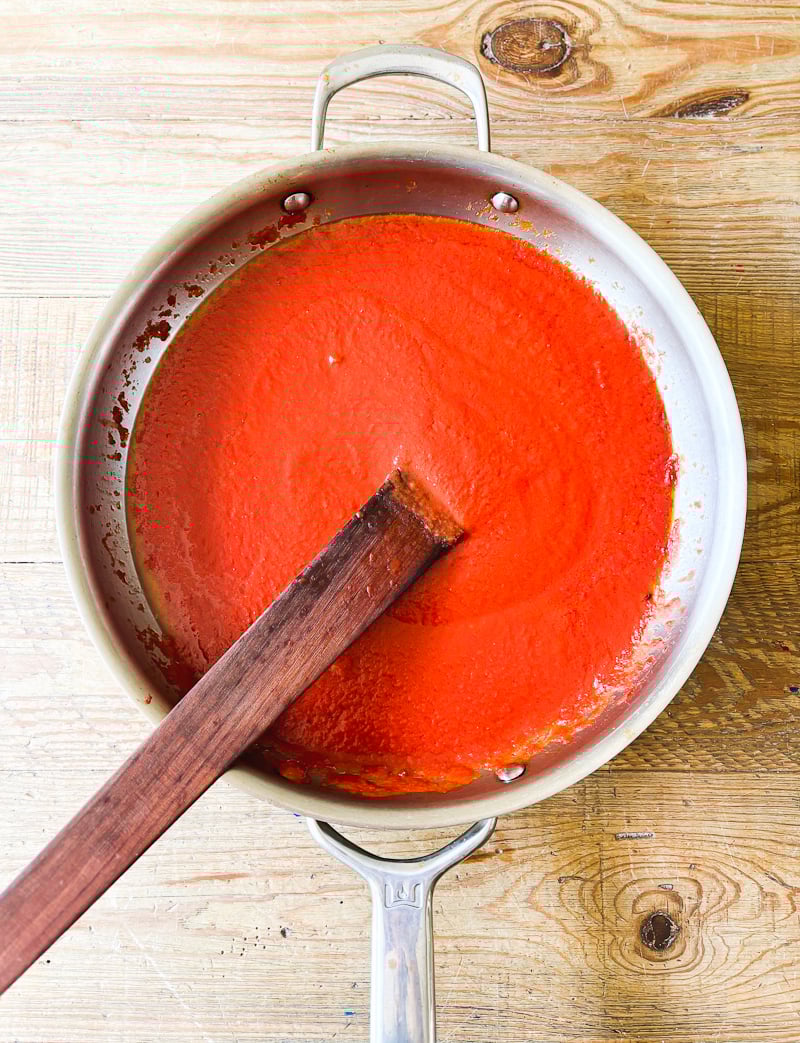
Step 3: Add The Tomato Passata
Now, pour in the passata and give the sauce a good stir. Simmer until slightly reduced, about 8 minutes or more depending on the size of your pan. The wider the pan, the less cooking time it needs.
Step 4: Toss With Pasta & Serve
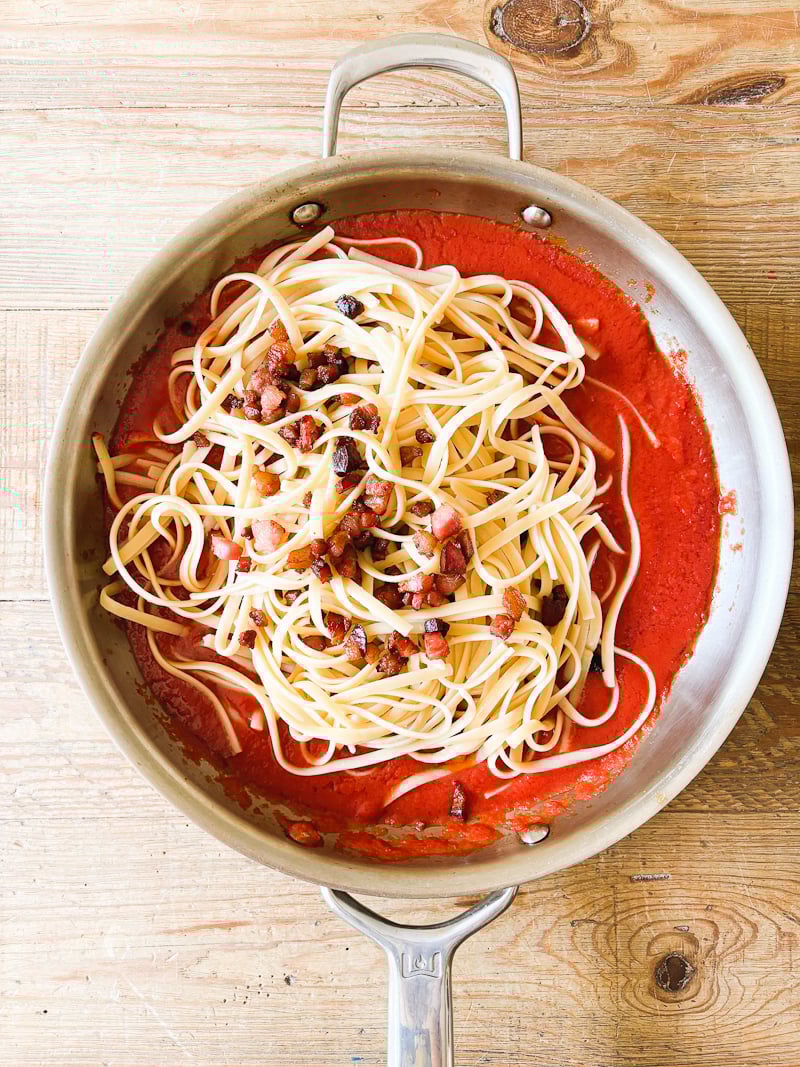
At this point the pasta should be done. Using tongs, transfer the pasta directly into the pan. It’s OK if some of the water still clings to the pasta- you want additional liquid to loosen the sauce.
Add 1/2 of the reserved guanciale and simmer for about a minute or so. Then, add some of the cheese (do this off heat so it doesn’t clump). If the sauce is too tight, loosen with 1/4 cup of the leftover pasta water plus more as needed. Top with the remaining guanciale and serve right away.
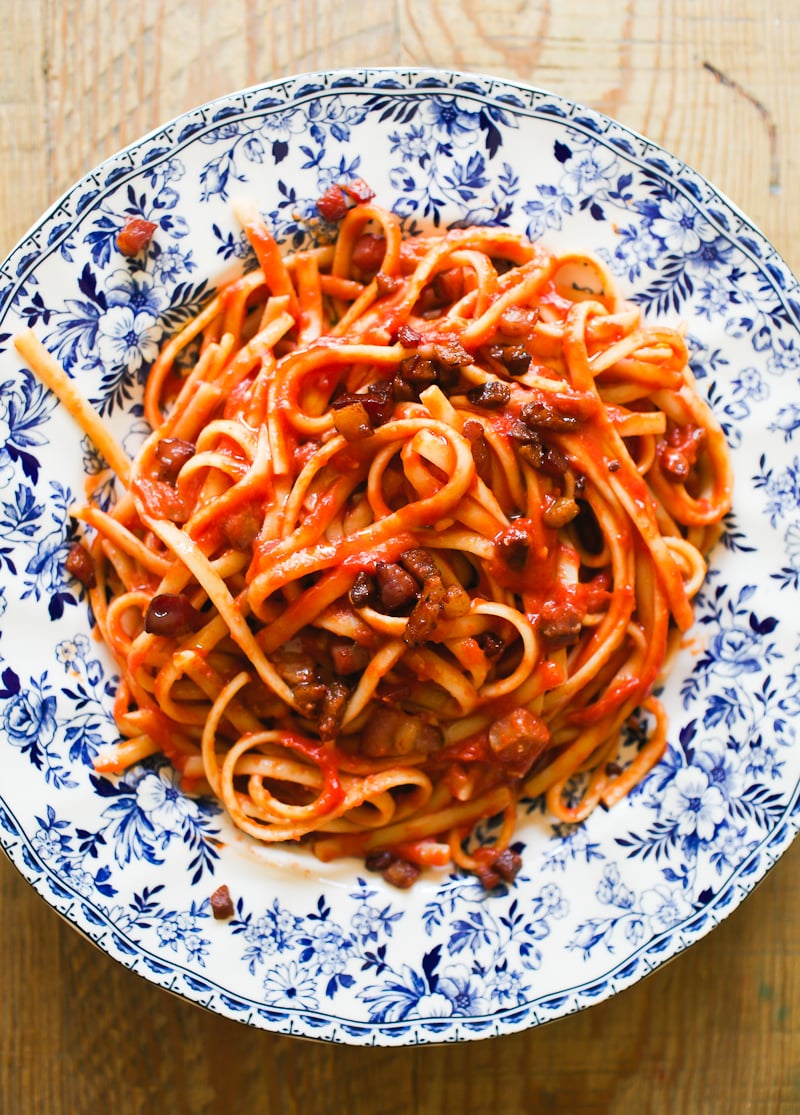
I’ll leave you with this: my kids absolutely love this dish. Adults too! It’s the smoky guanciale that turns heads every time. Amatriciana has a place in my normal rotation because it’s easy and very “weeknight” along with my real alfredo sauce (no cream) and this homemade Italian sausage ragù.
By signing up, you agree to receive emails from The Clever Carrot. Unsubscribe at any time.
Chef Approved Amatriciana Sauce
- Prep Time: 5
- Cook Time: 20 minutes
- Total Time: 25 minutes
- Yield: Serves 4
- Category: Pasta Sauce
- Method: Stove-top
- Cuisine: Italian
Description
My pasta all’Amatriciana sauce recipe is made the authentic Roman way: crisp guanciale, tomato passata, and Pecorino Romano cheese. No onions or garlic (hot chili flakes are optional). The success of any Amatriciana recipe relies heavily on ingredient quality and execution. Bucatini is the traditional pasta shape; however spaghetti and rigatoni are acceptable pasta shape substitutes. You will need a large 12-inch skillet or braiser pot to finish the pasta directly in the sauce the Italian way!
Ingredients
- 450 g (1 lb) spaghetti or mezze rigatoni pasta
- 250 g (8 oz) cubed guanciale (or best-quality thick cut bacon)
- 560 g (19.7 oz) tomato passata
- Pinch of chili flakes (optional)
- 30 g (1/3 cup) grated Pecorino Romano cheese
Instructions
- Bring a large pot of salted water to a boil. Cook the pasta according to the package instructions. Do not drain. Reserve the pasta water.
- In a large 12-inch skillet, sauté the guanciale over medium heat until golden and crisp. Transfer to a paper-towel lined plate. Keep the fat in the pan.
- Add the tomato passata to the pan; stir well. Simmer until slightly reduced, about 8 minutes or more, depending on the size of your pan (the wider the pan, the less cooking time you’ll need).
- At this point the pasta should be done. Using tongs, transfer the pasta directly into the pan. It’s OK if some of the water still clings to the pasta- you want additional liquid to loosen the sauce.
- Add 1/2 of the reserved guanciale to the sauce. Toss thoroughly to combine. Reduce the heat and cook in the pan for 1 minute for the flavors to combine.
- Remove the pan from the heat. Add 1/2 of the cheese and stir well. Give it a taste; add more cheese and/or salt if desired. If the sauce becomes too tight, loosen with 1/4 cup of the leftover pasta water, plus more as needed.
- Top with the remaining guanciale and serve right away.

Comments
Wesche says
Just a heads up: Step 3 says tomato pasta when I believe you meant to say tomato passata. Not trying to be annoying just figured it might confuse some people who are not familiar with passata. I look forward to trying this recipe. Normally I buy my Amatriciana from a place called Pastaria but I figured I would try making it myself.
Bruce Gilbert says
Yours is a brilliant book – my results are always splendid. I have also bought the book as a gift for friends and family who want to learn to bake sourdough.
Perhaps the best thing is that by using your tip of placing the risen dough into the fridge, is that it puts me in charge. I can bake when it is convenient to do so. Thanks Emilie!
Emilie Raffa says
This is so kind Bruce, thank you so much! Absolutely. There are so many different ways to make sourdough work for you. Holding the dough in the fridge is one of them. You can play around with all different techniques and methods to suit your schedule. It’s flexible. My schedule continues to change to this day, especially when the seasons (weather) changes too.