Made with all purpose flour and just a touch of butter, learn how to make soft, tender sourdough sandwich bread with bubbly, active sourdough starter. Recipe adapted from my bestselling book:
Artisan Sourdough Made Simple.
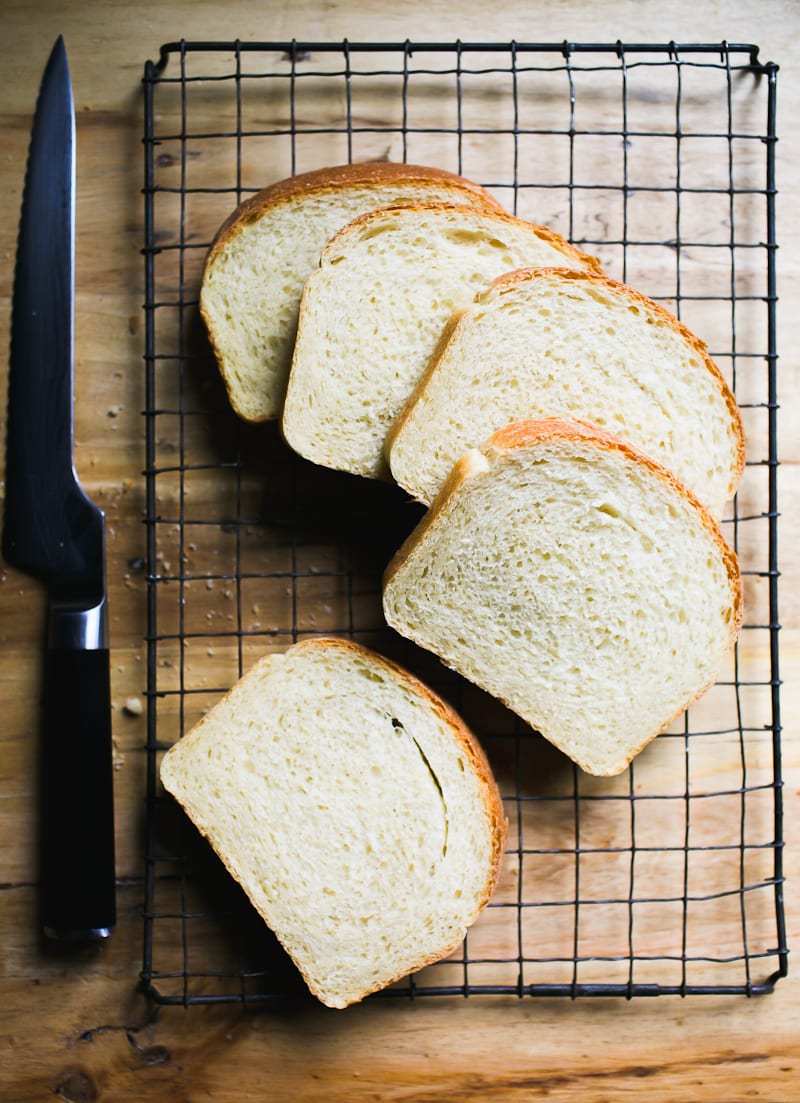
Out of all the sourdough bread recipes I make on repeat (my beginner sourdough bread recipe,
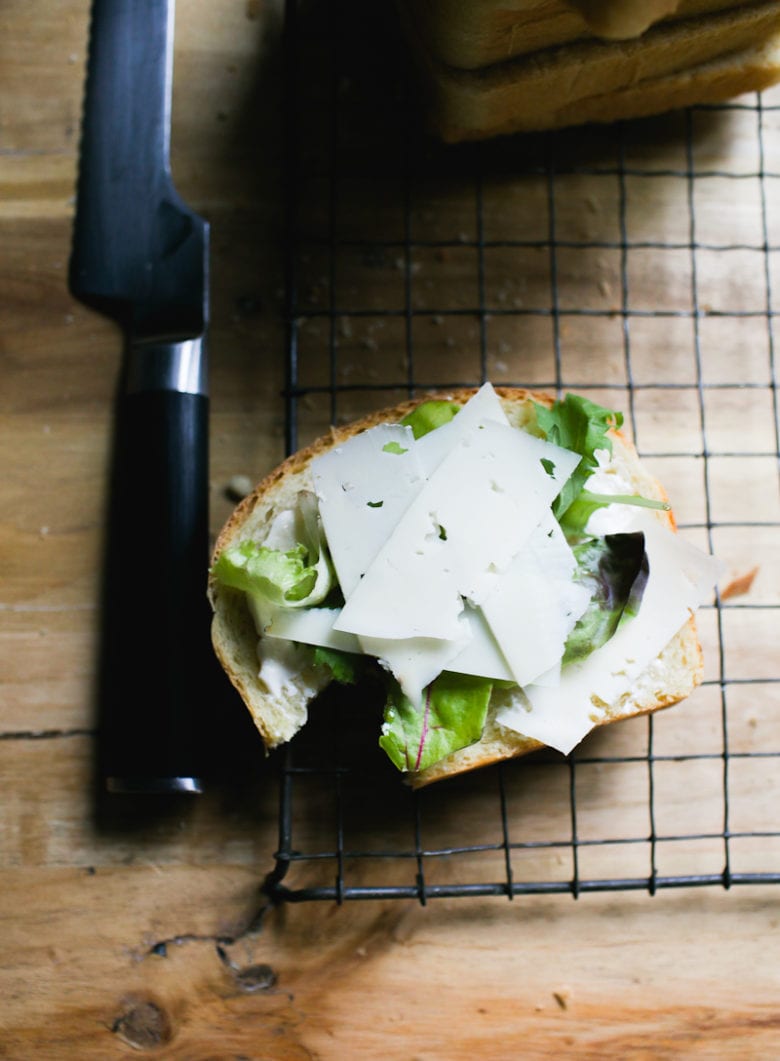
sourdough focaccia and sourdough pancakes to name a few!), this easy sourdough sandwich bread gets the most requests. Why? It’s soft. It’s buttery. It makes the kitchen smell like magic.
And the best part: you made it yourself. No junk or preservatives. Just simple sourdough with a soft crust, subtle tang and fluffy crumb that holds up to slicing, toasting and sandwiches (anything really).
Below, you’ll find my step-by-step walkthrough and baking schedule. You’ll also get three solid
variations (cinnamon raisin, whole wheat and bread flour) plus more sandwich loaf recipes in my book for inspiration.
Good To Know:
- What most bakers get wrong: the second rise goes for too long. This creates over proofed dough that bakes up flat. Follow my recommended timing and tips to master this step.
- Pan size matters. Want a taller loaf? Use an 8.5×4 inch pan instead of the standard 9×5 inch pan. Both work, but the smaller size will give the dough a nice upward boost.
- Use softened butter. If it’s cold, it won’t blend into the dough.
- Make it vegan. Swap in your favorite plant-based butter. Just check the label. Some brands are very salty.
- Temperature controls time. Warm kitchen? The dough will rise fast. Cold kitchen? Give it more time. Watch the dough and not the clock.
How To Make Sourdough Sandwich Bread {Step-By-Step Recipe}
Step 1: Mix the Dough
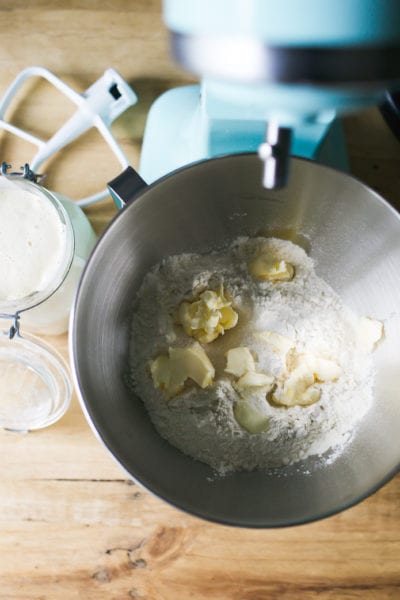
To Start: Add the flour, softened butter, sugar and salt to a bowl. I like using a stand mixer for this recipe. The dough is naturally a bit sticky; the machine makes it easier to handle. Mix with the paddle attachment until the butter looks like crumbs.
Mix in your bubbly, active sourdough starter and water until everything comes together. Cover and rest for 30 minutes to relax the dough before kneading.
Note: If you need assistance with your sourdough starter, read my companion articles Feeding Sourdough Starter: My Best Tips & Tricks and Troubleshooting Sourdough Starter.
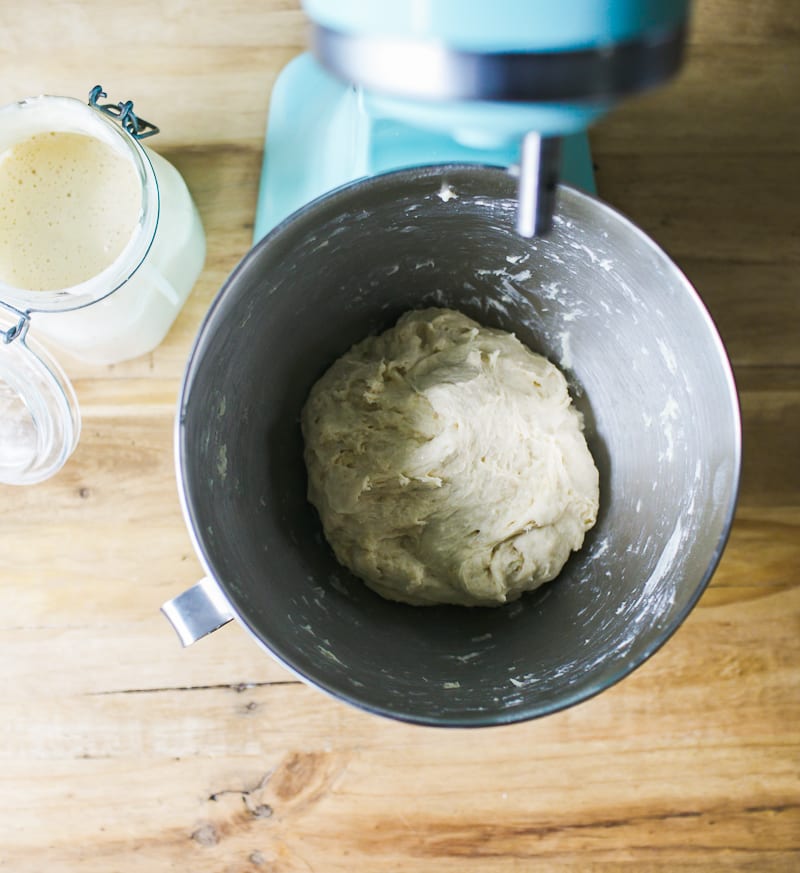
After 30 minutes of resting…
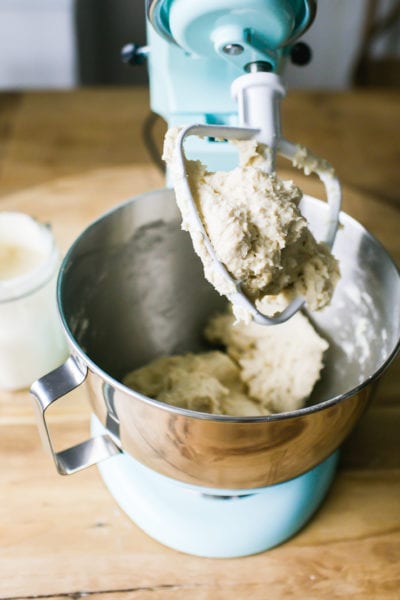
Remove the paddle attachment and switch to the dough hook. Knead until soft and supple, about 6-8 minutes. Note: on this particular day, my dough was stickier than usual so I added a sprinkle of flour to even it out. You can do that too.
No Stand Mixer? Knead the dough by hand on a lightly floured surface until it feels smooth, soft and elastic, about 8-10 minutes. Don’t worry about under/over kneading. If it’s springy (not sticky) you’re good to go.
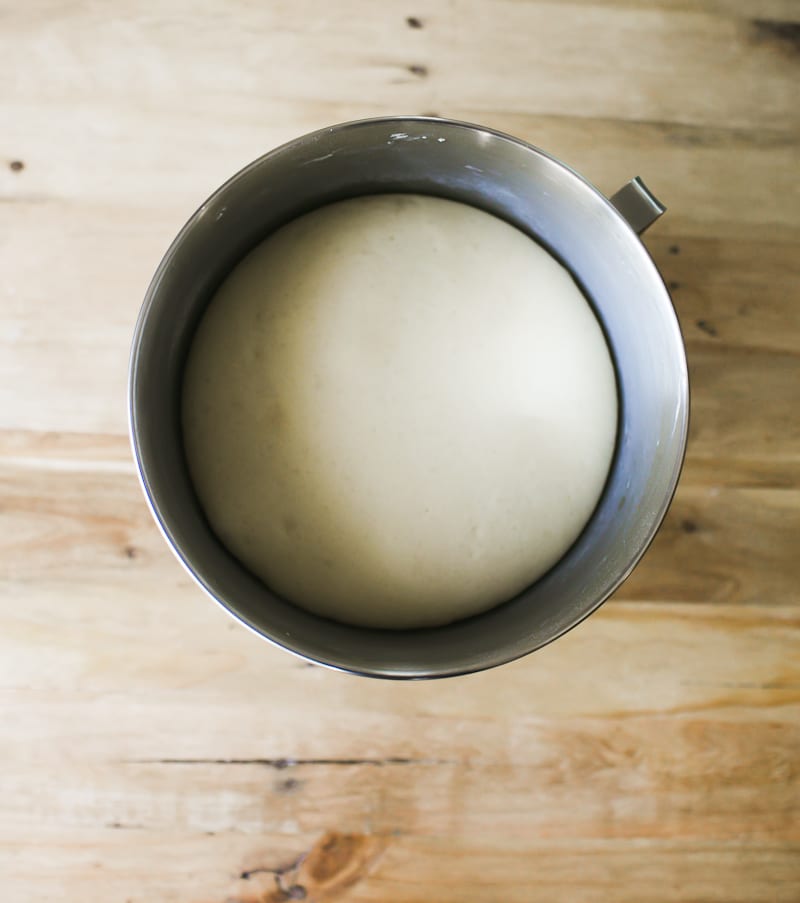
Step 2: Bulk Rise (Overnight)
Cover the bowl with plastic wrap and let the dough rise overnight at room temperature (68 F), about 10-12 hrs. The dough is ready when it’s puffy, airy and has doubled in size.
Tip: This is an overnight sandwich dough. However, you can do a same-day bake instead (see my Sample Baking Schedule).

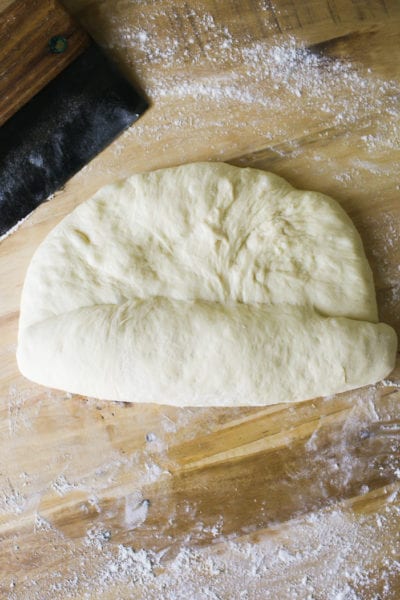
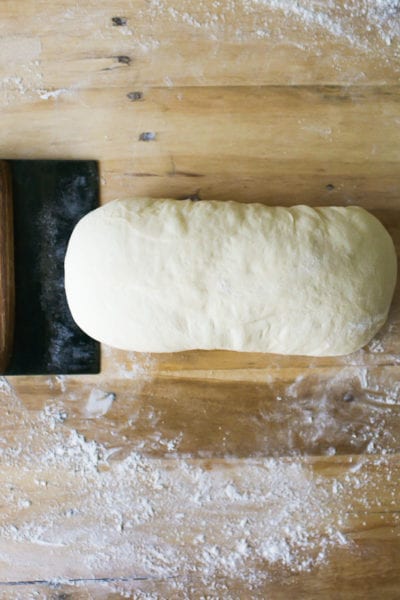
Step 3: Shape the Dough
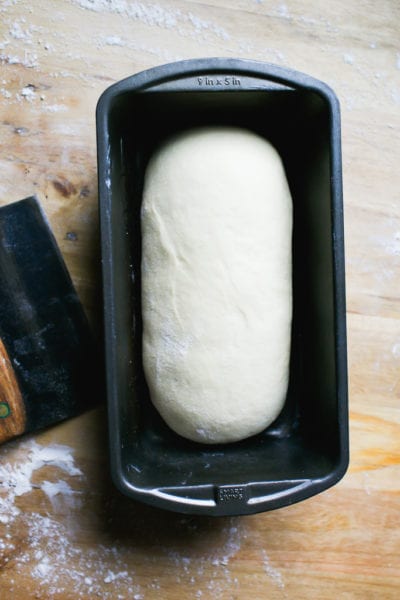
Remove the dough onto a lightly floured surface. Gently flatten to release the air bubbles (you don’t want big holes like ciabatta!).
Roll the dough into a log, tucking the ends underneath. Then, with floured hands pull the dough towards you creating surface tension to tighten its shape. Place the dough into a buttered loaf pan, but make sure it’s seam side down.
Step 4: Second Rise
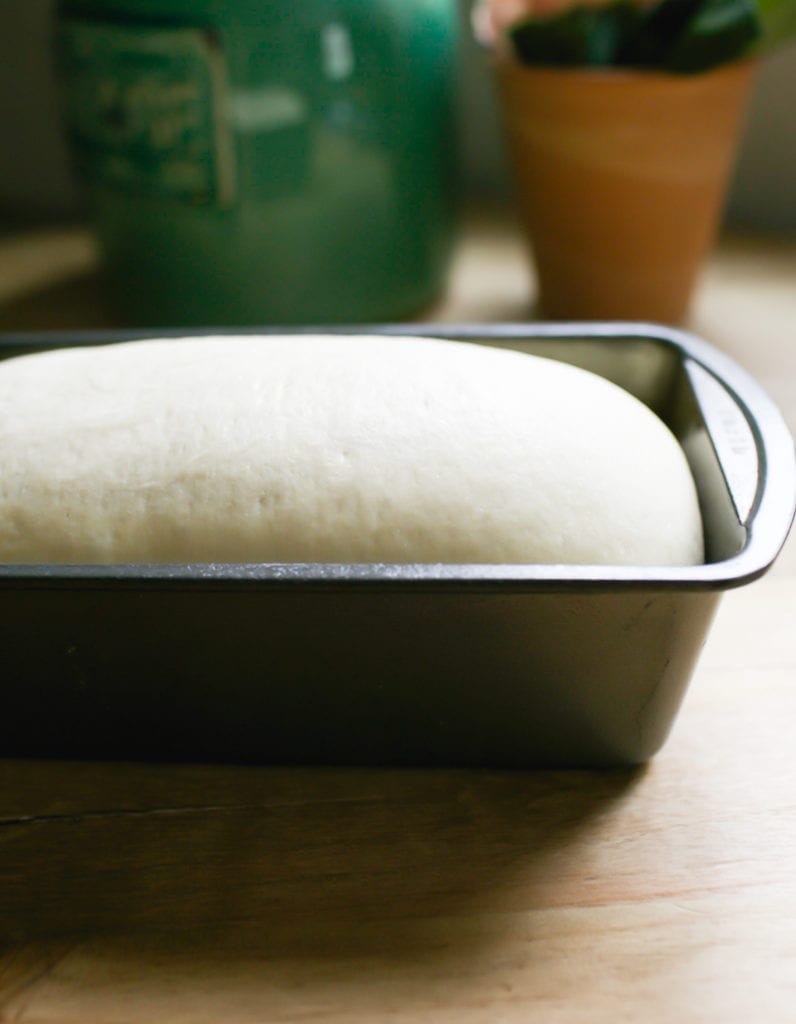
This step is crucial. When done correctly, your loaf will build back additional strength needed for good oven spring. Cover the pan with lightly oiled plastic wrap so the dough doesn’t stick to the top. Let rise until the center domes about 1 inch above the rim of the pan. You’e not going for double in size or sky scraper height; just notably puffy and less dense.
Tip: Cold Kitchen? Your second rise might take longer than expected @ 68 F. Be patient with this step. Plan on 1 1/2 -2+ hours depending on your specific room temperature and starter strength. If you’re short on time, use a proofing box or my DIY warm oven trick to speed things up (see “Helpful Tips” in the recipe card below).
Step 5: Bake The Bread
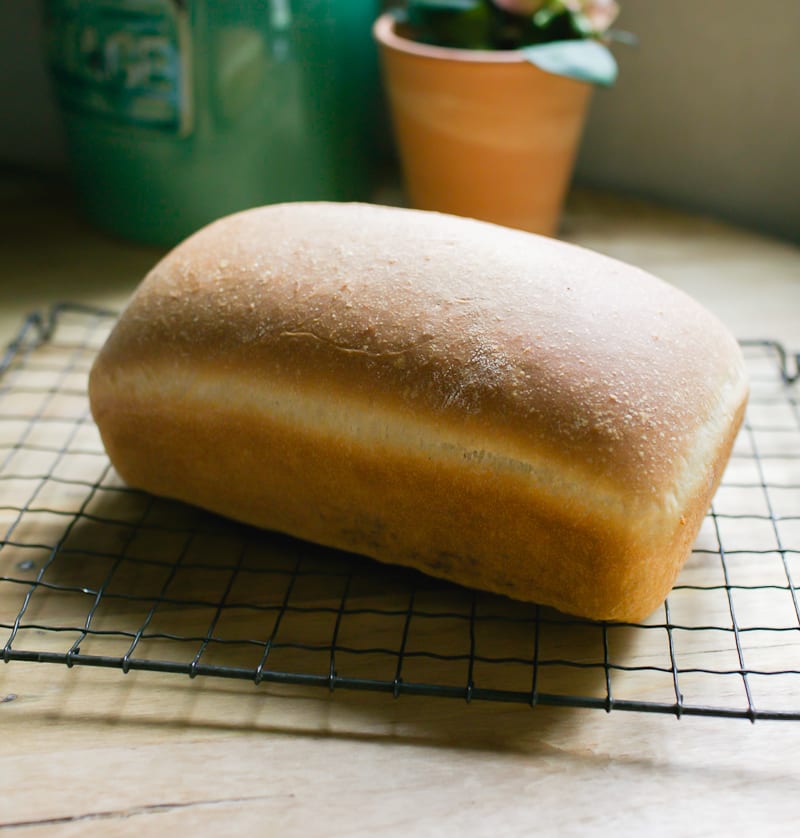
Preheat your oven to 375 F. For better oven spring, preheat to 500 F instead, then lower the temperature to 375 F when the dough goes into the oven. Bake on the center rack for 45-50 minutes or until golden brown.
Cool in the pan, then transfer to a wire rack. Wait an hour before slicing (skipping this step can turn the inside gummy).
Tip: Have an extra loaf pan? Some bakers create a makeshift “lid” by placing a separate, upside loaf pan on top of their pan before baking. This traps steam inside, creating a humid environment for the dough to rise avoiding potential blow-outs or tears, and keeps the crust soft. It’s similar to using a Dutch oven for my sourdough bread recipe.
Slice & Store
You’ll need a good serrated knife (I use this one). For a moderately priced option, try this knife instead. If your bread slices are really uneven, consider this collapsable bread slicer with 3 different thicknesses: thin, medium and thick to guide you along.
What I do at home: If you have a large family, or just eat a lot of bread, I highly suggest doubling this recipe. Bake (2) loaves side by side and freeze whatever you don’t eat. This loaf can be frozen whole, covered tightly in plastic wrap or as individual slices.
Sourdough Sandwich Bread Variations
- Whole Wheat: Replace 20% of all purpose flour with whole wheat or white whole wheat flour. If the dough seems dry (whole grain flours absorb more liquid), add more water as needed to achieve a workable consistency. Do this 1 teaspoon at a time.
- Bread Flour: Do an even swap, adding more liquid if the dough is dry. For example, King Arthur Bread flour is very thirsty so more liquid might be needed. If using Gold Medal bread flour which is not as absorbent, additional adjustments might not be necessary.
- Sourdough Cinnamon Raisin Bread: You’ll find my step-by-step post here. The vanilla-soaked raisins make it a community favorite!
What To Bake Next
In addition to the above variations, a natural next step for sandwiches and breakfast fare would be my easy, NY-style sourdough bagels (they are so incredibly chewy and addictive) and these super soft sourdough english muffins. I’m excited to see what you make next.
Sample Overnight Baking Schedule (68 F)
Feel free to adjust the start times below as needed. It’s flexible. For a same-day bake, start early in the morning and bulk rise at a warmer temperature.
Day 1 (Evening)
- 4:30 PM: Feed sourdough starter (to activate)
- 8:00 PM: Mix dough
- 8:30 PM: Rat 30 minutes, then knead.
- 9:00 PM: Cover and bulk ferment, room temp @ 68 F overnight (10-12 hrs).
Day 2 (Morning)
- 7:00-8:00 AM: Check the dough (should be doubled)
- 8:15 AM: Shape dough
- 8:30 AM: Second rise (1 1/2 – 2+ hours)
- 10:30 AM: Preheat oven
- 10:45 AM: Bake
- 11:30 AM: Cool
By signing up, you agree to receive emails from The Clever Carrot. Unsubscribe at any time.
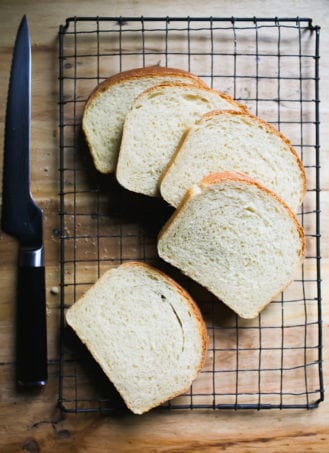
Easy Sourdough Sandwich Bread
- Prep Time: 12 hours
- Cook Time: 50 minutes
- Total Time: 12 hours 50 minutes
- Yield: 1 loaf 1x
- Category: Sourdough Bread
- Method: Oven-Baked
- Cuisine: American
- Diet: Vegetarian
Description
A simple and easy recipe for homemade sourdough sandwich bread. Made with all purpose flour and just a touch of butter. I like to make the dough at night so we can have fresh bread in the morning. This loaf freezes well (whole or sliced). I recommend this loaf pan.
Helpful Tips:
- For best results, weigh your ingredients with a scale instead of using measuring cups. Weight and volume measurements are not equal, only approximate! For example: If your starter is very bubbly, 1/4 cup might only weigh 30 g which is too little for this recipe (you need 50 g). The dough will take forever to rise. Same goes for the flour: 4 cups might weigh over 500 g depending on how tight the flour was packed into the cup. More flour = dry dough.
- This recipe works with Whole Foods 365 Everyday, King Arthur and Trader Joe’s all purpose flour. If using another brand with a lower protein content (i.e. Gold Medal, Pillsbury, Heckers) consider reducing the total water amount by 15 g.
- For a variation of this recipe with more sourdough starter, please choose one of the following adjustments below, keeping the rest of the ingredient quantities the same:
- 100 g starter + 255 g water
- 150 g starter + 250 g water
Additionally, because temperature controls time: you can also increase your surrounding temperature for the bulk or second rise, as needed. Place the dough in a proofing box set to 75-80 F. Or, preheat your home oven to 75-80 F and then shut it off immediately (use an oven thermometer to make sure it’s set to exactly 80 F and not higher!). Place the covered dough inside until it bulks up. Do no use this option overnight- it will be too warm.
Ingredients
- 500 g (4 cups) all purpose flour
- 60 g (4 tbsp.) unsalted butter, softened, cut into cubes
- 12 g (1 tbsp.) sugar
- 9 g fine sea salt
- 50 g (1/4 cup) bubbly, active sourdough starter (100% hydration)**
- 270 g (1 cup + 2 tbsp) warm water
Instructions
Baking Schedule: this is an overnight dough which takes approximately 10-12 hrs to rise @ 68 F. Start the night before, in the evening, and plan to bake the following day. If it’s warmer than 68 F the dough will take less time to rise. Alternatively, start in the morning and bake in the afternoon or evening.
Mix the Dough
In a stand mixer fitted with the paddle attachment, add the flour, butter, sugar and salt. Mix on low speed until combined; the butter should look like crumbs.
Add the starter and warm water. Mix until the flour is fully absorbed (get in there with your hands to finish mixing). The dough will feel slightly sticky and elastic at this stage. Cover with plastic wrap or a damp towel and let rest for 30 minutes. Meanwhile, replenish you starter with fresh flour and water.
After the dough has rested, switch to the dough hook and run the machine on medium-low (#3 on a KitchenAid) for 6-8 minutes. The dough will feel soft and supple and not stick to your hands. If it does, add a dusting of flour.
Note: If you do not have a stand mixer, the dough can be made by hand. After mixing and resting for 30 minutes, knead the dough on a lightly floured surface for 8-10 minutes, or until smooth, soft and elastic. Do not worry about under/over kneading. Relax into the process and focus on the texture, not the time.
Bulk Rise
Cover the bowl with plastic wrap and let rise overnight at room temperature (68 F) until double in size, about 10-12 hrs. Please refer to the Baking Schedule above for additional rise time options.
Shape the Dough
In the morning, coat an 8.5×4 inch loaf pan with butter.
Remove the dough onto a lightly floured work surface. Gently flatten the surface to release any large air bubbles.
Roll the dough into a log tucking the ends underneath. Rest for 5-10 minutes. With floured hands, gently cup the dough and pull it toward you to tighten its shape. Using a bench knife, place the dough into the loaf pan seam side down.
Second Rise
Cover the dough with lightly oiled or buttered plastic wrap. Let rest at room temperature until it has risen to about 1-inch above the rim of the pan (check the height by looking at the domed center portion of the dough). You are not looking for it to double in size. For timing, this can take anywhere from 1 1/2-2 hours (or more!) depending on temperature and the amount of sourdough starter used. Remember, the warmer it is, the faster the dough will rise. Refer to the “helpful tips” at the top of this post.
Preheat your oven to 375 F. Note: For higher oven spring, preheat to 500 F instead. Reduce to 375 F once the dough goes into the oven and bake as directed.
Bake the Dough
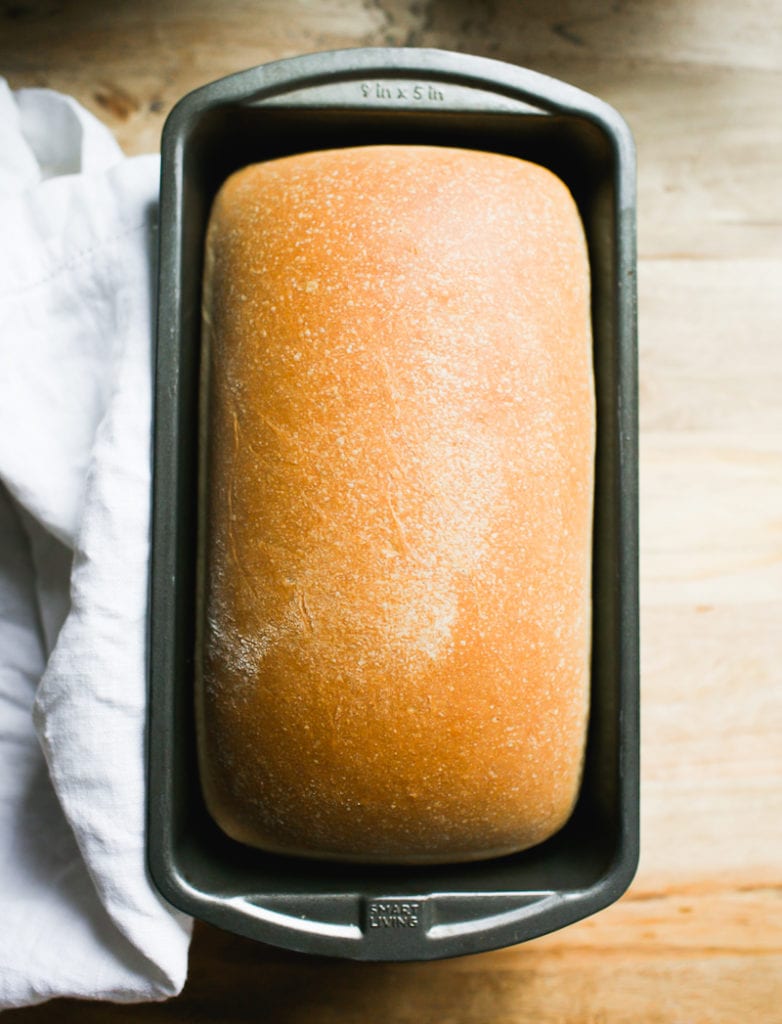
Bake the dough on the center rack for about 45-50 minutes, or until golden brown. Cool in the pan for at least 10 minutes, and then transfer to a rack to cool completely. This sandwich loaf will stay fresh for up to 3 days, stored in a plastic bag at room temperature.


Comments
Sara says
Could I use honey instead of sugar?
Emilie Raffa says
Hi Sara! Yes: honey is fine to use. You can either do an exact swap, or a reduced amount, perhaps 2 tsp. for a taste that’s less sweet.
Linda says
I have made this several times. The last time, i made 2 4×8 loaves because we don’t eat one loaf before it gets stale and they were perfect! I also put the loaves to rise overnight in the fridge because I was late starting it and then rose again for 3-4 hours. Perfect!
Emilie Raffa says
Sounds perfect, Linda! Doubling up is always a good idea ;)
Donna says
I made this sourdough sandwich bread with 25 g starter and 250g flour. I halved the recipe to make 1 loaf. The bread did not rise at all. I’ve been making sourdough bread for 2 years but this was my first time for sandwich bread. I suspect the amount of starter was too small. I followed this recipe carefully. What went wrong?
Emilie Raffa says
Hi Donna! Those quantities are too small for sandwich bread. I wouldn’t halve this recipe. For best results, I’d stick to the recipe as written, and perhaps freeze a portion of the bread if you’re after something smaller? Diving deeper: When sourdough doesn’t rise, it’s usually due to 3 things: temperature (not warm enough) the starter itself (not strong enough) + time (needs more). You need all 3 to be in synch for a successful rise. I don’t believe the reduced amount of starter was the issue.
Irongoddess says
Thanks so much for this wonderfully delicious and soft sandwich bread, and sooo easy to make! This will for sure become a staple in my home. You are right, it will be difficult to buy store-bought sandwich bread again.
Theresa says
The best bread ever!! Yummy. Came out perfect.
Raina says
I made this once already and had great sucess, thanks for the recipe! I would like to try it in my Pullman 4x4x10 pan with the lid, would all the directions still be the same?
karen says
This turned out fantastic on the first shot. The rising times were longer for me, but that’s normal for bread baking in December in Canada. Next up – the cinnamon raisin bread! Thx. ~ k!
Jordana says
Hi Emilie! I’ve used your recipes a lot before when I was in Florida (lower elevation), but now I’m living in Northern Arizona at 6,765 feet elevation. My dough hasn’t been rising as well and my bread falls when it bakes. Any tips I could use for baking at high elevation? I’ve been reading a few articles for regular baking, but I didn’t know what to do with sourdough baking.
Michelle says
Can I use whole wheat flour (or a mixture of all purpose and whole wheat) for this recipe?
Emilie Raffa says
Sure. I’d do a mix of both for best results. You might want to start with 15 % whole wheat and work your way up from there, depending on the flavor profile and texture you’re looking for.
Jenny Webb says
Fantastic! It turned out exactly as pictured and was easy to make and required much less time than the standard round loaf. No stretching/folding, no refrigeration or dutch oven required.
Emilie Raffa says
Thanks Jenny! xx
Deanna says
Hi! I made the dough last night and let it sit out. It has been almost 11 hours and it has not doubled. Should I put it in a warmer place and see if that helps? Or is it a complete loss? My starter was very bubbly before but it is my first time.
Emilie Raffa says
Hi Deanna! Yes. Your dough needs a warmer spot to rise. If your starter is strong and active, then temperature is usually the culprit. Warm spots include a proofing box set to 75-78 F or in your oven (turned off) with the light on for a short period of time (it gets hot in there). Also: next time use warmer water in your initial dough mix, about 90-95 F.
Jordan says
Great recipe, I can’t wait to try it this weekend. Do you have an estimate of how long the second rise typically takes? I’m trying to decide if I should prep it for the second rise in the morning and run errands or if the time is super short, I can wait until after my errands. This is my first time making sourdough anything or bread! Thank you!
Zelda Dancer says
We are really enjoying this recipe! We named it Emilie’s Easy Sourdough Sandwich Bread! Been doing sourdough over a year now, and like to try different things. This is wonderful for sandwiches, and survives the toaster very well. Tender and delicious with the sourdough tang and a fun change from the toothsome standard sourdough loaves. Thank you for sharing.
We tried doubling the recipe because we chowed down the first loaf so quickly, but it was too much for the stand mixer. Every other part worked well, just had to divide the dough for the step with the dough hook after the 30 minute rest. We also added a piece of plastic wrap with a spritz of cooking spray touching the top of the dough while it is doing the bulk ferment, and again on top of the loaves rising in the pan to prevent it drying out and forming a hard skin.
Stacia says
I just made this today and your cranberry pecan sandwich loaf last week. I can’t seem to get the sides to brown like I see yours does. I baked it for a full 50 minutes too. I even removed the loaf from the pan immediately and put it back inthe oven for an extra five minutes. It didn’t brown too much but I didn’t dare put it in for longer as I was worried I might overcook the bread. Any tips?
Also would adding milk make the loaf fluffier? How would you suggest I adjust the amount of water if adding milk?
Emilie Raffa says
Hi Stacia! Very interesting. Do you have an oven thermometer? The first step is to make sure your oven temp. is accurate. The second thing that comes to mind is dough fermentation. Usually, if the dough doesn’t brown it can be under proofed. Did your loaf double in size during the bulk? And how long was the second rise? Milk will make the dough slightly fluffier (butter helps too). I haven’t tested exact amounts, but try doing 50/50 and see how that goes.
Stacia says
No I dont have an oven thermometer. Its just the sides that don’t brown.. the top part browns nicely. Would the material of the loaf pan have anything to do with it? Anyway I might try again but using a pullman tin to see how that turns out.
As its hot where I live so I only bulked it for about 4.5 hours before shaping and letting it rise again in the pan for about an hour. When I pressed on the dough.. it didn’t bounce back immediately and in fact it didn’t rise up slowly either so I popped it in the oven right away.
Will give it a go again with milk. Do you happen to have a wholewheat sandwich recipe too?
Kristen Topliff says
This is far and away my very favorite sourdough recipe. And everyone in the family loves the soft texture when some of my other sourdough creations are not a hit. The instructions are clear and easy to follow, great for beginners!
Novice Cook and Baker! says
Hi Emilie, I plan to try this recipe today/tomorrow. I only have an 8.5 x 4.5 loaf pan. Should I decrease the recipe slightly or do you think I can make it work? Thanks in advance!
Emilie Raffa says
Hello! The 8.5 x 4.5 loaf pan will work. I have one at home that I use all the time with great results (and higher rise!).
Novice Cook and Baker! says
I baked this today and it turned out beautifully!! How do you think it would it turn out without adding in any butter?
Thank you so much for the awesome recipe.
Jeannie says
Hi, I love this recipe, and I’m wondering if I could use a pullman loaf pan? It is 4 1/2“ x 8“ but it is taller than a normal oaf pan and has a lid? Thanks!
Emilie Raffa says
Hi Jeannie! Great question. Unfortunately, I haven’t tested it myself so I’m unable to report back with specifics and/or adjustments. However, if you experiment, please let us know.
Jeannie says
Ok. Thanks. I’d be happy to let you know after I try it. Jeannie
Anna says
Hi this recipe sounds great however one question from my side – how come you don’t need to worry about creating a moist environment for this loaf n you just bake it uncovered? I thought it was necessary to cover it or add steam for a better oven spring. How does it work then ?
Mitch says
You don’t need to cover it unless your going for block loaf shape. The moist environment is trying to create that thin crisp skin on an artisan loaf, that’s not so important with a sandwich loaf.
The extra moisture also helps gain the more open texture that you see from traditional artisan sourdough, again, not needed for a sandwich loaf.
Anna says
That makes sense, thank you for your reply !
Sarah Pow says
Oh. My. GOODNESS. I feel like I just met my long lost love! This is easy to make and so amazing. Flavor, texture, perfect!
Christine Williams says
I love your Artisan Sourdough book and now branching out beyond Everyday Sourdough. How would this sandwich bread recipe change if olive oil were used instead of butter?
Lauren Troyer says
Love this recipe! It is my favorite and I have to keep it on hand. I was wondering if anyone has tried to replace the sugar with honey. Did you need to cut back on water?
Rachel Morrison says
Followed this recipe to the T and it came out fantastic! My first time ever making bread!! Thank you so much for your tips on the starter and your explanations of what the dough should look and feel like, helped so much!! Omnomnomnom!
Debbie Van Horn says
This is, hands down, the best sourdough bread recipe ever. Soft and sturdy – just perfect for sandwiches. I’ve made it several times and it never disappoints. I add about 1/4 teaspoon of citric acid for a little extra sour kick and have noticed that it lasts a day or two longer with the addition (if we don’t finish the loaf straight out of the oven).
Liliana Torres says
Awesome recipe I did it last week. Doing it today Sunday. I was wondering if I could leave bulk rise outside 2 days to bake it on Tuesday morning or maybe Monday night? Will that be okay?
Emilie Raffa says
Hi there! The dough won’t last for two days at room temperature. It will be over proofed. You can make the dough, let it rise, and once it’s almost double in size chill the whole bowl overnight. The following day, give it more time to rise (if needed), and continue with the remaining steps.
Kiki says
Do you think I could replace butter with olive oil? If yes what would be the ratio?
Nic says
My family love love LOVE this bread! I’m constantly making it they devour it so quickly!
I’m just wondering though if it is possible to reduce or omit the sugar and butter and make it more like a traditional sourdough loaf (I do try to make this loaf with the larger quantity of starter as we like our sourdoughs quite sour).
Thanks,
Nic
Emilie Raffa says
Hi Nic! Absolutely. You can definitely leave out the sugar & butter to create a more traditional sourdough. You might need to increase the liquid slightly if the dough feels too dry. Enjoy!
Nic says
Thanks Emilie, I’m keen to give it a try. What about using wholewheat flour or a mix of bread and wholewheat?
Emilie Raffa says
You’re welcome! Adding wholewheat or bread flour will change the ratios a bit. First, for whole wheat flour, I’d only sub 15-20% in this particular recipe. You might have to add more liquid to compensate, if the dough feels very dry. For bread flour, you can do a full even swap, adding more liquid as needed. Enjoy!
Erin says
Can you double this bread recipe? Just curious 🙂
Emilie Raffa says
Sure can! Just make sure you have a bowl that’s large enough for the bulk rise. A high-sided dough tub isa good option and/or divide the dough in half and rise the dough in two separate bowls.
Erin says
Thanks so much! Looking forward to trying this recipe!
Elizabeth Gergen says
Hi . I made the sandwich bread and it turned out well. I like the recipe but I was wondering if you have ever made it into rolls? If so , what would the temp and bake time be?
Emilie Raffa says
Hi Elizabeth! Great idea. I haven’t tested this recipe as rolls, so I’m unable to advise with exact specifics. I’ll update here if I experiment. In the meantime, try this recipe.
Loreta says
Haha… nice remark on going to school! Crazy days!
I am making this bread today and looking forward to see how it will come out. Thank you for the recipe.
Emilie Raffa says
You’re very welcome, enjoy!
Viki says
Can I skip the sugar?
Emilie Raffa says
Hi Viki! Absolutely. Totally fine. You can skip the sugar (it adds depth of flavor, not sweetness).
Anna says
Absolutely best and easiest loaf bread! I’m making this 2-3 times a week for my family. Thank you!
Candace says
This bread has become a staple in my home and for good reason! It is such a simple dough and nice to work with! It comes out beautifully every time! The bread has such a nice texture soft with a good amount of chew!
Barry says
Love making this loaf. It is very forgiving. I do add about 2 grams Vitamin C to the flour at the beginning and that helps retard mold production. With only 2 adults at home, a loaf needs to last more than a couple days (and I hate freezing bread). This loaf does make the very best grilled cheese sandwiches. I also use a Pullman loaf pan and get a nice square loaf.
Emilie Raffa says
Barry, the vitamin C tip is fantastic. Is there a specific kind you use?
Barry says
You can get a one pound pouch on Amazon (organic, pure) for less than $10. It’s used as a bulk item in cosmetics and also by fitness buffs – it’s amazing how inexpensive it is. For those without a scale, 2gm is about 0.25 teaspoonful. Vitamin C (ascorbic acid) is an antioxidant, and there are many uses for it in the kitchen, i.e. keep guacamole from browning, add a bit to brightly colored jams to retain color.
Erin says
I’m looking at making this recipe, it looks so good! I have never made sourdough before so looking forward to it.
I have a question tho, do I have to use a stand mixer or can I do it by hand ? As I don’t own one.
Thanks
Erin
Shannon says
This recipe is wonderful. I’ve made it 3 times and it tastes amazing. The first time I made it, everything was perfect. The last time and then this morning, the bulk rise was fine, did it’s thing. I shaped it and put it in the buttered loaf pan and it’s struggled to rise. i’m on hour 3.5 and it hasn’t gone an inch above the pan. I’m baking it as is bc it’s too hot out to wait any longer to use the oven, but any ideas about what could be the issue. our house temp is set at 73. thanks.
Candace says
There could be a number of things bread can be finicky. Try the trick with pre-heating your oven to 450 then when it comes to temp put the loaves in and immediately drop the temp to the recommended cooking temperature it always helps mine spring up beautifully. Just check your bread a little earlier than the recommended cooking time to make sure it doesn’t over bake. A good thermo pen is key in the kitchen :) hope this helps!
Farmgal says
I’m out of regular AP flour at the moment. Could I use einkorn AP flour with good results? Thanks!
Mariette Nel says
With the second rise, if after your dough hasn’t risen the amount specified, for how long can you still continue to let it rise? Should you consider the time or the 1 inch above pan height? Thank you!!
Emilie Raffa says
Hi Mariette! Great question. I always say, and this goes for all of my recipes: it’s best watch the dough and not the clock. Time, temperature and starter strength dictate rise times, so really, the experience will be a bit different for all of us. The second rise per this recipe is slow and requires patience; but when the dough is puffy and just about risen to 1 inch (a little less is fine) you’re ready to go.
Jodi says
I score the top , and brush butter on top, as soon as I take out from the oven, to create a soft crust,. Delicious!
Emilie Raffa says
Jodi, sounds so good! Love brushed butter on anything! :)
Derek says
Thank you so much for posting this and all recipes. You’re doing the world a great service. Awesome bread makes the world a better place (especially when people are hangry!).
Emilie Raffa says
You are very, very kind Derek. Thank you :) x
Aida says
Hi, can i bulk rise at room temp from 12pm to 10 pm for example, then shape and put in the pan, overnight rise in fridge and cook the next day straighr from the fridge?
Thank you
Deborah says
Hi Emilie,
People have asked about using bread flour but I have seen no reply from you.
Please let us know if we can use bread flour, King Arthur for me, rather than all purpose? Also can you use fresh milled flour, whole wheat or other types etc.?
Thank you
Deb
Emilie Raffa says
Hi Deborah! Bread recipes are formulated to work with a certain ratio of flour to water. When you change the type of flour (or water amount), the results will vary. For this particular recipe, bread flour can be used. However, depending on the brand, you might need to increase the liquid to compensate for the extra protein in the bread flour itself.
Here’s what I’d do: make the recipe as is first. If the dough seems very dry, add a splash more liquid to see how it effects the texture. Whole wheat flour can be used (up to 20% here), perhaps with an increased amount of water as well. Fresh milled flours are a little different; they vary in strength depending on the wheat variety you are milling.
Debbie Van Horn says
After successfully making this recipe several times, I swapped out about 1/4 of the AP for bread flour this time (both King Arthur). The dough is a little stiffer and took about 30% longer during second proof to get nice and puffy. The finished loaf turned out a little sturdier, but still just as delicious. Didn’t want to risk subbing out any more and ruining my Monday morning toast :)
Debbie Anderson says
Easy and delicious!! As long as you have a good strong starter this recipe is almost foolproof!!
Naomi Heiskell says
This says it should sit out for 10-12 hours. My cooking times are in the afternoon though. Can I out this in the fridge for say…18 hrs? Then remove for the second rise?
Emilie Raffa says
Sure. For an afternoon rise, you can bulk during the day and refrigerate when almost double in size (it will continue to rise slightly in the fridge). The next day, proceed with the remaining steps. Enjoy!
Kathie says
Love this recipe and have had success every time I have made it. Can this be made into a light whole wheat sandwich loaf? I love the butter in the dough and wish to have a light whole wheat loaf just like the white loaf. My kids eat this loaf too. If I can add additional nutrition for them I would be a very happy mum. Love the sourdough life!
Emily says
I subbed in about 1/4-1/3 of the white flour for whole wheat with great results. Nice texture, good oven spring, good flavor, nothing sacrificed.
Kathie says
WOW! Love this loaf. I have finally found a sourdough loaf that my kids love and just devour. I served it to my lunch guests and they loved it too. It have a nice light crumb. SO easy to make with my dough hook. I would love to know how to modify this recipe to incorporate some whole wheat flour and still obtain the same light texture. Thanks for a great recipe.
Lindsay says
This was a delicious, came out with the most beautiful golden crust. My kids aren’t a huge fan of sourdough but they loved this one! I think it was gone in about a day. Guess I’ll have to make another one!
Emilie Raffa says
So glad you liked it! My kids love this loaf too- I pretty much always double the recipe. We eat one and freeze one.
Madrien says
This is the BEST sourdough Sandwich bread EVER! Without a doubt! The great beauty is that if you leave it uncut overnight on the counter then get a good bread knife you can cut it up into bare 1/4 inch slices for those in your family that are limiting their carbs! You get a wonderful slice of bread with half the calories and carbs! And so delicious!
Marina says
The recipe calls for “warm water” but I’m a diligent rule follower, so what temperature should it be? When I have baked other sourdough recipes that called for warm milk, it was specified at 105 degrees. Should I apply the same rule here for the water? Otherwise, I was originally planning to use room temperature water. I’m about to try this recipe for the first time and I plan to prep the dough tomorrow night, so hoping someone can confirm for me before I give it a try, thanks!
Emilie Raffa says
Hi Marina! For this recipe, which is based on a 68 F room temperature, warm water between 85-95 F is fine. Note: If your ambient room temperature is warmer than 68 F, room temperature or even cool water is fine. It all depends on your specific environment. For further clarification, using 105 F milk or water is not a black and white rule (unless clearly specified in a recipe). I typically use 85-95 F in winter & 55 F (or cooler) in summer. Hope this helps.
Marina says
Very helpful, thanks! I prepped the dough tonight and am afraid I overkneaded it. But I’m going to let it sit and rise and see how it all turns out tomorrow. So looking forward to homemade sandwich bread :)
Marina says
I wanted to follow up and say it turned out great, and my hubby is pleased too! No more store-bought bread! I’m making 3 loaves this week so I can freeze sandwiches for our work lunches and busy weekends. So happy for healthy ingredients and also being cost-effictive, and still delicious to eat! Thank you!
Madrien says
I have used room temperature water but lately I have been using my whey off the yogurt I make and it has turned out the same as just water. But instead of room temp I heat it to 105.
Sophia Boschin says
So instead of water you use whey to make the bread? That’s so interesting! Does at add a different flavour?
Val says
Flavour stays pretty much the same maybe slight but so much food value in whey and I use it in a great deal of my baking replacing milk etc that I think I am immune to any flavour changes. Lol
Vicki says
Amazing bread! well written, detailed instructions. My second rise took 5 hours but the wait was well worth it
highly recommend!
Stacey Zimmer says
Hi! I am new to sourdough. Tried a few other things before working up to bread. This recipe was so easy to use. The one challenge I had is the dough would get sticky when kneeding it. Add a dusting of floor and kneed some more. Would be fine then get sticky again. So didn’t kneed as long. Found was a little sticky after first rising. Is there something I am not doing correctly that is causing the stickiness? Thanks!
Tami says
I’m not the author, nor a bread aficionado, but my personal experience is that all dough has a mind of its own. Some days you will need more flour than on some other days (dependent on weather – humidity, altitude etc,). I NEVER add the exact about of liquid stated in the recipe, AT FIRST, just enough to bring it together (which could be less, more or what’s called for) and clean the surface of the bowl (a clean bowl is a happy bowl). Some days you’ll knead (pun intended) all the liquid, some days not (again weather, altitude and such play a factor). But in the end you’ll have an ever so slightly tacky (not sticky) dough to work with. I hope this make a modicum amount of sense. Happy kneading!
Keith says
My experience with sticky dough is that it’s best to let it rest 5 to 10 minutes before you add more flour. Typically, higher hydration bread has better oven spring and a crispier crust. Resting allows the gluten network to reform and tighten, which helps to reduce the stickiness.
Sarah says
Question: in the video it states to rest the dough for 5-10 minutes after removing from the long proof; in the instructions it says to rest the dough after shaping in a loaf. I’m currently in the process, so I’m going to rest after both, but would like clarification. Thank you!
Emilie Raffa says
Hi there! Yes: can do both. Totally fine. Resting depends on how stiff the dough is.
For clarification: In the video, which I do in only one take, my dough was tight after the long proof. Resting it was necessary before moving onto the next step (otherwise, it wouldn’t be relaxed enough to shape). After shaping, you can rest the dough again too, before pulling it towards you.
Hope this helps!