Have questions about sourdough? This troubleshooting guide offers practical tips and tricks to achieve a bubbly, active sourdough starter.
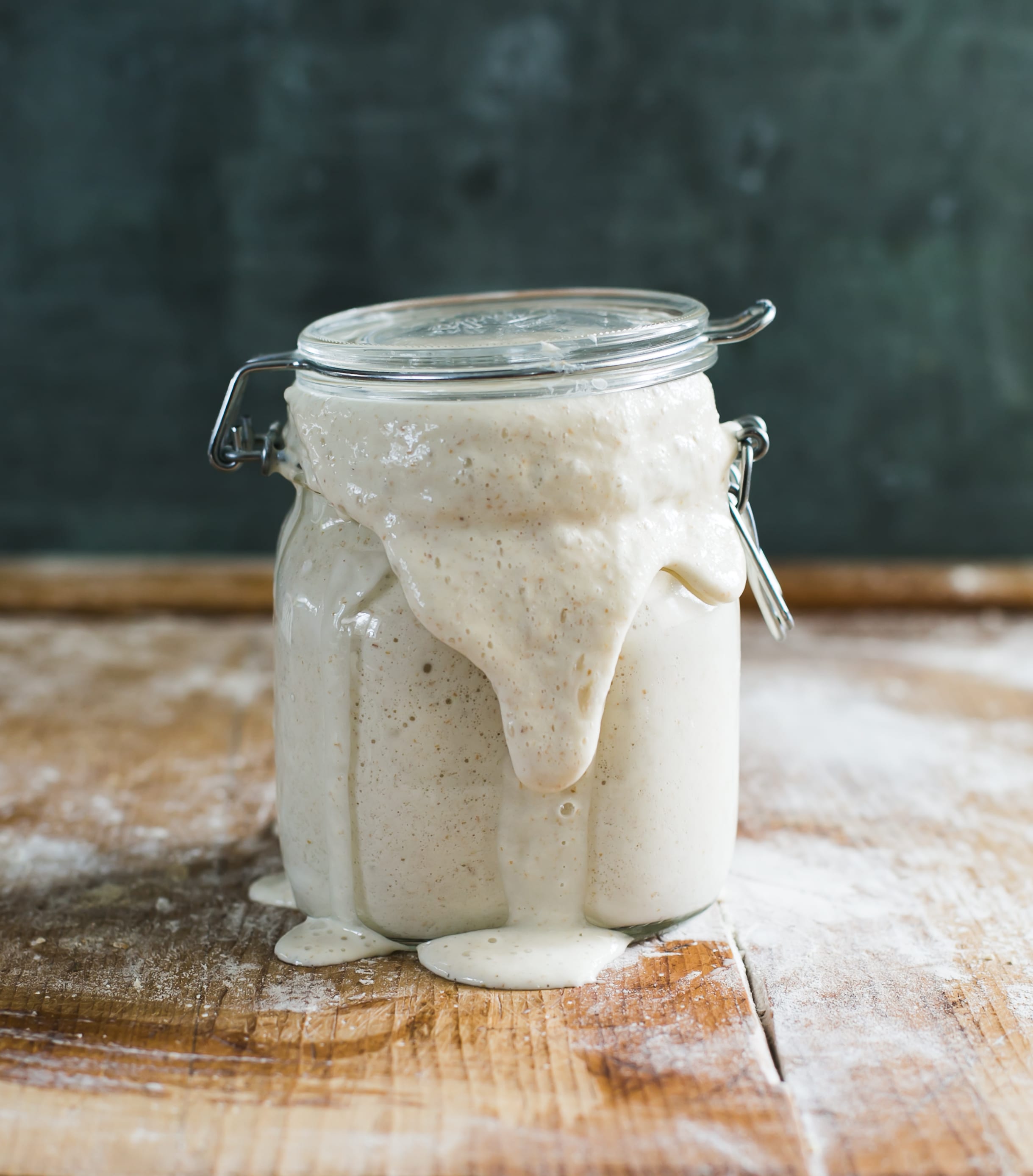
Without a doubt, the most intimidating aspect of sourdough baking is understanding its key element, the starter.
Simply put: a starter is a live fermented culture of flour and water. Once it becomes bubbly and active a small portion is added to a sourdough bread recipe to make it rise- no commercial yeast is required.
Sourdough is a technique that can be traced back thousands of years when instant yeast was not yet available to bakers. Doesn’t sound too scary, right? But there’s a catch…
A starter is not just this “thing” you create and walk away from forever. It must be kept alive and well with additional feedings to maintain its rising power (More step-by-step info here- Feeding Sourdough Starter: My Best Tips & Tricks).
Remember, your starter is a living culture which must be cared for with intent. Otherwise, your bread won’t rise. Think of it like a pet that needs to be fed daily, or a house plant that needs water and a sunny window.
At its core, sourdough is about understanding and committing to an ongoing relationship. As with all relationships, there lies a bit of uncertainty.
You might ask yourself: “Am I doing this right? Why does my starter look different than yours? Why is it taking forever to rise? Is it dead?”
That’s why I’ve put together this article for you. Most of the information is already covered in my book Artisan Sourdough Made Simple, but I’ve included additional details to answer any questions you might have and to open up the topic for discussion.
Two Quick Notes Before You Begin:
1.) To streamline the process, this post assumes you have a working knowledge of a 100% hydration starter, made from equal parts regular wheat flour and water by weight. This is the most common type of sourdough starter. If you don’t have one, try my Beginner Sourdough Starter Recipe.
2.) This post is very comprehensive. Take your time and read through it a few times until the aha moment strikes! Because eventually, it will.
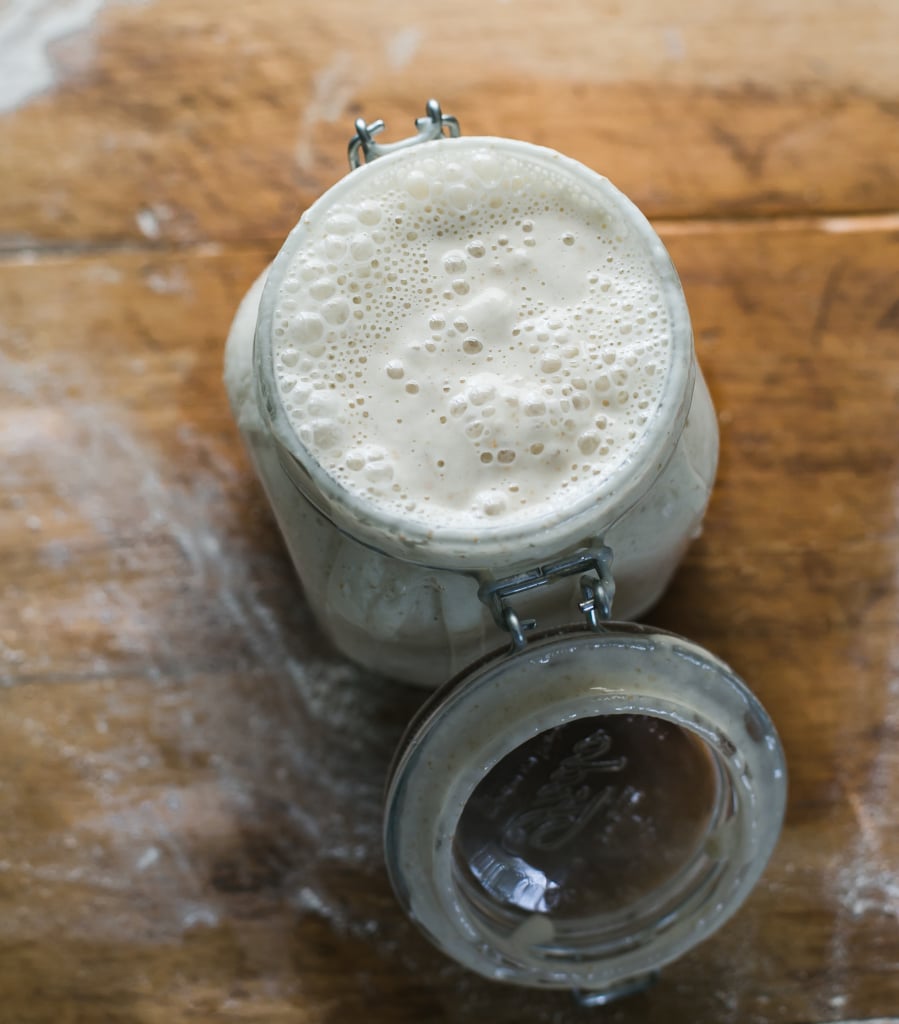
Troubleshooting Your Sourdough Starter
Why Won’t My Starter Rise?
Ahh yes… the million dollar question. It’s like asking: “Why won’t my 2-year-old sleep through the night?”
Because a sourdough starter is a living culture, like children of a certain age, they will definitely share some similarities. Each one will have their own unique personality and the “one size fits all approach” doesn’t always work.
Some bakers use science to explain these personality differences and others observe, follow their intuition and allow the starter to teach them. I implement both techniques.
Keep in mind, when troubleshooting your sourdough starter, it’s usually a combination of factors. In my experience, the rise time is based on temperature, ingredients, feeding frequencies, type of flour & the quantity of flour used.
Temperature
Starters love warm environments. The warmer the spot the quicker it will rise. But realistically, finding a warm spot can be challenging especially when baking in the winter. The ideal temperature is somewhere between 75-85 F.
Here are a few things you can do:
Try storing your starter in a cozy cabinet. It’s warm, draft free, and I have to say, my personal starter does really well in this snug little habitat. Experiment with a cabinet that’s near your stove for extra warmth.
Another option is to wrap the starter jar in a heating pad. One of my kombucha readers (Hi, Melanie!) suggested this tip and it’s very clever. The heating pad maintains the starter at an approximate temperature which can be adjusted to your liking.
A proofing box can also be used to control the temperature. This is the one I use, which is great for your dough too (it FOLDS FLAT!).
If you don’t have a proofing box, place your starter in the oven (turned off) with the light on. But please make sure to keep an eye on it and turn the light off, if necessary. It can get very hot in there! Another makeshift proofing box option is to use your microwave; just place the starter inside (turned off) with the light on.
Finally, try using warm water in your feedings. Around 80-90 F is a good temperature.
Note: regarding temperature, if your starter is exceptionally strong and vibrant, it will have no problem rising in warm OR cold environments, even in the fridge. My starter is a workhorse and will rise ANYWHERE. This is because it’s mature, well fed and cared for starter. Keep this in mind as you continue to develop a relationship with your personal starter.
Ingredients
A sourdough starter is made from flour and water. For best results, always use quality ingredients.
For the flour, please use something that is unbleached, unbromated, and does not contain chemicals.
Most non-organic U.S. flours, including my preferred brand King Arthur Flour, are enriched with vitamins and minerals including iron, folic acid and other vitamins. This is okay to use. I also like Trader Joe’s all-purpose flour for feedings.
However, it’s important to note that not all flours perform the same. Flour from the UK is going to have different enzyme and mineral levels than flour from the U.S., Japan, Australian etc. Even organic flours perform differently.
That’s why when troubleshooting your starter, it’s best not switch back and forth between brands at first. It’s too confusing and you won’t know where you went wrong. Stick to one brand, try to rule out additional factors that might be giving you trouble, and then make changes from there.
For the water, try using filtered or bottled water to avoid any trace chemicals or chlorine if you think it’s having a negative effect on the rise. I don’t have to do this at home, my tap is fine.
Feeding Frequencies
Ever have those days where you’re just ravenous?
Starters can be ravenous too. If at one point your starter was all bubbly and happy, and now it’s not rising anymore, it’s possible that it needs a few extra feedings to boost the yeast development. Assuming you understand how temperature and ingredients can effect the rise of your starter, try feeding it 2x per day and see what happens.
Also, if your starter has been stored in the fridge for a while, it’s going to need several feedings at room temperature to become bubbly. Have patience!
What Type Of Flour Can I Feed It With?
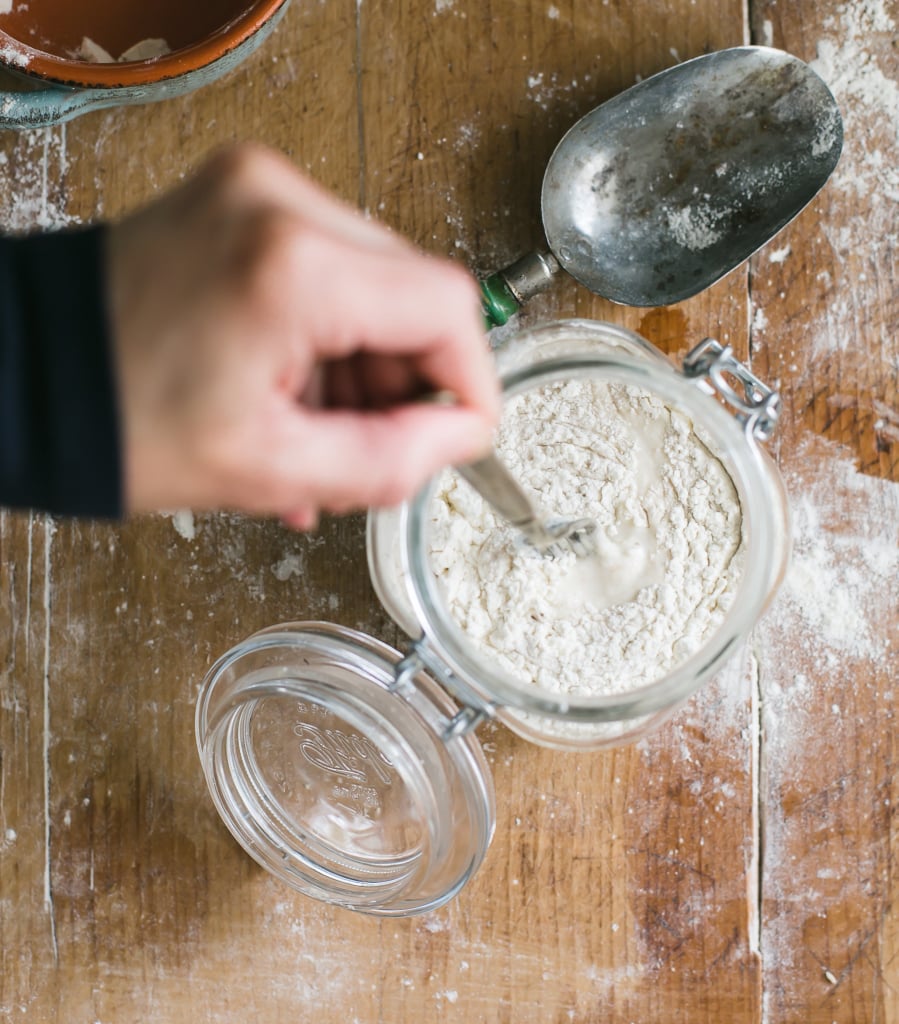
Feed your starter with the same flour from which it’s made.
Now, let me just clarify: every baker has their own way of feeding their starter. And one method is not necessarily better than the next (just different).
To cut through the noise with reliable results, feed your starter with the same flour that’s in the jar. For example, if your starter is made with all purpose flour, feed it with all purpose flour. If it’s made with rye flour, feed it with rye flour. Easy.
By doing so, you’ll establish a consistent feeding routine and the rise time will become more predictable. Think about it this way: how would your dog feel if you fed him a different type of dry food each week? Starters are no different!
How Much Flour and Water Does My Starter Need?
For a 100% hydration starter, feed it following a 1:1:1 ratio by weight.
For example, if you have 30 g of starter in the jar, feed it with 30g of flour + 30g of water. If you have 60g of starter, feed it with 60g of flour + 60g of water. Please use a kitchen scale for this! You can easily scale the initial starter quantity up or down, depending on how much you want to maintain now or in the future.
Again, every baker has a different method, but following a 1:1:1 ratio by weight will get you reliable results. Your starter will rise more predictably, and if you’re lucky, it will stay at its peak height for quite a while before it collapses.
I Created a Starter Following the Instructions in Your Book. It Used to Be Bubbly, But Now Nothing’s Happening? Should I Start Over?
Believe it or not, this is 100% normal.
Typically, when creating a starter from scratch, you’ll see bubbles on the surface around Day #3. When you start feeding it with flour and water on Day #4 and beyond, the bubbles may or may not appear as quickly. It makes sense to think that something’s wrong! But don’t panic.
In order to cultivate and develop the yeast within your starter, you need to feed it for several days in order to see results. The process can be unpredictable, and each person you talk to will have a different experience based on their personal situation and environment. It’s easy to get caught up and compare, doubt yourself, and think it’s not working.
So, should you start the whole process over?
No! Continue to follow the instructions in the book, but make sure to read this post a few times, including Sections 1-3 to familiarize yourself with possible troubleshooting factors. If you’re still stumped, please be patient and continue to feed your starter until it bubbles and doubles in size. Eventually, you will see results. It just takes time.
What Type of Container of Jar Should I use for My Sourdough Starter?
I wrote a whole post on this. Click here.
Does the Starter Jar Need To Be Airtight?
The jar or container can be airtight or covered loosely; it’s your choice.
If it’s airtight, just make sure the jar is large enough to accommodate the starter’s growth as it begins to rise (at least double in size). Otherwise it will burst through the jar.
If you choose a loose cover such as a cloth or something else that’s breathable, and a skin forms on the surface, that means too much air is getting into your starter. It’s not the end of the world if you see this. Just peel it off and/ or choose an airtight lid instead.
What Is That Dark, Smelly Liquid On My Starter?
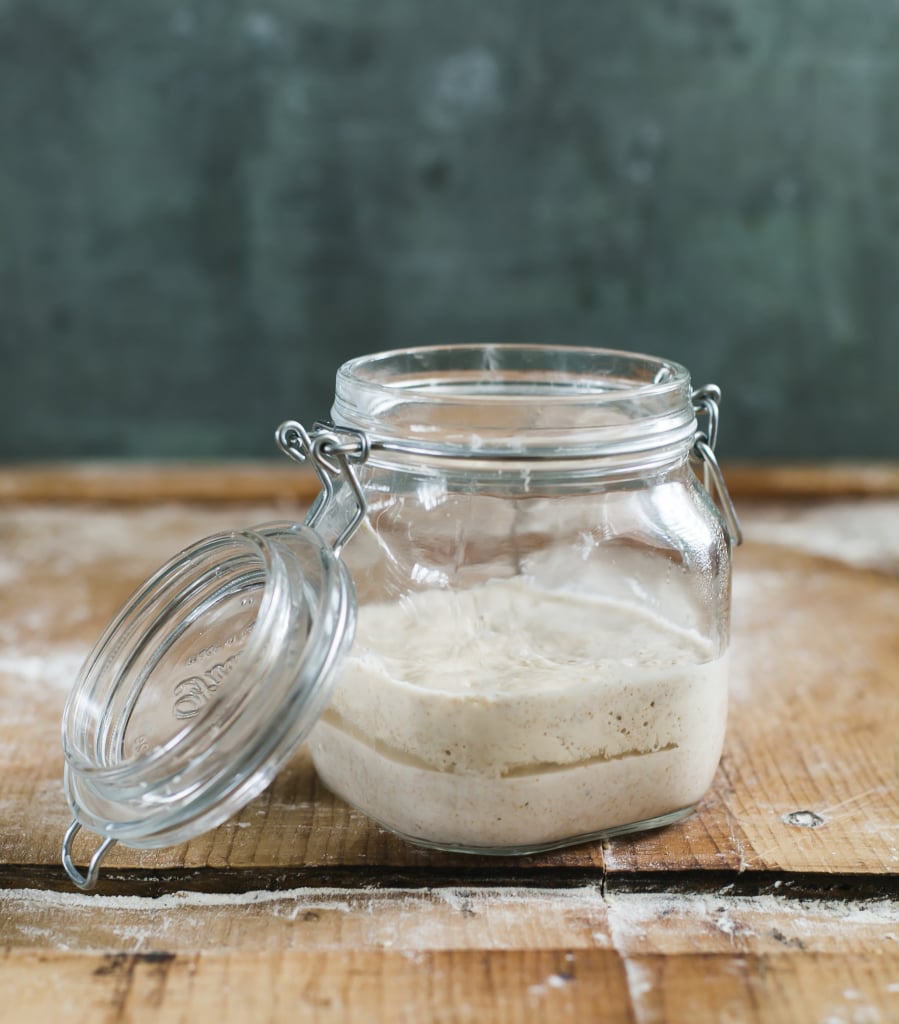
It’s called hooch which is an indication that your starter needs to be fed.
Don’t worry, it’s not dead. Just exhausted. This liquid is something you’ll see regularly, either on the surface of your starter or even within the culture itself (as pictured above), so get used to it! Because the liquid is unsightly and smells like gym socks, I pour it off with some of the discolored starter underneath and feed it right away. That’s all you have to do.
PS: hooch is not mold.
What Should My Starter Smell Like?
First all all, your starter shouldn’t smell too vinegary, like gym socks, or nail polish remover. If it does, it just needs to be fed. Don’t freak out over this too much. At some point your starter will smell like this.
On the other hand, when your starter is in good shape it should smell fresh, fruity and yeasty.
So, what does that even mean?
Fresh, fruity, and yeasty aromas will vary from starter to starter. Some will smell like toasted coconuts and pineapple, others will smell like apple cinnamon. It’s actually very interesting to note all of the differences. Don’t worry if yours just smells tangy and not very “exotic.” Totally normal. The aroma all depends on what’s in the jar and how it’s cared for.
9.)What Happens If There’s Mold Growing On My Starter?
If you see mold, get rid of the entire starter!
In all my years of baking, I’ve never had a problem with mold. That doesn’t mean it can’t happen to you. In fact, several of you have emailed me regarding mold (oddly enough you’re all from eastern Australia. Weather issues?).
Mold can occur on the surface of the starter or on the jar itself. Its appearance can range from white and fluffy, to dark greenish brown, and even pink.
What gives?
Here’s what I know about mold: mold spores are everywhere. And it takes a perfect storm of variables (food, temperature, and water) to populate its growth. So, think about your current environment: is your starter jar near a fruit bowl (food source)? Is your current climate on the humid side (mold loves this kind of weather)? Are you using tap water (where trace chemicals and chlorine can be found)?
Because we all live in different environments it’s hard to pinpoint the exact cause. But if you can troubleshoot any of the above, it might lead you in the right direction. Consider moving your starter to a different room if you think location is part of the issue.
Paired with the variables above, mold can also occur if your starter hasn’t been fed often enough. Consider feeding it more frequently. This will keep the naturally occurring bacteria fresh and happy.
And finally: Sometimes mold can occur when something else lands in the jar. Last summer, a fly got stuck in my starter and the whole thing turned pink (not the fly, the starter). I’m not sure if the pinkish color was true mold or just a result of the unfortunate casualty. Either way, it’s something to pay attention to.
How Do I Get Rid Of Fruit Flies?!
Short answer: you can’t.
When summer rolls around, get used to seeing fruit files because they LOVE sourdough starters. Love. Love. Love. It’s hard to prevent a fleet of flies swarming the jar but there’s a few things you can do.
First, make sure your starter is not near any fruit (for obvious reasons). Second, just relocate it. Sometimes, I keep mine in my bedroom and completely out of the kitchen where the main food sources reside- my husband thinks this is totally weird. Third, keep the lid on. This will not keep out the flies completely but it will help especially after you’ve moved the jar out of the kitchen.
If you have additional ideas on this one, I’m all ears! Please read the comment section below; you guys have THE BEST tips.
Can My Starter Be Used With Gluten Free Flours To Make GF Bread?
Short answer: NO
Most sourdough starters are made from wheat flour and water, so therefore it contains gluten. If you want to bake gluten free sourdough you’ll need a gluten free starter. Remember that. I get many emails asking if my starter can be used to create gluten free sourdough, and it’s just not the real deal.
If I Forget To Feed My Starter, Is It Going To Die?
Short answer: NO
No matter what I tell you here, the first time your starter gives you trouble, or it’s taking forever to rise, or whatever, you’re going to think it’s dead. I guarantee it. The Internet has scared people into thinking if your starter doesn’t rise instantly with a trillion bubbles on the surface, it’s completely broken and will never be usable again. EVER.
Please have a little faith. I have a starter that’s been siting in my fridge for over 1 year, unfed. I forgot it was even in there. After transferring it to a new jar, feeding it for several days in a warm spot, and just being patient, guess what?! It was still ALIVE!!! That’s all you have to do if you suspect your starter needs a little love. Starters are resilient creatures which require practice and patience.
Which brings me to my last point (hooray!)…
Be Patient!
This is THE hardest tip to follow. But it’s undoubtedly the most important.
Who has patience these days when we have access to whatever we want on demand? Sourdough will teach you all about patience whether you like it or not. You can’t rush it. There are no shortcuts. No cheat sheets. Again, like parenting, eventually your 2-year-old will sleep through the night.
So, please read through these tips slowly and carefully and see what troubleshooting factors apply to your personal situation. Some days you’ll have a beautiful bubbly starter and other days it will act like a diva. And just remember: it’s usually a combination of factors that contribute to sourdough starter issues. Your starter behaves this way not to make your life miserable; it just wants you to pay attention. Take your time, feed it a million times if you have to, move it to a warmer spot, and just honor the relationship. It’s the only way you’ll learn.
My intent with this post was to include enough information to satiate your questions, without making you feel exhausted.
Believe me, this topic can go on for ages- there’s just so many scenarios. Feel free to comment below with additional thoughts and tips. Based on your feedback, I will make periodic updates to keep this post fresh and relevant! Happy baking, friends :)

Comments
Gareth says
Hi, your sourdough starter explanation is by far the best I have come across.
I’m struggling with containing my sourdough and I’ve had a couple of spillages.
When the sourdough starter is rising, Is it ok to either stir or tap the container to cause it to deflate a bit and stop it spilling over?
I know that I probably just need a bigger container long term (or less dough) but this one will fit in the refrigerated once the starter matures.
Emilie Raffa says
Hi Gareth! Thank you so much, that is very kind. Sourdough is actually quite straightforward, but because there are many ways to slice the pie so to speak, it can get confusing!
Anyway… to answer your question: it’s ok to stir the starter. But you’ll slow down the rise a bit because you are deflating the bubbles. Personally, I’d just use a bigger jar. Or, keep the jar you have and feed what you need for your recipe is a separate bowl.
Jeani says
I have read through the posts! I have made yummy bread and to die for cinnamon rolls. My question is this to ensure I am doing correctly! When we make a recipe we take out the amount of starter requested we then feed with the 1:1:1 ration discarding the remainder starter(or cook with it as well)??? Or do we use amount recipe calls for and feed only weekly??? Or once we get down to 60g of starter???
Emilie Raffa says
Hi there! When feeding your starter, discard a portion first (if it’s in good condition it can be used for other recipes like pancakes, but not for bread). Then feed what’s left in the jar at a 1:1:1 ratio. Alternatively, you can pour off some of your starter and feed it in a separate bowl instead. It’s up to you. If stored at room temperature, feed it daily OR 1x/ week in the fridge.
Jeani says
Got that Discard and feed but when so I use it to make bread ? How long after I have fed it?
Sorry people been asking me and now I am confused?
Thank you
Jeani
Emilie Raffa says
Hi there! After your starter has doubled in size, it’s ready to use. This can take anywhere from 2-8 hours after feeding it depending on the strength of your starter- it’s different for everyone. To test when your starter is ready to use, do the float test when the starter has doubled (and has not fallen yet); if it floats to the top of a glass of water, go ahead and start the dough.
Patty Smith says
Hi there- thank you for this wonderful blog post- I am on my third try for this sourdough starter- around day 4 each time- it looks great – rises, bubbles etc. I remove half. I am on day 8 and just bubbles form on the top. No more rising. Each of the three times this happens. No rising. I live in New York- so I have time to try again. But what am I doing wrong?
Signed,
Sourdough starter failure
Emilie Raffa says
Patty! Don’t give up! I’m in NY too… it’s just the general mood here ;)
It sounds like your starter is getting somewhere… it’s not a complete bust. Try feeding your starter at approximately the same time each day. Morning or early afternoon. The idea is to train your starter to rise and fall predictably. Give it a stir once and a while during the day to re-incorporate the bubbles. And also, don’t give up after Day 8…. keep going with the feedings. It can take up to 2 weeks or more for the yeasts to cultivate.
Patty says
You were right! Thank you so much! I woke up on day 9 and it had risen in the middle of the night because it’s so cold that the heat was on all night! Thank you SO much! Made my first loaf and it was delicious! Stay healthy!
Emilie Raffa says
Excellent. You’re welcome! xx
Holly says
Hello,
Thank you for your sourdough starter recipe and advice! I started my starter two weeks ago using your exact method and it still doesn’t seem to be rising enough. I have been feeding it once a day using the 1:1:1 ratio, and have been keeping it in a warm spot in my kitchen. A few days ago, the starter began to get more bubbly and is rising a little bit after each feeding, but it never doubles. In fact, it probably only expands by about 10%. Any tips or ideas on what might be happening or if I can expect it to double soon? For more information, I’ve been using room-temperature filtered water, have been stirring the starter before and after each feeding, and am keeping it in a glass jar with a locking lid. I’m using non-organic, all-purpose flour (and used whole wheat flour on Day 1).
Thanks!
Emilie Raffa says
Hi Holly! Thanks for the details info- it really helps. You are doing everything correctly so far. My guess is that it just needs more time (frustrating answer, I know). Try this: feed your starter at approximately the same time each day. Morning or early afternoon and see how you go. The idea is to “train” the starter to rise and fall at predictable times. If you miss a day, or your timing is off please do not worry. Just try to be consistent with this for the next week or so.
Sarah says
Emilie! I am so grateful for you and your beautiful website! I started making sourdough a few months ago and I am so happy that I did (given the current yeast shortage!). I am looking forward to ordering your book soon.
I have had many successful loaves and my family and I are loving the bread. My question to you is, if my starter rises everyday after feeding, can I bake bread every day? We are a family of 5 and can easily eat a loaf each day.
What I have been finding is that I can make bread for two or three consecutive days but by the 3rd or 4th day the bread doesn’t rise as well and tastes more sour. It’s still quite delicious but not as good as the other loaves…
Also, given the time it takes here for the dough to rise, I usually let it rise all night (I am in Nova Scotia on the east coast of Canada). Should I feed my starter late in the day and make my dough just after the starter rises then let is stand through the night and bake in the morning?
Thanks for any help you can offer!
Emilie Raffa says
Hello Sarah! Thank you!
If your starter rises everyday, you can definitely bake bread everyday. We are a family of 5 too- feel free to double some of the recipes!
Regarding the rise & sour flavor on the 3rd or 4th day, the issue could be numerous things, not necessarily the strength of the starter. Has anything else changed? Temperature? Temperature of the dough? Rise time? Recipe? Flour type or brand? We would have to rule out these factors first for best results.
For timing with overnight doughs, you can either feed it early in the morning AND in the late afternoon. Or, just in the late afternoon. It all depends on how strong your starter is to begin with.
Hope this info helps! x
hal says
Hi,
Being stuck in the house for a while with the Covid 19 virus going on, I just finished making my new starter, and my first few loaves of bread from it. I had made starters before, but it had been a while. It took almost 2 weeks to get this one going, and your web site helped me to calm down. I tried making bread with it (too soon) when it was just bubbly, and it turned out looking like a discus. I’m pretty sure the yeast had not fully developed yet, and most of what I was seeing was the bacteria. Anyway, my last loaf rose about as fast as I’m used to with commercial yeast. My bread is delicious. My wife loves it. (I’m the bread baker in the family).
My starter is definitely alive, rises and nearly over flows if I don’t keep an eye on it. Very cool. I’m heading back to work offshore for a week or so, so it’s going to rest in the fridge till I get back
Emilie Raffa says
Hi Hal, this is fantastic! Thanks for sharing your feedback here. Keep on baking :)
Nancy Splan says
I use the 1:1:1 ratio . My dough rises beautifully & is filled with air holes but it doesn’t float in water. What does that mean? Can I use it? It always doubles in size (if not more) after feeding in about 4-6 hours
Emilie Raffa says
Nancy, do the float when the starter doubles in size (not when it falls). Your starter sounds active, but I believe you are doing the test a touch too late.
Tammy says
Loved this! Very helpful for someone new.
Emilie Raffa says
Thank you Tammy! Glad you’ve found this helpful :)
Serina Nations says
Hi Emilie! I have a starter & I’m definitely no chef. I began my starter about 8 days ago. Since it’s suggested to keep in a luke warm spot, I put it in the oven with just a light on overnight. The next day it looked ok but darker & smelled real sour. But I also kept reading to not stop, but to feed it if something didn’t look right. So I kept the 2 Tblsp of mix & fed it with 1c water, 1c white flour & 1c wheat flour, just as I had the 1st time I started the mix. But this time I set it on top of the hot water heater (oh. I should mention that I had it loosely covered with a paper towel & some plastic wrap loosely covering it, just to touch the glass bowl enough to keep the p.towel over the top). I changed the location hoping that spot may have a better temperature my starter may like. It was so pretty the next day! A good color & all. I feel like it rose that night. Well, dummy me, I moved it over to a box in the back mudroom & also decided maybe I should cover it with a light kitchen towel instead. Now this starter has been getting sort of hard on the top. Actually, it’s just getting a hard crust over the top. But it’s still a sticky doughy mess underneath. So I’ve been trying to just keep the mix underneath when I go to feed it. Does it sound like I’m doing this right? I think I’m going to try to move it back over to the hot water heater again with a paper towel & plastic wrap for tonight. Bc I had wanted to try to bake some by this past weekend but then I haven’t been able to get it right enough to bake. Thank you for your time!
Emilie Raffa says
Hi there! Is the issue that your starter is not rising? Bubbling? Both?
From what I understand, I believe that you are feeding it too much. Feed the starter equal amounts of flour and water by weight. For example, if you have 30 g of starter, feed it with 30 g of flour and 30 g of water respectively. The hard crust on top means too much air is getting in. Cover the jar with a lid or seal with plastic wrap.
Try these suggestions first and see how you go!
SERINA NATIONS says
Thank you so much for replying to my first message. I have to believe that it isn’t from me feeding it too much, I left it for at least 24hrs the first day/night. Then about the same again, except for maybe once when I was going to try to bake some & had only left it that time for around 12hrs. Like last night.. I just pulled the crusty stuff off of it, then added the 1/4 c. each of both flours & 1/4c. water. Today it still looks like a little dough ball. No bubbling, no smell, but no crusty stuff either. And I try to stir her up really good when I’m doing a feeding. I’ve been contemplating names too, but haven’t settled on a definite yet..lol! I did move it back over to the area I had it in the second night, except on a rack above the wash/dry area instead on the hot wtr htr. And I also went back to my paper towel plastic wrap top. I don’t remember if I told you that it’s in a glass bowl, not a jar. I don’t have any jars yet. So I am just working with what I have here. Thanks. I hope I clarified some of your questions!!!
SERINA NATIONS says
Wow. Check out the 1’s up at my time when I commented back! Apr 11, 1:11p .. ? Pretty cool! Just thought I’d share that after I saw it..lol!
Emilie Raffa says
OMG I love when this happens! You’re on the right path, Serina. Keep gong ;)
Tracy says
Hi there! I’m on day 4, and for the last couple days there has been white fuzzy stuff on the inside of the jar. I read about mold in your troubleshooting guide. Does it sound like mold to you? I’m thinking of starting over. May I use distilled water in case water is my issue?
Thanks much, Tracy
Emilie Raffa says
Hi Tracy! Yes, unfortunately it sounds like mold. Distilled water is fine. Additionally, make sure to scrape down the sides of the jar after feedings. This has helped me in the past with mold. :(
Jamie Richilano says
Thank you so much, you are truly amazing. Just a couple more questions: 1. How soon after doing the float test do I need to make the dough for the bread? 2. Do you think a starter with dry active yeast is less healthy than without?
Tusen Takk fra Norge :)
Emilie Raffa says
Hi Jamie! All starters are different. Some will rise and fall quickly, and others will stay at peak height for up to 2 hours (or more). You will be the best judge of your starter. However, I’d use it within one hour of doubling to be on the safe side. A starter made with dry active yeast is a hybrid starter. I’m actually unsure of its “health” but for the overall best benefits, pure 100% sourdough is the ultimate way to go.
Jamie Richilano says
Thank you so much again Emilie!
Liz says
Hi! I’m on day 3. Yesterday (day 2) I had a bit of hooch form so I decided to feed my starter (Olaf). Today it’s super bubbly and when I opened the jar it hissed at me. How many more days should I continue to feed it till it’s ready? Thanks! I’m thoroughly enjoying doing this while practicing social distancing. :)
Emilie Raffa says
Hi there! Is your starter already established? Or are you on Day 3 of the creation process? If the latter is the case, continue to feed it for the full 7 days to build strength.
Keerthi Vydyula says
Hi,
I have gone through the beginners sourdough starter recipe and this post. I wanted to make sure of being aware of all the circumstances before I start. Although, I couldn’t find detailed information on steps to follow when the starter is stored in fridge. Can you tell me what to do exactly? As I intend to store it in fridge as I don’t bake break often. Also once the starter is live, can the discarded half portion be used in making bread? Also, I am from India, which is a topical country. Already the temperature is already crossing 86°F, so in this case what should I do? I really appreciate if you can help me with all the question. Thank you in advance.
Emilie Raffa says
Hi there! When storing your starter in the fridge, feed it once a week to keep it going. If you miss a feeding, it’s ok. Just don’t forget about it. Prior to use, remove it from the fridge and feed it at room temperature for a few days before you plan to bake.
Once the starter is alive, the discarded portion cannot be used to bake bread. It’s typically not active and will not leaven the bread. It can be used for other recipes such as waffles and pancakes.
Regarding the temperature, your rise time for the sourdough starter will be fast. This is a good thing! Starters like warm weather.
Aydin Berkin says
Hi there, from Spain! I have been doing all that is in your sourdough starter recipe, except from using whole wheat flour all the way through. The thing is, I know we’re not supposed to use bleached flour, and I feel like I can’t trust white flours that are not organic (during the lockdown I don’t have access to organic flour). That’s why I have used whole wheat flour for feedings as well. My starter is all bubbly, but it’s the 9th day and it is only rising a little. I did the float test and it floated for a minute, and then sunk to the bottom. I am keeping the starter in the oven with only the light on. I don’t feel like it’s ready, and I’m thinking if feeding with wwf is the issue. Help please! Thanks!
Emilie Raffa says
Hi there! The ww flour is not the issue. It’s possible that you’re doing the float test slightly too late. You’ll want to do the test when your starter doubles (and before it falls). Hopefully this will help- do try again!
Jamie Richilano says
Thank you so much for your advice! I never actually feed it again after it bubbled over (I read this a little too late), but instead took out half the remaining started the next day, and then feed it with the amount I had took out. That day the dough floated in water and seemed like a perfect started. I left the starter out and have been feeding it since at room temperature for a little over a week now because I keep testing each day to see if the dough floats (wanting to make bread,) however the dough sinks every time. It has all the other good characteristics- bubbling, smelling fruity and fresh- just sinks. Should I be refrigerating it at this point? Should I maybe remake my starter because I never feed it the first time it bubbled over?
Thank you so much for this amazing website! I will buy your book just as a thank you for the amazing work you have done here. Hope you and your loved ones are healthy and safe during these strange times.
Warmly wishes from Norway :)
Emilie Raffa says
Hi Jamie! Your starter is fine- do not start over! Timing is the issue. Do the float test when the starter has doubled (not after it has fallen). You don’t need to refrigerate it. You can keep it at room temperature indefinitely. I only suggest refrigerating it if you do not plan to bake for a while. It won’t go sour like milk ;)
Amelia says
Thank you so much for all this info! My starter is on day 8 and I amfeeding twice a day 1:1:1 and it is keeping warm wrapped in a heating pad. The smell is great, it is bubbly, and the texture is very much like marshmallow goo- but sometimes when I go to feed it is quite soupy (still nice and elastic though), and I am only seeing *very* slight rise. I am wondering if there are times I should be just adding flour? Or every time I feed, discard and add equal parts water/flour. I am totally fine being patient, as it sounds like it isn’t unusual for starters to take a few weeks to rise- but just wanted to check in :) thank you !!!! I just got your e-book too and I am SO excited to make alllll the things!
Emilie Raffa says
Yes! Your starter will look different on different days. All normal. If it’s too thin (again, normal), add more flour and/or less water. The texture is more important than exact amounts. Equal parts refers to weight measurements only (not measuring cups) which could also be why the texture is off. Hope this helps!
Amelia says
Thanks Emilie! Good to know! I ended up swapping plastic wrap over the top for the mason jars actual lid today (using a quart jar) and sure enough it is now bubbled up to twice its size! Not sure if that helped- but either way, might be helpful for anyone else reading. Thank you for your help!!!
Emilie Raffa says
It did help! Often times, bakers will say starters need to be exposed to air. But I’ve found that when the jar is sealed, more often than not, it bubbles faster given the right conditions! xx
Lydia says
Hi! So on day 5 of my starter, it was the fourth day of a very runny-looking starteer and I panicked and only added 9g of flour to my starter rather than doing a normal discard and feeding. I realize that I probably should have been more patient and continued with my feedings (removing 45g, adding 30g of each). Do I need to account for this extra flour in my feeding today when I go back to normal feedings today?
Emilie Raffa says
Hi there! I wouldn’t worry about it at all. Just discard the amount that you want, and continue. The process is flexible and forgiving.
Kittie says
Hi. I have the perfect solution to your fruit fly problem. Take an empty tuna/pet food can or similarly sized small dish. Pour in apple cider vinegar and a couple drops of blue Dawn dish soap. Stir till mixed then place near fruit fly activity such as kitchen sink, trash, pet litter box. It’s cheap and not poisonous. The soap droplets simply break the surface tension of the vinegar (which the flies LOVE) and they sink and drown. Empty and replenish as needed.
Emilie Raffa says
Hi Kittie! This is excellent, thank you so much ;)
Charly M says
Hi and thanks for this excellent guide and blog. Much easier to use than many of the others there. I’m not a regular baker, but in these tricky times with no yeast in the shops, making my own sourdough is really appealing. I got past the early bubbles and now after feeding for a week or so, I seem to have a stagnant lazy starter which shows a few bubbles on the top, but isn’t really rising or getting any stronger. It doesn’t pass the float test either. Recently I thought it had expired and tried confirmed death using a time lapse photo just after feeding, alas no new bubbles after several hours. As I was preparing to bin it I discovered some fresh bubbles under the skin which had formed when I took the cloth off. It lives! Just. I will carry on, and experiment with different feeding frequencies and temperatures, but I’m still holding off giving it a name in case I get too attached.
I would be glad of help on one thing though. When you say the starter should ‘double in size’ do you mean from day 1 to present, or some other interval like, from feeding to peak bubblyiness maybe? I worked out that if I start with 60+60 (=120) and follow the 1:1:1 ratio after halving, then I will go from 120g to 400g in just 4 days. And also if I keep going at that rate for another couple of weeks I will use heaps of scarce flour (and bin half of it!) and have about 2kg. I’m thinking I should discard 2/3 rather than half, so I keep a more or less stable total quantity after adding in a 1:1:1 ration. Is that the right idea?
Emilie Raffa says
Hi there! You are quite welcome. You are also very funny :)
To answer your question: when referring to an active, established starter, it should double in size after it’s fed. This increased growth is not instant; it can take anywhere from 2-8 hrs or more. Does that make sense?
For maintaining the starter size, just scale down the original amount you have. This way, you’ll only have to feed it a smaller amount. I prefer to keep a small amount of starter, which is why most of my recipes in the book call for 50 g. It’s more practical!
Hope this helps!
Jamie Richilano says
Hi!
Total novice here in Norway. i just made my soughdough starter and within an hour, it bubbled over. I cleaned up the stuff that had bubbled over on the counter with a rag… but maybe this was stupid? Should I have weighed it to see what I need to feed the starter?
Emilie Raffa says
Hi Jamie! Not to worry. It’s ok if you don’t have the weight. Just give it another feed, and continue until it bubbles again.
Lauren says
Hi, I started my starter with organic white AP flour because that was all I had in the house, it has been about 12 days and not much is happening. I am feeling impatient! Can I feed it with some whole wheat flour to give it some more enzymes?
Emilie Raffa says
Hi there! The process can take up to 14 days or more for some people. I know it can be frustrating! You can definitely add ww flour for more enzymes; it might work or delay the process. I’d suggest splitting your starter into 2 jars. Feed one with ap flour and the other with ww flour. See which on takes off!
Becca says
Hi!
I’ve been feeding my starter once a day, for 5 days now and it looks great! Unfortunately I forgot to feed it today and won’t be able to until tomorrow. It’s it okay for the starter to not be feed for one day and be left out at room temperature? Also, my starter if full of air bubble and is taking on a more fermented smell. My boyfriend says it smells like kombucha. Is this normal?
Emilie Raffa says
Hi Becca! Absolutely. Your starter will be fine if you skip a day, or two of feedings etc. They’re very resilient. The air bubbles and fermented smell are all normal. Just continue to feed it; the smell will change over time.
Andrea says
I made a whole wheat sourdough starter and it was going gangbusters after 5 days. I read somewhere that I could feed it with unbleached all-purpose flour but I think that caused it to stall. Now when I feed it, I only get a handful of bubbles on top and it doesn’t really rise. Should I switch back to whole wheat flour for feeding the starter?
Ryan Foy says
Hi Emilie,
Recently bought your book and have enjoyed it, but I’m utterly confused about the 1:1:1 ratio. The instructions say to discard half my starter, and then add back that amount of water/flour, but won’t it just keeping getting bigger and bigger? I’m on day 4 of my starter and it was 100 grams this morning. If I add 100g of water and 100 g of flour, the total weight will be 300 grams. So the next day I’d be adding 150g of water/flour. Should I instead be discarding enough starter to get it down to the weight I want, like 60g as your book suggests, and then adding that amount of flour/water? Please help!
Also, I hope you are your family are well with everything going on. I bet a LOT of people are taking up bread making right now!
Emilie Raffa says
Hi Ryan! Question: Was your starter 100 g before or after you removed half? And thank you for thinking of us during these crazy times. Hope you and your family are well, too (a ton of people are baking right now…) Stay safe!
Ryan Foy says
My replies don’t seem to be posting, hope this doesn’t show up repeatedly. My started was 100g after discarding half.
Alison says
When you say, “if there’s mold, get rid of it,” is “it” the mold or the starter? I’ve heard you should chuck moldy starters ad start over, but if there’s a way to keep from doing that, that’d be so much better!
Emilie Raffa says
Hi Alison! Get rid of the starter. That’s the safest bet :)
Deidre Girard says
Emilie-
HELP! I have read the trouble shooting post several times, as well as your book and several other SD books and don’t know what to do! I started my starter on March 9, followed recipe to a T. Day 2 seemed fine and did the first feeding on Day 3-the starter got foamy and I saw some rise and action. Day 4 I feed it and got nothing, actually a bit soupy not thick and stringy. I feed it a second feeding 12 hours later. I am now on day 5 and it still looks soupy. There are a few bubbles on top of the surface but that is it. I used Bob’s Redmill wheat for beginning and am using KA unbleached AP. I have used filtered water. My house runs around 70 degreed during the day and chillier at night. I have been putting it in oven with the light on and monitoring the temp so it doesn’t get too high. What should I do-wait till summer to try?? or add some wheat flour in?? I even took starter out and measured 60g so after yesterday it was 60/60/60- Please help!!! I hate to bury this guy before I have named him!
Lisa says
Hi. Firstly, I love your book! I’m working my way through. As the weather is cooling my starter isn’t performing the way I like but I have a new trick. Drop the jar in my yoghurt maker. It loves it there at 25 C. It’s a good place to build a levain for a recipe too. My question is probably age old but I’m still confused about the use of all purpose vs Bakers flour in starters and breads? I’m in Aust and only use organic flours but my bread recipes with unbleached organic all purpose always seem to dense. I wish there was king Arthur flour here! Thanks again for
all your recipes.
Emilie Raffa says
Hi Lisa, thanks so much! Glad to hear you are enjoying the book. AP flour has a lower protein content than bread flour. So for bread baking, in short, this means it wont rise as high. Bread flour is prized for its high protein content and gives our loaves that lofty, high rise! In starters, you can use both flours interchangeably. Just remember, because bread flour has a higher protein content, it tends to absorb more liquid than AP flour. So if using bread flour to feed your starter, you’ll need to add more water to get the right consistency.
PS: you bread might be dense because you are using AP flour and not bakers flour. Try the same recipe with bakers flour and see how you go! xx
Johannes Kristensen says
Hello. I got a sourdough starter from my aunt. It had a very nice and intesive sourdhough starter aroma, (although it did smell some what of paint). Now I have been feeding it twice a day, 1:1:1 for almost a week, and unfortunately it is loosing more and more of it’s original powerfull aroma. The paint smell is also decreasing which of course is nice. It seems to have peaked when I feed it because it collapses just slightly. Even so I am afraid of overfeeding it and thereby thinning out in the yeast/bacteria population. I feed it 1/3 manitoba wheat flour and 2/3 wholemeal rye. I store it at aproximately 71 degrees. My aunt stores her starter in the fridge and bakes rye bread from it once a week. Her starter contains salt. I don’t use salt in my starter.
Any good tips on how to increase or at least maintain aroma in a starter?
Thanks.
Philip Sheikh says
Hi Emilie, I would like to start by thanking you for the article and the vast thread you’ve created on here!
I have recently built a proofing cabinet from a large polyurethane box which controls the temperature using a sensor and a heating mat and with a humidity of 84% using Boveda packs that are used to maintain cigars. In theory, this is all great for creating the conditions I am after. However, after leaving my starter in the box overnight, it has sucked up the smell of the new box. I’ve fed the starter twice and I can still smell the polyurethane. Will this be toxic to bake with and ingest you think? Shall I keep feeding the starter and eventually the smell will be chucked out with the discarded starter or do you recommend I start over?
And finally, I have placed some damp tea towels all over the insides of the box so they suck up the smell then will let it air out for a few more days prior to using it. Do you think this should work?
Sam says
Hello! Sourdough newbie over here :) I made my first batch of sourdough bread using your starter and basic recipe and it turned out lovely. Thank you so much! I since then put the started into the fridge because I only need to bake about once a week. My question: when I am ready to bake again, do I take out the whole starter from the refrigerator, discard half and feed with equal amounts, and then leave on the counter to get bubbly again? Then, after it gets bubbly to use and use what I need, I feed with equal amounts and place back in the fridge? I am just a little confused with the feeding and storage part when I take it out to bake, since I am storing in the fridge it in the mean time. Thank you in advance for the hopeful clarification!!
Megan Osmond says
Hey. My starter is on day 12. It rose massively today which pleased me however it still smells vinegary. Is that normal? Should I be feeding it again? I fed it about 9 hours ago. Thanks!
Paul Walter says
Hi Emilie,
I’ve had my starter going for about 3 weeks now. At one point it passed the float test, but it no longer floats. I discard some and feed it everyday, and it grows slightly, but I can’t seem to pass the float test anymore. Any tips?
As a side note, I started the starter with bread flour on day one, but for all my feeds since then I’ve used bleached all-purposed flour – I missed the note on using non-bleached flour. Do you think this is an issue?
Thanks for all of your help – I love your blog!
Emilie Raffa says
Hi Paul! I wouldn’t use bleached flour for your starter. This could be the issue. Switch back to bread or pure all purpose flour, move your starer to a very warm spot, and see what happens over the course of a week. I’ve used bleached flour before (accidentally), and experienced a lot of problems. But it can be revived! Let us know how you go….
Lex Starwalker says
Hi Emilie! I just found your blog a while ago when I decided to try making sourdough bread. I’ve been working on my starter for a couple weeks now. Due to cold temperatures, it’s been slow going, but it’s almost ready for the first baking day!
I wanted to comment on the issue with fruit flies. I haven’t encountered this with sourdough yet, but I also brew kombucha which attracts fruit flies too.
One trick I learned is you can create a fruit fly trap. Just put some apple cider vinegar in a jar, glass or other container. Add a few drops of dish soap. Put a piece of plastic wrap on top and secure with a rubber band. Now poke some holes in the plastic top with a fork. You want the holes big enough for the fruit flies to get in. The fruit flies get in, but they can’t get out. You just have to empty out the vinegar and flies every so often. You can also use a trap like this to catch house flies, just make the holes a little bigger.
I keep one of these traps near my kombucha fermentation jars, and they work like a charm. I still see a fruit fly every now and then, but not nearly so many as before I used the trap.
Molly says
Hi, I accidentally left my active sourdough on the counter for a week when I was gone. Is it now unsafe to use?
Emilie Raffa says
Hi Molly! It’s totally fine to use. It’s not like leaving milk out on the counter. Just continue to feed it until it bubbles and doubles in size :)
Carol says
Hi Emilie,
Does low altitude affect starter/baking sourdough bread? I have found many articles regarding baking at higher altitudes, but I can find nothing regarding low altitude/sea level baking. I’m new to baking sourdough. I’ve been baking a hybrid (King Arthur Flour’s recipe using starter for flavor and commercial yeast for rise) bread for about 6 months with no issues. Using your beginner’s guide (very helpful!) I made my first loaves of true sourdough (using the starter to make it rise/no commercial yeast) bread while we were camping and they came out beautifully. Our cabin is about 450 miles from our home. It it about 2400 feet about sea level and has a dry climate. Little to no humidity. Two feedings after arriving at the cabin and my starter was floating and ready to use. At home, however, I can’t get my starter to pass the float test at all. Home, btw, is only 59 feet above sea level with very high humidity (like breathing through a damp sponge). On two different occasions recently I fed my starter twice a day for a week. Still couldn’t get it to pass the float test either time. It bubbles, but doesn’t double in size. It’s more like “goo” at home. I starting wondering if maybe it was the difference in the water so the next trip to the cabin I brought water home and used it. I fed the starter twice a day for another week. That didn’t help. Buying bottled/filtered water doesn’t help either. I’m using the same starter, same water, same flour. The only variable is location (with very different altitudes, climates, moisture levels). Could this be why my starter works in one location but not the other? Is there anything I can do to get my starter to work at the lower altitude?
Thank you,
Carol
Emilie Raffa says
Hi Carol! Thank you for the detailed information. I’ll be honest with you, I do not have experience with low altitude baking. However, you mentioned something very critical in your comment: the texture is like “goo.” This gives us a clue. I believe (due to the different moisture levels) that you actually need to add more flour to your starter when you’re at home. You’re looking for a slightly thicker consistency, a texture that is comparable to how it looks when you’re at the cabin. Don’t worry about weighing here; just add flour by the spoonful. Additionally: since there are some bubbles present in the jar, your starter is definitely still active, which is great. I think it just needs more food (flour) to cultivate the yeast. I hope this makes sense!
Carol says
Thank you! I will try that.
Emilie Raffa says
Great! Good luck :)
Liz says
hi my name is Liz,I been trying to make sour dough bread and used whole meal bread flour, /but the bread come out very dense .What am i doing wrong .
Emilie Raffa says
Hi Liz! I’ll need a bit more information… what recipe are you following? Brand of flour? Do you weigh your ingredients? Thanks :)
Gloria Aide says
I would like to start baking sourdough bread. I have been given some starter. I’m wondering why it is necessary to discard half of the starter each time I feed it? If I miss doing that the first time, will the starter be ruined? Thanks for your response.
Emilie Raffa says
Hi Gloria! Discarding a portion of your starter is necessary to refresh the acidity levels. It also keeps the starter from growing too large. It will not be ruined if you miss doing it for the first time. Starters are resilient.
Carol Roberts says
Thank you for this wonderfully informative and (just as important) reassuring article. Yes, I was indeed thinking my starter was dead.
Please excuse the newbie question: When you talk about putting the starter in a warm spot like a cupboard, do you mean after every feeding, just on days when I’m going to bake with it, or all the time (surely not)? I think I’ve identified 2 likely causes of a nonbubbly starter that used to be bubbly: kitchen is too cold and I was feeding it only once a week.
Have you every heard of anyone using the yogurt setting on a pressure cooker (that is, very low heat and no pressure) to keep a starter warm?
Emilie Raffa says
Hi Carol! You are quite welcome :) To answer your question, I would suggest keeping your starter in the cupboard all the time (especially if you’re looking for a warm spot). Keep in mind though, it doesn’t have to live there forever. For example, you might want to move it in the summer if the cupboard is too warm; does that make sense? I haven’t heard of using the yogurt setting on a pressure cooker. But hey! It might work? Maybe someone here can comment ;)
Carla Whelton says
Can someone help? My sourdough starter bubbly and fruity, dough rises nicely with bubbles under surface. When I turn out the dough from the proving basket the dough comes out flatter than it should. The crumb and crust are good but the loaf is flatter than ones I see in restaurants and bakeries. I dont think it is over proved as dough springs back when I test it. Help.
Emilie Raffa says
Hi Carla! What sourdough bread recipe are you following? And how long is your bulk rise AND second proofing time? Thanks!
Julie says
Hi! I have worked with a starter a little in the past and have recently taken it back up again. We got some dried from my mother and started aggressively feeding it. We aren’t getting much lift out of it though and just had an idea yesterday that may be the cause- we have a alkalizing water machine and was using that water to feed it. My husband just did a brief search yesterday online and read that a starter needs to be acidic around a PH of 3. Our water machine was putting out a PH of 10! My question is; did we kill some of the bacteria in my starter? It’s still producing some bubbles and smell but it’s not producing much lift both when we are feeding it or in the loaf stage.
Thanks so much!!
Tyler says
Hello!! I’m trying to make my first spurdough starter and the video I followed on youtube sais to use pineapple juice for the first two feedings, then use water after that. Once that video produced a sourdough starter that didn’t rise amd molded, I tried to start over, this tome following my heart. I used just flour and water this time, equal proportions, and out on the counter for a few days. Then, it was in the fridge and I didn’t feed it for a few days. Today, I took it out on the counter to feed. I’m going to leave it there for a few more days, feeding it every day, but it’s been over a week and it hasn’t risen yet. It smelled like vinegar and after feeding, it smelled better, but i can’t help but feel I’m doing something wrong. Can you help me?
stella quinert says
Hello – just wondering if you can advise me . I started a recipe and followed it all the way through – however at no stage was my starter bubbly or liquidy like your picture – I read somewhere that there is a stiff starter philosophy and thought thats is what I had encountered – I have since found out that I am using a recipe by Richard Bertinet and his ratio was 150gm white flour 50 gm spelt flour 1 tbspn honey and 150 l water. I mixed it and set it aside as per instructions for 2 days in the kitchen but nothing really happened – I kept on with the recipe anyway and I eventually got a little loaf and put the rest of the starter in the freezer. I dont think I did it properly – can I rescue it or is it best to start all over..thanks for your help
Sarah says
Hello – I know you posted this some time ago but wondering if you can help. I bake my sourdough weekly and have been using the same starter for 10 months now. I thought I had it down pat. I always use the float test to know I’m ready to bake. However, I have been consistently feeding my starter for over 2 weeks now and it still isn’t floating. It’s bubbling and has even overflown my jar but always sinks!? I’m completely perplexed. Help.
Thanks,
Sarah
Emilie Raffa says
Hi Sarah! The good news, is that it sounds like your starter is totally fine. I think it’s just your timing that’s a little bit off. Meaning, the float test is done after your starter has peaked and fallen; does that makes sense? Try to do it a bit earlier and see how you go. Hope this helps!
Dorota says
I bought your book and I love it. I made a starter last year from whole wheat rye flour and had to dry it because I was away for almost two months. Two weeks ago I brought it back to life, the starter behaves beautifully, rises, bubbles etc, however, I don’t see it being very strong. It seems forever to proof, I tried different recipe that I used it for and the dough didn’t rise much at all, after almost two days of proofing :)
My question is, is it possible that, even though the starter looks beautiful that it lost its strength if combined with the flour for the bread recipe ? I also tried your first recipe in the book and the dough was so flat and lifeless, didn’t double in size even though I followed all YOUR instructions as to when the starter is ready: doubled in size, passed the float test etc. Could that be that the starter lost its strength after being dryed up for storage?
Gennelle says
There is a dark gray layer plus some liquid on the top of my starter. I haven’t fed it in about 3 weeks. I don’t know if it’s mold/mildew but I haven’t seen it before and I’ve been using the same starter for about 7 months. I’ve had it in the refrigerator the whole time. I’ve scraped of the layer and fed it. Is it ok to use or should I start over? I didn’t feed it for three weeks when we were out of town and it looked normal when I came back, but this time it looks funky. Thanks!
Jimboy says
Im on second day of making my starter. And it it seems like its already alive. It dobled in size already, is it normal?. im using whole wheat flour. By the way im from Phillipines. Im thinking maybe its because the climate.. im hoping you can help me.
Karen says
Thank you so much for this! I was convinced my starter had been neglected to death (by me!) but have just excitedly and lovingly fed and rehomed it and am patiently waiting for its ressurection!
Jim Shawhan says
I’m 80 years old now and was raised with sourdough. My personal starter (beer can) is almost 50 years old; the original starter was a wedding gift from a very old starter in my wife’s mother’s family.– the Pikes of Pike’s Peak. The (family) secret to working with sourdough and it’s recipes is to -never- let it touch metal of any kind.. Use glass or stoneware containers and bowls, and work the dough and subsequent “batters” with wooden utensils (some plastics are okay, others not). Years ago, I started a test flask, and when it got going I stirred it with a metal spoon –voila– killed it dead! I tried everything to revive it to no avail. Also, the final rise of whatever is being prepared can be done in a metal baking utensil, and it doesn’t seem to affect the final product. I hope this information is helpful.
Gail says
Emilie, I am working on my starter. All was going well in terms of bubbles (but no rising) using flours suggested in your book and bottled water till day 3-4 when I got the bright idea to substitute filtered water from my fridge (warmed to room temp). I believe my tap water would have chlorine but thought this would be ok. I am not going to make all of my sourdough with bottled water so thought maybe I should start things out with the water I’ll eventually be using? Well needless to say I’m on day 6 now, still zero rising, and very noticeably less active bubbling. I fed today with warmed bottled water and moved to a warmer spot hoping I haven’t wrecked things. I know….patience right? I will keep feeding and stick with the bottled water. But my question is does this bode poorly for my future baking? Will my future loaves not rise using my house water?
Sarah says
I read elsewhere that you can leave chlorine tap water out over night, in an uncovered container, then the chlorine will dissipate. I was unsuccessful with water straight from the tap, but am having success with water left overnight (we have chlorinated water).
Emilie Raffa says
Hi Sarah,
Ooo this is so interesting. I’ve never heard of it! I’m definitely going to try this out; our tap water is heavily chlorinated (although I’ve never had any problems with it in baking). I’m curious to see the results. Thanks for the tip!
Gail says
Thank you Sarah. I’ve since done just that with my water after reading about it elsewhere. I still had no luck though with AP flour though. I got minimal bubbling on the top only and essentially no rise. I’ve done well with 25% rye + 75% AP but I really want to feed with straight AP since I have to order rye online and it’s expensive. At the moment I’m trying to gradually wean my starter off rye and also starting a new one with rye instead of whole wheat on day 1 but feeding with only AP. I hope one or the other approach will eventually work! I am starting to wonder if anything about KAF AP flour has changed since Emile created her starter.
Mindy Lebovics says
Hi!
I recently bought your book. I’m on day 9 of making my starter. The first 2 days ( with just the whole wheat flour) it doubled in size. Since I started started adding flour (King Arthur unbleached all purpose flour) not so much. I’ve wrapped it in a heating pad which helped a little (grew about 1/2” from it’s original 1 & 1/2”) I’ve been weighing and doing equal parts ratio….. any more suggestions?
Sheh says
My favourite fruit fly defence is to cover the jar with pantyhose/tights – those pesky fruit flies can’t come anywhere near my starter then! :)
Emilie Raffa says
Hi there! Yes! Great idea. In fact, my mom suggested this tip to me recently as well. I’ll have to try it this summer. Thanks :)