Have questions about sourdough? This troubleshooting guide offers practical tips and tricks to achieve a bubbly, active sourdough starter.
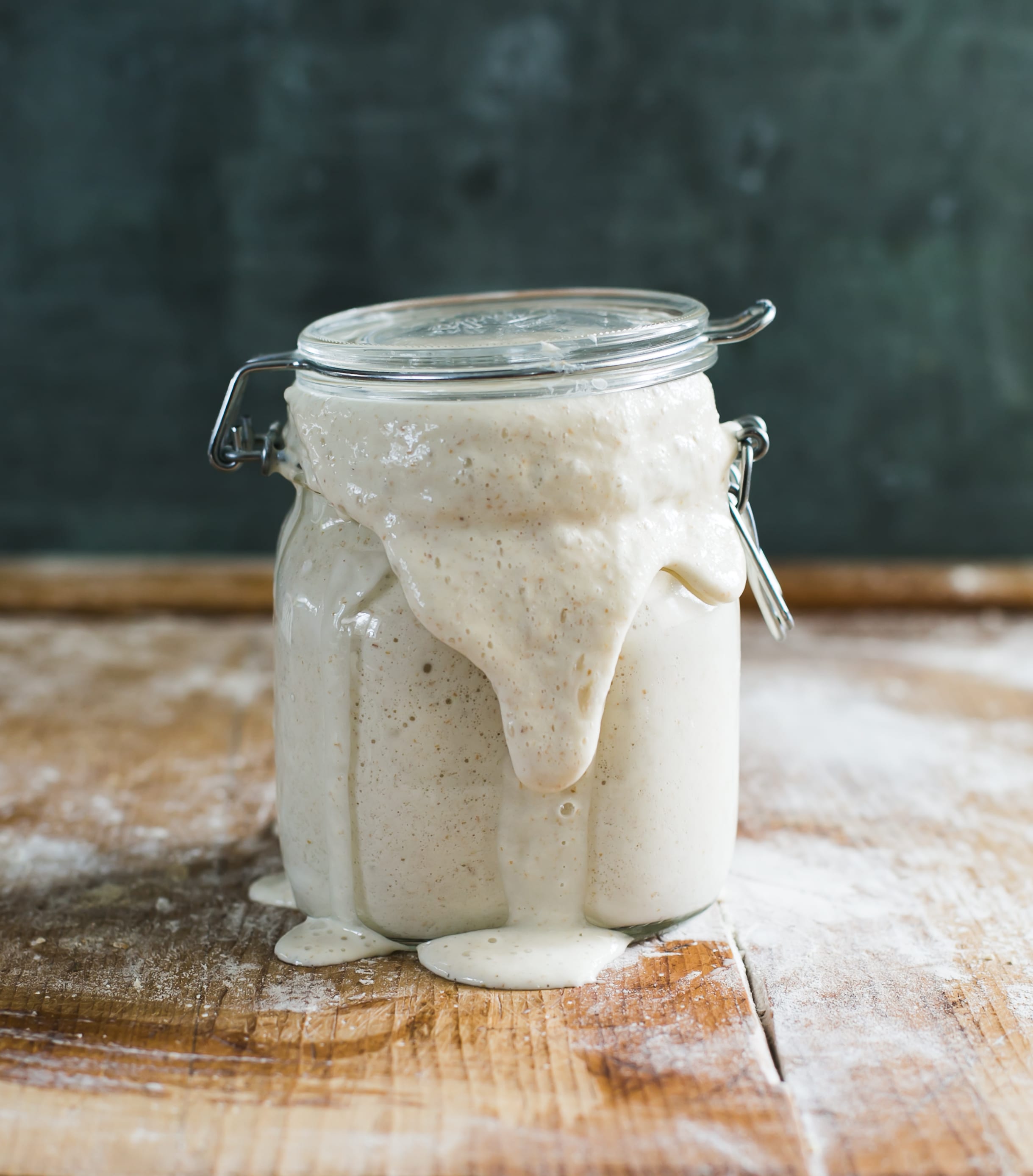
Without a doubt, the most intimidating aspect of sourdough baking is understanding its key element, the starter.
Simply put: a starter is a live fermented culture of flour and water. Once it becomes bubbly and active a small portion is added to a sourdough bread recipe to make it rise- no commercial yeast is required.
Sourdough is a technique that can be traced back thousands of years when instant yeast was not yet available to bakers. Doesn’t sound too scary, right? But there’s a catch…
A starter is not just this “thing” you create and walk away from forever. It must be kept alive and well with additional feedings to maintain its rising power (More step-by-step info here- Feeding Sourdough Starter: My Best Tips & Tricks).
Remember, your starter is a living culture which must be cared for with intent. Otherwise, your bread won’t rise. Think of it like a pet that needs to be fed daily, or a house plant that needs water and a sunny window.
At its core, sourdough is about understanding and committing to an ongoing relationship. As with all relationships, there lies a bit of uncertainty.
You might ask yourself: “Am I doing this right? Why does my starter look different than yours? Why is it taking forever to rise? Is it dead?”
That’s why I’ve put together this article for you. Most of the information is already covered in my book Artisan Sourdough Made Simple, but I’ve included additional details to answer any questions you might have and to open up the topic for discussion.
Two Quick Notes Before You Begin:
1.) To streamline the process, this post assumes you have a working knowledge of a 100% hydration starter, made from equal parts regular wheat flour and water by weight. This is the most common type of sourdough starter. If you don’t have one, try my Beginner Sourdough Starter Recipe.
2.) This post is very comprehensive. Take your time and read through it a few times until the aha moment strikes! Because eventually, it will.
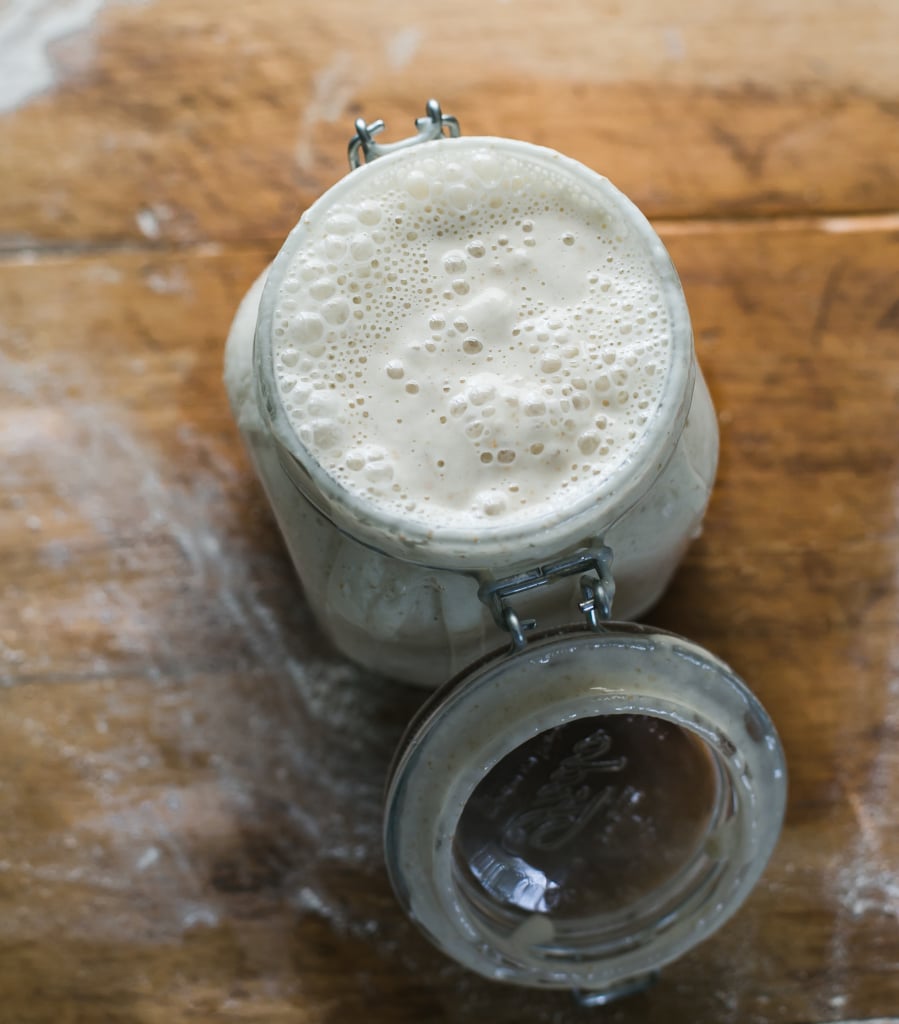
Troubleshooting Your Sourdough Starter
Why Won’t My Starter Rise?
Ahh yes… the million dollar question. It’s like asking: “Why won’t my 2-year-old sleep through the night?”
Because a sourdough starter is a living culture, like children of a certain age, they will definitely share some similarities. Each one will have their own unique personality and the “one size fits all approach” doesn’t always work.
Some bakers use science to explain these personality differences and others observe, follow their intuition and allow the starter to teach them. I implement both techniques.
Keep in mind, when troubleshooting your sourdough starter, it’s usually a combination of factors. In my experience, the rise time is based on temperature, ingredients, feeding frequencies, type of flour & the quantity of flour used.
Temperature
Starters love warm environments. The warmer the spot the quicker it will rise. But realistically, finding a warm spot can be challenging especially when baking in the winter. The ideal temperature is somewhere between 75-85 F.
Here are a few things you can do:
Try storing your starter in a cozy cabinet. It’s warm, draft free, and I have to say, my personal starter does really well in this snug little habitat. Experiment with a cabinet that’s near your stove for extra warmth.
Another option is to wrap the starter jar in a heating pad. One of my kombucha readers (Hi, Melanie!) suggested this tip and it’s very clever. The heating pad maintains the starter at an approximate temperature which can be adjusted to your liking.
A proofing box can also be used to control the temperature. This is the one I use, which is great for your dough too (it FOLDS FLAT!).
If you don’t have a proofing box, place your starter in the oven (turned off) with the light on. But please make sure to keep an eye on it and turn the light off, if necessary. It can get very hot in there! Another makeshift proofing box option is to use your microwave; just place the starter inside (turned off) with the light on.
Finally, try using warm water in your feedings. Around 80-90 F is a good temperature.
Note: regarding temperature, if your starter is exceptionally strong and vibrant, it will have no problem rising in warm OR cold environments, even in the fridge. My starter is a workhorse and will rise ANYWHERE. This is because it’s mature, well fed and cared for starter. Keep this in mind as you continue to develop a relationship with your personal starter.
Ingredients
A sourdough starter is made from flour and water. For best results, always use quality ingredients.
For the flour, please use something that is unbleached, unbromated, and does not contain chemicals.
Most non-organic U.S. flours, including my preferred brand King Arthur Flour, are enriched with vitamins and minerals including iron, folic acid and other vitamins. This is okay to use. I also like Trader Joe’s all-purpose flour for feedings.
However, it’s important to note that not all flours perform the same. Flour from the UK is going to have different enzyme and mineral levels than flour from the U.S., Japan, Australian etc. Even organic flours perform differently.
That’s why when troubleshooting your starter, it’s best not switch back and forth between brands at first. It’s too confusing and you won’t know where you went wrong. Stick to one brand, try to rule out additional factors that might be giving you trouble, and then make changes from there.
For the water, try using filtered or bottled water to avoid any trace chemicals or chlorine if you think it’s having a negative effect on the rise. I don’t have to do this at home, my tap is fine.
Feeding Frequencies
Ever have those days where you’re just ravenous?
Starters can be ravenous too. If at one point your starter was all bubbly and happy, and now it’s not rising anymore, it’s possible that it needs a few extra feedings to boost the yeast development. Assuming you understand how temperature and ingredients can effect the rise of your starter, try feeding it 2x per day and see what happens.
Also, if your starter has been stored in the fridge for a while, it’s going to need several feedings at room temperature to become bubbly. Have patience!
What Type Of Flour Can I Feed It With?
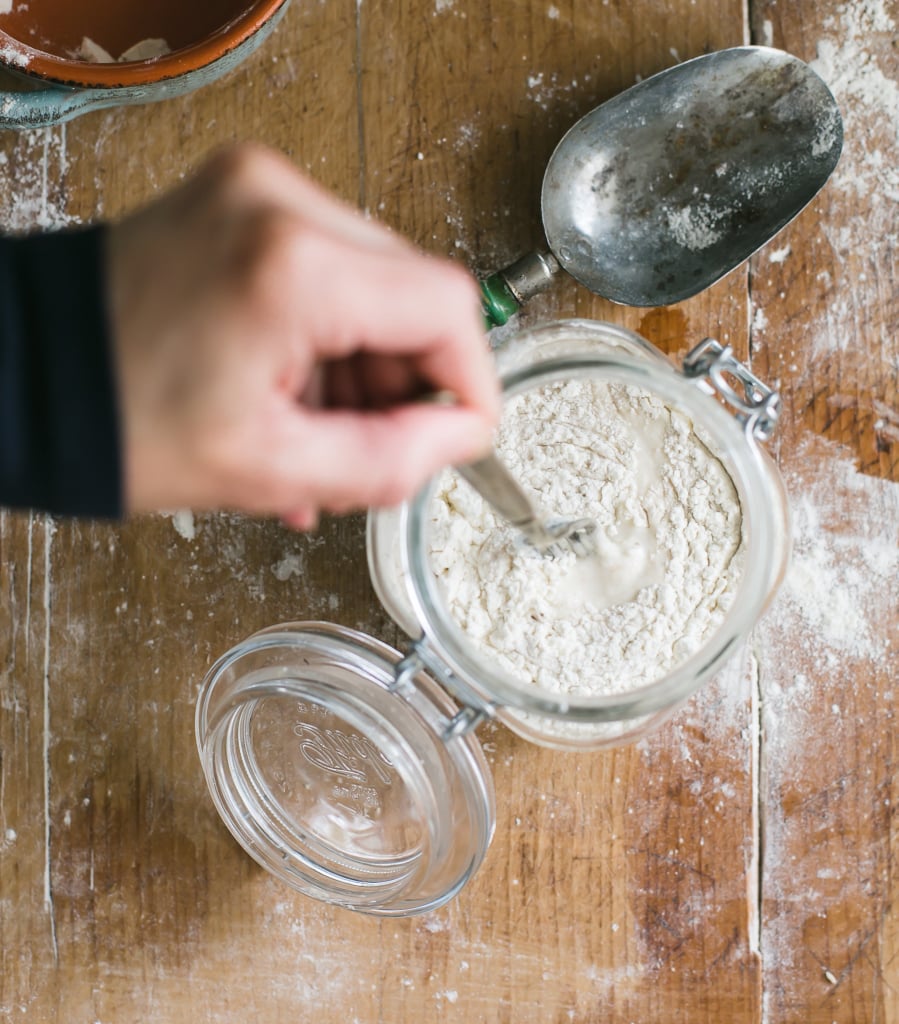
Feed your starter with the same flour from which it’s made.
Now, let me just clarify: every baker has their own way of feeding their starter. And one method is not necessarily better than the next (just different).
To cut through the noise with reliable results, feed your starter with the same flour that’s in the jar. For example, if your starter is made with all purpose flour, feed it with all purpose flour. If it’s made with rye flour, feed it with rye flour. Easy.
By doing so, you’ll establish a consistent feeding routine and the rise time will become more predictable. Think about it this way: how would your dog feel if you fed him a different type of dry food each week? Starters are no different!
How Much Flour and Water Does My Starter Need?
For a 100% hydration starter, feed it following a 1:1:1 ratio by weight.
For example, if you have 30 g of starter in the jar, feed it with 30g of flour + 30g of water. If you have 60g of starter, feed it with 60g of flour + 60g of water. Please use a kitchen scale for this! You can easily scale the initial starter quantity up or down, depending on how much you want to maintain now or in the future.
Again, every baker has a different method, but following a 1:1:1 ratio by weight will get you reliable results. Your starter will rise more predictably, and if you’re lucky, it will stay at its peak height for quite a while before it collapses.
I Created a Starter Following the Instructions in Your Book. It Used to Be Bubbly, But Now Nothing’s Happening? Should I Start Over?
Believe it or not, this is 100% normal.
Typically, when creating a starter from scratch, you’ll see bubbles on the surface around Day #3. When you start feeding it with flour and water on Day #4 and beyond, the bubbles may or may not appear as quickly. It makes sense to think that something’s wrong! But don’t panic.
In order to cultivate and develop the yeast within your starter, you need to feed it for several days in order to see results. The process can be unpredictable, and each person you talk to will have a different experience based on their personal situation and environment. It’s easy to get caught up and compare, doubt yourself, and think it’s not working.
So, should you start the whole process over?
No! Continue to follow the instructions in the book, but make sure to read this post a few times, including Sections 1-3 to familiarize yourself with possible troubleshooting factors. If you’re still stumped, please be patient and continue to feed your starter until it bubbles and doubles in size. Eventually, you will see results. It just takes time.
What Type of Container of Jar Should I use for My Sourdough Starter?
I wrote a whole post on this. Click here.
Does the Starter Jar Need To Be Airtight?
The jar or container can be airtight or covered loosely; it’s your choice.
If it’s airtight, just make sure the jar is large enough to accommodate the starter’s growth as it begins to rise (at least double in size). Otherwise it will burst through the jar.
If you choose a loose cover such as a cloth or something else that’s breathable, and a skin forms on the surface, that means too much air is getting into your starter. It’s not the end of the world if you see this. Just peel it off and/ or choose an airtight lid instead.
What Is That Dark, Smelly Liquid On My Starter?
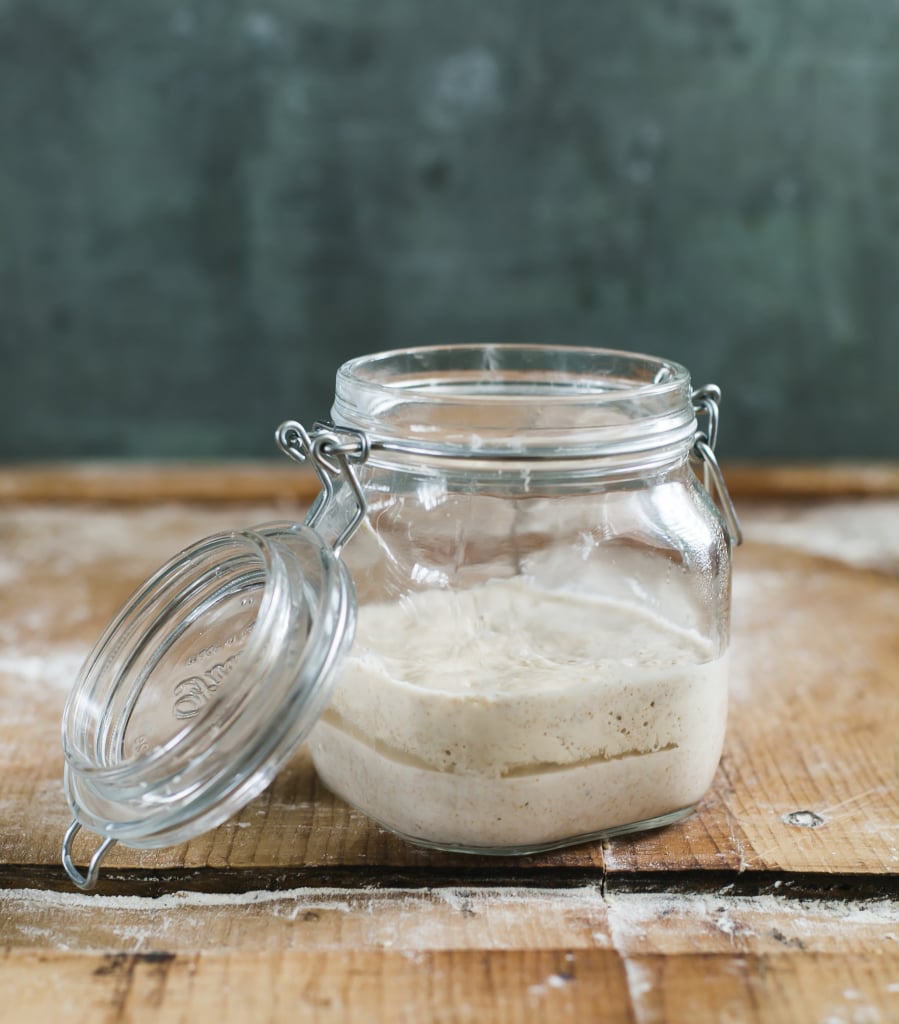
It’s called hooch which is an indication that your starter needs to be fed.
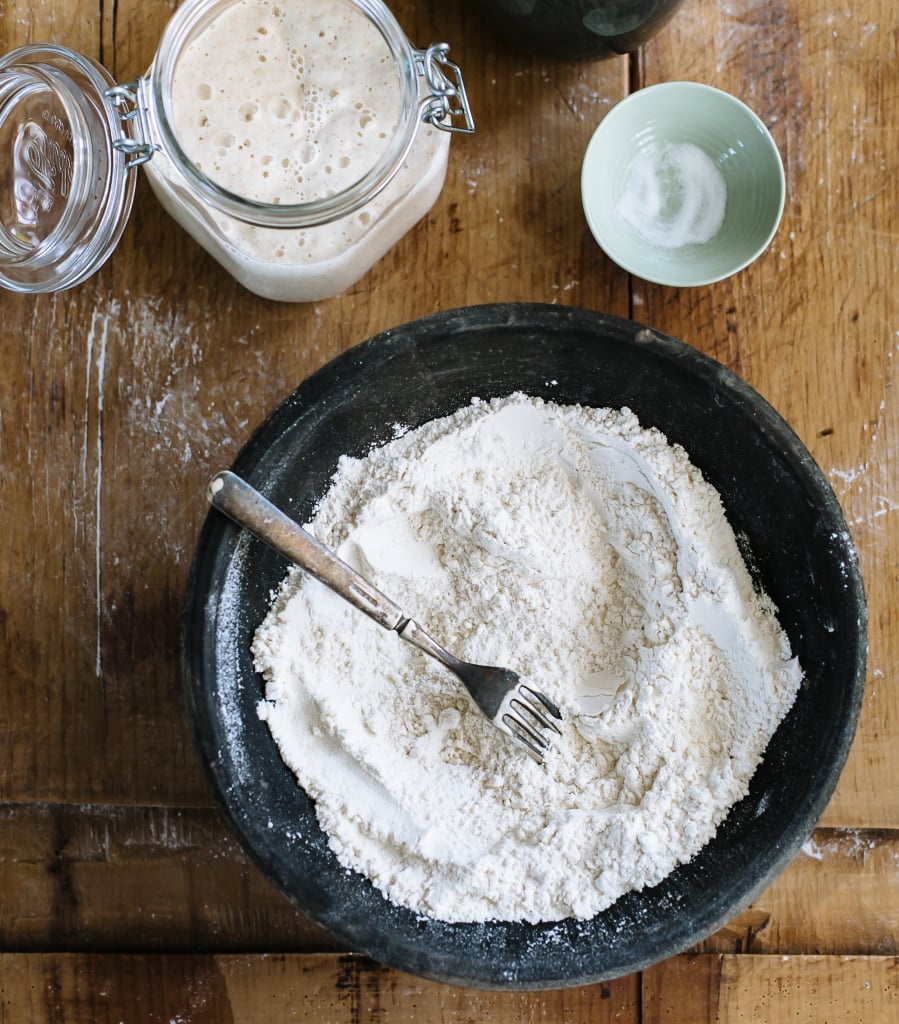
Don’t worry, it’s not dead. Just exhausted. This liquid is something you’ll see regularly, either on the surface of your starter or even within the culture itself (as pictured above), so get used to it! Because the liquid is unsightly and smells like gym socks, I pour it off with some of the discolored starter underneath and feed it right away. That’s all you have to do.
PS: hooch is not mold.
What Should My Starter Smell Like?
First all all, your starter shouldn’t smell too vinegary, like gym socks, or nail polish remover. If it does, it just needs to be fed. Don’t freak out over this too much. At some point your starter will smell like this.
On the other hand, when your starter is in good shape it should smell fresh, fruity and yeasty.
So, what does that even mean?
Fresh, fruity, and yeasty aromas will vary from starter to starter. Some will smell like toasted coconuts and pineapple, others will smell like apple cinnamon. It’s actually very interesting to note all of the differences. Don’t worry if yours just smells tangy and not very “exotic.” Totally normal. The aroma all depends on what’s in the jar and how it’s cared for.
9.)What Happens If There’s Mold Growing On My Starter?
If you see mold, get rid of the entire starter!
In all my years of baking, I’ve never had a problem with mold. That doesn’t mean it can’t happen to you. In fact, several of you have emailed me regarding mold (oddly enough you’re all from eastern Australia. Weather issues?).
Mold can occur on the surface of the starter or on the jar itself. Its appearance can range from white and fluffy, to dark greenish brown, and even pink.
What gives?
Here’s what I know about mold: mold spores are everywhere. And it takes a perfect storm of variables (food, temperature, and water) to populate its growth. So, think about your current environment: is your starter jar near a fruit bowl (food source)? Is your current climate on the humid side (mold loves this kind of weather)? Are you using tap water (where trace chemicals and chlorine can be found)?
Because we all live in different environments it’s hard to pinpoint the exact cause. But if you can troubleshoot any of the above, it might lead you in the right direction. Consider moving your starter to a different room if you think location is part of the issue.
Paired with the variables above, mold can also occur if your starter hasn’t been fed often enough. Consider feeding it more frequently. This will keep the naturally occurring bacteria fresh and happy.
And finally: Sometimes mold can occur when something else lands in the jar. Last summer, a fly got stuck in my starter and the whole thing turned pink (not the fly, the starter). I’m not sure if the pinkish color was true mold or just a result of the unfortunate casualty. Either way, it’s something to pay attention to.
How Do I Get Rid Of Fruit Flies?!
Short answer: you can’t.
When summer rolls around, get used to seeing fruit files because they LOVE sourdough starters. Love. Love. Love. It’s hard to prevent a fleet of flies swarming the jar but there’s a few things you can do.
First, make sure your starter is not near any fruit (for obvious reasons). Second, just relocate it. Sometimes, I keep mine in my bedroom and completely out of the kitchen where the main food sources reside- my husband thinks this is totally weird. Third, keep the lid on. This will not keep out the flies completely but it will help especially after you’ve moved the jar out of the kitchen.
If you have additional ideas on this one, I’m all ears! Please read the comment section below; you guys have THE BEST tips.
Can My Starter Be Used With Gluten Free Flours To Make GF Bread?
Short answer: NO
Most sourdough starters are made from wheat flour and water, so therefore it contains gluten. If you want to bake gluten free sourdough you’ll need a gluten free starter. Remember that. I get many emails asking if my starter can be used to create gluten free sourdough, and it’s just not the real deal.
If I Forget To Feed My Starter, Is It Going To Die?
Short answer: NO
No matter what I tell you here, the first time your starter gives you trouble, or it’s taking forever to rise, or whatever, you’re going to think it’s dead. I guarantee it. The Internet has scared people into thinking if your starter doesn’t rise instantly with a trillion bubbles on the surface, it’s completely broken and will never be usable again. EVER.
Please have a little faith. I have a starter that’s been siting in my fridge for over 1 year, unfed. I forgot it was even in there. After transferring it to a new jar, feeding it for several days in a warm spot, and just being patient, guess what?! It was still ALIVE!!! That’s all you have to do if you suspect your starter needs a little love. Starters are resilient creatures which require practice and patience.
Which brings me to my last point (hooray!)…
Be Patient!
This is THE hardest tip to follow. But it’s undoubtedly the most important.
Who has patience these days when we have access to whatever we want on demand? Sourdough will teach you all about patience whether you like it or not. You can’t rush it. There are no shortcuts. No cheat sheets. Again, like parenting, eventually your 2-year-old will sleep through the night.
So, please read through these tips slowly and carefully and see what troubleshooting factors apply to your personal situation. Some days you’ll have a beautiful bubbly starter and other days it will act like a diva. And just remember: it’s usually a combination of factors that contribute to sourdough starter issues. Your starter behaves this way not to make your life miserable; it just wants you to pay attention. Take your time, feed it a million times if you have to, move it to a warmer spot, and just honor the relationship. It’s the only way you’ll learn.
My intent with this post was to include enough information to satiate your questions, without making you feel exhausted.
Believe me, this topic can go on for ages- there’s just so many scenarios. Feel free to comment below with additional thoughts and tips. Based on your feedback, I will make periodic updates to keep this post fresh and relevant! Happy baking, friends :)

Comments
Jenni says
I’m on day 9…my starter was fluffy and very bubbly on day 7 when I transferred to a clean container. It doesn’t seem as bubbly now-there are some bubbles, but it doesn’t seem to be rising at all or becoming very bubbly. It’s a batter consistency. Should I just keep repeating day 3?
Lisa says
Thank you for the starter recipe! Like many others, my starter didn’t rise after the third day, and then suddenly it happened on day 9. Today I am going to make my first starter bread. Question – after you take out the right amount of starter for your recipe, should you immediately feed what is remaining? thank you!
Maria says
Simple question: When you are removing 50g to clean jar (to feed) do you stir it first?
Emilie Raffa says
Hi there! I do not stir down my starter before using.
Liz says
Hi
I’m not sure what my starter in the fridge should smell like? I fed my starter 7 days on the counter and was then able to bake my first loaf. We loved it! I fed and put my remaining starter in the fridge and fed it again once since. I didn’t put the lid on tight in the fridge, I misread it. When I checked it, it smelled very strong. Almost like glue or paint. It looks fine, has bubbles and the colour looks ok too. It’s the smell I’m worried about. Can starter go off??
Thank you
Nina says
Not a pro here. I’m new to this as of last night. But, it’s probably all good. My discard smelled similarly. When I fed the jar of discard in the fridge, the smell decreased. When you take it out later to use, leave the portion you’ll use at room temp, making sure to feed it 8-10 hours before using it — I did this — the smell goes away as it warms up and you’ll get the sour smell you want bc it has been freshly fed.
MariZ says
Hi,
My friend gave me her start which I was able to maintain and use for about 2 weeks. Then I put it in the fridge, as I didn’t intend to bake for 2 weeks, but fed it weekly. Now ive taken it out and tried to revive it, have even increased feedings, to every 12 hours but it’s only rising like barely 1 cm above where it was the prior feeding. It’s been almost 5 days and a lot of flour! Is there any hope or am I wasting good flour after bad? How many more days should I keep feeding to see if there’s a revival? I feel bad how much flour is being tossed!
Bella says
Hi! I had this problem too. I used whole wheat flour to revive it and it helped me a lot. Good luck!
Hannah says
Hi! I have been googling for ages now and landed on this page- it was incredibly helpful!
I had my starter sitting in the fridge while we moved house for around 6 months, i am now trying to bring it back to life, but it is not rising. I have come to the conclusion it is just too cold in my house. I will try your suggestion and pop in oven to keep it warmer.
Thanks for you support! On the plus side, for now the local bakery is going to continue to get my business while i figure this out during Iso!
Jason says
Hey, thanks for the guide. Found it really useful and easy to follow.
I now have an 8 day old AP starter. 3 days in it was fluffy and marshmellowy and smelt super Sour. Around day 5 when feeding I forgot to discard half (but still fed it as if I had), so assume it was underfed. It then began to develop hooch. I discarded the liquid and began feeding properly again. Now on day 8 it is no longer growing at all but has a few bubbles on the surface. I am feeding every 12 hours to try and promote the yeast but nothing is changing. Is it a case of patience and to keep on persevering or have a killed the little guy?
Appreciate the help!
Lauren says
I built my starter from scratch following the KA guide (4 oz starter, 4 oz flour 1/2 cup water) and my first bake was so beautiful. Lately I’ve been having issues with my starter getting bubbly enough and ending up with UFO loaves. After reading this super helpful post I’m going to switch to a 1:1:1 ratio and just keep it all in grams for simplicity sake along with trying your troubleshooting methods. Thank you!
P.S. I made your sourdough cinnamon rolls twice this week…it’s Wednesday.
P.S.S. A note on the fruit flies: we get them bad every summer and I use a small mason jar with vinegar in the bottom then place a cone shaped piece of paper in the top of the jar. The hole in the bottom of the cone should be big enough for the flies to fit in, then they can’t figure out how to get out. Then I usually just replace the vinegar once a week and store it near our fruit basket!
Katya says
Dear Emma! Thank you so much for such a detailed post, Though I have a similar problem as Emma – my starter doesn’t float, it’s been three weeks old now and o do keep it in the fridge, because we are in India and it is a summer here now, so kitchen temperature is around 92F, which is too much and I think it overferments quickly.
My starter is 100%whole wheat. It’s bubbly and nice smelling, but it never doubles in size since it was mature enough to go to the fridge (about 9days) – may be gains 50-70% maximum in a volume. I feed it twice a week now, leaving it for 4 hours at the room temperature before moving it back into the fridge. And it’s 1:1:1 ratio. Please share your thoughts on what am I doing wrong 🙏🏻
Laura Munson says
Hi! I’m still trying to figure out the feeding of my starter. My friend says to keep it in the fridge (about 2 inches). Then on the night before you bake, feed it and leave it with a loose lid on the counter over-nite. Each time I do this, it knocks the lid off, and over flows, but then by morning, falls. It’s still at least a cup of bubbly goo. But I wonder if I should capture it when it’s at full rise? Also, She doesn’t feed it unless she’s baking the next day, in the fashion mentioned above. I’d love some advice on what I’m doing right/wrong. The loaves are all deelish, but I wonder if they’d be more airy if I used the starter at full rise. Oh, and also…do you stir it when you use it, or keep it as lofty as possible? THANK YOU! This is helping me through Covid and providing for my family. — Laura
Raquel F Jarrell says
I may be mistaken, but did you mention removing part of the starter prior to feeding it? Or can we feed it without removing part of the starter?
Nina Martinez says
You have to remove part of the starter before feeding it so as to not have as many microbes to feed! For example, if you started with 1/4c starter, usually after feeding (~1/4c. water + 1/2c. flour) + 12 hours wait time, it’s 3/4c. Feeding again at this time, I remove the extra 1/2c, leaving 1/4c. again in the jar. Then feed the jar.
Natalie says
You can feed it without discarding BUT you have to add same amount. If you have a 200g of starter feed it with 200g water and 200g water. Ratio is always 1:1:1
Tilly says
Hi Emilie! I’ve always loved sourdough but never had the guts to try baking one. I’ve since decided to attempt making one after reading your post and everything sounded so manageable! I’ve started making my starter with all purpose flour.
However, I’m onto day 5 ( i think!) of the process and my starter has barely risen and doesnt smell fruity or welcoming. It was thriving around day 2 and smelled like vomit around day 3. Since then, It’s gotten very runny and smells like cardboard.
I understand it’s normal for the starter to thrive at the beginning and might calm down after, but it’s been runny for about 3 days now. I’m in Western Australia, where it is fall and the temperature ranges from 48-73 degrees fahrenheit throughout the day.
Am I on the right path? What should I do to improve on my starter?
John Coley says
Hi Emilie!
This, along with your “Sourdough Bread: A Beginners Guide.” has been incredibly useful and informative. Thank you! My most recent batch is still rising c. 24 hours after putting it down to bulk ferment. I’m TRYING to be patient! I keep my starter in the fridge and I think I’m not letting it properly up to speed before making dough. I’ll work on that. My question is: When I use some starter, and feed the rest before putting it away, should I weigh out how much starter is there so I can match it with equal weights flour and water? Thanks, and now I’m off to buy your book…
John
Emilie Raffa says
Hi John! Fantastic! You are very welcome :)
Ok, so 24 hrs is long time without a rise… something seems off. When using a fridge starter, I feed it for several days at room temp. before using to perk it back up. Try doing that next time, making sure it doubles and passes the float test before using. Regarding the feedings, yes: you can do that. Keep the jar wight noted somewhere (masking tape fixed to the bottom of the jar) and just subtract it to find the starter weight. Tons more detail in the book. Thanks for your support! x
Karen Lehmicke says
Hi! I had bought several small bags of whole wheat flour to make sourdough starter, and used up the last of it this morning (Tuesday) but my starter isn’t “ripe” yet (It smells AMAZING, but I tried dropping it in water, and it didn’t float, and it hasn’t risen too much). It is about a week and half since I started it. Now, because of COVID, I can’t get wheat flour at the store, and the place I ordered from won’t deliver it until Thursday. Should I continue feeding with regular flour until the whole wheat arrives, or hold off and wait to feed it until the whole wheat flour arrives? FYI, right now I’m following King Arthur Flour’s instructions of feeding 2x per day, discarding all but 113 grams in the morning. Thank you for your help!
Emilie Raffa says
Hi there! You can do either one. It might take more time for the starter to adjust if you switch flour types for the feedings, but it can be done.
Kathy Miller says
I am still trying to get my starter to rise and float…so I am just adjusting and being patient. Hopefully warmer weather will help the situation. I just wanted to leave a tip about the fruit flies. Leave out an uncorked red wine bottle with just about a half a cup of red wine in the bottle. The fruit flies will choose the wine over everything else. They fly in and drink themselves to death. What a way to go!
Yiwena says
Hello Emma,
Lovely post right here! I am currently on my 5th day of starter from scratch, but during these few days it has started to developed a very dry surface. It is bubbly and have already developed a really nice vinegary smell, but the top is just really dry. I tried stirring it, it looks okay, but after a few hours, it starts to develop the dry top again. May I know if this is normal???
Thanks!!!!
Emilie Raffa says
Hi there! Too much air is getting in. Remove the dry surface and switch to a lid or another tight cover like plastic wrap or a reusable wax wrap to seal it.
Phoebe says
I have a very happy starter that I use wholewheat flour in and have never had any issues with it. I moved some of it out into a new jar and transitioned it over a few days to strong white bakers flour instead (the nice soft white pizza bases I’d been trying to make kept turning out with too much bran in them from the wholewheat in the starter) and it’s just…sad. Seems too runny, is only rising an inch, barely bubbling. I was doing 1:1 but lowered the hydration a little to account for runny-ness but suspect I may need to lower it even more. Is there much of a need to discard starter right down so you’ve got 1:1:1? I never did with my wholewheat – would discard a little but never needed to discard a whole lot. Just trying to figure out where I’m going wrong and what I can to try help it along! Thank you for your great articles, they’ve been a huge help.
Chelsea D says
Hi there, I read the your post and it was mostly helpful: but it didn’t deal with whole wheat. Bread flour wasn’t available when I decided to take on this challenge so here I am! My starter Veruca is living up to her name and starting to take all of my attention I’m on day 5 and she doubled in about 6 hours and not the 4 I read about. Not passing the float test either. Can I put her in the refrigerator after the next feeding until I’m ready to bake in a few days? I’m really getting anxious that she’s growing really fast but isn’t actually strong enough to bake. I’m feeding with 1/3 cup ww and 1/3 ap and 1/2 cup water. Sorry, no kitchen scale!
Emilie Raffa says
Hi Chelsea! To answer your question: yes, you can put her in the fridge until ready to bake. It sounds like your starter is active. However, it’s possible you’re doing the float test after it has fallen. Try doing it when it has doubled in size.
Christine Weald says
Thanks for your tips. My starter is bubbly, smells good but is too thick to pour. What viscosity should a starter be?
I do not seem to advance beyond making a starter to make bread. Help please.
I extracted 100gm and added it to 250gm of flour and 275gm water and left overnight but it is thick and sticky although bubbly. I didn’t continue.
Emilie Raffa says
Hi Christine! It depends on the type of starter you have. The texture of a whole wheat starter will be different than one made with all purpose flour. The hydration level (the water to flour ratio) will make a difference too. If you find that the texture is too thick, just add a splash of water to thin it out. It’s flexible. For 100% hydration starters, which is a common starter to use, the texture should be like thick pancake batter. When it becomes bubbly, the texture will become fluffy, stretchy and aerated similar to roasted marshmallows.
Alice Harbin says
I obtained my sour dough starter from a B&B owner in Nome AK in 1997. I have been feeding it whenever it developed hooch or smelled bad.
I was too intimidated to actually make bread, but I’m ready now.(This stay at home Corona 19 is good for something). I don’t like to toss all but 1/4c of the starter each time I feed it. It is so nice now that I’ve been feeding it weekly. Consequently, I have 3 starters going.
Must I toss so much starter?
Emilie Raffa says
Hi Alice! How lovely! The amount you discard is always up to you. It’s flexible.
Andrew Taylor says
Hello Alice
Instead of tossing your starter surplus, pour into a heated, oiled pan and add salt, pepper, and some fresh chopped herbs and eat it as a pancake with your bacon and egg. You can also add a sweetened cinnamon apple compote if you want something sweeter.
Elizabeth says
Hi, I have a starter right now, on day 3 it rose and fell perfectly. But day 4 & 5 have had no rise but have nice bubbles in top. Am I doing something wrong or should I wait it out. Is it possible for my starter to have risen overnight? Also sometimes I feed it at different times on different days. I have had hooch everyday except for day 1 & 2, but i feed it, is there something else i am doing wrong?
Amanda says
I am trying my hand at a sourdough starter for the first time.. it has been almost two weeks with consistent feeds and unimpressive results. Nothing bad but nothing real active either. I’m getting a kitchen scale and going to keep after it! Thanks for the ideas and awesome encouragement! Great read!
Emilie Raffa says
Hi Amanda! Just keep going! I know it can be totally frustrating without immediate results. But if you stick with it, your starter will eventually grow. PS: try moving it to another room. It sounds minimal, but it has helped me in the past when my starter has been sluggish.
Justys says
Hi there! I have had a starter for 2 weeks now. Only a couple of days ago it rose enough to be used for bread making, but it collapsed before I could. After that, I fed it like normal and now it won’t rise at all. Should I just keep feeding it as you said even though i’ve had it for so long? Thanks!
Emilie Raffa says
Hi there! Yes, continue to feed it until it doubles again. Your starter will always rise and fall; it’s the nature of the feeding process.
Nicole says
Hello,
I just started my sourdough starter and on day two it has tripled in size since the last feeding with lots of bubbles. Is this normal? Should I be feeding it less? I have never heard of that quick of growth and bubbles in such a short period, and am afraid I did something wrong!
Thank you!
Emilie Raffa says
Hi there! It’s normal! Just keep feeding it per the recipe- all good things are happening. But it still needs to build strength. Do not feed it less.
Sarah says
Hello! Thank you for this very helpful post. I have just made my own sourdough starter after reading this and have been feeding it for about a week now. It seems to bubble well on the surface with both big and small bubbles however, it does not seem to be rising. Any tips on what I should do before attempting to use it in my first loaf of bread?
Thanks in advance!
Emilie Raffa says
Hi there! I would continue with the feeding process, aiming to feed it at the same time each day to train the rise and fall of the starter. Additionally, give it a stir once and a while to redistribute the air bubbles.
Alastair J W Maxwell says
Hi you are awesome for crafting this for all of us proto-sourdough bakers.
I read somewhere to keep the half of my starter I scoop off when feeding in the fridge. Just to confirm, is this usable? Have I now got two batches of sourdough starter:)
My starter that I feed is bubbly, sweet smelling, but not double in size, only a quarter. Just feed more?
Emilie Raffa says
Thanks so much, Alastair! What you keep is up to you. If what you scoop off is gross and smelly, throw it out. There’s no point in using it for pancakes let’s say, because the taste will be unpleasantly sour. I only save and use sourdough discard that’s in good condition. Period. Regarding your starter, just feed it more and make sure it’s in a warm spot. You’ll get there! x
John Kavalchek says
Hello all. This is my first time making starter. So it’s been a week since started. After 3 days I got a good rise. Good enough to overflow out from under my coffee filter. I fed it again, and it continues to keep doing this. I also forgot to start double feeding until the 6th day. But this stuff smells good and obviously is super active. Is it ok that I never really doubled my feedings until the 6th day? I am wanting to make bread with it. Do I feed it a few more days or can I use it now? I’ve tasted it and it’s quite sour and smells sweet, yeasty, and fruity and looks perfect. I’ve seen recipes that want you to feed and let rise before you use, and others that want you to starve it a few days. Which is correct? And if I decide to starve it a few days, is that done on the counter or in the fridge? Thank you for any advice you can give me.
John
Emilie Raffa says
Hi John! It sounds like your starter is active ready to use.
For best results, you’ll need to feed it before using. Once it doubles in size, then you can make the bread dough.
With regards to “starving” your starter: unfed starter that is flat and not bubbly cannot be used to make bread dough. It has no rising power. It’s possible that some bakers like to skip feedings for several days before using it to change the acidity levels. But after that, it needs to be bubbly and active before using.
Emma says
Hello! I’ve read this article at least 100 times looking for my solution but am hoping you can weigh in….. I have a starter, it lives in a cozy cabinet that is about 70 degrees all day. I feed it with Bobs Redmill WW flour. I did a 1:1:1 for about 9 days and then upped it to 1:3:3. It rises well, had lots of big bubbles and good marshmallow texture and good smell, but no float. I felt like maybe it was hungry before I was feeding it (like hungry at 3am and I don’t feed it until 530/6) so I fed it 1:5:5 and it liked that. Just this morning (I was up super early) it hadn’t been feed in about 10 hours and looked like it had peaked and had some nice big bubbles coming up on the top and throughout so I fed it again but still…. NO FLOAT! Its probably 10 days old – maybe 11. I am stumped. My water is good, my flour is good, I provide words of affirmation and positive energy and it doesn’t float (and needless to say my bread attempts are like round sourdough bowling balls – great taste, good crust even, but a crumb so dense i can barely chew it.) Any ideas?! Send help!!
Emilie Raffa says
Hi there! This all sounds very familiar to me… I think I answered it somewhere? No worries. Ok, so a few things: do the float test when you are absolutely positive your starter is still at peak height. Not before or after. It will sink. I think your timing might be off. Also, try pouring off a portion of your starter in a separate bowl and feeding it with ap flour instead (so you’ll have two starters). See if the second one floats at peak.
Emma Schachter says
I will give the AP one a try – is it ok for me to just start that one with the WW mother? should i treat it as a brand new starter or expect it to take a few days to work itself out? thank you so much for your quick reply.
Charyl says
I’ve learned a lot (I’m a beginner) from your site.
I live in a warm humid climate and partially owned a bakery years ago… but I didn’t bake…. I kept the books!
I was told to microwave my flour I use at home… to kills any potential eggs (bugs) in it. But isn’t that also killing the bacteria? Is this the problem I’m having with the starter not rising?
I’ve been working it for 2 weeks and started feeding it 2x a daily with very little bubbling and no rising but it smells good. I’m using King Arthur flour with bottled water. I started it with half wheat and half white flour.
Emilie Raffa says
Hi there! It’s possible! But I’ve never microwaved my flour so I’m not sure. Regarding your starter, I would use reg flour for feedings to rule out the issue. Try that and see how you go.
Candi says
My starter hasn’t been foamy or bubbly. Last couple of times I’ve made bread the starter has been doughy. Now it rises while I’m in the process of making bread but it takes forever. Is there something wrong with my starter? How and I fix it? Do I need to worry about it ?
Rachel says
Hi there. I tried the starter a few times and it always reeks on day 3. If I see a Hooch on day 2 should I feed my starter? Secondly, my current starter has a touch of a greenish color on the surface. Can I just remove it?
Christina says
Hello! I have been feeding my starter ever 12 hours for the last 3 weeks. I really want to start making bread but every time I test it, it sinks. When I watch videos on baking break with starter the starter I see on the videos looks very different than mine does. My starter is is liquidy /bubbly /airy but all the videos that I watch the starter looks sticky/ gooey /thick. I can find ANY information on this. Even when I water test my starter at it peak still sinks. I am using 100% whole wheat unbleached flour and reverse osmosis water to feed my starter. My starter always doubles in size and smells yummy. I do 45 grams of starter / 90 grams of water and 70 grams of flour
Emilie Raffa says
Hi Christina! It’s important to understand that sourdough starters will share similarities but they are all different. That’s why they don’t look the same in the videos you’re watching. It’s tricky to compare a 100% whole wheat starter to a 100% white starter, for example. For an immediate remedy: I would pour a small amount of your ww starter in another jar and feed it with all purpose flour instead until bubbly. Do the float test at peak, and see if it passes. See how you go with this!
Samartha Gurung says
Hi, I’m into day 30 of my sourdough starter. My starter produce lots of bubbles and have risen but not exponentially but a fair amount, and it still fails the float test. I use strong stoneground wholemeal flour. You have stated that the proportion of the mature starter and the feeding plus the water should be equal, but I have tried this in the past, and it didn’t work for me. So now I use 25g of mature starter and feed it with 50g of the same flour and warm water. To feed it everyday has somewhat become expensive for me because I’m not seeing any results. Any advice would be greatly received. Thank you x
Renato Petean says
Great article… well done!
But one thing to remember is where bacterias and yeasts comes from.
So… I’m not sure, but I guess that when you feed an old unfed starter and then after days it just “wakes up”… you’re probably just doing a NEW starter! It’s probably not the old bacterias, let alone the yeasts.
Cheers
S. Gold says
Thank you! Sticking my starter in a cabinet above the fridge did the trick! I haven’t been able to get it to double until today!
Emilie Raffa says
Fantastic!
lia says
I enjoyed reading your explanations and troubleshooting. I have a 10 months old starter which used to provide for lovely bread and used to triple in size. this winter it stopped rising to triple, hardly doubled itself but bread was excellent, however the crumb was dense. I thought because of cold temperature. now it is getting warmer but no difference. so I started strenghtening it- feeding twice a day, discarding etc. rise has improved a bit but I notice less bubbles , while originally it was a very bubbly starter. I use 90% whole rye flour and 10% all purpose flour. I am quite at a loss why this happens I understand yeast is growing but less lactic bacteria. Is something I do wrong? should I start a new starter from scratch if I want a bubbly starter?
thank you so much
Emilie Raffa says
Hi Lia! Have you changed brands of flour from what you’ve used in the past? Same with the water, either tap or bottled?
lia says
thank you emilie for your answer. yes I might have changed flours during feedings. the starter was originally a 50% rye and 50% ap flour but during the last months I haven’t kept this ratio permanently. I sometimes fed it wholewheat flour, sometimes rye and ap. now when I’m trying to strengthen it I am strictly following the same regimen. It rises more than before but is less bubbly compared to its origins. I have been doing this for a week and I wonder if I should just leave and start from scratch or should try to go on. the last bread had a good oven spring but no open crumb or latge bubbles when bulk proofing.
thank you so much for your input and experience
Emilie Raffa says
I would continue to feed it following the same regimen. Be consistent. Make sure it passes the float test before using. You’ll get there!
Nicole says
Hello!
Firstly, I just wanted to say thank you! Sourdough baking has been on my to-do list for sometime, and your beginner sourdough starter recipe and bread recipes are so easy to understand and follow. I have read so many books and articles that made the process sound so scary and involved that it put me off trying for so long, until I found your post. I found myself wanting to begin making my starter straight away, which is what I did! So thank you!
So my starter is now 6 days old, but since about day 5 it hasn’t really done a great deal. Day 1 and 2 didn’t see a lot of action, but overnight and into days 3 and 4 the starter doubled in size, then fell towards the end of the day. I guess my question is, why is nothing happening now? And is there something else I should be doing to help it? I have fed the starter at the same time every morning, with the ratios in your recipe, and it has been kept in the same place at the same temperature (somewhere between 70F-85F). It has been producing some bubbles, large and small. I think they are mainly on the surface though. I have also had to poor off a tiny amount of hooch on days 4 though to 6. The consistency is also like thick soup before I feed it. Please help!
Emilie Raffa says
Thanks so much, Nicole! Appreciate the feedback :) For the starter, you just have to keep going. From what you’ve described, the yeasts are cultivating which is positive. And it’s good that you are feeding it at approximately the same time each day. Try giving it a stir throughout the day as well (just once in a while) to redistribute the air. If you find it’s too thin, add a touch more flour and just keep feeding it. This will help a bit. x
Caroline says
Hi Emilie,
First off, I discovered you and your site last week when I decided to start my own starter. Your website is the most helpful sourdough resource on the internet! Your posts are thoughtful and informative. Thank you for this.
I began my starter exactly one week ago today. Followed your ratio, but only had all-purpose on hand, no whole wheat. Been feeding everyday around the same time, 1:1:1. I’m in LA and it’s hot for May, so my kitchen (no central air) offers a really warm environment.
I noticed lately there hasn’t been much growth. A handful of days ago, she (her name is Frances McDormand) had some bubbles, a little hooch at the top, a funky smell too. All normal as your post assured me. Since then, the consistency is more of a yogurt/pancake batter, with a greek yogurt smell to it: not offensive, not terribly delicious, either. I know patience is at the root of this process. But is it possible I’m overfeeding? I read somewhere this is a thing. I’ve experimented with less water, since at one point (day 5) she was quite runny. Yesterday, I didn’t feed her until the afternoon, when I usually feed her in the AM. This was an accident, and I felt bad/apologized! Anyway, you can tell I’m a total newb. Just unsure if I’m doing it all wrong. Lol. Any guidance is much appreciated. Thank you!
-Caroline
Emilie Raffa says
Hi Caroline! Thank you! Glad to hear that you are finding the information helpful :)
For your starter, it just takes time. It’s like planting a garden; the growth is not instant. I don’t believe you are over feeding it either. What’s happening, is you’re trying a few different things to remedy the issue and I think the starter is just trying to adjust. There’s nothing wrong with this by the way. I would try feeding her at approximately the same time each day to train the rise and fall of the starter. This way, her “behavior” will become more predictable. x
Kate says
I’ve started my starter for 4 weeks now. At first it was very inactive and not until 2 weeks ago it started to rise/get bubbly but on the flip side, it has a pungent alcohol scent. I tried to increase the feeding (2-3 times a day) and reduced the water content as suggested by other post online but the scent remains. I’m at lost! Should I just start a new one?
Sonia says
Hi Emilie, thank you for your great and informative website!
I have been making challah with bleached flour and yeast for years. This is my first time working with sourdough. I have a couple of questions:
Can I use a rye starter instead of a white flour one to bake with white flour? Are there any adjustments I should make to my ratios or rise times?
Also, will an active sourdough starter be able to raise dough made with bleached flour?
Thank you very much
Emilie Raffa says
Sonia, you can use any starter that you’d like! It doesn’t have to match the flour you’re using in the actual recipe. I do not have specifics on adjustments because it all depends on the particular recipe you’re following. An active starter will work with dough made with bleached flour. Hope this helps!
Debopama says
Hi Emilie
Greetings.
I just started off last night with my first sourdough starter. After almost 18 hours now I see quite a few faint greenish spots on top of the starter. Does this indicate moulds? I can see bubbles and also there is a faint smell (not bad though). Should I continue with this or start afresh? The temperature here is 30 degree Celsius with humidity of 45%. Please guide.
Thanks and regards
Debopama
Emilie Raffa says
Hi there! Unfortunately, it sounds like mold to me. I would start fresh. Make sure to scrape down the sides of the jar for your next batch; this will help with any mold that might want to grow inside.
Kim says
My starter (day three) has developed yellow spots on surface… Is this mould? Or a bad bacteria?
Or is it ok?
Emilie Raffa says
Hi Kim! I’m not exactly sure… However, it’s not normal to see yellow spots. I would discard the whole thing and start over.
Alison says
Hi Emilie,
Hope you are well!
I have a question about my starter and my loaves.
My starter is made of 100% rye flour (flour bought from a bakery). and I feed it 60g starter: 60g water and 60g Flour. However I am finding the starter to be very dense. As such it doubles in size (4-6 hours) but NEVER deflates unless I mix it down. Is this normal? I’ve had the starter for 2 months now (starter was given by a bakery as well) and I have been consistently feeding it and feeding it once a week in the fridge when I’m not baking that week.
Subsequently twice when i’ve made my loaves they’ve turned out to be quite dense. The recipe I follow is 77% hydration & uses 15% starter. However it is very noticeable within the first step of Autolyse that already the dough is super thick and not as watery/liquid as is shown in Videos. I use 300g plain bread flour and 200g Rye flour. As such, the entire loaf is dense!
Can you please help me?
Thank you!
Alison
Emilie Raffa says
Hi Alison! Rye starters are a bit different than all white starters, whole wheat starters etc. Totally normal.
Regarding the texture, rye is a thirsty flour which is why the starter was more dense following the 1:1:1 ratio (and doesn’t deflate unless stirred). Don’t be alarmed if the texture is “cement-like” too. Add more water to thin it out, if needed.
For the loaf, it could be numerous things… I would try reducing the amount of rye to 50-100 g total next time. Make sure the loaf doubles in size during the bulk fermentation stage.
Hope this helps!
Alison says
Thank you for your response and tips Emilie!
i’ll try out my next loaf using less rye flour :) fingers crossed!
Catherine C says
I am in the process of making sourdough starter as per your directions, but find one thing puzzling. On Day 7 it says that the starter should have doubled in size. How will it ever double in size if I am always taking out half of it when I feed it?
Emilie Raffa says
Hi Catherine! As the yeasts begin to cultivate, bubbles will form which aerates the starter. As a result, the volume will grow.
Christa Allan says
I so appreciate your detailed and thorough advice! I made my beginner’s bread this morning…I’m not sure it rose as much as it should, and I wonder if I rushed my starter. I know it rises because in the morning when I feed it, the towel that I have on top of it has a circle of flour (at least I’m assuming that it’s rising since what I actually see doesn’t reach the top of the bowl). I’ve not been consistent about my feeding times, so that’s something I’ll fix. So, should I use the starter for my recipe only when it’s risen? That means I need to check it during the day to see when it rises?
Emilie Raffa says
Hi there! Yes. Use your starter only when it has risen. It should double in size when ready. Do the float test to double check. You can only do the test when the starter has doubled, not after it has fallen. Feeding it at consistent times will help to determine when it’s ready (so you don’t have to check on it all the time). Hope this helps!
Sarah Robinson says
I have been growing my starter for 2-3 weeks. It has been showing signs that it is ready to use and I have attempted to make bread twice. Both times, my bread has not risen. Any idea what the problem might be?
Emilie Raffa says
If 100% sure your starter is not the issue, it’s most likely temperature. This article: Why Won’t My Sourdough Rise will help.
Trevor Sworn says
Thanks For your posts especially this one. We live in Cambodia so warmth & humidity is not a problem! Our ‘toddlers’ (we have two starters) are happy with a simple flour water mix every two days. This weekend I’m trying a slow proof sourdough pizza.
Wishing everyone happy and great results with your creations!
Emilie Raffa says
Welcome Trevor! Happy sourdough baking in Cambodia! So cool. x
matthias gustavsson says
hello,
when you say “if you see mold, get rid of it” do you mean get rid of the starter altogether and start over or do you mean just get rid of the mold, but you can still use the starter? Thank you for an informative article.
Matt
Emilie Raffa says
Hi! It’s best to get rid of the entire starter. This is your safest best. I’ll update to clarify. Thanks!
Ellie-Rose says
Hello!
I am super new to all of sourdough world. I started a starter with your recipe and similarly to people above, had lots of success and it is now struggling to rise again. On its most successful day I left it in a very warm spot (we had sun this day). Is it possible for it to get TOO warm? Is it bad to have temperature inconsistencies? Is it okay for the starter to be in direct sunlight ?
Also, I accidentally used the 1/3 cup one day instead of the 1/4 cup (for 1/2 cup flour 1/4 water for feeding) and it was from here on that I had troubles with bubbles/rise. Could I have fed too much?
I will try feeding twice a day now since I have been getting a hooch most days.
Thanks for your help!! You’ve got great posts that are very helpful!
Emilie Raffa says
Hi there! It is possible for a starter to get too warm, but it has to be really hot for a negative effect to occur. I don’t believe this is the issue for you. Do not put it in direct sunlight- too hot. Temperature inconsistencies will effect the rise rate, but not necessarily kill it. It’s like taking a house plant that likes a sunny window and putting it in the basement ;)
For now, it sounds like your starter needs consistency. Put it back in the warm spot you had success with and continue to feed it for several days. It takes time. And the day you fed it with 1/3 c instead of 1/4 c is not the issue either. Starters are quite resilient. They just require patience.
Lauren says
Hi thank you for the information!
Regarding #7 hooch, what do I feed with?
I started my starter last night. What should I use to feed it? It’s only been 13 hours.
Any info could be helpful! Thanks
Emilie Raffa says
Hi Lauren! I’m not sure I understand your question? Are you following my Beginner Sourdough Recipe? Or something else? Happy to help, just need ore info for clarification. Thanks!