Get your FREE Sourdough Starter Cheat Sheet → Subscribe now!

  • Nav Social Menu

    • Amazon
    • Facebook
    • Instagram
    • Pinterest
    • YouTube

The Clever Carrot

  • About
    • About The Clever Carrot
  • My Books
    • Artisan Sourdough
    • The Clever Cookbook
  • Bake Better Bread
  • Sourdough
    • Sourdough Bread Recipes
    • Sourdough Starters
    • Sourdough Discard Recipes
    • Sourdough Tips + Techniques
    • To Serve With Bread
  • Homemade Pasta
    • Fresh Homemade Pasta Recipes
    • Pasta Sauce
    • Homemade Gnocchi
    • Homemade Ravioli
  • Recipes
    • Sourdough Bread Recipes
    • Cookies, Cakes + Sweet Treats
    • Dinner Ideas
    • Pasta + Grains
    • Risotto
    • Side Dish
    • Salads
    • Soups
    • Snacks

Home » Sourdough Starters

Troubleshooting Your Sourdough Starter

Sourdough Starters

917 comments
By Emilie Raffa — Updated January 13, 2024 — This post may contain affiliate links.

Have questions about sourdough? This troubleshooting guide offers practical tips and tricks to achieve a bubbly, active sourdough starter.
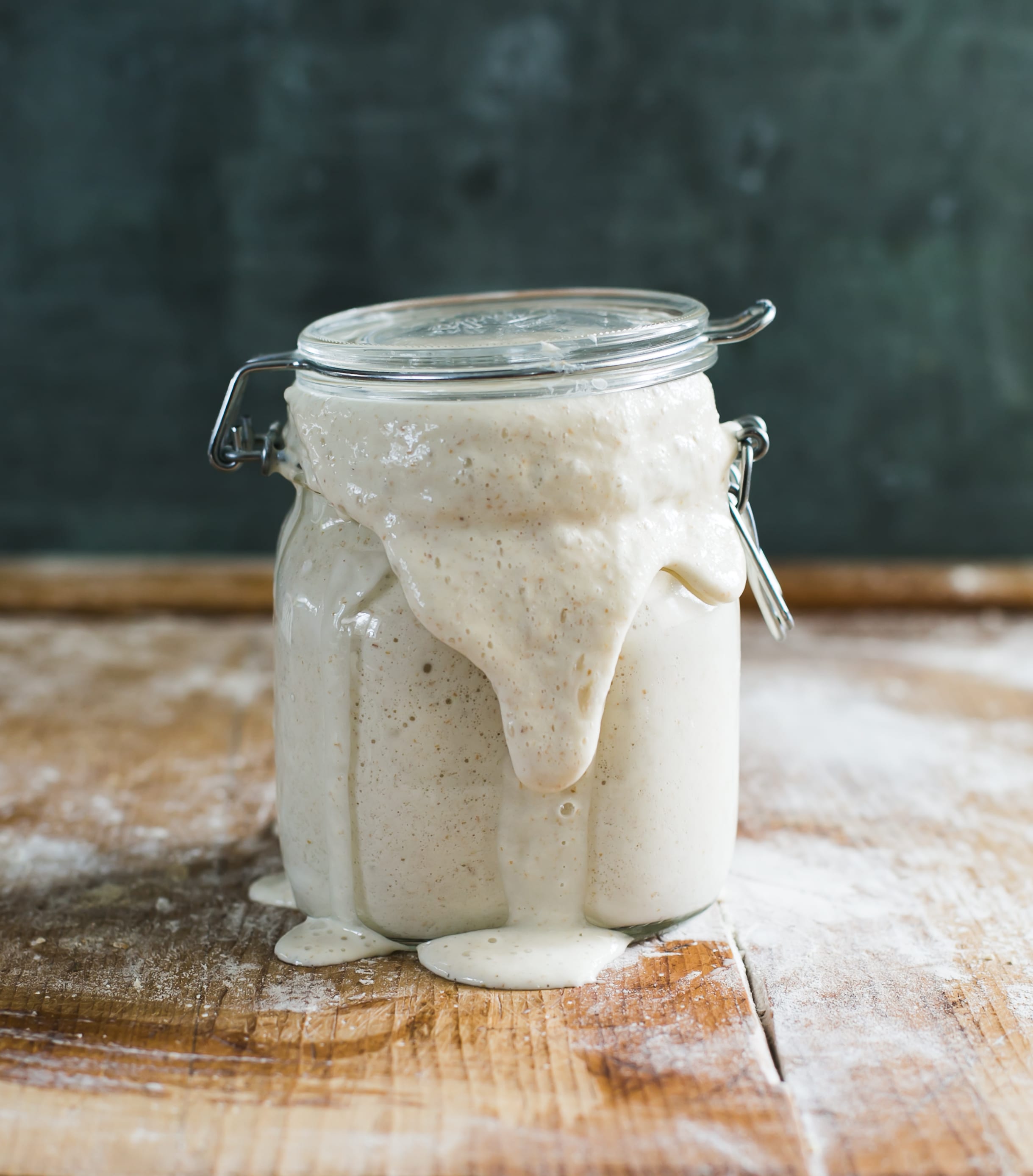
Troubleshooting Your Sourdough Starter

Without a doubt, the most intimidating aspect of sourdough baking is understanding its key element, the starter.

Simply put: a starter is a live fermented culture of flour and water. Once it becomes bubbly and active a small portion is added to a sourdough bread recipe to make it rise- no commercial yeast is required.

Sourdough is a technique that can be traced back thousands of years when instant yeast was not yet available to bakers. Doesn’t sound too scary, right? But there’s a catch…

A starter is not just this “thing” you create and walk away from forever. It must be kept alive and well with additional feedings to maintain its rising power (More step-by-step info here- Feeding Sourdough Starter: My Best Tips & Tricks).

Remember, your starter is a living culture which must be cared for with intent. Otherwise, your bread won’t rise. Think of it like a pet that needs to be fed daily, or a house plant that needs water and a sunny window.

At its core, sourdough is about understanding and committing to an ongoing relationship. As with all relationships, there lies a bit of uncertainty.

You might ask yourself: “Am I doing this right? Why does my starter look different than yours? Why is it taking forever to rise? Is it dead?”

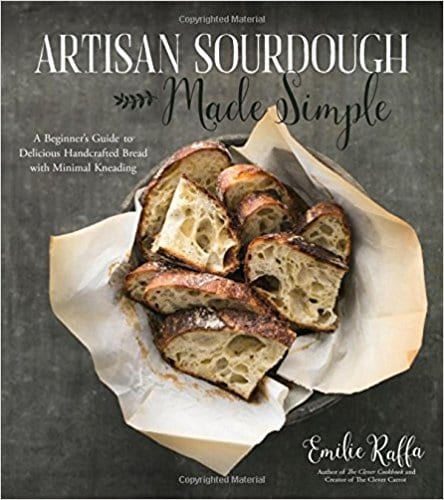
That’s why I’ve put together this article for you. Most of the information is already covered in my book Artisan Sourdough Made Simple, but I’ve included additional details to answer any questions you might have and to open up the topic for discussion.

Two Quick Notes Before You Begin:

1.) To streamline the process, this post assumes you have a working knowledge of a 100% hydration starter, made from equal parts regular wheat flour and water by weight. This is the most common type of sourdough starter. If you don’t have one, try my Beginner Sourdough Starter Recipe.

2.) This post is very comprehensive. Take your time and read through it a few times until the aha moment strikes! Because eventually, it will.
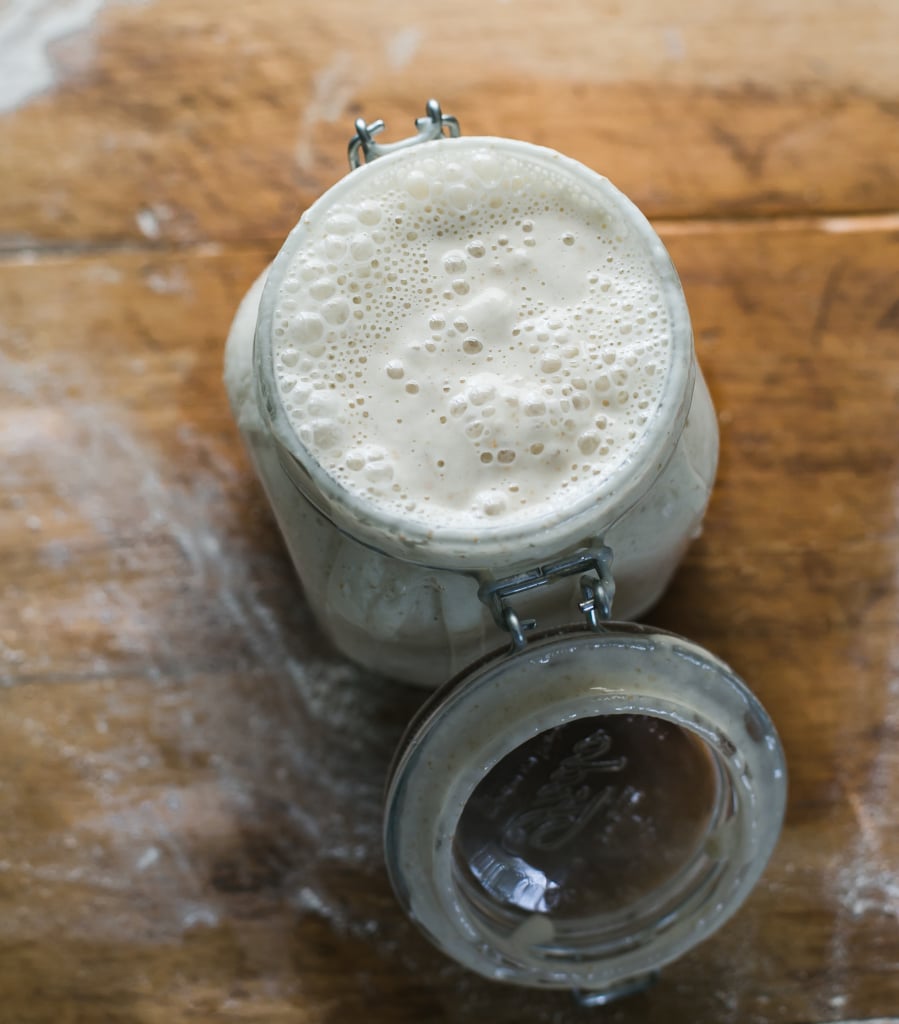
Troubleshooting Your Sourdough Starter | theclevercarrot.com

Troubleshooting Your Sourdough Starter

Why Won’t My Starter Rise?

Ahh yes… the million dollar question. It’s like asking: “Why won’t my 2-year-old sleep through the night?”

Because a sourdough starter is a living culture, like children of a certain age, they will definitely share some similarities. Each one will have their own unique personality and the “one size fits all approach” doesn’t always work.

Some bakers use science to explain these personality differences and others observe, follow their intuition and allow the starter to teach them. I implement both techniques.

Keep in mind, when troubleshooting your sourdough starter, it’s usually a combination of factors. In my experience, the rise time is based on temperature, ingredients, feeding frequencies, type of flour & the quantity of flour used.  

Temperature

Starters love warm environments. The warmer the spot the quicker it will rise. But realistically, finding a warm spot can be challenging especially when baking in the winter. The ideal temperature is somewhere between 75-85 F.

Here are a few things you can do:

Try storing your starter in a cozy cabinet. It’s warm, draft free, and I have to say, my personal starter does really well in this snug little habitat. Experiment with a cabinet that’s near your stove for extra warmth.

Another option is to wrap the starter jar in a heating pad. One of my kombucha readers (Hi, Melanie!) suggested this tip and it’s very clever. The heating pad maintains the starter at an approximate temperature which can be adjusted to your liking.

A proofing box can also be used to control the temperature. This is the one I use, which is great for your dough too (it FOLDS FLAT!).

If you don’t have a proofing box, place your starter in the oven (turned off) with the light on. But please make sure to keep an eye on it and turn the light off, if necessary. It can get very hot in there! Another makeshift proofing box option is to use your microwave; just place the starter inside (turned off) with the light on.

Finally, try using warm water in your feedings. Around 80-90 F is a good temperature.

Note: regarding temperature, if your starter is exceptionally strong and vibrant, it will have no problem rising in warm OR cold environments, even in the fridge. My starter is a workhorse and will rise ANYWHERE. This is because it’s mature, well fed and cared for starter. Keep this in mind as you continue to develop a relationship with your personal starter.

Ingredients

A sourdough starter is made from flour and water. For best results, always use quality ingredients.

For the flour, please use something that is unbleached, unbromated, and does not contain chemicals.

Most non-organic U.S. flours, including my preferred brand King Arthur Flour, are enriched with vitamins and minerals including iron, folic acid and other vitamins. This is okay to use. I also like Trader Joe’s all-purpose flour for feedings.

However, it’s important to note that not all flours perform the same. Flour from the UK is going to have different enzyme and mineral levels than flour from the U.S., Japan, Australian etc. Even organic flours perform differently. 

That’s why when troubleshooting your starter, it’s best not switch back and forth between brands at first. It’s too confusing and you won’t know where you went wrong. Stick to one brand, try to rule out additional factors that might be giving you trouble, and then make changes from there.

For the water, try using filtered or bottled water to avoid any trace chemicals or chlorine if you think it’s having a negative effect on the rise. I don’t have to do this at home, my tap is fine.

Feeding Frequencies

Ever have those days where you’re just ravenous?

Starters can be ravenous too. If at one point your starter was all bubbly and happy, and now it’s not rising anymore, it’s possible that it needs a few extra feedings to boost the yeast development. Assuming you understand how temperature and ingredients can effect the rise of your starter, try feeding it 2x per day and see what happens.

Also, if your starter has been stored in the fridge for a while, it’s going to need several feedings at room temperature to become bubbly. Have patience!
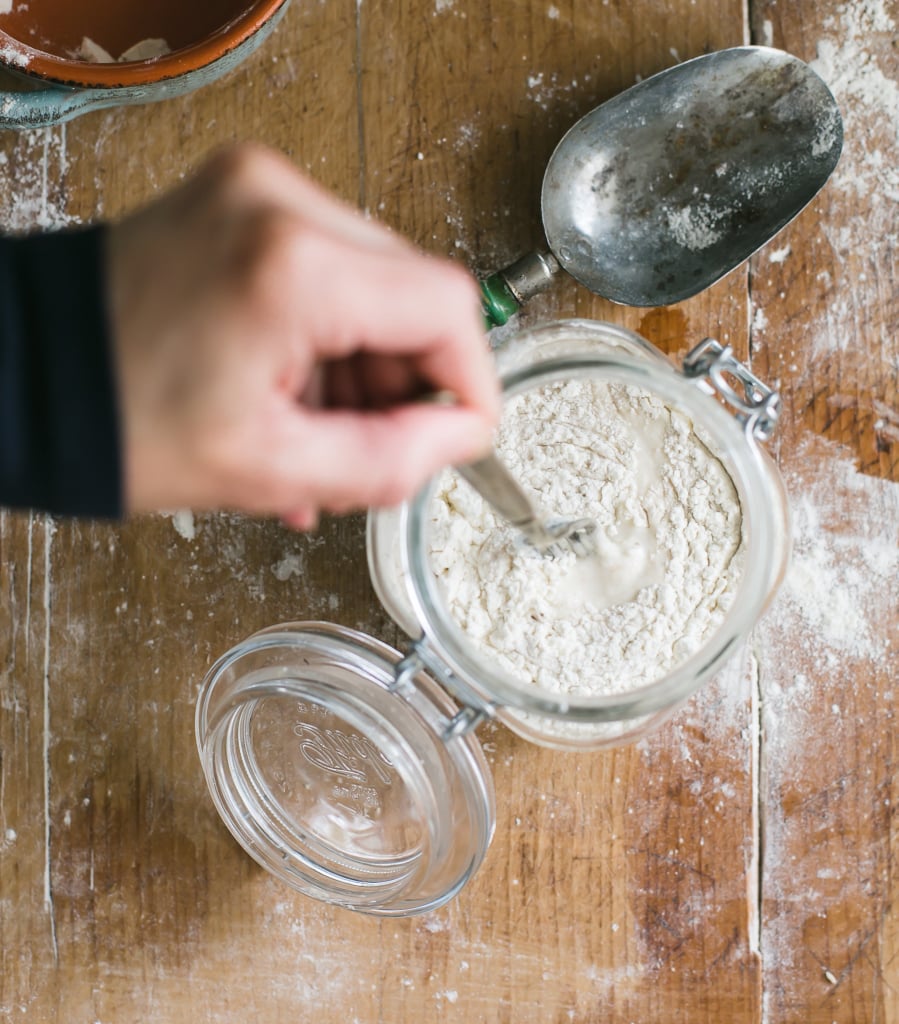
Troubleshooting Your Sourdough Starter | theclevercarrot.com

What Type Of Flour Can I Feed It With?

Feed your starter with the same flour from which it’s made.

Now, let me just clarify: every baker has their own way of feeding their starter. And one method is not necessarily better than the next (just different).

To cut through the noise with reliable results, feed your starter with the same flour that’s in the jar. For example, if your starter is made with all purpose flour, feed it with all purpose flour. If it’s made with rye flour, feed it with rye flour. Easy.

By doing so, you’ll establish a consistent feeding routine and the rise time will become more predictable. Think about it this way: how would your dog feel if you fed him a different type of dry food each week? Starters are no different!

How Much Flour and Water Does My Starter Need?

For a 100% hydration starter, feed it following a 1:1:1 ratio by weight.

For example, if you have 30 g of starter in the jar, feed it with 30g of flour + 30g of water. If you have 60g of starter, feed it with 60g of flour + 60g of water. Please use a kitchen scale for this! You can easily scale the initial starter quantity up or down, depending on how much you want to maintain now or in the future.

Again, every baker has a different method, but following a 1:1:1 ratio by weight will get you reliable results. Your starter will rise more predictably, and if you’re lucky, it will stay at its peak height for quite a while before it collapses.

Note: to determine the weight of your starter you’ll need to know the weight of the jar first. To do so, weigh the empty jar and note the amount somewhere, either on paper or a piece of masking tape affixed to the bottom of the jar. Then weigh the jar with the starter inside and subtract the original jar weight. 
 

I Created a Starter Following the Instructions in Your Book. It Used to Be Bubbly, But Now Nothing’s Happening? Should I Start Over?

Believe it or not, this is 100% normal.

Typically, when creating a starter from scratch, you’ll see bubbles on the surface around Day #3. When you start feeding it with flour and water on Day #4 and beyond, the bubbles may or may not appear as quickly. It makes sense to think that something’s wrong! But don’t panic.

In order to cultivate and develop the yeast within your starter, you need to feed it for several days in order to see results. The process can be unpredictable, and each person you talk to will have a different experience based on their personal situation and environment. It’s easy to get caught up and compare, doubt yourself, and think it’s not working.

So, should you start the whole process over?

No! Continue to follow the instructions in the book, but make sure to read this post a few times, including Sections 1-3 to familiarize yourself with possible troubleshooting factors. If you’re still stumped, please be patient and continue to feed your starter until it bubbles and doubles in size. Eventually, you will see results. It just takes time.


What Type of Container of Jar Should I use for My Sourdough Starter?

I wrote a whole post on this. Click here.

Does the Starter Jar Need To Be Airtight?

The jar or container can be airtight or covered loosely; it’s your choice.

If it’s airtight, just make sure the jar is large enough to accommodate the starter’s growth as it begins to rise (at least double in size). Otherwise it will burst through the jar.

If you choose a loose cover such as a cloth or something else that’s breathable, and a skin forms on the surface, that means too much air is getting into your starter. It’s not the end of the world if you see this. Just peel it off and/ or choose an airtight lid instead.
Troubleshooting Your Sourdough Starter | theclevercarrot.com

What Is That Dark, Smelly Liquid On My Starter?

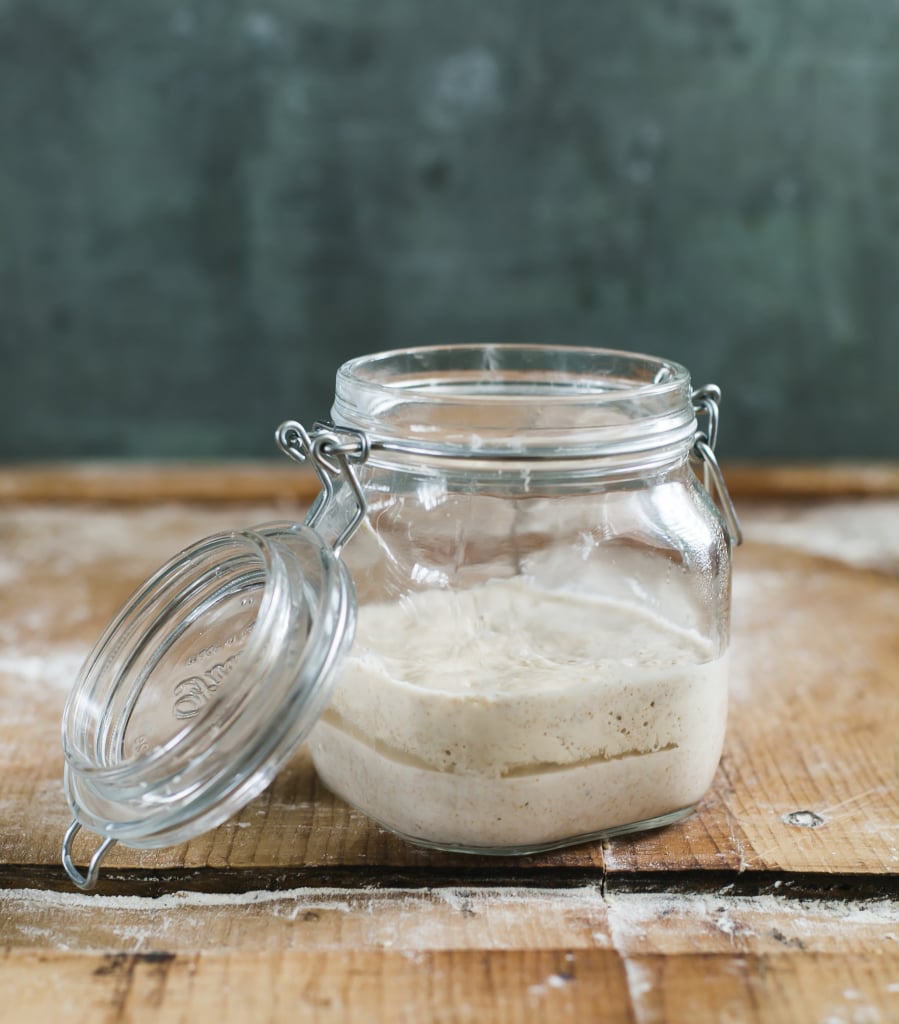
It’s called hooch which is an indication that your starter needs to be fed.

Don’t worry, it’s not dead. Just exhausted. This liquid is something you’ll see regularly, either on the surface of your starter or even within the culture itself (as pictured above), so get used to it! Because the liquid is unsightly and smells like gym socks, I pour it off with some of the discolored starter underneath and feed it right away. That’s all you have to do.

PS: hooch is not mold.

What Should My Starter Smell Like?

First all all, your starter shouldn’t smell too vinegary, like gym socks, or nail polish remover. If it does, it just needs to be fed. Don’t freak out over this too much. At some point your starter will smell like this.

On the other hand, when your starter is in good shape it should smell fresh, fruity and yeasty.

So, what does that even mean?

Fresh, fruity,  and yeasty aromas will vary from starter to starter. Some will smell like toasted coconuts and pineapple, others will smell like apple cinnamon. It’s actually very interesting to note all of the differences. Don’t worry if yours just smells tangy and not very “exotic.” Totally normal. The aroma all depends on what’s in the jar and how it’s cared for.

9.)What Happens If There’s Mold Growing On My Starter?

If you see mold, get rid of the entire starter!

In all my years of baking, I’ve never had a problem with mold. That doesn’t mean it can’t happen to you. In fact, several of you have emailed me regarding mold (oddly enough you’re all from eastern Australia. Weather issues?).

Mold can occur on the surface of the starter or on the jar itself. Its appearance can range from white and fluffy, to dark greenish brown, and even pink.

What gives?

Here’s what I know about mold: mold spores are everywhere. And it takes a perfect storm of variables (food, temperature, and water) to populate its growth. So, think about your current environment: is your starter jar near a fruit bowl (food source)? Is your current climate on the humid side (mold loves this kind of weather)? Are you using tap water (where trace chemicals and chlorine can be found)?

Because we all live in different environments it’s hard to pinpoint the exact cause. But if you can troubleshoot any of the above, it might lead you in the right direction. Consider moving your starter to a different room if you think location is part of the issue.

Paired with the variables above, mold can also occur if your starter hasn’t been fed often enough. Consider feeding it more frequently. This will keep the naturally occurring bacteria fresh and happy.

And finally: Sometimes mold can occur when something else lands in the jar. Last summer, a fly got stuck in my starter and the whole thing turned pink (not the fly, the starter). I’m not sure if the pinkish color was true mold or just a result of the unfortunate casualty. Either way, it’s something to pay attention to.

How Do I Get Rid Of Fruit Flies?!

Short answer: you can’t.

When summer rolls around, get used to seeing fruit files because they LOVE sourdough starters. Love. Love. Love. It’s hard to prevent a fleet of flies swarming the jar but there’s a few things you can do.

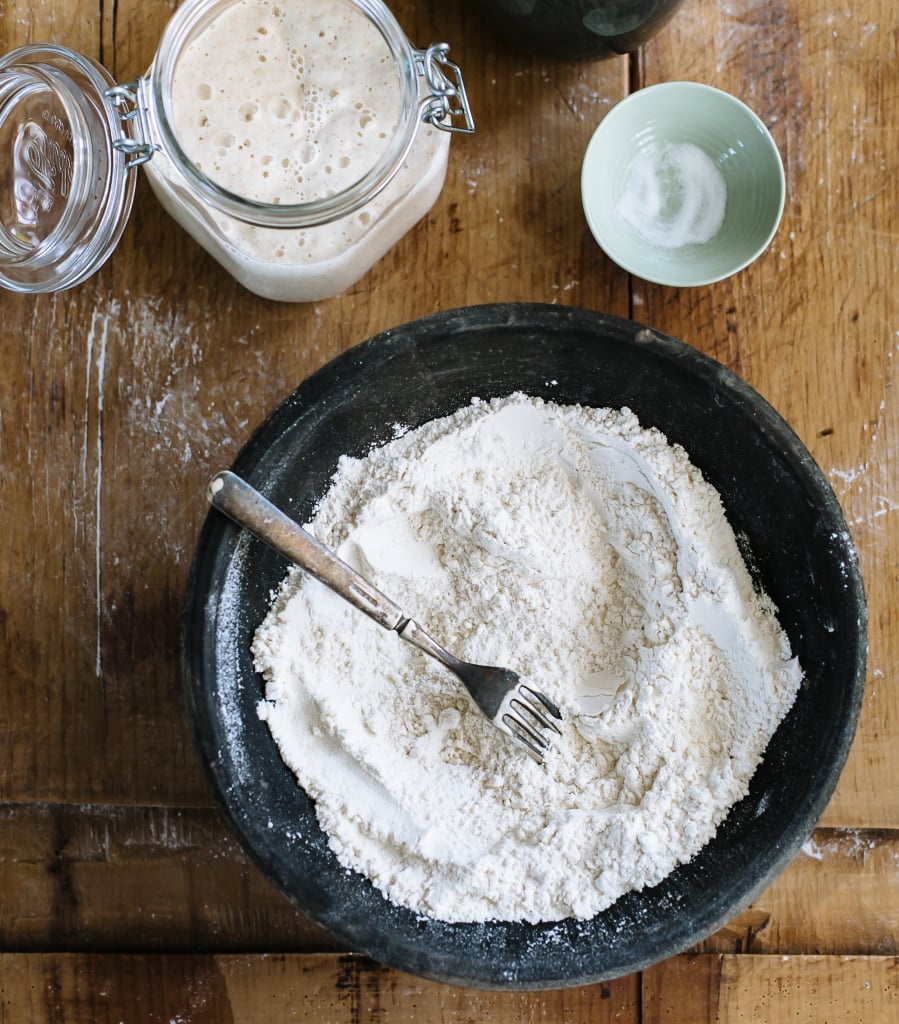
First, make sure your starter is not near any fruit (for obvious reasons). Second, just relocate it. Sometimes, I keep mine in my bedroom and completely out of the kitchen where the main food sources reside- my husband thinks this is totally weird. Third, keep the lid on. This will not keep out the flies completely but it will help especially after you’ve moved the jar out of the kitchen.

If you have additional ideas on this one, I’m all ears! Please read the comment section below; you guys have THE BEST tips.
Troubleshooting Your Sourdough Starter | theclevercarrot.com

Can My Starter Be Used With Gluten Free Flours To Make GF Bread?

Short answer: NO

Most sourdough starters are made from wheat flour and water, so therefore it contains gluten. If you want to bake gluten free sourdough you’ll need a gluten free starter. Remember that. I get many emails asking if my starter can be used to create gluten free sourdough, and it’s just not the real deal.

If I Forget To Feed My Starter, Is It Going To Die?

Short answer: NO

No matter what I tell you here, the first time your starter gives you trouble, or it’s taking forever to rise, or whatever, you’re going to think it’s dead. I guarantee it. The Internet has scared people into thinking if your starter doesn’t rise instantly with a trillion bubbles on the surface, it’s completely broken and will never be usable again. EVER.

Please have a little faith. I have a starter that’s been siting in my fridge for over 1 year, unfed. I forgot it was even in there. After transferring it to a new jar, feeding it for several days in a warm spot, and just being patient, guess what?! It was still ALIVE!!! That’s all you have to do if you suspect your starter needs a little love. Starters are resilient creatures which require practice and patience.

Which brings me to my last point (hooray!)…

Be Patient!

This is THE hardest tip to follow. But it’s undoubtedly the most important.

Who has patience these days when we have access to whatever we want on demand? Sourdough will teach you all about patience whether you like it or not. You can’t rush it. There are no shortcuts. No cheat sheets. Again, like parenting, eventually your 2-year-old will sleep through the night. 

So, please read through these tips slowly and carefully and see what troubleshooting factors apply to your personal situation. Some days you’ll have a beautiful bubbly starter and other days it will act like a diva. And just remember: it’s usually a combination of factors that contribute to sourdough starter issues. Your starter behaves this way not to make your life miserable; it just wants you to pay attention. Take your time, feed it a million times if you have to, move it to a warmer spot, and just honor the relationship. It’s the only way you’ll learn.


My intent with this post was to include enough information to satiate your questions, without making you feel exhausted.

Believe me, this topic can go on for ages- there’s just so many scenarios. Feel free to comment below with additional thoughts and tips. Based on your feedback, I will make periodic updates to keep this post fresh and relevant! Happy baking, friends :)

Filed Under: Sourdough Starters

917 Comments

Previous Post: « Why Won’t My Sourdough Bread Rise?
Next Post: Sourdough Baking Glossary »

Reader Interactions

Artisan Sourdough Made Simple |theclevercarrot.com

Artisan Sourdough Made Simple

A beginner’s guide to delicious hand-crafted bread with minimal kneading.

Buy now

    Leave a Comment & Star Rating Cancel reply

    Did you find this post helpful? By leaving a star rating and review, it will help others find my recipes and tutorials too. As always, thanks for your support! —Emilie

    Your email address will not be published. Required fields are marked *

    Comments

  1. Jason says

    January 30, 2021 at 1:04 pm

    thank you for the post. I am on day 8. After a few days it was bubbly and looked like it rose just slightly. It formed the liquid (hooch) on the top and I fed it. The next few days I was feeding it once/day in the mornings. It didn’t look like it rose at all as I had marked the jar and saw no fall streaks. I thought I should be seeing this at this point, so I decided to move the location to the top of the fridge. The previous location was in front of a window with some direct sunlight and apparently that is not what it likes. When I woke up it had risen to the top and started coming out the sides. This rise was not just double, but maybe 5-6x the original height. I think its a good sign it rose this much, but not sure and should I just wait until it falls and then feed it again and can I use this for during peak heigh to make bread?

    Thanks again for the post!

    Reply
  2. Demetra Hagen says

    January 30, 2021 at 11:43 am

    Hello! This was so helpful! I do have a question about the flour though…I have a really beautiful starter that I’ve been growing for about a week, it’s rising perfectly, lots of bubbles. My only issue is the smell. I can’t describe it exactly it’s just not GOOD..I realized today (day 7) that I’ve been using the wrong flour to feed it with and I’m kicking myself! I meant to use a high quality unbleached apf, but kept grabbing my BLEACHED apf. Moving forward, can I switch to my higher quality flour to feed or should I toss and start over?

    Appreciate you!

    Reply
  3. Chris says

    January 21, 2021 at 10:15 pm

    My starter is active, and bubbles reliably, but has never risen. I am using unbleached, all purpose, King Arthur flour, and filtered water. I usually warm the water to around 85 degrees for the feedings. I am using a 1:1:1 ratio, with 60 grams of starter, 60 grams of water, and 60 grams of flour. I always make sure to use a clean spoon to mix everything. My starter is about 3 weeks old now. I have tried 1 feeding a day and two feedings a day, but have seen no difference with either one. I have the starter in a glass jar with a lid that has a rubber gasket on it, and seals with a metal clasp. I usually keep the lid open and cover the opening with a wet paper towel so that the starter can breathe. I have tried leaving the lid closed overnight, but that didn’t make any difference either. A couple of hours after each feeding the starter gets nice and bubbly, but has never risen even a millimeter beyond where it was before. I am starting to get worried and frustrated. Any ideas?

    Reply
    • Emilie Raffa says

      January 22, 2021 at 10:06 am

      Chris, it’s tough to say without seeing a picture because a bubbly starter usually coincides with one that rises. Can we rule out if it has risen at some point? But by the time you got to it, it has collapsed?

      As a remedy for now- stick with 1 feeding/ day, switch to bread flour (enzymes are a bit higher- KAF brand is fine), continue to use warm water, and let it sit in a warm water bath. The bread flour will make the texture a little thicker, which is ok. Place a rubber band around the base of the jar to mark its growth.

      Reply
  4. DEBRA GADSDEN says

    January 21, 2021 at 3:43 pm

    Hi Emilie
    Very readable and understandable post. I have a great starter (Fred) myself who is several years old, but decided to read your article for any new tips! Definitely got a few.
    My kitchen is not usually very warm as my family is continually coming and going through the back doors a lot (open plan) so I keep Fred on top of my hot water tank on top of a folded tea towel. He loves it in there and performs beautifully! My ovens with the light on do get too warm for him. I’ve even had to do my bulk fermentation in front of the woodstove!
    We live on the West Coast of British Columbia so we get some cold breezes from their comings and goings. When I don’t plan to bake for a while I keep Fred in the fridge as you mentioned.
    Thank you for your interesting post.
    Debra

    Reply
  5. Cameron Binder says

    January 14, 2021 at 12:57 pm

    Hello! This process has been so fun:) Thanks for all of your comments and tips- it has made the process so easy! I am on day 5 of my starter and yesterday and today it seems quite watery compared to the first few days. I have been using a scale when adding the flour and water so it’s been pretty precise. Perhaps I should be adding a bit more flour? Or will it naturally thicken up to that marshmallowy consistency the longer I wait. Thanks!

    Reply
  6. Kathryn says

    January 3, 2021 at 11:37 pm

    Hi! I’m currently on day 7 of my starter – this is my second starter, I made one in April and sadly left it in the fridge to long and it grew mold :( I’m starting a new one and now this time around it’s January so its pretty cold, there’s just not a ton of humidity or warmth in my home. My starter smells as it should and is very bubbly, it just won’t rise…. I’ve tried putting it all over my home and in any warm place I could, and I’m still having a lot of trouble. I’ve been feeding it twice a day 1:1:1 ratios. Thanks for any help!!!!

    Reply
    • jill says

      January 11, 2021 at 7:27 pm

      Hey Kathryn, this is a solidarity post. I am on day 10 of mine, also feeding twice a day at 1:1:1 ratio. I am attributing its reluctance to rise to the cold temperatures we’re experiencing at the moment and I’m just trying to persevere with patience. A moment of empathy with my starter hit me this morning when I really struggled to get out of bed, the air in the room around me was so cold and my bed was nice and toasty, I just didn’t want to get up :D
      Have you had any joy since you posted?

      Reply
      • Andrea says

        January 12, 2021 at 10:11 am

        I came here for this too! A friend gave me a starter out of the fridge that she said just needed a feed before use. It gets nice and bubbly and has that marshmallow-like consistency before I go to feed it, but oddly enough it hasn’t budged an inch after 3 days and 6 feeds. My starter and I live rather north in Canada, but I have it parked beside a small heat register that is always on, and the jars don’t seem to have any chill on them. I’m impressed with the bubbles and consistency and so a bit confused why it doesn’t seem to want to rise.

        Reply
        • Jamie says

          February 21, 2021 at 6:33 pm

          I too came here for this issue. Our home in NE Connecticut is a comfy 68 degrees for us, but apparently the starter my friend gave me feels much differently despite the warm corner I keep her in. She stopped rising despite trying a few things including keeping her in the oven with the light on. I have beautiful bubbles, texture & smell – sadly no rise…
          Since misery/confusion/concern loves company, I would like to join the table of patiently & hopeful waiting. 😊

          Reply
  7. Ruchita says

    December 30, 2020 at 7:12 pm

    Hi!
    I’m following the exact recipe for sourdough starter that is laid out in your book. I’m on Day 12 and my starter just wont rise. I did read the entire post but it is so frustrating. I tried skipping a day to see if would double in size. I did see that liquidy texture but when I changed my container it stopped creating that hooch too! Should I start again? I also tried using warm water.. I used whole wheat flour on day 1 and I’m feeding my starter with AP flour (unbleached). Should I feed my starter 2X/day? Thank you!

    Reply
  8. Whitney says

    December 29, 2020 at 8:51 am

    Hi! I have just started a new sourdough starter and I did the float test a couple of days ago and it floated. I went to see if it would float today to start my first round of sourdough and it’s no longer floating. Is there a reason for this?

    Reply
    • Emilie Raffa says

      December 29, 2020 at 9:17 am

      Hi there! Your starter needs to be active prior to doing the float test. This means in needs to be fed first. So, while your starter passed the float test the other day (yay!), it won’t pass again now unless it’s been fed, and is bubbly, active and double in size. Starters need to be fed every time before using to make bread dough.

      Reply
  9. Isabel says

    December 20, 2020 at 3:43 pm

    This was immensely helpful! I’m on day 4 on my starter and it wasn’t doing much which I found out is normal. But I’ve also been leaving it in particularly warm spots (towel-covered radiator, behind my TV etc) and have discovered this might lead it it requiring more frequent feedings. It’s SO daunting how much information there is on creating a starter but I’m just going to stick to this as a troubleshooter and try not to overthink!

    Reply
    • Emilie Raffa says

      December 21, 2020 at 9:15 am

      Isabel, there is a TON of info out there. And the thing is, those who are new to the process don’t realize that sourdough is like a web (each step is connected). So when you make changes, or combine different methods from different bakers, it’s totally hit or miss. I always tell people, find a baker & method that resonates with you and practice it a hundred times. When you understand more, then expand your horizons.

      And also: yes, the warmer the location the faster your starter will rise and fall. It’s all about observation and finding balance :)

      Reply
    • Sophie says

      December 24, 2020 at 6:38 pm

      Hello Isabel, I don’t know if you’ll see this, but I’m just curious how your starter is looking now 4 days later? I am on day 4 of my starter and I can’t really see any change and I was thinking maybe my apartment is too cold. Anywho I’m probably just worrying too much, I’m just so excited to start, so I was just wondering how your started is looking now? Anywho thank you, cheers from Canada :) Happy holidays!

      Reply
  10. Donna Pennington says

    December 18, 2020 at 7:23 am

    I didn’t see an answer to this comment but I am doing this also with 1/2c starter and the 120g of water and flour.
    My starter is very thick. After reading your page I think I know what I’ve done wrong. But let’s see. I thick it’s thick like dough because I wasn’t measuring right. I was pulling 1/2 cup of starter and adding 120g of flour & 120g water. Should I be using 120g of starter? Is that why my starter is so thick? It stays thick even at room temperature.

    Reply
  11. Margret says

    December 17, 2020 at 10:12 am

    Hi Emelie,
    I have baked many loaves of your Everyday Sourdough and other loaves from your wonderful book, but, I am frustrated that while I’ve coaxed my starter through sluggish periods so that now it does double reliably (I had to finally change to 100% whole wheat flour), my dough does not come close to rising as much as it should. I feel like I’m following the book to the tee. Last night I made the Farmhouse Sandwich bread and it did not come close to rising even to the top edge of the pan. It tastes amazing, but it is height-challenged. Do you have any suggestions or reading I can do to correct this? I’m “this close” to caving and adding commercial yeast. Please save me from this fate. ;)

    Reply
  12. Mary-Joy O'Reilly says

    December 15, 2020 at 4:04 pm

    Hi. I’ve a Newbie to sourdough baking and have been having fun baking using your recipes from your book with good success. I thought I’d take a second step and use whole grain all purpose flour from a small mill. My Starter has been quite active but it does not rise much with the new flour after 3 daily feeds of 1:1:1. I would appreciate any suggestions that you can give me.
    Thank you,
    MJ

    Reply
  13. Emma Mack says

    December 9, 2020 at 3:24 pm

    Hi! I’m new at this and wanted something to do over the holidays, this is my first starter. I followed the days 1 & 2 instructions, but today (day 4), after I fed it, it was 172g instead of 210g. I added approx. 15g of water and flour to try to increase the amount, but I wanted to know if this was a mistake.

    Also, while I’m still feeding it (before I switch to the 1:1:1 ratio), is 60g of both flour and water the method I should use?

    Thanks in advance!

    Reply
    • Emilie Raffa says

      December 10, 2020 at 8:31 am

      Hi Emma!

      It’s ok if the starter weight is not exact on a certain day. There are many variables that could have caused this- all normal. What you did is fine!

      For ongoing feedings, it’s the 1:1:1 method you should follow. The flour + water quantity by weight won’t necessarily be 60 g, respectively. Most bakers match the flour and water quantity to the starter amount. So, if you had 40 g of starter, you’d feed it with 40 g of flour + 40 g of water. If you had 80 g of starter, you’d feed it with 80 g flour + 80 g water. Make sense?

      Hope this helps!

      Reply
  14. Panda says

    December 9, 2020 at 1:44 am

    Hi. So I’m on day 2 and just 6 six hours after feeding, my starter is already double in size. I wonder if I should get rid some of it? If I do that, should I feed it again or just leave it as is? Or should I just divide it into two separate container?

    Reply
    • Emilie Raffa says

      December 9, 2020 at 9:39 am

      Hi there! For best results, I would continue to feed it per the directions in the recipe. Although it doubled in size on Day 2, it’s not ready or strong enough to use yet.

      Reply
  15. Russ F says

    December 6, 2020 at 12:02 am

    Hi Emily, if I am using 3 cups of all purpose or bread flour in a recipe, how many g of sourdough starter should I used. Usually I would add active dry yeast about 8g.
    By the way, as I adujusted the ratio of water to flour from time to time, it is not 100% hydration? Should we take into consideration of this for how much starter to add to the flour and about 325ml water?
    Thanks.

    Russ.

    Reply
    • Emilie Raffa says

      December 7, 2020 at 10:03 am

      Hi Russ! To confirm your recipe (in grams) is it about 375 g flour + 325 g water? Thanks!

      Reply
      • Russ F says

        December 9, 2020 at 12:27 pm

        Hi Emilie, thank you for your reply. Yes I usually measure the flour with a measuring beaker for 3 cups. I would say in gram, it would be around 375g bread flour with 325g / ml of warm water. So, I am not sure how many grams of starter I should be adding. And in additional, when I was creating my starter, I varied the ratio of water to flour judging by the texture like you mention (So it may not be a 100% baker ratio). Does this also determine the amount I should use to add to the flour for a good rise? Hope to get it right. My starter is active and I place it in my fridge and reacticate it once a week but discarding less than hald the amount and adding about 60g flour and 60g water now. It usually rise to 3 times the amount in 3.5 hours. Question: If this is repeated, will it also gradually made the starter to return to 100% hydration starter eventually?

        Thank you. :)

        Reply
        • Emilie Raffa says

          December 12, 2020 at 8:22 am

          Perfect, thanks for the info.

          Bakers typically use 10-20% starter in their formulas. However, I wouldn’t go by percentage only. You have to examine the following 3 factors as well:

          1.) Hydration of the dough
          2.) Hydration of the starter
          3.) The style rise you want (long vs. short).

          In your case, without the starter, you’ll looking at an 86% hydration dough. This is a wet dough. If you swap bread flour for ap, it will be wetter. And if you use too much starter, it will be even wetter.

          Based on your recipe, if you don’t want to change the original flour and water quantities, I’d use 50 g of starter paired with a long, overnight rise (8-12 hrs) @ 68 F. This will push you to 87.5% dough hydration. If the dough feels wetter than usual when you mix it, just add more flour.

          And finally: if your starter is not exactly 100% hydration it’s ok. Judging by texture is perfectly fine. Too thick? Add more water. Too thin? Add more flour. So, while the hydration % of your starter does effect the texture of the dough, I wouldn’t get too caught up in the numbers. What you’re doing with your starter sounds fine.

          Hope I’ve answered your question. A bit long winded, I know ;)

          Reply
          • Russell Fong says

            December 28, 2020 at 12:08 pm

            Hi Emile, Happy Holidays and thank you for your long reply.
            I have some questions:
            1.) Hydration of the dough (How so I know this?)

            2.) Hydration of the starter (Not sure what is the hydration as I am not having a 1:1 ratio starter.

            3.) The style rise you want (long vs. short). – Meaning?

            4. How did you derived that I would be working with a 86% Hydration dough?

            Thank you. And yes, do write as long and simple :)

            Russ F.

          • Emilie Raffa says

            February 1, 2021 at 2:48 pm

            Hi Russ! Please see my answers below:

            1.) Dough hydration refers to the ratio of water to flour by weight.

            To find the hydration, divide the water weight by the flour weight. For example, 350 g water & 500 g flour would give you a dough hydration of 70%. Some bakers include the sourdough starter in their calculations as well.

            2.) Sourdough starter hydration follows the same principle (ratio of water to flour by weight). Since you’re feeding it following a 1:1 ratio it’s a 100% hydration starter. This is the most common type of starter in sourdough baking.

            3.) All sourdough recipes are different. Rise times connect to the baker’s formula. For example, 50 g of starter works well with a long overnight rise at cooler temperatures, whereas 150 g of starter will rise the dough faster in warmer temperatures.

            4.) Your dough hydration was calculated by dividing 325 g water by 375 g flour.

            Moving forward, I would use the following formula for your recipe:

            375 g bread flour
            280 g water
            50 g starter

            See how the dough feels; if you want to add more water increase it in 15 g increments during the mixing stage.

            Hope this helps!

  16. Joslyn Lowy says

    December 2, 2020 at 6:33 am

    Hi! I am following your recipe and here I see it calls for 1:1 ratio of flour and water but in your sour dough starter recipe it initially starts with 1/2c flour and 1/4c water, I followed that and my initial consistency is very doughy. Should I start over with a 1:1 ratio?

    Reply
    • Emilie Raffa says

      December 2, 2020 at 9:22 am

      Hi there! The ratio for the starter recipe is different. Once it’s up and running, we switch to the 1:1:1 ratio by weight. If you find that the texture is way too thick, just add a splash of water. No need to starter over. Additionally: the ratio is by weight not volume (i.e. not 1/2 cup to 1/2 cup etc).

      Reply
  17. Tim says

    December 2, 2020 at 1:38 am

    Emilie

    Thanks so much for this website and the book. I got a starter going back in April and the family have loved the different breads and treats like the spinach and artichoke dip braid. It’s been a great outlet through lockdowns! In the last couple of weeks, my starter has stopped rising in its normal predictable fashion: it normally doubles in about 5 – 6 hours, but is now taking twice that. I haven’t changed anything, except moving it to a new jar and we’re moving into summer in Melbourne, which I thought would speed things up, rather than the opposite. Do you have any ideas what might be happening?

    Thanks

    Reply
    • Emilie Raffa says

      December 2, 2020 at 9:20 am

      Hi Tim! So wonderful to hear! Regarding your starter: can you provide your exact feeding method? Feeding ratios, brand/type of flour, tap or filtered water, where you store it, and how often it’s fed. Thanks!

      Reply
      • Tim says

        December 2, 2020 at 4:38 pm

        Emilie

        I normally bake around 4 times a week, with the starter kept in the fridge when I’m not planning to use it. The day before baking I take it out in the morning, feed it around 1pm and leave on the counter: it’s normally doubled by 7pm. If I’m baking two days in a row, the starter stays on the counter and I feed again in the middle of the next day. For the first month or two, I followed your 1:1:1 ratio, but the starter has been pretty tolerant and I now don’t follow your measurements exactly. I normally have around 100g of starter, which I feed with 50g of bread flour (Ben Furney Special White ’00’ 11.5% protein) and 50g of warm tap water. If I’m planning to bake bagels and a loaf, I’ll start with approx 150g of starter and add 60g each of flour and water.

        Yesterday, I tried going back to 1:1:1 and the starter still took around 12 hours to double, although I tried a float test and it floated after 6 hours even though it hadn’t doubled……

        I suspect I’m getting payback for not following instructions, but would welcome any advice. Also, if the starter floats, is it ok to use at that point, rather than waiting for it to double?

        Thanks again

        Reply
        • Emilie Raffa says

          December 3, 2020 at 8:51 am

          This information is perfect, Tim. So two things-

          1.) First, it sounds like your starter needs more food. I’d suggest going back to the 1:1:1 feeding ratio. Do this for a while, and once your starter becomes more predictable, you can always scale back afterwards. It might take up to a week or more for your starter to get used to the new feeding quantity. Be patient.

          2.) Now that the weather is warmer, the texture of your starter might become more thin and liquid. I’d scale back on the water (slightly) to compensate. You’ll have better luck with a slightly thicker starter in the summer. It will stay at peak height for longer.

          Regarding the float test- it’s really tough to say. Usually, an active starter that has doubled in size goes hand in hand with passing the float test. It’s possible that you did the test just as it started to fall, but it was still active. I’d have to see a picture :)

          Hopefully this helps a bit.

          Reply
          • Tim says

            December 4, 2020 at 10:42 pm

            Great. Thanks for the advice.

        • Jasmin says

          January 12, 2021 at 2:22 am

          Hi
          The ‘long and sort’ rise section is how long you leave the whole bread mix i.e. flour, water and starter as a dough to rise before baking it. Some recipes are a fast rise so usually need more starter to give a rise- a slower rise can be overnight, 24 hours or even longer! These slower rises in theory will need less starter As the whole dough mix feeds the starter. Individual recipes will suggest the rising time- although you may need to adjust that for your own environment. Different rises after or slower, require different sloppiness ie hydration in the dough. Is more or less water overall compared to flour.

          Reply
  18. Suzanne says

    November 30, 2020 at 10:02 am

    Thank you so much! My starter wasn’t rising but getting lots of bubbles every day. I decreased the feed the next 2 days, and it rose perfectly both days now. Trying my first loaf with this starter today.

    Reply
  19. Nora says

    November 21, 2020 at 11:37 pm

    Hi! So I had my husband read off this to me while I started my starter for the first time. He read the oven light tip but forgot to mention that it can get too hot in there. I kept my starter (about 5 days old now) in the oven with the light on overnight and now it smells like old cheap pungent wine. Kinda like rotten grapes. Is this alright? Or should I scrap and restart? Thank you so much!

    Reply
  20. Stephanie Anderson says

    November 21, 2020 at 5:04 am

    My last couple of attempts at sourdough baking have been not great although the bread tastes great it lakes softness inside and the loaf is dense. After the overnight proofing was dough is sticky and collapsed even leaving in the warm the next day it does not revive. What am I doing wrong ? Thank you

    Reply
    • Emilie Raffa says

      November 21, 2020 at 8:45 am

      Hi there! I’d have to know the exact recipe and method you’re following to properly troubleshoot. Additionally, if you’ve made any changes to the original recipe (i.e. flour substitutions etc) please let me know. Thanks!

      Reply
  21. Angiea says

    November 18, 2020 at 9:03 am

    My starter is very thick. After reading your page I think I know what I’ve done wrong. But let’s see. I thick it’s thick like dough because I wasn’t measuring right. I was pulling 1/2 cup of starter and adding 120g of flour & 120g water. Should I be using 120g of starter? Is that why my starter is so thick? It stays thick even at room temperature.

    Reply
  22. Leonie Ruffin says

    November 12, 2020 at 6:31 pm

    I am onto my second rise and very little seems to be happening after 1 hr ?

    Reply
    • Emilie Raffa says

      November 13, 2020 at 9:51 am

      Hi there! Are you referring to dough? Or your starter?

      Reply
  23. Sue says

    November 4, 2020 at 12:10 pm

    I love your recipe! Ive been following for almost a week now. My starter was doing great and doubling and even tripling a couple of days ago. This morning when I woke up it hasnt budged, but it does have bubbles in it. It is the texture of smores marshmallows and smells soury but good. I thought it was doing really well, but now Im discouraged! I tried feeding it this morning and it is now afternoon and it hasnt budged again but there are bubbles. Im thinking I will feed it again later and maybe that will perk it up. Ive also been putting the jar in a bowl of warm water and that seems to be helping create a warmer environment. Any other tips as to what else I could do. Thanks!!

    Reply
  24. Nancy Gandelman says

    November 4, 2020 at 9:52 am

    Hi, how long approximately is starter at its peak? In other words, how long to I have before it deflates? Thanks!
    I can not find this answer anywhere! LOVE your website!
    Nancy

    Reply
    • Juan lara says

      November 9, 2020 at 2:21 pm

      Hi I have just started a starter a few weeks ago and it doesn’t seem like it’s working. It bubbles and stuff but not much. I like making just wheat bread cuz I read somewhere that this is the healthiest of flour for your stomach rather than bread flour or any other. I also add in a bunch of different nuts and some raisins. Well my bread comes out like a rock lol. I leave it out for 5 of 6 hours to rise and I don’t think it is. Is t the nuts? Is it cuz there’s no bread flour? Or white flour? Is all wheat flour hard to rise without yeast? I feed my starter the days before. Like 24 to 28 hours before. Do I use it after I freshly feed it?

      Reply
  25. Nancy Gandelman says

    November 4, 2020 at 9:49 am

    Hi! Love your website. I have a question about starter. You write,

    Reply
  26. Deborah says

    November 1, 2020 at 5:48 pm

    Hi Emilie,

    I’ve been using your online tips and your book for several months now, and have had mostly wonderful results. Thank you! I keep my starter in the fridge. Once a week I halve it, feed both halves, and return original to fridge. I use the other half for my baking. Question: will it work to keep the baking half on the counter for a day or two and to feed it once or twice more to get a second bake out of it?

    Thanks!

    Reply
    • Emilie Raffa says

      November 2, 2020 at 6:40 am

      Absolutely! I do this all the time :)

      Reply
  27. Bill says

    October 28, 2020 at 1:54 pm

    Living in Ireland. I’ve recently tried to cultivate a starter using rye flour followed by strong white flour for the feedings. All goes well for the first three or four days then – nothing! I was using the hot press to for a warm environment because our house temperature is usually in the low to mid 60s. The temperature in the hot press varies as the hot water cylinder is only heated early in the morning and a short burst in the evening. Can I just leave it in the kitchen and will it still work but just take longer?

    Reply
    • Emilie Raffa says

      October 30, 2020 at 10:20 am

      Yes. Time, temperature and patience is key. You can just leave it in the kitchen and wait.

      Here’s a tip that might help- Lately, when it’s really cold here, I’ve been submerging my starter jar in a hot water bath (the surface of the jar is not underwater, obviously). This really helps to give my starter a much needed boost.

      Reply
      • Bill says

        November 3, 2020 at 6:11 am

        Thank you very much for the advice. I’ll try again with a new batch.

        Reply
    • Bill says

      November 12, 2020 at 7:13 am

      I took your advice and did one more thing. I decreased the water in the last feeding as my starter was too liquid. I doubt it was much of a factor in the result but leaving it alone after five or six days of feeding it finally started to rise two days later and now, nearly three days after the latest feed it is nearly doubled in volume. I won’t feed it again until it peaks. I guess it just takes a LOT more time when it’s as cool as it is in our kitchen! Thanks again for the help.

      Reply
      • Emilie Raffa says

        November 12, 2020 at 8:53 am

        Bill, this is great. Decreasing the water (or adding more flour) does help; thicker starters stay at peak height for longer. But yes, finding a warm spot is key as cold weather slows everything down.

        Reply
  28. Claire says

    October 21, 2020 at 12:00 pm

    HELP PLEASE! My starter rose the first day or two – then stopped. And the consistency was really watery. I’m confused about feedings day 3+. Is the idea that every time I feed I throw out half, and then if what’s left is, for example, 172g starter, I’ll add 172g flour and 172g water? So, so I throw out half and then add the same amount of water and flour as whatever amount of starter is remaining? I see bubbles on the top – but it hasn’t risen in days. I’ve started feeding twice a day.

    Reply
  29. Madeline says

    October 19, 2020 at 11:52 am

    Hi! I’ve been feeding my starter for six days now, once a day at about 7 at night, and it hasn’t been making many bubbles. Also, it smells AWFUL, but with no hootch or anything. I don’t mind the bubbles, but my family and kids think the way it smells just means its rotten. HELP!

    Reply
    • Emilie Raffa says

      October 21, 2020 at 8:43 am

      If it smells really bad, I would discard all but 1 tbsp and feed it with fresh flour and water. It could be that the natural bacteria is a little funky and the acidity levels need to be refreshed. The smell of your starter should smell tangy but not like gym socks :)

      Reply
      • Madeline says

        October 22, 2020 at 12:08 am

        Thank you!

        Reply
  30. Hannah Rice says

    October 6, 2020 at 1:31 pm

    Hi my starter used to work perfectly fine. I forgot to feed it one day about a week ago and ever since then it smells like cheese. Not moldy or rotten cheese, but like a fresh string cheese. I have continued to dump half and refeed like I do every morning, and the starter seemed healthy. It has bubbles and passed the float test, yet the past two loaves I have made were dense and barely rose. Todays came out like frisbees.. The bread still tastes good, it just isn’t rising anymore. I didn’t change anything in my preparation process. Any ideas of what might be happening? Thank you

    Reply
    • Emilie Raffa says

      October 6, 2020 at 2:04 pm

      Hi Hannah! If your starter is bubbly and active, it passed the float test (and the dough was made right after the test), then we can rule out it out as being the cause. My next thought is the recipe. What recipe & method are you following? What brand/type of flour are you using? What is your current room temp? Thanks!

      Reply
  31. Lynette says

    October 3, 2020 at 7:06 pm

    Help! I started my starter with exactly the recipe in the book, using whole wheat unbleached flour. When I started feeding in the days after I used bread flour. I don’t think it has ever risen but I know its eating b/c it becomes runny. One day I even fed it twice, however, I have never seen it rise. Should I have stayed using wheat the whole time or should I feed half and half. I’m on day 7 and it is way to runny to float. When I feed it, its nice and thick. I’m not sure what I did wrong.

    Reply
    • Sabrina says

      October 13, 2020 at 1:47 am

      Oh this is happening to me right now. Hope we get some advice.

      Reply
      • Emilie Raffa says

        October 13, 2020 at 12:04 pm

        See above :)

        Reply
    • Emilie Raffa says

      October 13, 2020 at 12:04 pm

      Hi Lynette! You can try all of these things if you’re curious, but they won’t necessarily fix the issue and you’ll end up with a different style starter altogether. I’d recommend feeding your starter at the same time everyday to train the rise and fall. This way you’ll have a better idea of what it’s doing, why it’s runny, and when this texture occurs. Using bread flour for the feedings should be sufficient, especially when the texture is thick. The process takes time, needs a warm spot and a little patience. Hope this helps!

      Reply
  32. Tom says

    September 29, 2020 at 11:31 am

    Thanks for the very comprehensive troubleshooting guide!

    A tip/observation I wanted to pass along that I struggled with is the particular yeast that I have absolutely hates too much water. I am using an organic flour so I’m not sure if that has anything to do with my results, but I found that my starter was MUCH happier once I halved the amount of water that went into its feeding.

    Good luck out there everyone!

    Reply
    • Emilie Raffa says

      September 29, 2020 at 11:47 am

      Tom, this is SO true. Because flour is like a sponge, and different brands/varieties absorb water at different rates, feeding ratios are just guidelines. If your starter prefers more flour, then add it! Great observation.

      Reply
  33. Phyllis says

    September 28, 2020 at 10:06 am

    Day 8, doubled in size, but did not pass the float test. Do I need to start feeding twice a day? Help!

    Reply
    • Emilie Raffa says

      September 28, 2020 at 10:19 am

      Hi there! Did you do the test when the starter doubled? Or sometime afterwards when it collapsed? It should be done when it has doubled in size at peak height in order to pass.

      Reply
  34. Andrea says

    September 24, 2020 at 8:56 am

    Hi there!!!!!
    Currently on third week of feeding the starter, I see small bubbles but not active bubbling and I also did the float test dint float yet. batter a little looses tho What do I do. Please help.
    Thank you

    Reply
    • Shelly says

      September 25, 2020 at 1:47 pm

      I’m in the exact same boat!

      Reply
    • Andrea says

      October 2, 2020 at 4:34 am

      Hey Im still feeding it and I still don’t see mass bulking should I give in already?

      Reply
  35. Jeff says

    September 24, 2020 at 4:06 am

    Great post Emilie. Day 3 of my first ever starter and I had just said to my wife (who is suspicious of this new house guest) “I think I killed it yesterday when the scale maxed out and I put too much water in. I probably need to start over.” You have emboldened my patience and confidence. Thank you! Onward to bread!!! Woohooo!

    Reply
    • Emilie Raffa says

      September 24, 2020 at 10:27 am

      Go Jeff! Yay! :)

      Reply
      • Steve Dunne says

        September 26, 2020 at 4:18 am

        Hi Emilie
        Thanks for a very helpful website!
        My starter is now a couple of months old and appears to be working well. It is 35g seed from previous, 35g Rye flour, 35g wholemeal flour, 110g water. It makes great sourdough bread!
        Daytime at 78-80°F it takes 7 hours to rach peak at just more than double, then falls back. At night, cooler, it takes 10 hours or so to do the same. I feed it every time it reaches peak, 3 times per day – largely because I don’t know any better. My question – what happens to the starter efficacy if I don’t feed before it falls? Does it lose vigour after falling, and need extra care to get back to its best behaviour?
        I bake 3-4 times a week, so using the fridge is not necessary – and it appears that the starter needs nursing back to health after being in the fridge (so woulkd I, I suppose!), but does the same principle apply when I skip a feed?
        Sooy to ask a dumb question, But I reaaly don’t know, and all I read seems to skip over this.
        Thanks again,
        Steve.

        Reply
        • Emilie Raffa says

          September 26, 2020 at 9:19 am

          Hello Steve! Great questions. Not dumb at all. In short: the more often you feed your starter, the stronger it will be. If you’re currently feeding it 3x/ day at room temperature to bake 3-4x a week- I’m sure it’s exceptionally vibrant.

          To answer your questions: all starters will lose strength after they fall, but not so much that they won’t work altogether (if fed again soon after). The amount of time it will take to perk back up will vary; in your case, because your starter is well fed, I imagine it won’t take very long outside of your usual timeframe given the weather isn’t too cold. You just have to keep an eye on it and see what it does.

          And yes: the same principle applies to feeding a starter coming out of the fridge. In my experience, they will take a little longer to rise and bubble again, perhaps with a few additional feedings because they are colder.

          Overall, when in doubt, just keep feeding it.

          Hope this helps :)

          Reply
  36. Courtney says

    September 19, 2020 at 8:57 am

    I started my starter with gold medal all purpose flour and didn’t realize it was bleached. I made my first loaf with King Arthur bread flour and it went great! But can I switch the flour I feed the starter to King Arthur all purpose with no problems?

    Reply
    • Emilie Raffa says

      September 19, 2020 at 12:59 pm

      Absolutely! You can switch. It might take a day or two for your starter to adjust, but you don’t have to stick with the same brand forever.

      Reply
      • Heather says

        September 21, 2020 at 6:25 am

        Hi Emilie, Thanks for your awesome site and information. I started a brand new starter that was fantastically bubbly and big the day after the first feeding, and it hasn’t bubbled or doubled since (8 days later). I fed it every 24 hours at first and for the last 2 days, feeding every 12 but it still hasn’t budged. Could I have used it after day 1? Thanks!
        Heather

        Reply
        • Emilie Raffa says

          September 21, 2020 at 10:18 am

          You’re welcome, Heather! This can happen from time to time. However, your starter definitely wasn’t ready to use after day 1. Now that the weather is getting colder, make sure it’s rising in a warm spot. Additionally, try adding more flour to make a thicker starter (the exact amount doesn’t matter, just go by eye) and/or use 50/50 white and whole wheat flour for a boost. Hope this helps!

          Reply
          • RACHEL GERSON says

            September 28, 2020 at 11:49 am

            Mine is doing the exact same thing! It was huge and bubbly overflowing my pint jar on the third day, then it fell overnight and didn’t grow at all after feeding on day 4 and only a few bubbles. Now we are on Day 5. It seems a little runny and flat. Maybe I will try adding a little whole wheat

  37. Melanie says

    September 15, 2020 at 2:02 pm

    Oh no!! I forgot to remove half my starter this morning (2hours ago). I added the daily flour and water on top.
    Is there something I can do??

    Reply
    • Emilie Raffa says

      September 15, 2020 at 2:15 pm

      Hi Melanie! Not to worry. We discard for two reasons: to refresh the acidity levels and to control the overall growth in size (if you did not discard, your starter would grow out of control and become cumbersome to maintain). Just keep it as is for now, paying more attention to the texture- keep it on the thicker side if using all purpose flour for best results.

      Reply
  38. Gina says

    September 10, 2020 at 10:39 pm

    Hi there – you mentioned that you should feed your starter with some type of flour that you began with, However your starter recipe calls for wheat flour which I did, and then you instruct in the same post to feed with all purpose flour. Can you clarify that? Thanks so much!

    Reply
    • Steve says

      September 14, 2020 at 9:10 am

      All purpose flour is a wheat flour, just not as higher protein level as a bread flour. If you have used all purpose just don’t start adding spelt or rye to it.

      Reply
  39. Frustrated says

    September 9, 2020 at 2:38 pm

    I’m getting so frustrated with my starter! Floated yesterday and I fed it last night so I could make bread today but nothing!! How does anyone time this??? I can’t just watch it all day to see when it grows.

    Reply
    • Emilie Raffa says

      September 9, 2020 at 2:56 pm

      Hi there! Don’t give up! Here’s the issue: When your starter floats, it needs to be used right away (give or take) to make bread dough. If you wait until the next day, it won’t be active enough and will fail the float test without an additional feeding. Does that make sense? If you want to make dough in the morning, feed your starter at night the day before to give it a boost. In the morning, feed it again and wait for it to bubble and double in size. PS: once you figure out how long it takes for your starter to rise you can adjust your feeding schedule to make dough when you want.

      Reply
  40. Kelly Saltzman says

    September 9, 2020 at 11:46 am

    Thanks so much Emilie! I am so excited about my beginner sourdough and creating something from scratch. I am on day 9, and I still don’t have A LOT of bubbles, just a couple small ones at the top, the smell is still a little sour and I have tested if it floats in water, it’s a no go. I am still consistently removing 50% of the starter, and adding 60gs of flour (the same that I started with) and 60gs of water. It currently ways about 225gs. It is very wet, like loose pancake batter.

    Do you have any suggestions? Should I try starting over?

    Reply
    • Jacquelyn Miller says

      September 21, 2020 at 6:13 pm

      I’m having the same problem!

      Reply
    • Emilie Raffa says

      September 22, 2020 at 9:58 am

      Hi Kelly! Yes: add more flour. Especially if you’re using all purpose flour for the feedings. Flour is like a sponge and they absorb at different rates. So, if the texture is too loose or wet- this is not your fault. It just needs to be thicker. Add about 1 tbsp. of flour at a time until the texture becomes very thick like Greek yogurt. As it sits at room temperature, the flour will hydrate and the texture will become slightly thinner. And of course, continue to let it rise in a warm spot for best results.

      Reply
      • Srijana says

        September 26, 2020 at 3:57 am

        Hi Emily
        Thank you for amazing post with detailed and cleared information. Today is day 7 for me and my starter also does not look thick. So for two days I have been feeding every 12 hours 50gm flour and 50ml water. To make it thick do I need to add more flour and less water or should I go with same ratio until it is ready? Please help
        Srijana

        Reply
        • Emilie Raffa says

          September 26, 2020 at 9:02 am

          Yes! Just add more flour. It’s totally flexible and adding more won’t hurt it. :)

          Reply
    • Njoseph says

      October 23, 2020 at 10:08 am

      I made the starter with freshly grinded whole wheat . Within 2 weeks saw a good rise. Just above double the size. But later on I changed flour and couldnt see that similar rise. So I decided to go back to freshly grinded. But now it rises but not double and it’s more of lactic curdled smell n look.
      Is there anything wrong.?

      Reply
  41. Megan says

    September 7, 2020 at 10:41 am

    Thank you so much for your informative article. I made a sourdough started two weeks ago from your instructions and it was rising and doubling in size for the first week. But now It never rises or bubbles and I can not figure out what to do to get it stronger. I am doing the 1:1:1 ratio for feeding and trying to keep it warm in the oven with the light on for small stretches of time. Thanks!

    Reply
    • Emilie Raffa says

      September 7, 2020 at 9:13 pm

      Hi Megan! This will happen from time to time… try increasing your flour ratio (1:2:2), especially if using all purpose flour for your feedings. The texture should be thick. This is what I do in the warm summer months to give it a boost and it helps tremendously. :)

      Reply
  42. Linda says

    September 2, 2020 at 8:49 am

    Hi,

    I have just started my starter after reading your post. I started with 40g flour and 40g water. There was rising on day 3 but no rise after day 4 and i can see hooch on top a few hours after feeding. However, i made a mistake on day 4 as i did not discard half of the starter, instead i stir the hooch in and feed with 40g flour and 40g water. On day 5, still no rise but hooch on top. I discarded the hooch and half of the starter in the jar and continue feeding with 40g flour and 40g water. Should i start again as i mix up the ratio? Or should i add more flour and water?

    Reply
  43. Mira says

    August 31, 2020 at 10:42 am

    Hi! I am on day 3 of my starter and there are many bubbles throughout but no hooch. Is this a problem?

    Reply
    • Emilie Raffa says

      August 31, 2020 at 11:08 am

      Not at all! Sometimes you’ll see hooch and sometimes you won’t- it all depends :)

      Reply
  44. Bec says

    August 31, 2020 at 9:02 am

    Hello! I stumbled on your blog and am so grateful. I had been feeding my starter with 1 cup flour, 1/2 cup starter and 1/2 cup water. Over the months it has gotten REALLY thick. This morning I fed using your instructions to weigh the ingredients and used the 1:1:1 method. It still seems really thick so I added a bit more water to make the consistency more like batter. I hope my gut instinct was correct on the additional water. FYI, I bought your book in hopes of making a better loaf. Mine past loaves have been pretty dense using the thick starter and maybe that is why.

    Reply
    • Emilie Raffa says

      September 1, 2020 at 8:52 am

      Always go with your gut. Here’s why: flour is like a sponge. And because of this, your starter will look different on different days. When it’s humid, the texture will be more runny… when it’s dry, the texture might be a bit thicker. So, while ratio’s are certainly helpful to establish guidelines, you’ll need to make your own adjustments based on your specific conditions. This is why observing the texture of a starter is sometimes more beneficial than the actual quantity of flour and water that goes into it.

      Reply
  45. Julia says

    August 30, 2020 at 4:53 pm

    Hi Emilie! I’ve had a bit of a hard time getting a starter started, but now I have one that seems like it’s on the right track. For the past week, I have been feeding it twice a day, with a 1:1:1 ratio (before that, I don’t think I was feeding it enough). It smells great, and there are small bubbles on the surface. It seems like it’s a good consistency, but it has never risen. I’m using unbleached AP flour, warm water, and keeping it in a closet. Do you think I should change anything I’m doing or just wait it out a bit more? Thanks so much!

    Reply
  46. Smarika says

    August 29, 2020 at 1:17 am

    Hey emilie.. i have liquid at the bottom of the strater.. i used whole wheat flour with 1:1 ratio. What should i do??.. feed it or leave it.. it is day 2

    Reply
    • Emilie Raffa says

      August 29, 2020 at 2:15 pm

      Hi there! You can leave it for now and discard the liquid the following day. It doesn’t really matter :)

      Reply
  47. Isabelle says

    August 25, 2020 at 3:01 am

    Hi Emilie!
    I have a quick question about my starter. I keep it in the fridge and feed it on Mondays, and it was pretty active last month, it would double in size in less than 2 hours after feeding. I might’ve slacked off a little one week and fed it after 9 days rather than 7, and the next time i fed it was on Tuesday (8 days later). I’ve been feeding it on Tuesdays for the past 3 weeks, and it rises so slowly now, it barely doubles after 4 hours. How often/when should I feed it to make it more active? Could I feed it once a day and still keep it in the fridge, or would I have to leave it on the counter? Thank you! :)

    Reply
  48. Esther says

    August 24, 2020 at 8:36 pm

    Hi, I followed your recipe in making my starter. For the first feeding , it’s 60g starter + 60g flour + 60g water. So it’s 1:1:1.
    But the next day it’s 90g starter + 60g Flour + 60g water , so it’s no longer 1:1:1 right ?
    Same applies to day 3-6, since the total starter left in jar is getting more and more , and I only discard half. Correct me if I’m wrong, thanks :)

    Reply
    • Emilie Raffa says

      August 25, 2020 at 9:07 am

      Eshter, you are correct! And PS: the ratio when creating a starter is different than the 1:1:1 ratio for ongoing feedings discussed in this post. :)

      Reply
      • Russ F says

        October 19, 2020 at 5:28 am

        Hi Emilie, whats the difference between theccreating starter ratio you mentioned with the daily discarding of 60g and then adding back 60g flour/water from this 1:1:1 ration for “on going feedings?

        Reply
        • Emilie Raffa says

          October 19, 2020 at 9:23 am

          Hi Russ! When creating a starter (per my method) it doesn’t follow a strict 1:1:1. It’s a little bit less. The ongoing feedings follow the 1:1:1 as a guideline, which can vary based on how much starter you have in the jar.

          Reply
  49. Veronica says

    August 20, 2020 at 11:35 am

    Hi Emilie!
    I have been following your beginner sourdough starter method, and I have a question that I haven’t been able to find in the hundreds of comments :) On day 9, my started finally started to rise just a tiny bit, but it happened very slowly. Yesterday evening was day 10, and I fed it at the same time I always do- 5 pm. I woke up to find that it had risen significantly. It is happening really slowly because when I went to bed last night, 7 hours after feeding it, it had risen very little. But by the time I woke up, it had almost doubled. And now, it is JUST NOW starting to fall- 17 hours after feeding it! Because I couldn’t find anyone else experiencing such a slow rise and fall, I went ahead and did the float test since it was bubbly on top. It passed! My question is- since the rise and fall is ridiculously slow (and not common I’m guessing?), should I wait a few more days to “strengthen it” some more? Or do you think that won’t make a difference? At this rate, if I want to bake bread, I have to feed my starter about 15 hours or so before I want to start! Or is this a good thing because it means my window to use the starter in a recipe is huge? Based on everything I am observing, the starter is staying at it’s peak height for several hours.
    In case it matters, I am using unbleached KA AP flour, warm tap water, and my starter is living in my pantry (still using the original feeding method of removing/discarding half of the starter and adding 60 g flour and 60 g water).
    Thanks for all of your help- you are the sourdough QUEEN!!!

    Reply
    • Emilie Raffa says

      August 20, 2020 at 3:25 pm

      Oooo this is a great question. And to be honest, there is no right answer. It all depends on what you’re looking to achieve.

      Here’s how I see it: if your starter is bubbly and passes the float test now, go ahead and use it. It’s ok that the rise is slow (and not that common- don’t worry about that). The most important thing here is that your starter is showing healthy signs of activity. That’s what you want!

      Taking it a bit further: the more frequent you feed your starter, the stronger it will get and the faster it will rise. But if I were you, don’t start messing with that yet. Get to know your starter as it is now, play around with the rise and fall timings with your baking schedule (maybe that 15 hr window is a good thing is you’re busy?), and just take your time to get your feet wet. Practice through repetition is important. Then, based on your observations, you can increase the feeding frequencies if you want and take it from there.

      Does that make sense? Hope so! I’d write more but my baby is strangling the cat in the other room… lol xx

      Reply
  50. Christine S says

    August 18, 2020 at 2:05 pm

    Hello, I followed your Beginner Sourdough Starter recipe and after a couple of slow (and impatient!) weeks, it finally activated! I’d been feeding it using the same method in the starter recipe, where I’d removed half then add 60g flour + 60g water. At what point should I switch to the 1:1:1 ratio method discussed above?

    Reply
    • Emilie Raffa says

      August 19, 2020 at 9:37 am

      Hi Christine! There are no hard and fast rules. If your starter is happy with the ratio you’re using now, you don’t have to change anything. If you’d like to switch to the 1:1:1 try it and see how it goes. It won’t hurt. Heads up: in the warm summer months regardless of the feeding ratios starters tend to become more runny and liquidy. Feel free to add extra flour to thicken it up. :)

      Reply
« Older Comments
Newer Comments »

Primary Sidebar

Meet Emilie

Hi! I’m Emilie, author of the best selling book: Artisan Sourdough Made Simple. I’m a bread baker, pasta maker, and head over heels for old world Italian recipes. Let’s cook together! More here: about Emilie.

Get the book

Artisan Sourdough Cookbook

Buy Now

Let’s Connect

  • Facebook
  • Instagram
  • Pinterest
  • Twitter

Popular Now

sourdough pizza
Tray of baked sourdough bagels
Soft Sourdough Cinnamon Rolls

Popular Sourdough Recipes

  • Sourdough starter
  • Sourdough bread
  • Sourdough focaccia bread
  • Sourdough pancakes
  • Sourdough pizza crust
  • Sourdough bagels
  • Sourdough cinnamon rolls
  • Sourdough sandwich bread
  • Sourdough pasta

Sourdough Tips + Techniques

  • How to feed sourdough starter
  • What sourdough starter container to use
  • Sourdough starter troubleshooting
  • How to stretch and fold sourdough
  • How to shape a round sourdough boule
  • What to do with sourdough discard
  • Sourdough bread fillings
  • My book, Artisan Sourdough Made Simple

Dinner Pastas & Sauces

  • How to make fresh pasta dough
  • Homemade ravioli
  • Arriabbiata sauce
  • Alfredo sauce
  • Pasta carbonara
  • Ragu bolognese sauce
  • Pomodoro sauce

Seasonal Staples

  • Brioche burger buns
  • Brioche rolls
  • Apple crumble
  • Butternut squash ravioli
  • Classic lasagna
  • Italian anise biscotti
  • Shortbread cookies

  • Privacy Policy
© 2026 Artful Spoon LLC + Design by Tara Hurst + Support by Foodie Digital