This pappardelle pesto is one of the easiest recipes you can make with Italian basil pesto (store-bought or homemade). It’s light, summery and unbelievably delicious. Serves 4.
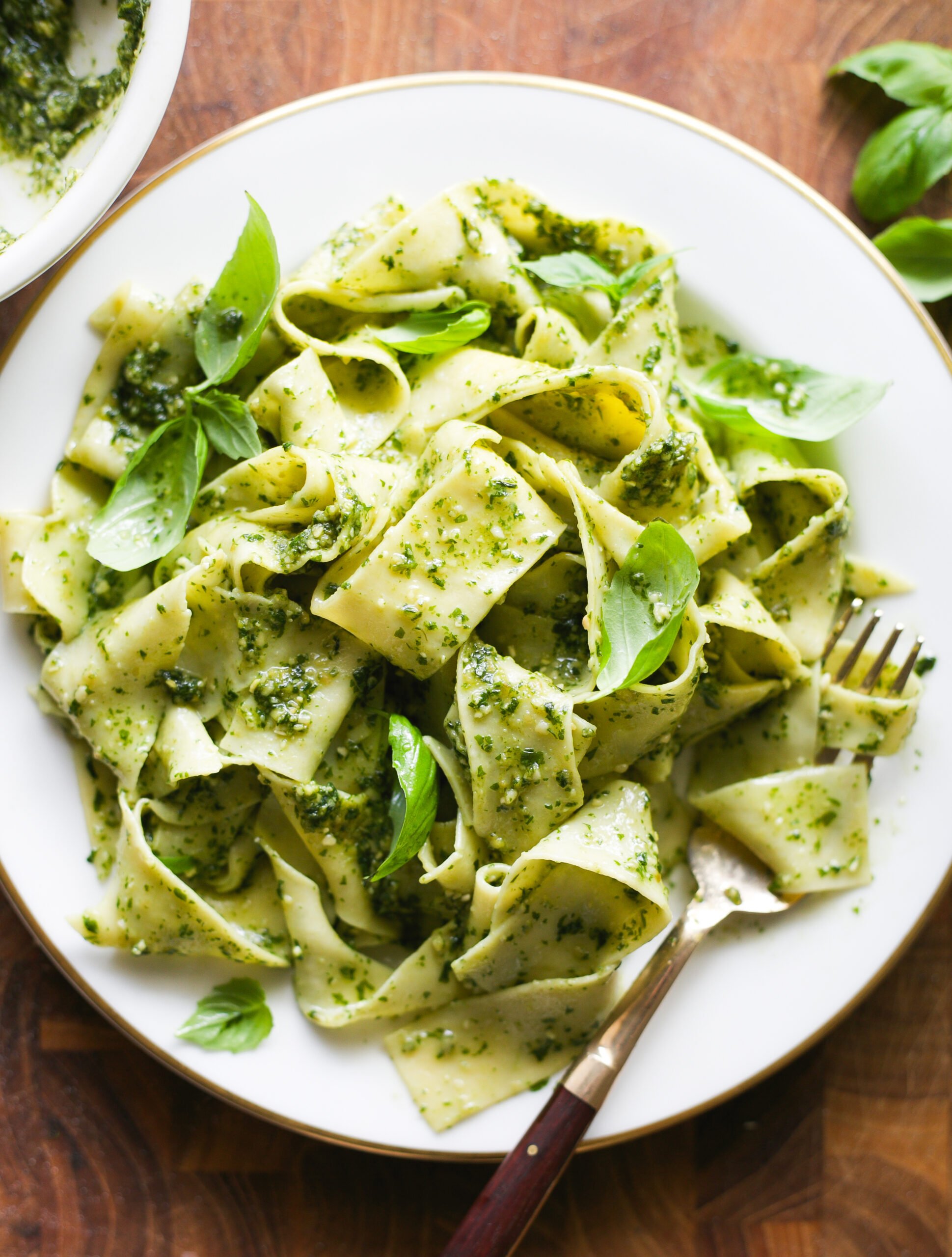
Normally, I reach for pappardelle pasta when making Ragù Bolognese, since the wide, flat ribbons easily envelop the sauce.
But I fell in love with the unexpected pairing of pappardelle and pesto. Herbaceous, summery, classic basil pesto clings just as beautifully!
This dish is simple to make: if you go the store-bought route, just cook the pasta and toss it with your favorite pesto.
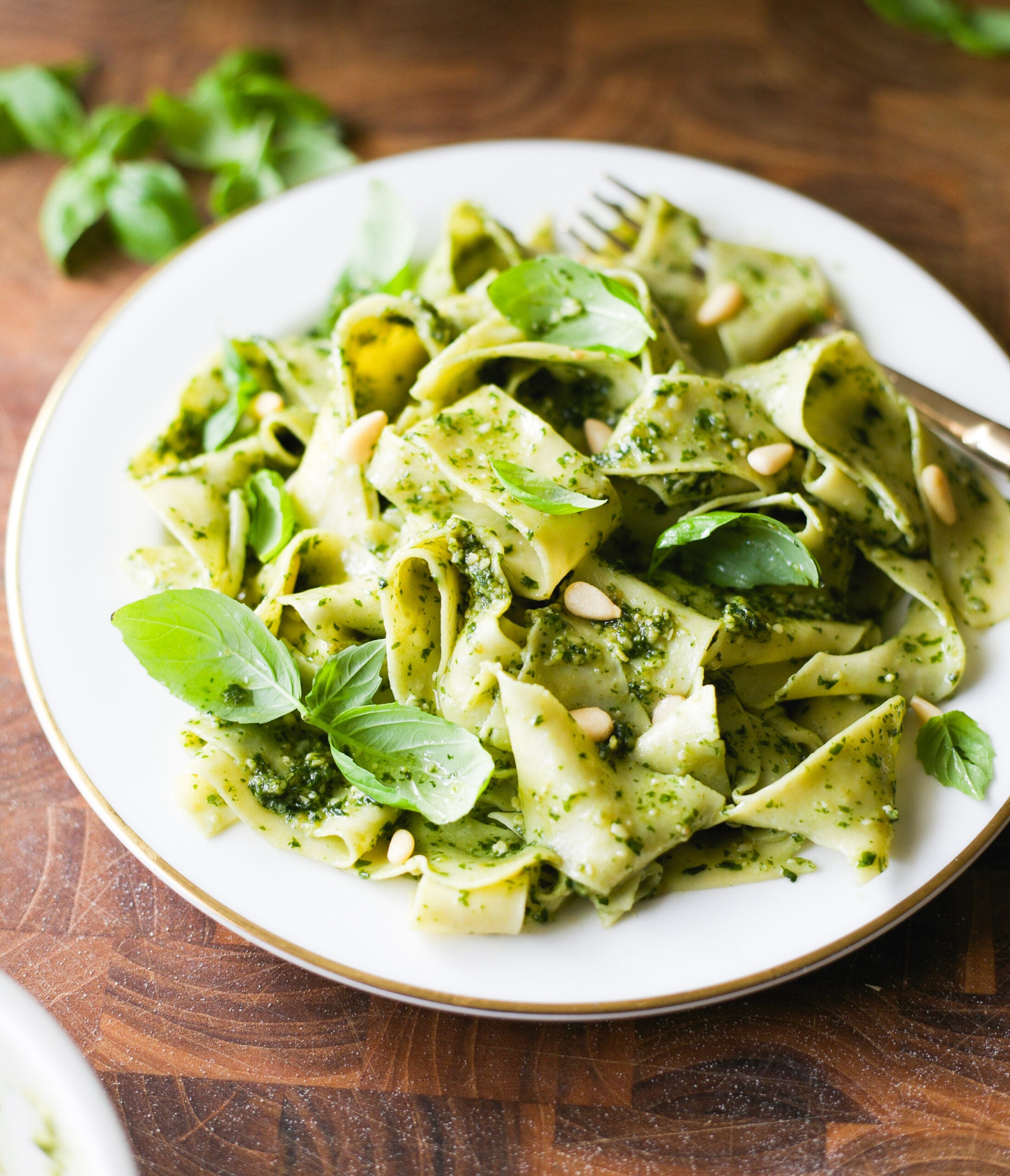
To elevate it, make homemade pappardelle and pesto, as I’ve done here (watch my video above). The soft, silky pasta paired with vibrant, fresh, in-season basil is exceptional. I like toasted pine nuts on top for crunch.

Tips For The Cook
- Want bright green homemade pesto? Chill your olive oil, use small basil leaves, and blend in batches. For more details, read this post.
- New to homemade pasta? Check out my Beginner’s Guide to Fresh Homemade Pasta (with video!) for everything you need to know.
- Make it ahead. The pesto sauce can be made 1-2 days ahead and stored in the fridge. Homemade pappardelle pasta can be made in the morning to cook later in the day.
- Serve warm, not hot. I actually prefer pesto pasta warm or at room temp. If it’s too hot, the pesto will turn black- it can oxidize quickly.
By signing up, you agree to receive emails from The Clever Carrot. Unsubscribe at any time.
Fresh Pappardelle Pasta with Classic Basil Pesto
- Yield: Serves 4-6 1x
- Category: Homemade Pasta
- Method: Stove-Top
- Cuisine: Italian
- Diet: Vegetarian
Description
This pappardelle pesto recipe is made with classic Italian basil pesto (basil, olive oil, garlic, pine nuts and Parmesan cheese) and fresh pappardelle pasta. You can make the pappardelle pasta yourself, or use store-bought. Either option will work!
Ingredients
For the Basil Pesto
- 70 g (appx. 2 1/2 – 3 cups), small, basil leaves (see note)
- 1 fresh garlic clove, smashed and roughly chopped
- 3 tbsp. pine nuts
- 1/2 cup olive oil, divided, plus more as needed
- 6 tbsp. (packed) grated Parmesan cheese
- 2 tbsp. (packed) grated Pecorino cheese
- Pinch fine sea salt
For the Pasta
(1x) Recipe Homemade Pappardelle Pasta (or 1 lb./ 450 g store-bought. I like Giovanni Rana).
Pesto Notes & Tips:
For the basil: choose small, baby basil leaves (Genovese variety). This is key. Grab a few potted plants if you cannot find this type of basil sold in bunches. The leaves should be small and curl under. They are tender and delicious!
Blend the pesto in batches, per the recipe. Doing so, paired with chilling the food processor or blender bowl, blade and olive oil, helps to prevent the basil from bruising and turning black. You’ll also achieve the best texture and flavor.
Instructions
For the pesto, before you begin: Freeze the bowl and blade of your food processor (or blender) for 30 minutes. Refrigerate the olive oil for 30 minutes. This will prevent the basil from oxidizing.
- Add the garlic, pine nuts and 2 tbsp. of oil to the food processor. Pulse a few times until minced. Scrape down the sides of the bowl.Add the basil leaves and another 2 tbsp. of oil. Pulse until finely chopped. Add the cheeses.
- With the machine running, slowly stream in the rest of the olive oil and blend until creamy.
- Scrape the pesto into a bowl. Taste, and adjust seasoning with salt (if needed). Stir in more olive oil to loosen the texture (if needed). It shouldn’t look like a thick glob.
- Cover and set aside at room temperature, if using right away. Or, transfer pesto to a small jar. Top with a layer of olive oil to prevent browning. Refrigerate until ready to use. It should last up to 1 week.
- For the Pasta, bring a large pot of salted water to a boil. If using my homemade pappardelle recipe, cook the pasta for 5-7 minutes or until aldente. Alternatively, if using store-bought fresh pasta, just following the cooking time listed on the package. Reserve 1/2 cup of the pasta water. Drain the pasta; add to a large bowl.
- To serve, toss the pasta with some of the pesto, adding more sauce as you go. Thin the consistency with some of the reserved pasta water, if needed. Garnish with fresh basil leaves, pine nuts and cheese (optional).

Comments
Beginner Food says
Ah so that’s what a Genovese is, I really thought it pertains to a city that it originated, it’s a type of Basil. I’ll try to see if it has a clear difference compared to the bigger basil leaves in the market. Thanks for the tips.