Looking to improve your sourdough bread? This technique will do it! Learn how to stretch and fold sourdough with my easy step-by-step instructions and video.
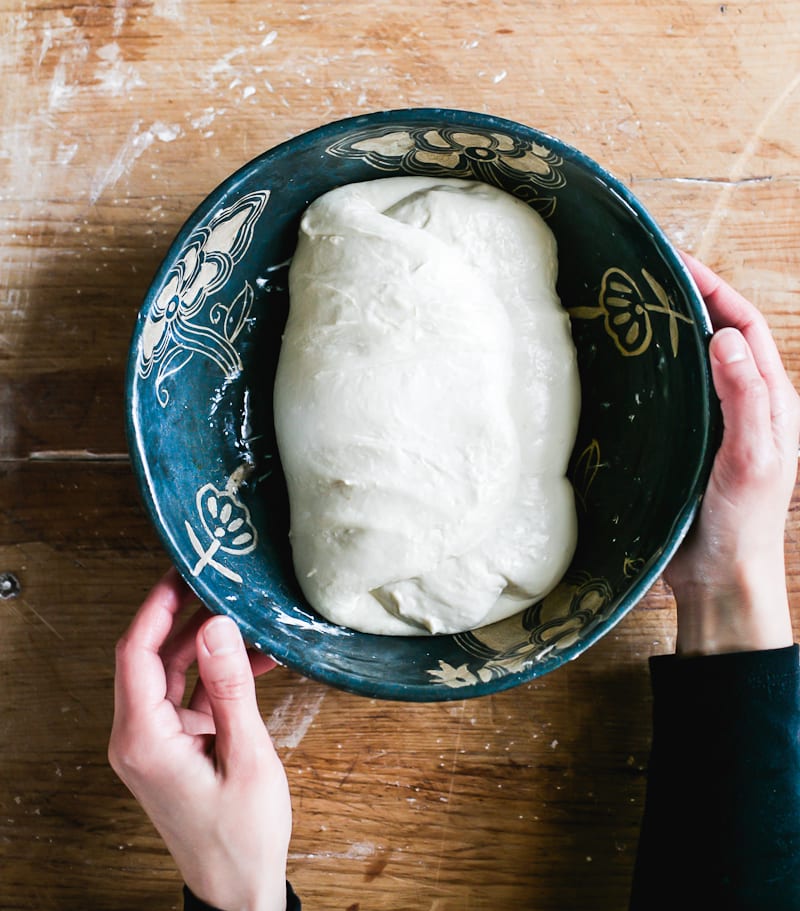
Bakers use the stretch and fold technique to improve the quality of their sourdough bread.
When done correctly, it will strengthen the gluten and gently incorporate air into the dough without kneading. I talk more about this in my book Artisan Sourdough Made Simple. But for now: the benefit is increased volume, a lofty high rise, and if you’re lucky: a more open interior crumb. Plus, it’s the most satisfying sensory experience (who doesn’t love touching bread dough?!).
The technique can be done on the countertop or directly in the bowl; the latter option is what I’m showing you here.
- Stretch the dough upward
With lightly wet fingertips, grab a portion of the dough and stretch it upward.
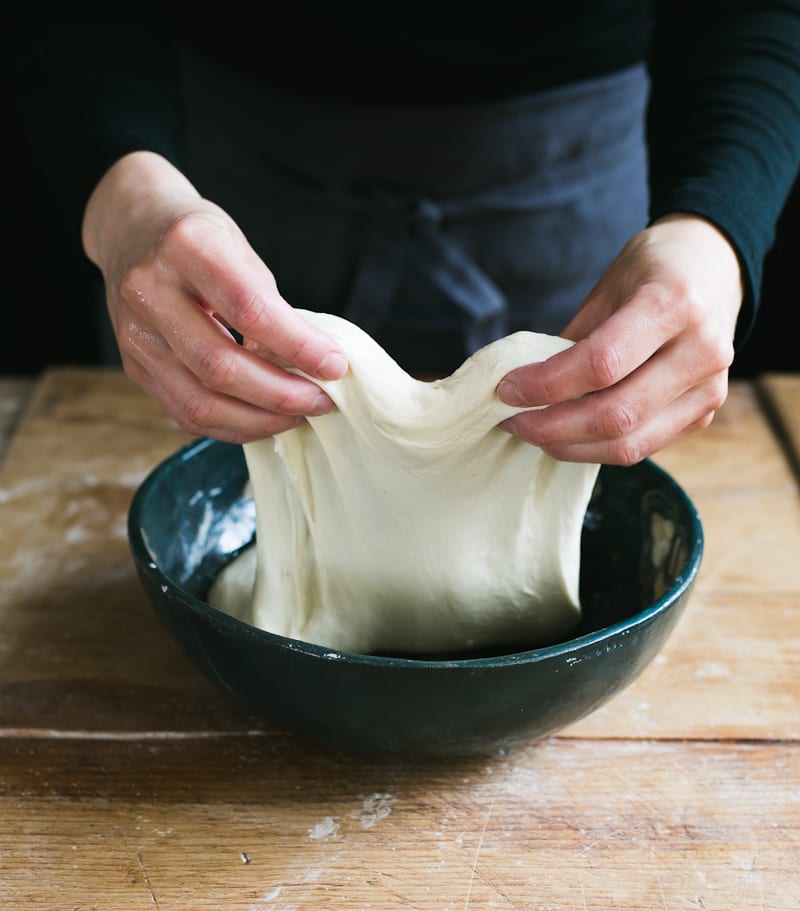
- Fold the dough
Fold the dough over toward the center of the bowl.
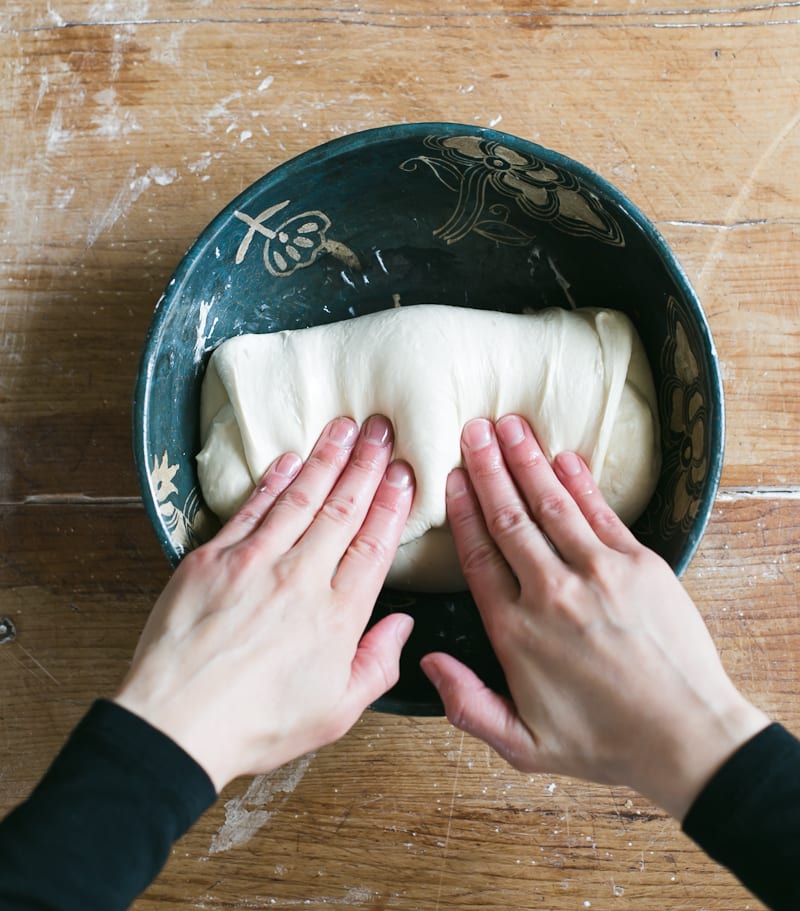
- Stretch and fold
Give the bowl a one-quarter turn and repeat: stretch the dough upward and fold it over toward the center.
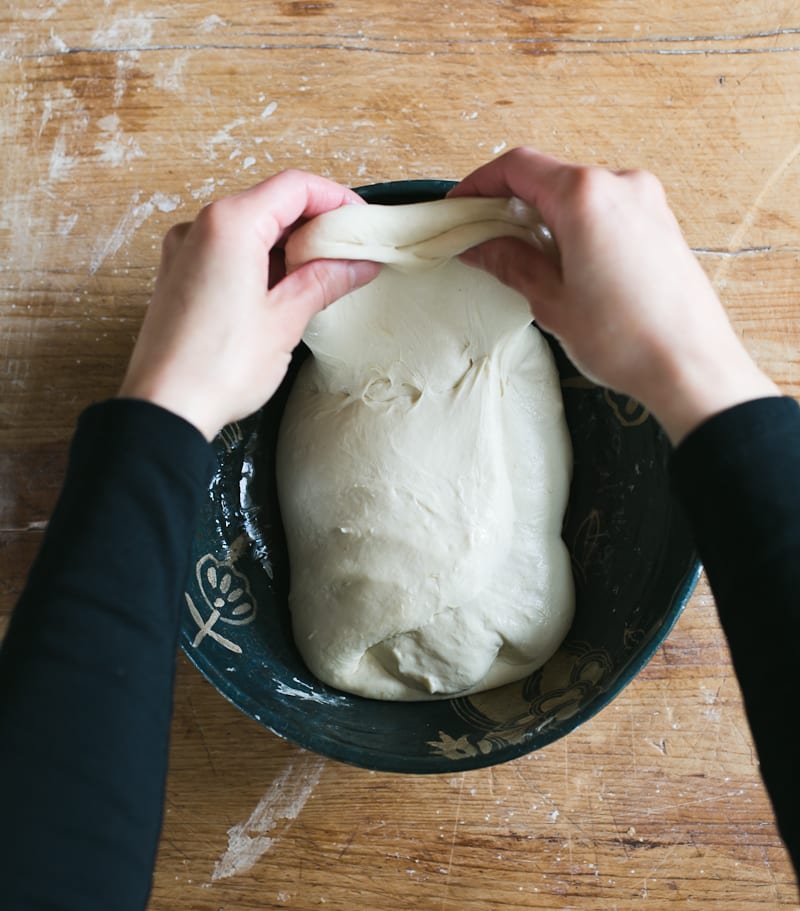
- Stretch and fold again
Continue until you have come full circle to complete 1 set, or 4 folds around the bowl.
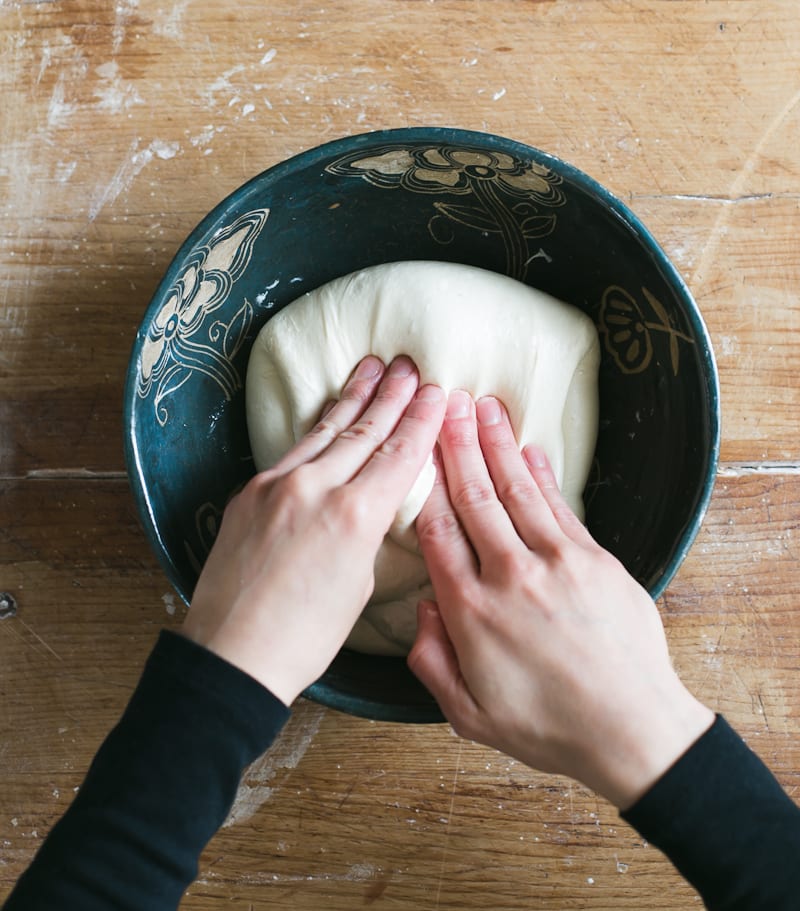
Baker’s Tip: When you do the first fold, the dough will feel loose and elastic. As you continue, the dough will start to tighten up, usually around the 3rd or 4th fold. After about 2-4 sets, the dough will go from flat and dense to plump and jiggly. That’s how you’ll know the technique is working.
How Many Times Should You Stretch And Fold the Dough?
Stretch and folds are completed in sets. The first set is usually done about 30 minutes into the bulk rise. Then, you’ll complete up to 4 additional sets spaced about 15 minutes to 1 hour apart, depending on the dough’s flexibility and your own personal baking schedule.
Baker’s Tip: As a general rule of thumb, the sets for high hydration doughs (wet dough) can be spaced closer together because the dough is slack; about 15-30 minutes apart. For low hydration doughs (dry, stiffer dough), the gluten will need more time to relax, about 30 minutes to 1 hr. Otherwise it won’t stretch properly. As always, these are suggested timeframes. Watch the dough and not the clock!
So, Is It Worth it?
Absolutely! Once you get the hang of it, you’ll find ways incorporate the stretch and fold technique into your baking routine. And with practice and repetition, you’ll notice changes in the look, taste and feel of your sourdough bread. Just remember: not all doughs require it. However, it’s easy, practical and super effective when applied as an optional step.
Baker’s Tip: When you stretch and fold the dough it may (or may not) look similar to mine. This is normal. It might be stiffer or even looser; it all depends on the specific recipe you’re following. For reference in the video above, I’m using a dough that is approximately 70% hydration.

Comments
Larry says
Hi Emilie,
Thank you for the video always good to see technics in action, sometimes they can be lost in translation from book to brain!
One thing (and you may have already done so) have you ever done a sourdough crumpet receipe? I think the texture of the sourdough yeast and the general nature of a crumpet would a great combination. I am sure there are recipes out there, but I would love something from you in the future. You are my go-to for all things sourdough and I hope you mind the suggestion and compliment.
Larry
Emilie Raffa says
Larry, great question! I haven’t made sourdough crumpets before, but I know it can be done. Sounds delicious, actually. I will keep this in mind as I continue to experiment. Thanks for the suggestion!
Kylie says
Great tips thank you! Do you have a favourite bread knife you could recommend? I always have a bit of trouble slicing my bread even when I cut it on it’s side.
Nancy says
I leave my sourdough overnight in a cloth bag and cut it the next day and it is much easier to cut.
Emilie Raffa says
Yes! I use the Shun classic offset bread knife (9 inch). My mom and I both have this knife and we love it. Cuts like butter!
Kate Kunz says
This is great! Can we get a video about incorporating things, ie dried fruits, nuts, etc, in sourdough?
Emilie Raffa says
Yes! Great idea. I’ll keep this in mind :)
Linda says
Artisan Sourdough Made Simple is excellent! This is my go to book! It has made me a confident sourdough baker with excellent results! Love the videos too!
Emilie Raffa says
Linda, thank you so much! I really appreciate the feedback!
karen wheeler says
Thank you I needed this today! Some normalcy in a difficult time.
Emilie Raffa says
You’re very welcome. I totally know what you mean :)
Michael says
Despite following the stretch and fold method, my sourdough lacks surface tension. Any suggestions for building up gluten strength?
Emilie Raffa says
Hi there! To clarify: the dough lacks surface tension at what point in the process? During shaping? How long is your bulk rise? Thanks.
Cristy says
Your book was my first sourdough bread making book…love it.
Your recipes never disappoint me, I have made your small boule, two boules and the all purpose sourdough with amazing oven spring using all purpose flour as bread flour during this t8me is hard to come by.
Thank you and looks forward to your posts every week. Again, thank you!
Emilie Raffa says
Thank you Cristy! I’m glad it’s working out for you!
betsy stone says
So I actually love to knead. Is this better for the bread? My sourdough is lovely and well aerated. Should I stop kneading it?
Emilie Raffa says
Betsy, I say this to everyone: if it’s working for you DO NOT change a thing. The stretch and fold technique is just an alternative method for strengthening bread dough. Keep doing what you’re doing :)
Angela Evans says
Just signed up and really enjoying the blog and videos!! Thx
-ae
Emilie Raffa says
Welcome, Angela! :)
Omer says
Is it ok the dough tears a little? Especially in the first stretch and fold
Emilie Raffa says
Omer, yes this is fine. And normal. When bread tears, the gluten is not strong so continue on until it becomes smooth and elastic. However, the dough might need more time in between sets to stretch properly. All depends on the recipe you’re following.
Antjie says
I love watching you videos and appreciate your information ad the sourdough breads
Will it be possible to send the above steps per e-mail for me please
Emilie Raffa says
Hi there! Subscribe to the blog and you’ll get all of my posts delivered straight to your inbox.
Joey says
Thank you for the video. I was following the Sourdough recipes and had a hard time understanding this part without a showing. Thx for all the great recipes!!
Emilie Raffa says
My pleasure, thanks Joey.
Maartje says
Do you als do this with your no-knead recipe, and is it useful there as well?
Emilie Raffa says
It’s up to you. Some no-knead doughs are incredibly wet, so it might be difficult at first. But it can be done!
Patricia says
Hello Emilie, I plan on making NK Bread this week and want to experiment with the folding process. This year, I’ve typically used recipe methods and proportions from both Jim Lahey & Breadtopia allowing a 12-14 hour bulk fermentation with no knead/no fold, and excited to see how folding will affect results! *Question*: What type of breads or hydration % are not well-suited for folding process?
Emilie Raffa says
Hi there! In my experience, you can really apply the technique to any dough with some experimenting. Dry doughs @ 60%-65% or less will be more stiff to stretch (so a longer set spacing is necessary), and extremely wet doughs @ 75% + might need more turns around the bowl/set to really build strength. There is no right or wrong.
Rachel M. says
I really appreciate being able to see what this looks like in your video. Also, I love the sound effects. :)
Thanks Emilie!
Emilie Raffa says
Haha… same here. I think it’s the best part!