Made with all purpose flour and just a touch of butter, learn how to make soft, tender sourdough sandwich bread with bubbly, active sourdough starter. Recipe adapted from my bestselling book:
Artisan Sourdough Made Simple.
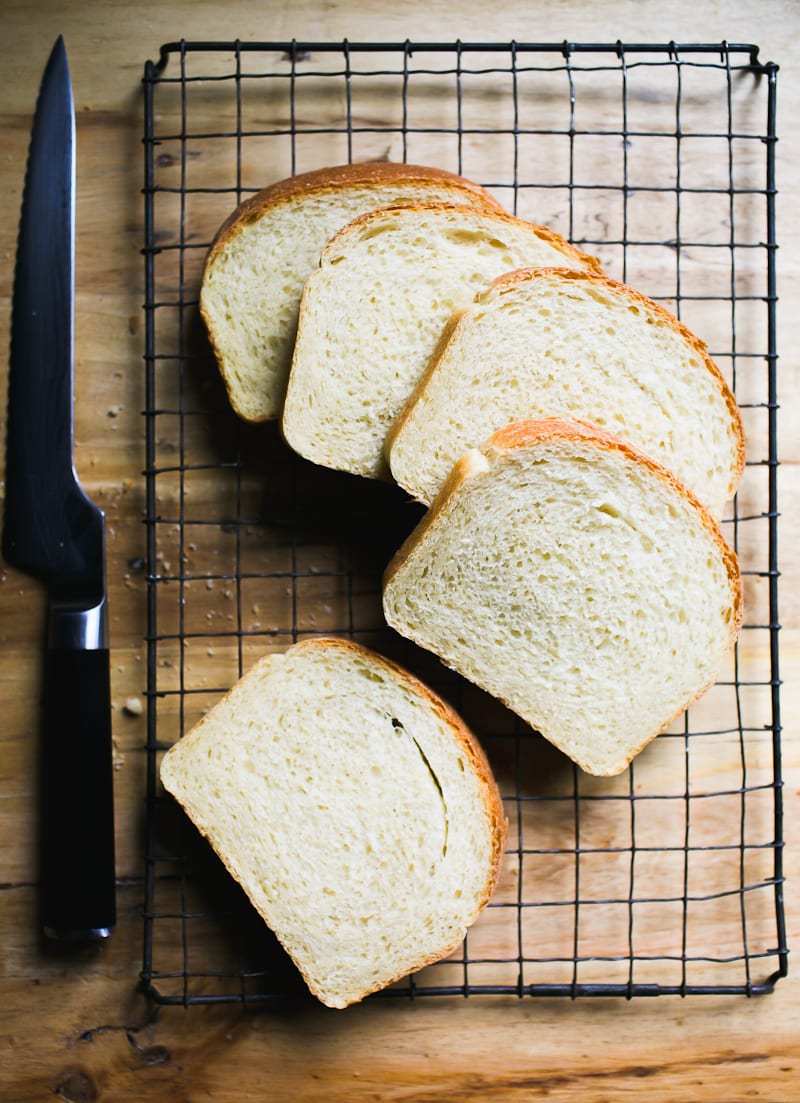
Out of all the sourdough bread recipes I make on repeat (my beginner sourdough bread recipe,
sourdough focaccia and sourdough pancakes to name a few!), this easy sourdough sandwich bread gets the most requests. Why? It’s soft. It’s buttery. It makes the kitchen smell like magic.
And the best part: you made it yourself. No junk or preservatives. Just simple sourdough with a soft crust, subtle tang and fluffy crumb that holds up to slicing, toasting and sandwiches (anything really).
Below, you’ll find my step-by-step walkthrough and baking schedule. You’ll also get three solid
variations (cinnamon raisin, whole wheat and bread flour) plus more sandwich loaf recipes in my book for inspiration.
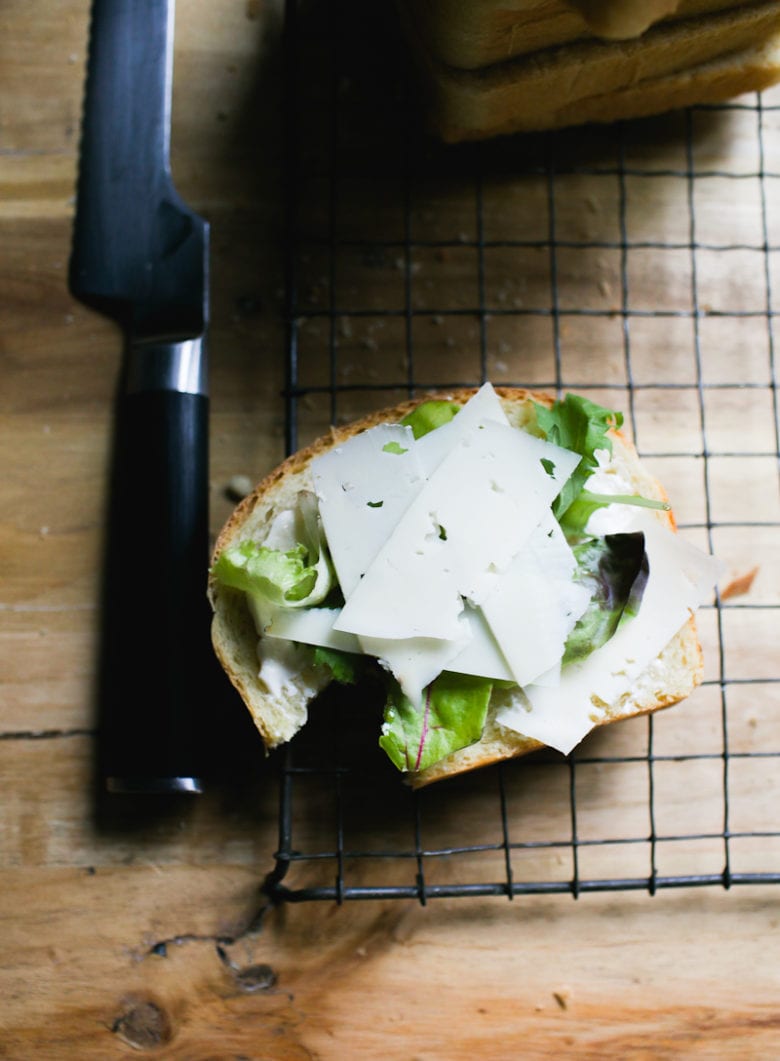
Good To Know:
- What most bakers get wrong: the second rise goes for too long. This creates over proofed dough that bakes up flat. Follow my recommended timing and tips to master this step.
- Pan size matters. Want a taller loaf? Use an 8.5×4 inch pan instead of the standard 9×5 inch pan. Both work, but the smaller size will give the dough a nice upward boost.
- Use softened butter. If it’s cold, it won’t blend into the dough.
- Make it vegan. Swap in your favorite plant-based butter. Just check the label. Some brands are very salty.
- Temperature controls time. Warm kitchen? The dough will rise fast. Cold kitchen? Give it more time. Watch the dough and not the clock.
How To Make Sourdough Sandwich Bread {Step-By-Step Recipe}
Step 1: Mix the Dough
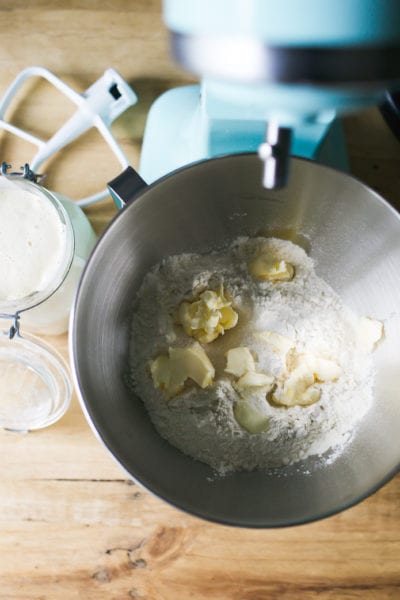
To Start: Add the flour, softened butter, sugar and salt to a bowl. I like using a stand mixer for this recipe. The dough is naturally a bit sticky; the machine makes it easier to handle. Mix with the paddle attachment until the butter looks like crumbs.
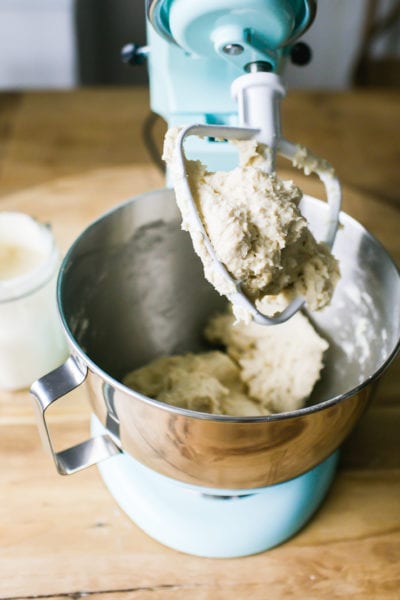
Mix in your bubbly, active sourdough starter and water until everything comes together. Cover and rest for 30 minutes to relax the dough before kneading.
Note: If you need assistance with your sourdough starter, read my companion articles Feeding Sourdough Starter: My Best Tips & Tricks and Troubleshooting Sourdough Starter.
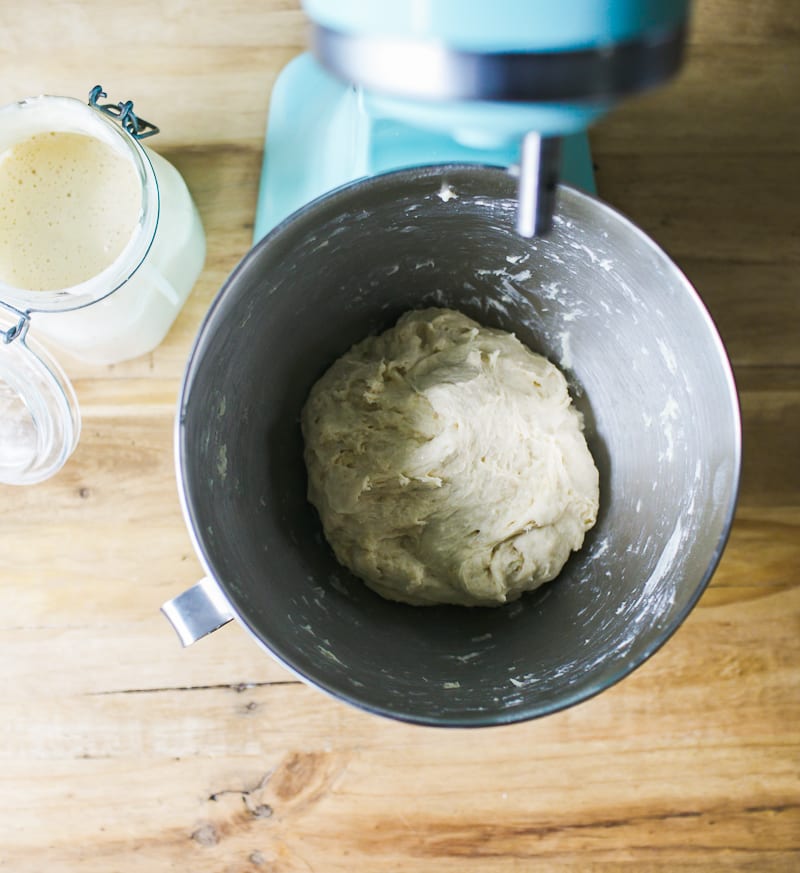
After 30 minutes of resting…
Remove the paddle attachment and switch to the dough hook. Knead until soft and supple, about 6-8 minutes. Note: on this particular day, my dough was stickier than usual so I added a sprinkle of flour to even it out. You can do that too.
No Stand Mixer? Knead the dough by hand on a lightly floured surface until it feels smooth, soft and elastic, about 8-10 minutes. Don’t worry about under/over kneading. If it’s springy (not sticky) you’re good to go.
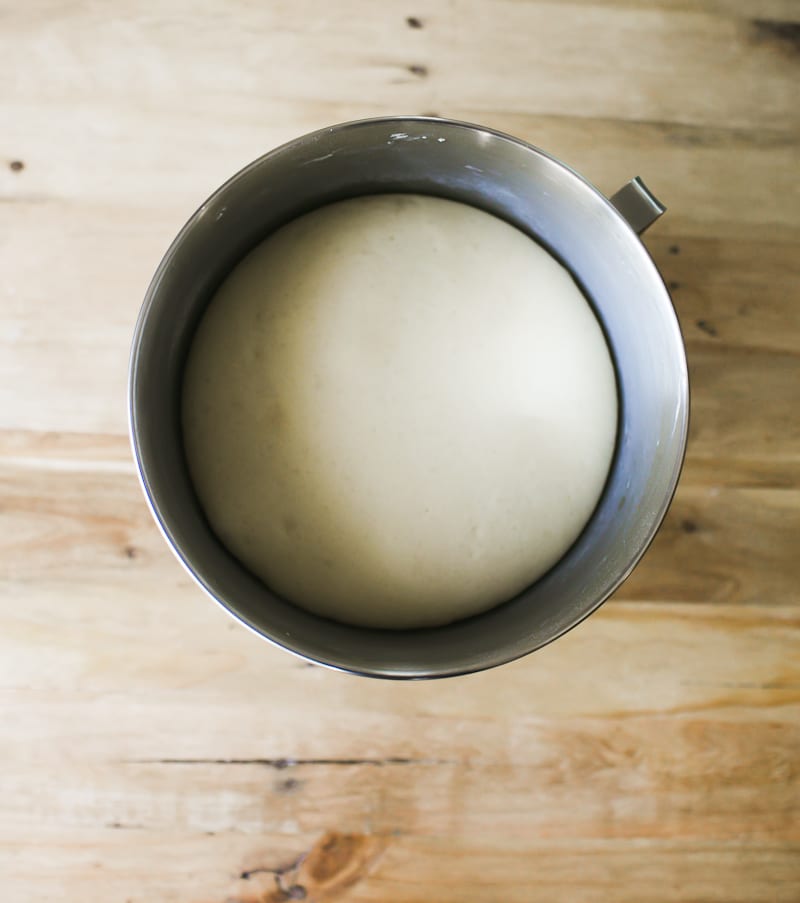
Step 2: Bulk Rise (Overnight)
Cover the bowl with plastic wrap and let the dough rise overnight at room temperature (68 F), about 10-12 hrs. The dough is ready when it’s puffy, airy and has doubled in size.
Tip: This is an overnight sandwich dough. However, you can do a same-day bake instead (see my Sample Baking Schedule).

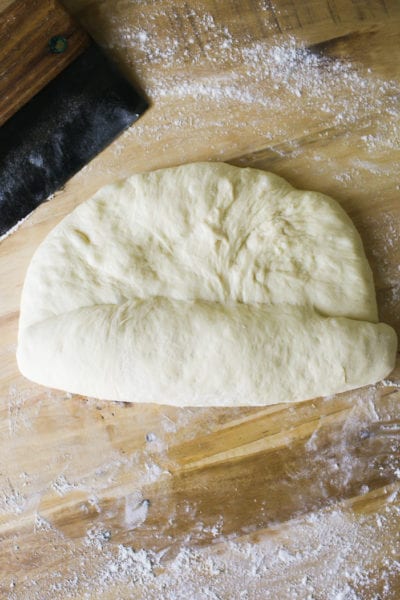
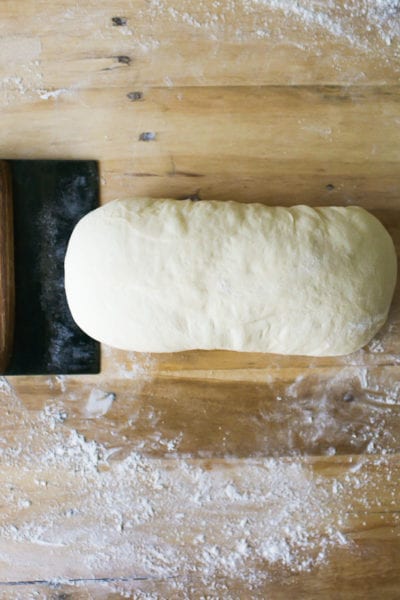
Step 3: Shape the Dough
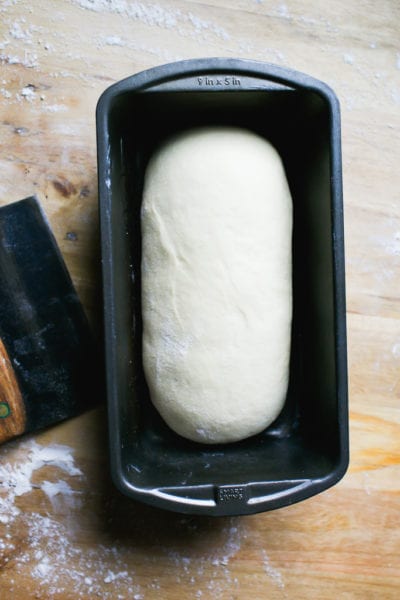
Remove the dough onto a lightly floured surface. Gently flatten to release the air bubbles (you don’t want big holes like ciabatta!).
Roll the dough into a log, tucking the ends underneath. Then, with floured hands pull the dough towards you creating surface tension to tighten its shape. Place the dough into a buttered loaf pan, but make sure it’s seam side down.
Step 4: Second Rise
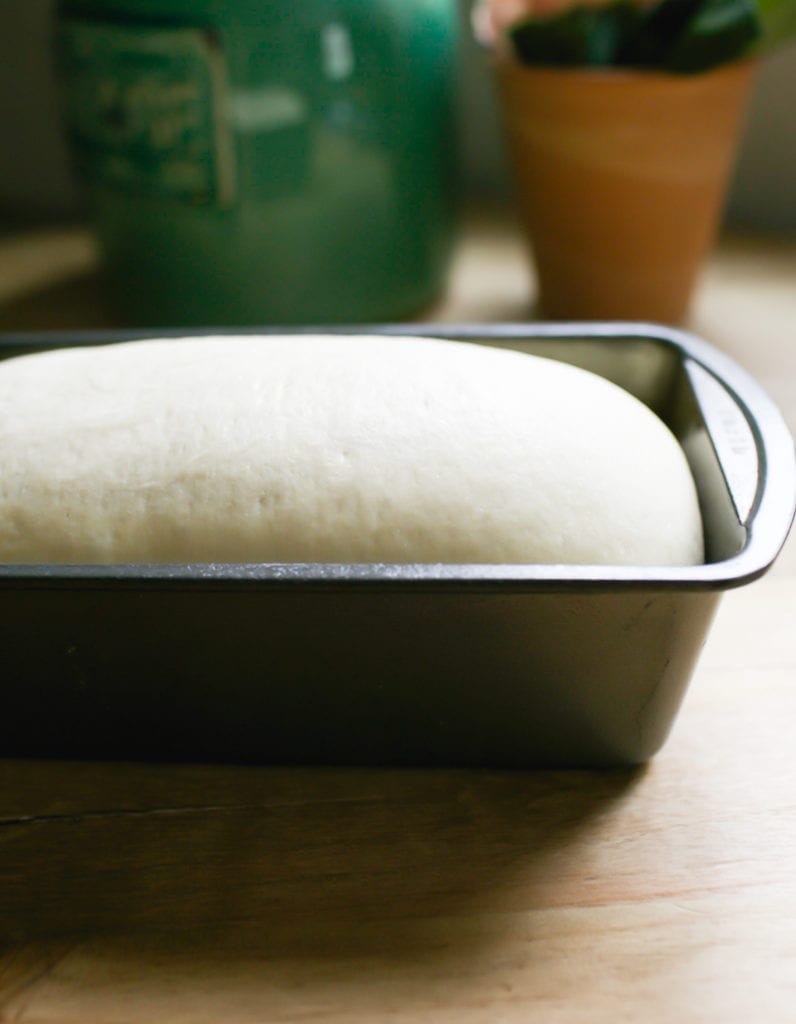
This step is crucial. When done correctly, your loaf will build back additional strength needed for good oven spring. Cover the pan with lightly oiled plastic wrap so the dough doesn’t stick to the top. Let rise until the center domes about 1 inch above the rim of the pan. You’e not going for double in size or sky scraper height; just notably puffy and less dense.
Tip: Cold Kitchen? Your second rise might take longer than expected @ 68 F. Be patient with this step. Plan on 1 1/2 -2+ hours depending on your specific room temperature and starter strength. If you’re short on time, use a proofing box or my DIY warm oven trick to speed things up (see “Helpful Tips” in the recipe card below).
Step 5: Bake The Bread
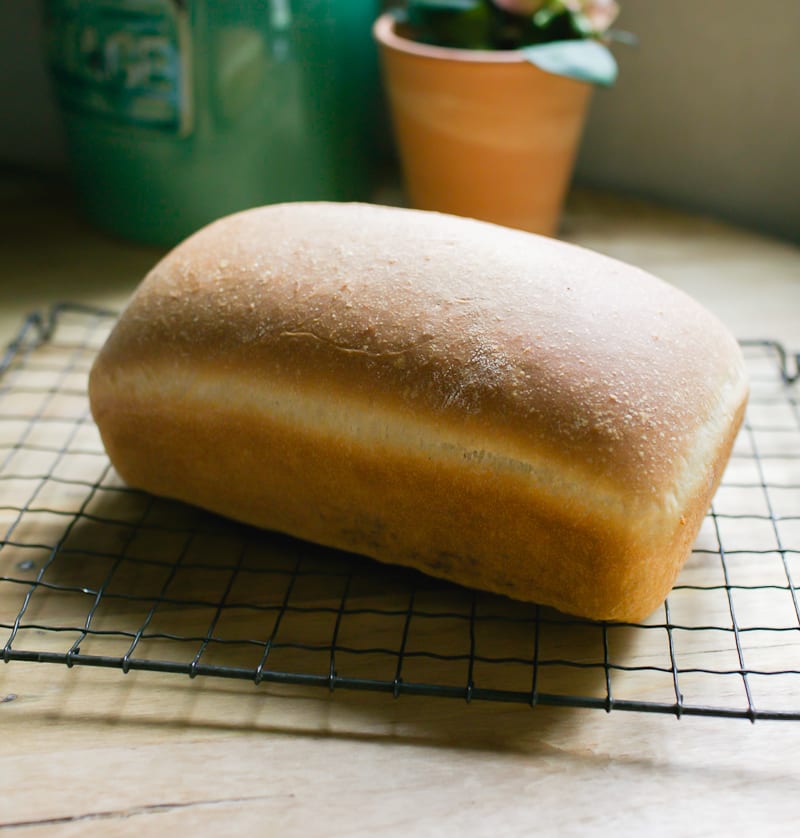
Preheat your oven to 375 F. For better oven spring, preheat to 500 F instead, then lower the temperature to 375 F when the dough goes into the oven. Bake on the center rack for 45-50 minutes or until golden brown.
Cool in the pan, then transfer to a wire rack. Wait an hour before slicing (skipping this step can turn the inside gummy).
Tip: Have an extra loaf pan? Some bakers create a makeshift “lid” by placing a separate, upside loaf pan on top of their pan before baking. This traps steam inside, creating a humid environment for the dough to rise avoiding potential blow-outs or tears, and keeps the crust soft. It’s similar to using a Dutch oven for my sourdough bread recipe.
Slice & Store
You’ll need a good serrated knife (I use this one). For a moderately priced option, try this knife instead. If your bread slices are really uneven, consider this collapsable bread slicer with 3 different thicknesses: thin, medium and thick to guide you along.
What I do at home: If you have a large family, or just eat a lot of bread, I highly suggest doubling this recipe. Bake (2) loaves side by side and freeze whatever you don’t eat. This loaf can be frozen whole, covered tightly in plastic wrap or as individual slices.
Sourdough Sandwich Bread Variations
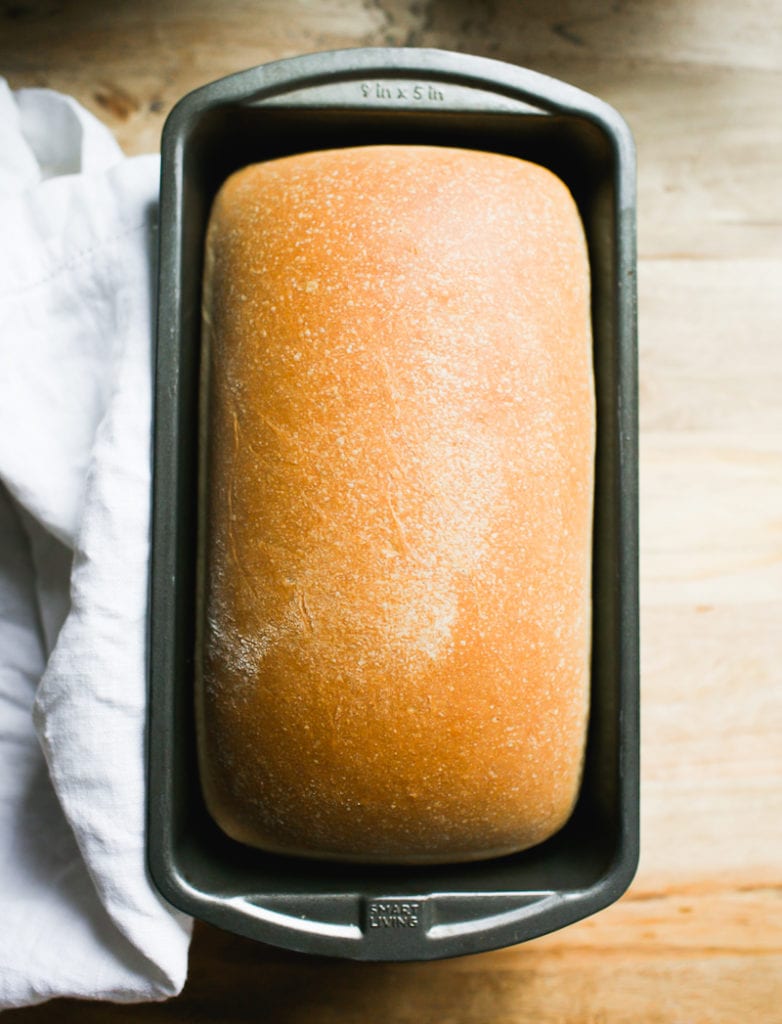
- Whole Wheat: Replace 20% of all purpose flour with whole wheat or white whole wheat flour. If the dough seems dry (whole grain flours absorb more liquid), add more water as needed to achieve a workable consistency. Do this 1 teaspoon at a time.
- Bread Flour: Do an even swap, adding more liquid if the dough is dry. For example, King Arthur Bread flour is very thirsty so more liquid might be needed. If using Gold Medal bread flour which is not as absorbent, additional adjustments might not be necessary.
- Sourdough Cinnamon Raisin Bread: You’ll find my step-by-step post here. The vanilla-soaked raisins make it a community favorite!
What To Bake Next
In addition to the above variations, a natural next step for sandwiches and breakfast fare would be my easy, NY-style sourdough bagels (they are so incredibly chewy and addictive) and these super soft sourdough english muffins. I’m excited to see what you make next.
Sample Overnight Baking Schedule (68 F)
Feel free to adjust the start times below as needed. It’s flexible. For a same-day bake, start early in the morning and bulk rise at a warmer temperature.
Day 1 (Evening)
- 4:30 PM: Feed sourdough starter (to activate)
- 8:00 PM: Mix dough
- 8:30 PM: Rat 30 minutes, then knead.
- 9:00 PM: Cover and bulk ferment, room temp @ 68 F overnight (10-12 hrs).
Day 2 (Morning)
- 7:00-8:00 AM: Check the dough (should be doubled)
- 8:15 AM: Shape dough
- 8:30 AM: Second rise (1 1/2 – 2+ hours)
- 10:30 AM: Preheat oven
- 10:45 AM: Bake
- 11:30 AM: Cool
By signing up, you agree to receive emails from The Clever Carrot. Unsubscribe at any time.
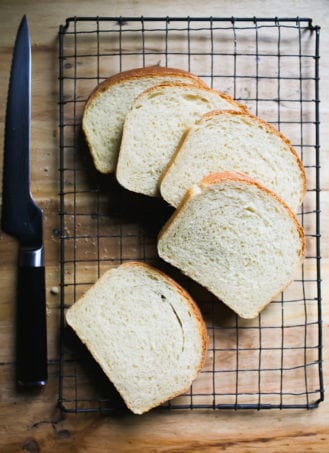
Easy Sourdough Sandwich Bread
- Prep Time: 12 hours
- Cook Time: 50 minutes
- Total Time: 12 hours 50 minutes
- Yield: 1 loaf 1x
- Category: Sourdough Bread
- Method: Oven-Baked
- Cuisine: American
- Diet: Vegetarian
Description
A simple and easy recipe for homemade sourdough sandwich bread. Made with all purpose flour and just a touch of butter. I like to make the dough at night so we can have fresh bread in the morning. This loaf freezes well (whole or sliced). I recommend this loaf pan.
Helpful Tips:
- For best results, weigh your ingredients with a scale instead of using measuring cups. Weight and volume measurements are not equal, only approximate! For example: If your starter is very bubbly, 1/4 cup might only weigh 30 g which is too little for this recipe (you need 50 g). The dough will take forever to rise. Same goes for the flour: 4 cups might weigh over 500 g depending on how tight the flour was packed into the cup. More flour = dry dough.
- This recipe works with Whole Foods 365 Everyday, King Arthur and Trader Joe’s all purpose flour. If using another brand with a lower protein content (i.e. Gold Medal, Pillsbury, Heckers) consider reducing the total water amount by 15 g.
- For a variation of this recipe with more sourdough starter, please choose one of the following adjustments below, keeping the rest of the ingredient quantities the same:
- 100 g starter + 255 g water
- 150 g starter + 250 g water
Additionally, because temperature controls time: you can also increase your surrounding temperature for the bulk or second rise, as needed. Place the dough in a proofing box set to 75-80 F. Or, preheat your home oven to 75-80 F and then shut it off immediately (use an oven thermometer to make sure it’s set to exactly 80 F and not higher!). Place the covered dough inside until it bulks up. Do no use this option overnight- it will be too warm.
Ingredients
- 500 g (4 cups) all purpose flour
- 60 g (4 tbsp.) unsalted butter, softened, cut into cubes
- 12 g (1 tbsp.) sugar
- 9 g fine sea salt
- 50 g (1/4 cup) bubbly, active sourdough starter (100% hydration)**
- 270 g (1 cup + 2 tbsp) warm water
Instructions
Baking Schedule: this is an overnight dough which takes approximately 10-12 hrs to rise @ 68 F. Start the night before, in the evening, and plan to bake the following day. If it’s warmer than 68 F the dough will take less time to rise. Alternatively, start in the morning and bake in the afternoon or evening.
Mix the Dough
In a stand mixer fitted with the paddle attachment, add the flour, butter, sugar and salt. Mix on low speed until combined; the butter should look like crumbs.
Add the starter and warm water. Mix until the flour is fully absorbed (get in there with your hands to finish mixing). The dough will feel slightly sticky and elastic at this stage. Cover with plastic wrap or a damp towel and let rest for 30 minutes. Meanwhile, replenish you starter with fresh flour and water.
After the dough has rested, switch to the dough hook and run the machine on medium-low (#3 on a KitchenAid) for 6-8 minutes. The dough will feel soft and supple and not stick to your hands. If it does, add a dusting of flour.
Note: If you do not have a stand mixer, the dough can be made by hand. After mixing and resting for 30 minutes, knead the dough on a lightly floured surface for 8-10 minutes, or until smooth, soft and elastic. Do not worry about under/over kneading. Relax into the process and focus on the texture, not the time.
Bulk Rise
Cover the bowl with plastic wrap and let rise overnight at room temperature (68 F) until double in size, about 10-12 hrs. Please refer to the Baking Schedule above for additional rise time options.
Shape the Dough
In the morning, coat an 8.5×4 inch loaf pan with butter.
Remove the dough onto a lightly floured work surface. Gently flatten the surface to release any large air bubbles.
Roll the dough into a log tucking the ends underneath. Rest for 5-10 minutes. With floured hands, gently cup the dough and pull it toward you to tighten its shape. Using a bench knife, place the dough into the loaf pan seam side down.
Second Rise
Cover the dough with lightly oiled or buttered plastic wrap. Let rest at room temperature until it has risen to about 1-inch above the rim of the pan (check the height by looking at the domed center portion of the dough). You are not looking for it to double in size. For timing, this can take anywhere from 1 1/2-2 hours (or more!) depending on temperature and the amount of sourdough starter used. Remember, the warmer it is, the faster the dough will rise. Refer to the “helpful tips” at the top of this post.
Preheat your oven to 375 F. Note: For higher oven spring, preheat to 500 F instead. Reduce to 375 F once the dough goes into the oven and bake as directed.
Bake the Dough
Bake the dough on the center rack for about 45-50 minutes, or until golden brown. Cool in the pan for at least 10 minutes, and then transfer to a rack to cool completely. This sandwich loaf will stay fresh for up to 3 days, stored in a plastic bag at room temperature.


Comments
Colleen says
I just had a revelation! I was having my bread rise on the counter, and it was always really slow and not getting as high as expected. Then I realized: my countertops are stone, and are always cold! The cold was going into the metal bold and slowing the rise. Face palm. I’ve started doing the rise on a wooden table top and everything is working out so much better! Just a heads up if you have stone/marble counters!
Michelle says
Good observation. I’ll change to a wood surface for proofing!
Technically speaking, the stone surface is the same temperature as wood. It does absorb/transfer heat better, so it robs the heat from your dough (or your hand—which is why it feels cold). Wood is a much better insulator/poorer conductor, so it won’t steal the heat from your dough.
Emilie Raffa says
Hi Colleen! This is SUCH great info- thanks so much for sharing. It makes total sense too- bakers will actually buy marble boards to roll out their pastry doughs like pie crusts, croissant dough etc. The stone keeps cooler than room temperature, so the butter doesn’t melt and soften the dough! 🥰
Annetta says
I’ve been making sourdough bread in a dutch oven, but always needed a recipe for a softer bread for sandwiches. This was perfect, I did divide it into two small loaves, absolutely loved the texture and taste, thank you for sharing this, was so very easy. We love bread and wanted a healthier choice and sourdough is definitely better, will use this instead of store bought bread.
Paul Calzolano says
Question. How TALL is your llosf pan? I have a usa pan that’s 4 inches high. The cheaper pan i have is only 2 1/2 inches high ad appears similar to yours in the pix. So what am i shooting for in the final rise? 1 inch over the 4″ high pan, or to a height of approximately 3 1/2 inches which would be 1 inch above the smaller pan?
Jen says
I tried first your starter recipe. 1st try failed, when i followed your ratio 1:1:1. So made a fresh starter, this time every feeding i did 1:2:2 ( like a pancake batter but much sticky. And there goes a good starter!
Now i followed your loaf bread recipe, even substituted 100g wheat+400g all purpose flour. I used my starter that i feed and made active.
After 10 hours, though it risen it was too wet. I followed the 6mins low time in mixer. So tried adding bread flour while i shape it and put into pans. I am still hoping for a good rise after 1-2hours. I promised my family i would give them one loaf each 😅, maybe i should’ve just made a sourdough bread like i first planned.
Colleen says
This has become my weekly go-to! Thank you! I’m so happy to have found a way to feed my kiddos tasty bread without any gross additives like the store bought versions!
Amanda Baumgartner says
This has been our go to for the past year or so. It is by far our favorite for toast and for tuna sandwiches.
I make 2 to 3 loaves every 2 weeks.
I plan on baking enough loaves to take to all my neighbors for Christmas gifts this year. Delicious!
Erika Biesterfeld says
Such a great recipe! I’ve made it several times. Question for you: I bought your cookbook (love it so far!!) and want to make your soft honey whole wheat recipe. Why does that recipe call for much less kneading this one?
Doreen Hodges says
I’m new at sourdough bread making and have had a few failures. This was going to be my last try. Well looks like I need to feed my starter because I followed the recipe exactly and it is perfect. Thank you.
Jackie Reynolds says
I did make this.. My husband prefers very soft crust so I figured this would be the way to go. It is delightful bread. I followed your recipe to a T. You must spend a lot of time experimenting until you have everything right. Thank you for that.
I have several options for storing my bread. Those include compostable Ziploc‘s, cloth, bread, bags, paper, bread bags. However, I never store my bread and plastic bags. Whenever I did, we always wondered why it never tasted nearly as good the next day. I highly recommend never storing your bread in plastic bags.
Sue says
Can you make the sandwuch bread without adding the sugar?
Julie Shin says
I made this today and it’s so delicious! So much better than store bought bread!
Kalie Niederhauser says
What do the different variations in starter do? Does more starter give a bigger loaf?
Courtney says
More starter = a faster bulk fermentation, less starter will result in the bulk fermentation taking longer.
Br. Abraham henderson says
Hi – this is Br. Abraham – wanting to convert our Friary bread baking to sourdough. 24 men – we bake 12 loaves at once…could this recipe’s quantities be successfully multiplied to do this?
Thanks for your sharing your experience and research.
Celine says
I have made this recipe a few times and the bread always came out perfect! I was wondering if I can double the ingredients to make 2 loaves? I have been using 2 separate bowls to make 2 loaves before but is there any modifications I need to do to double it?
Rachel says
I do this every time and it always turns out perfectly
Dottie says
Do you mix it in a stand mixer? I was afraid it might be too much dough and overtax the mixer. I’ve been doing them separately but bulk rising them together. I think I’ll give it a try the next time.
Kathy says
Hi! I tried this recipe with my new sourdough starter (using your beginner starter recipe and it’s doing excellently!) The rises went well, and it baked perfectly. I made sure not to over knead and followed the timing suggestions for the rises. Now that I’m eating the bread, it’s quite dense/think on the inside – not too much of a problem, but it’s pretty heavy bread with VERY tangy/sharp taste. What could I have done wrong? The second rise (after shaping) took forever, well into 3 hours I think. Could that be the reason for the taste? The bread has pretty even air pockets, nothing too crazy.
Thank you for the help in advance! And thanks for all your recipes. I’m rather enjoying this sourdough journey.
Nancie says
This was my first time trying this recipe, and I have the same issue. The taste is very good and tangy, but the bread is very heavy. Not sure where I went wrong.!
Madie says
I did a few modifications as you recommended. 150g of starter with a little less water, 20% (100g) of whole wheat flour. I also substituted the sugar for 21g (1 Tablespoon) of honey. It turned out so soft and tasty!! The texture reminds of store- boughten bread, it’s so soft!
Emilie Raffa says
Excellent! This is very helpful feedback, Madie. Thanks for sharing. 🥰
Penelope says
I’d like to include honey for both the flavor and to sweeten. How can I substitute the sugar for this? If it’s liquid, would I need to reduce the water at all? Please advise. Thank you.
Tarah Lee Johnston says
I’ve switched out sugar on all her delicious recipes. (Except the banana muffins) I do not change any water/liquid amount. I have not tried the bread but plan on doing it today. I’ve never noticed it to change the pancakes that I do this with her recipe is my households favorite. My kids eat chocolate chip pancakes everyday(I even sometimes add maple syrup and honey) I have been Doing experiments getting granulated sugar out of recipes.
Piroska says
Is it ok to do second rise in refrigerator overnight?
Emilie Raffa says
Yes! Absolutely! Just check it in the morning—if it needs more time to rise, do so at room temperature until puffy.
Harry says
Can I use a mix(50/50) of 00 flour and bread flour in this recipe?
Clarissa says
We live in Central America, and regular room temp can range from 85-95 F. Just wondering what an approx time schedule would be for the rise times. Do you think it would be only half the amount of time needed for the first and second rise?
Tammy says
Mafe those bread today! It is delicious, but it was a little dense. I am blaming myself, because I did *rush* the fermented process. I used a proofing drawer.
It cut nicely and its delicious. Will definitely try it again.
Julie T says
Is it a problem if the butter is fairly melted rather than just soften. I might have over melted it in the microwave. It was a whole stick. I was doubling the recipe. So, I was unable to cut butter into cubes.
Emilie Raffa says
Hi Julie! You can still use it. Just make sure it’s not too warm when you add it to the dough. 🥰
Rachel M says
Can you swap for bread flour if that’s all you have?
Emilie Raffa says
Hi Rachel! Yes, you can. The dough might be a little bit drier (not by much)– it’s just a heads up. Enjoy!
Annette O'Brien says
Can you use salted butter and omit the sea salt??
Emilie Raffa says
Yes! You can do that. Alternatively, add just a pinch of salt instead of omitting it altogether.
Love from Israel says
This is my favorite sourdough bread recipe. I make it twice a month. It gets lots of compliments. Thanks!
Emilie Raffa says
You’re very welcome!! I’m so glad you like it. Sending love right back 🥰
Jo says
I’m rather new on my sourdough journey. Your Easy Sourdough Sandwich Bread recipe has great reviews and have decided to bake it. I noticed you have sourdough starter variations using either
100 g or 150 g starter instead of the 50 g in the recipe. I would love know why one would use the other variations?
Mica says
Such an easy recipe and my sandwich bread turned out perfect! I used blonde coconut sugar for anyone wondering about that swap and it worked seamlessly. 45 min was just a touch too long, but I did use the suggestion to get the oven to 500 degrees first then turn down to 375 – I’ll need to watch it a little more closely next time to nail down the baking time. I will absolutely be making this again and again!
Lauretta says
Made the sourdough sandwich bread last week. The loaf was beautiful, tasty, but a little dry. Blaming that on the oven, which seems to make hot and I am still working on adjustments. I will probably have to locate the oven thermometer. Today I making the sourdough bread with olive oil and the Basque cheesecake. Watched video on pasta making, my daughter and I will do that one eventually.
Jean says
I think this is the 4th sourdough sandwich recipe I’ve tried, and it’s so much better than the others. This is so much like soft store bought that I’m hopeful I’ll finally get my husband to ditch the store bread and join me eating a sourdough sandwich.
Yours is simple to make, and excellent instructions, you just can’t go wrong. FYI, I did not try covering with a second loaf pan.
Thank you for this fabulous recipe!!
Ann says
Yes do you cover with another loaf pan when baking? Do you keep
It on till done
Ashley L says
I have been using the country farmhouse white sandwich bread recipe from your cookbook. When I found this recipe on your website I noticed there are some subtle differences. Like much more butter, the cookbook version only uses 1T of oil and less starter. What is the reason for this? I’m assuming this would produce a softer and less sour outcome, is that correct? Since this was made more recently than your book is this your preferred recipe? Thank you!
Daphne says
Hi, and thank you for this great recipe! I’m wondering can I double the recipe? And if so should I just double all of the ingredients or more starter? I’m new to sourdough bread making!
Sarah says
I’ve made this twice and doubled everything both times. I divided the dough before the overnight rise and it worked really well!
Betsy says
Hi! Has anyone calculated the nutrition in this recipe? Thank you!
Michelle says
Look on your flour bag. And your butter box. Add 60 calories (13 g carb) for the sugar. You’re done.
Monica says
Where might I find the nutritional breakdown on this recipe.
Sierra Sugar says
So easy and so delicious!! I have struggled with making a true sourdough bread for years! I joked that the only reason I kept up with my starter was to use the discard in other recipes. I have a really great sourdough discard + brewer’s yeast sandwich bread that is easy to make. This recipe is just as easy. I let it bulk rise on my counter for about 6 hours. My house is cold and it was bedtime. So I put it in the fridge overnight and didn’t get back to it until 5pm the next day. I shaped it and let it come to temperature on the counter for several hours until it had both warmed and risen. Then I baked it with an inverted bread pan as a cover, and it turned out perfect! Timing has always been my issue. Due to chronic pain it is hard for me to keep up with the timing and bake before it over proofs. That did not happen this time. THANK YOU so much for this easy and forgiving recipe. I will be scouring your site for other great recipes.
Svetlana says
Great recipe! The bread has the perfect texture for a sandwich loaf. If you don’t like sourdough and want regular white sandwich bread, this is the recipe that will satisfy you.
Rena B. Bailey says
This is the 3rd time I am making this bread using my Pullman pan. The dough is soft and has a lovely texture. The flavor is wonderful and the bread is great for toast, sandwiches and French toast. I think my next venture will be a cinnamon loaf. Great recipe for both beginners and experienced bakers!!
Turia Penkalski says
I love this recipe, I’ve made it a few times now, but I am always wishing I knew what the final internal temp should be. When making traditional sourdough I always ensure the internal temp is at least 200°F. After 45 minutes this loaf is about 175, I am afraid to take it out at that temp enventhough the top is browned. Do you have a recommended internal temp? Thank you!
Kiki says
I made this with the adjustment suggestion of more starter and 20% whole wheat flour. It turned out amazingly! I also added egg wash & sesame seeds on to before baking. I wish I’d made 2 loaves. My family devoured half the loaf at lunch. Also, super easy to cut, with the thin & crunchy crust.
Jessica Newton says
This is my first time making sandwich bread instead of a traditional sourdough loaf. Is it normal for it be heavier and crispier than a store bought load?
Susan Reich says
Is it ok to leave the dough in the metal mixing bowl (that comes with the stand mixer) overnight, or will that change the results?
cherrie says
I regularly leave my dough to proof in the mixing bowl. If yours is stainless, it shouldn’t be a problem.
LISA says
I have made this several times and it always works out perfectly. Easy directions to follow. Love this.
Hugh says
This bread is a wonderful vehicle for that tomato sandwich during the Summer.
Rebecca says
I’ve been making 1 or 2 loaves of this sandwich bread every week for a few months now. At first, I made it exaclty according to the recipe, and it turned out great every time. I’ve since found a couple of tweaks that enhance it a little more for my personal taste. I prefer to use bread flour (which typically means I do need to add just a little extra liquid), and I replace half of the water in the recipe with whole milk. That makes the texture perfect for me. But whether you make this loaf exactly as written, or you use it as a blueprint and go your own way, this recipe is solid and no-fail.
Andrea says
This bread always turns out really well for me. I live in a warm area so I usually do my bulk rise during the day (6-7 hours) then shape and put it in the fridge over night. I take it out of the fridge and let it sit for a couple hours before baking. I use a standard 9×5 loaf pan because that’s what I have.
Elaine says
If I use a proofing box or my house is warmer (77*) am I still looking for it to double during bulk rise, even though it will happen faster?
Allie Proffitt says
Could I make this in a 9×5 loaf pan?
Rochelle says
Hello can you make this without sugar, honey instead!?
Julie says
Yes I leave out the sugar and it works and tastes 😊
Sandra says
I switched from sugar to honey- no difference.
JoAnn Perkins says
Hello.. I make this bread every week and we love it. I’m wondering if I can add fresh garlic and rosemary and when is best time to add… thank you
E says
I personally would add at the second rise. :)
Tammy says
This is the BEST Sandwich loaf recipe. I bake bread for others and it is BY FAR the best Sandwich Loaf recipe out there. (My preference!). It has flavor, a strong balance of texture and the sourdough characteristics! My customers have left other bakers and come to me because of THIS recipe. Thank you, thank you, thank you!
Johnna D. says
This was the first recipe I have made using all SD starter, but just discard. It worked really well! I added cinnamon chips.
Alexandra Moody says
Would you use the same amount of discard as starter?