Light and fluffy gnocchi recipe? You’re in the right spot! Make fresh homemade potato gnocchi with just 4 ingredients and simple step-by-step instructions. My secret is Yukon Gold potatoes, egg yolk (only) and fine milled Tipo 00 flour for best texture and flavor. Serves 4.
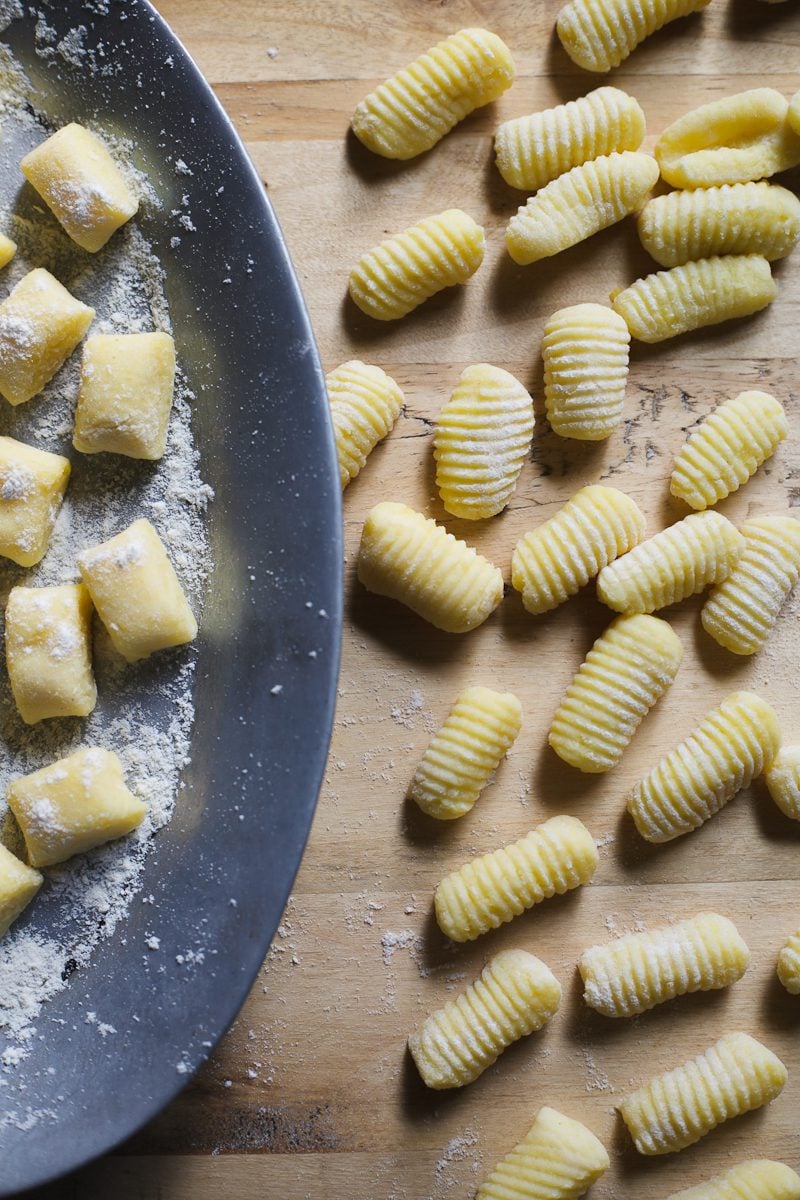
My first attempts at homemade gnocchi were too dense and chewy, and not in a good, toothsome kind of way. The defeat was crippling. Where were those light and fluffy clouds everyone raves about?!
What I eventually learned is this: gnocchi isn’t just a recipe. Just like sourdough bread or homemade pasta, it’s an understanding of ingredients, how they work together, and what the dough should look and feel like in your hands. It takes practice.
My beginner’s guide teaches exactly that. From choosing the best potatoes, the right flour, to understanding eggs (oh the controversy!) you’ll learn how to avoid dense and chewy gnocchi, so you too, can achieve light, etherial clouds.
Understanding Eggs: The Great Debate
You’ll come across two types of gnocchi: with eggs or without. This is important. Eggs act as binders, holding the dough together so the gnocchi won’t dissolve into smithereens is rapid boiling water.
But oftentimes, whole eggs lead to dense and chewy gnocchi (this is from the egg whites), which is why some purists avoid them altogether. But go fully eggless, and the dough becomes notoriously difficult to work with!
The solution? Use egg yolks only, a tip I learned from Gennaro Contaldo and it really works. The yolks bind the dough without adding chewiness, producing gnocchi that are light, tender and a beautiful golden color.
How To Make Fresh Homemade Potato Gnocchi {Step-by-Step}
Step 1: Cook & Rice The Potatoes
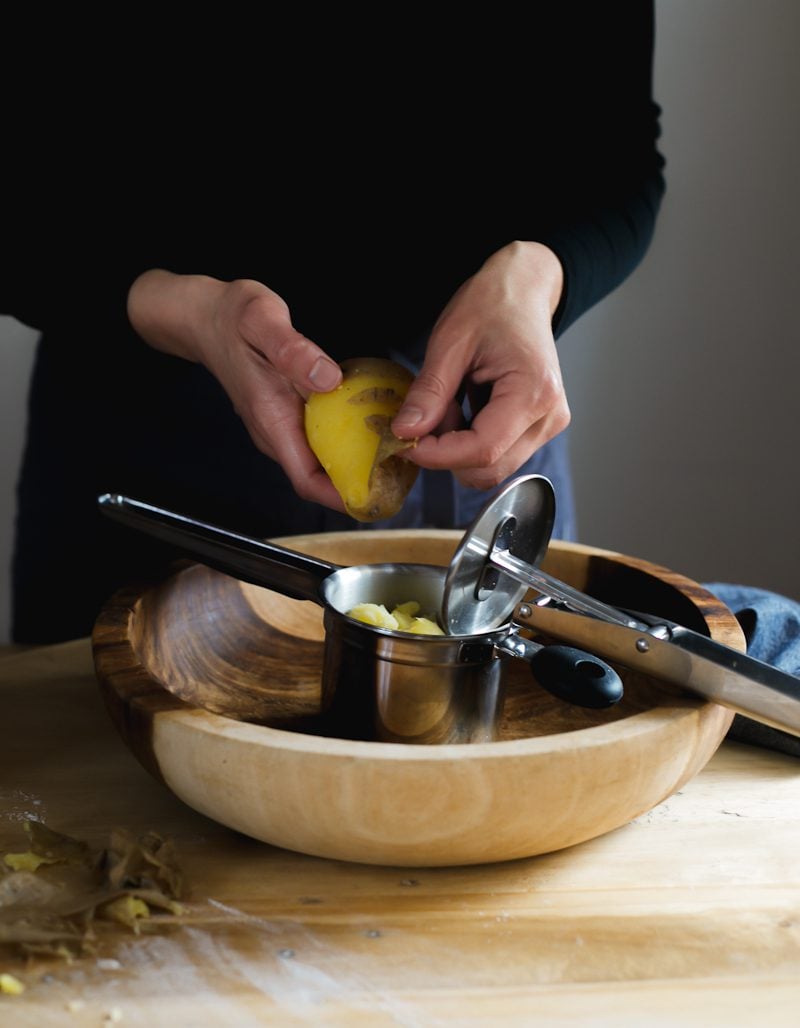
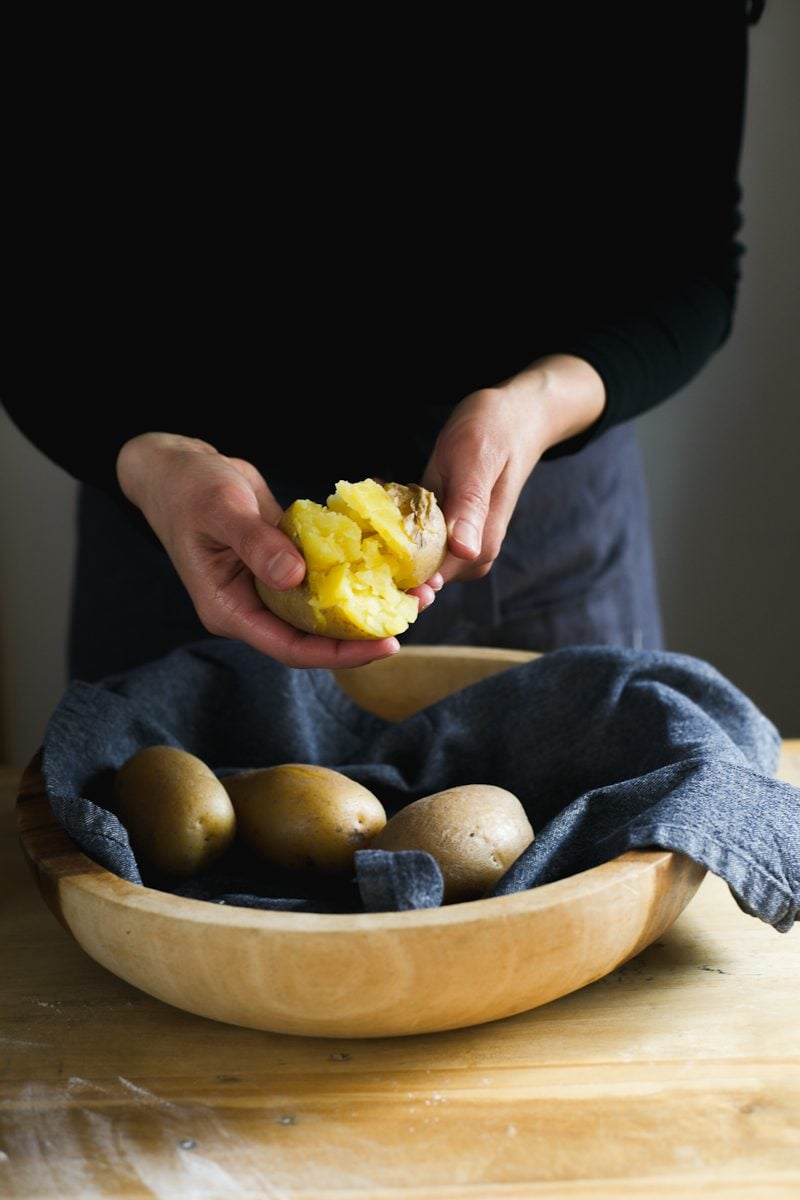
To start, boil the potatoes, skin on, until tender. I recommend Yukon Golds over floury Idaho or Russet potatoes. They’re creamier, semi-waxy, and do not retain a ton of moisture. You want that for gnocchi. Stick a knife in one of them to check for doneness; it should slide right out. Drain, dry, and remove the skins while still warm.
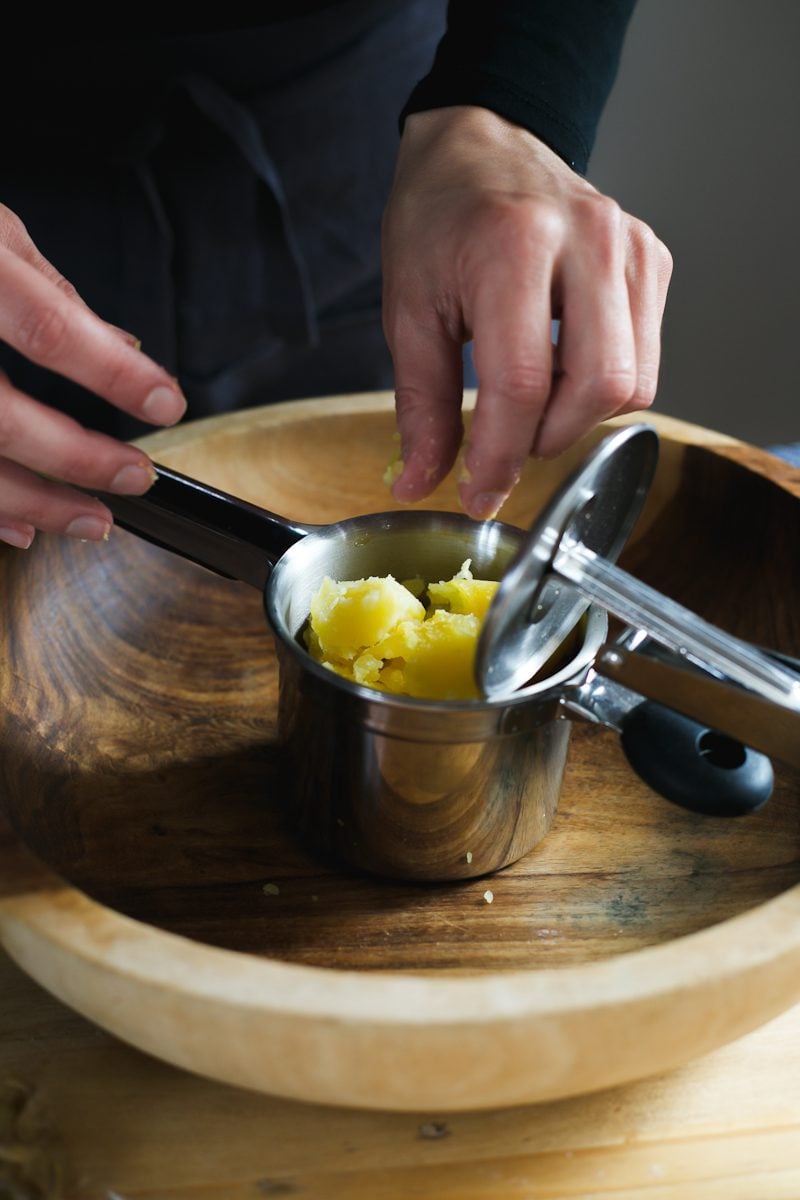
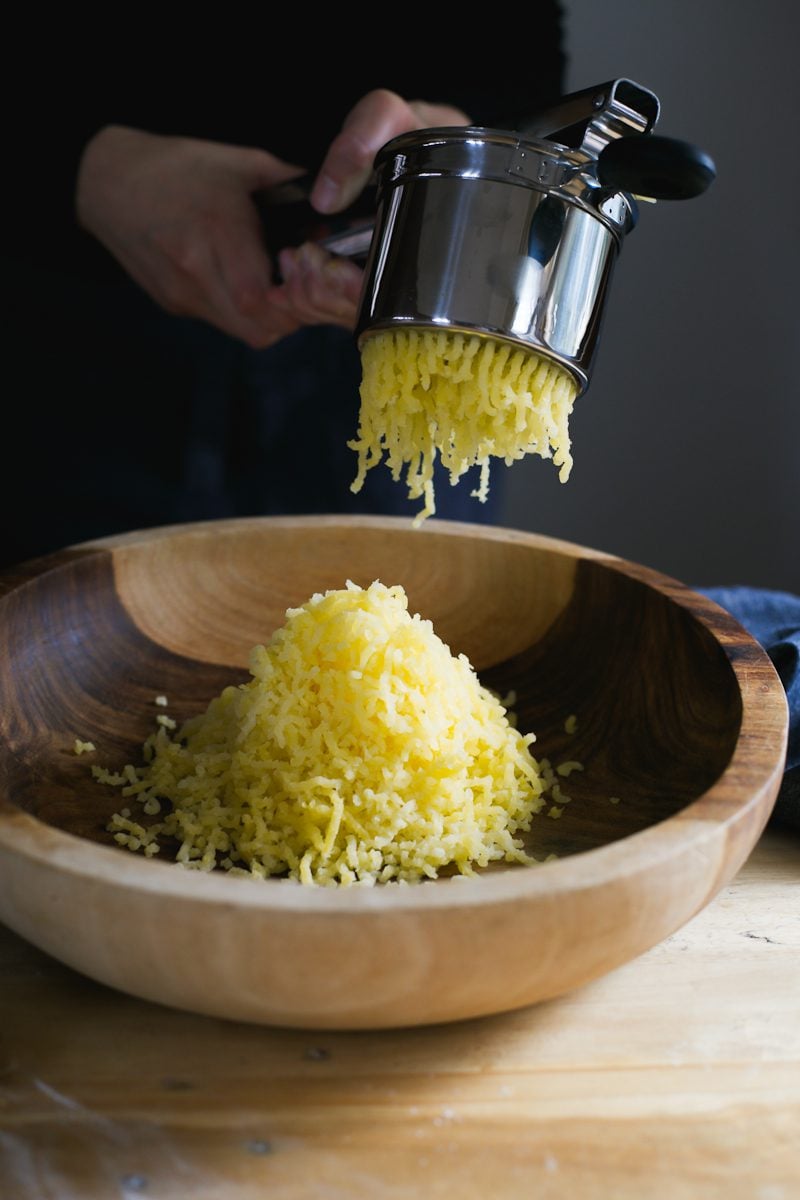
Rice your potatoes directly over a large bowl. Yes, you need a potato ricer if you want lump-free potatoes. Alternatively, use a food mill or mash gently with a fork (if you have the patience for that).
Step 2: Mix the Dough
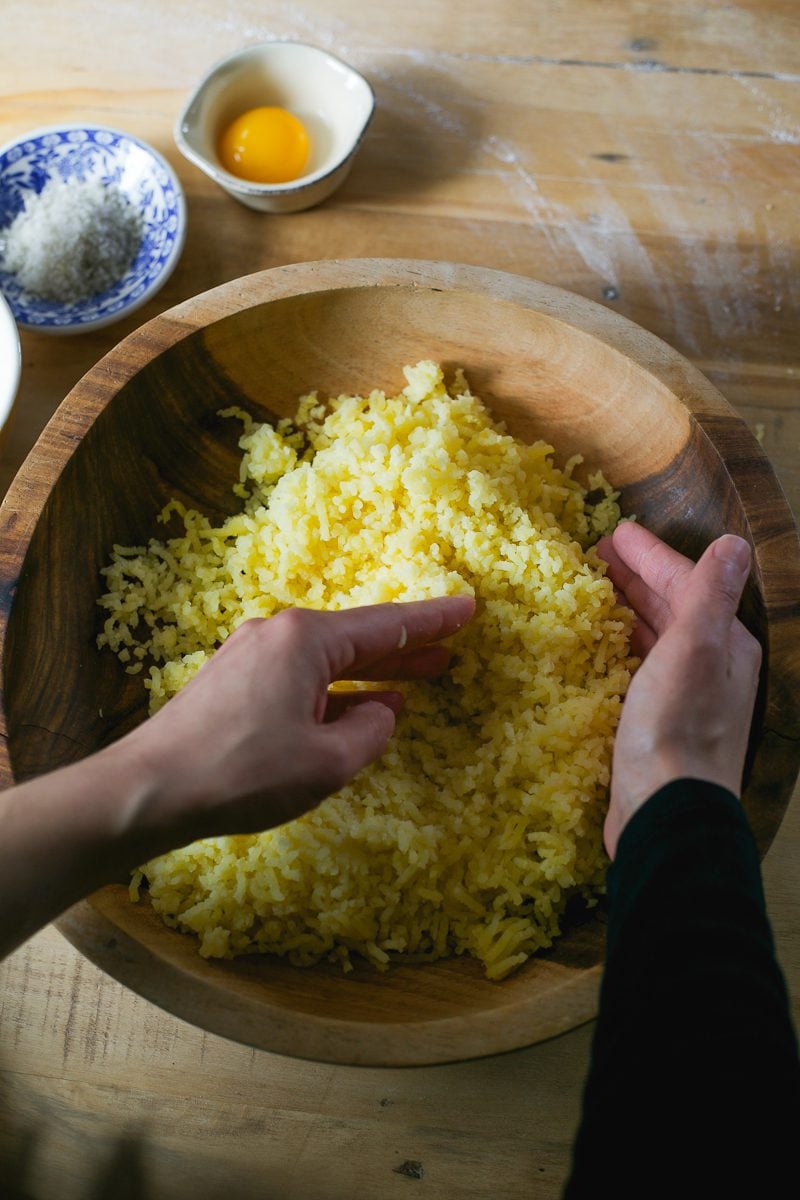
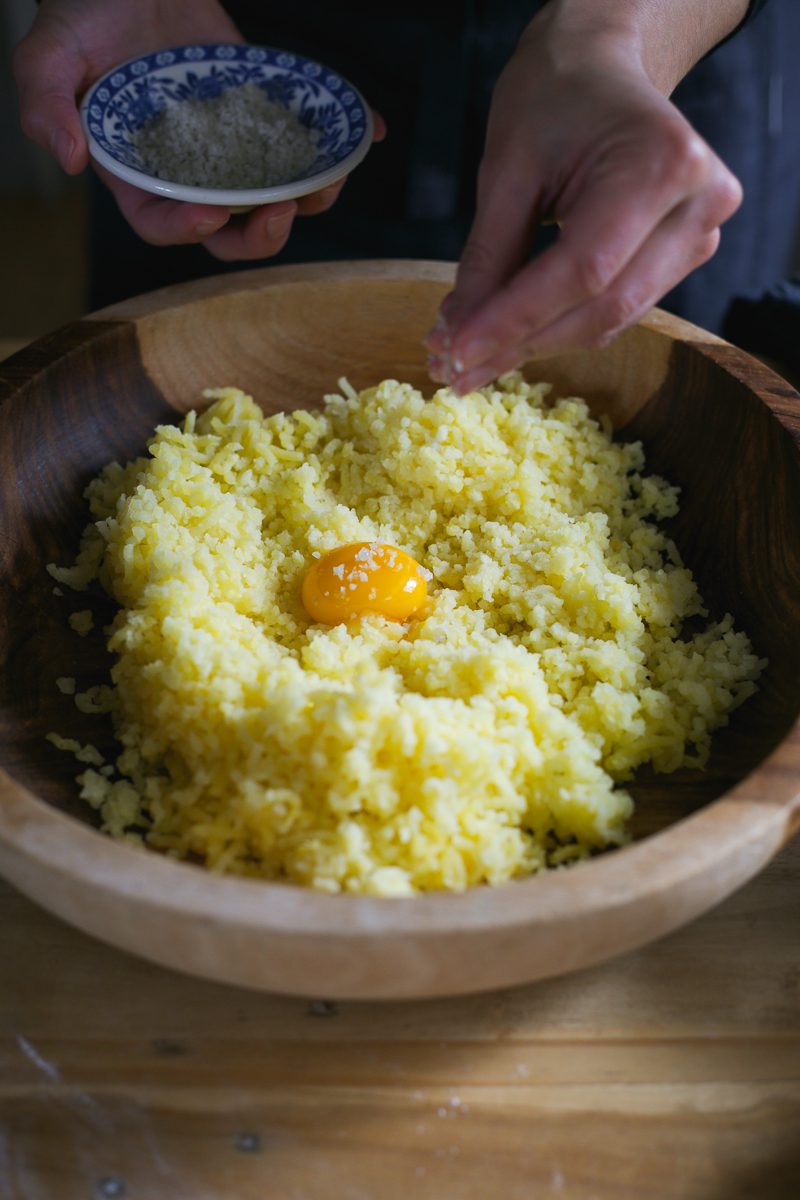
Now, form a well in the center of the potatoes. Add the egg yolk, salt, and sprinkle some of the flour on top. I use Italian 00 flour, which is a fine-milled soft wheat flour.
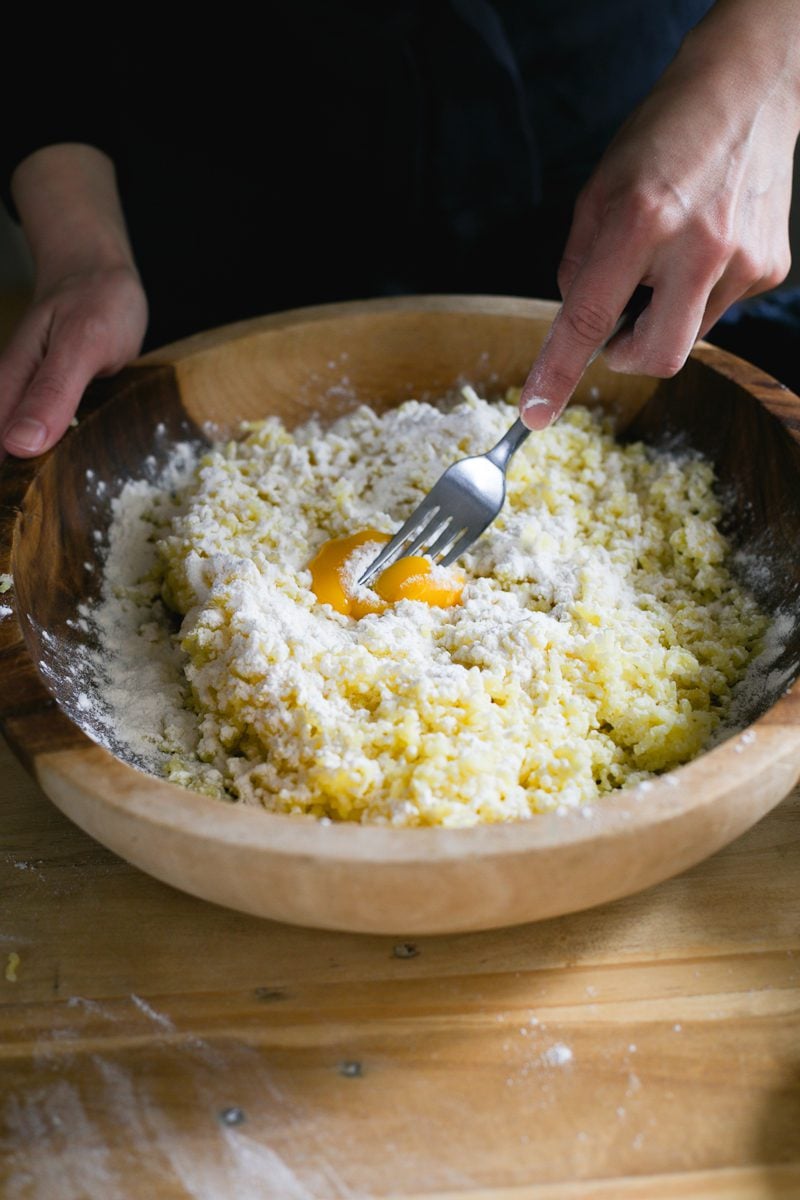
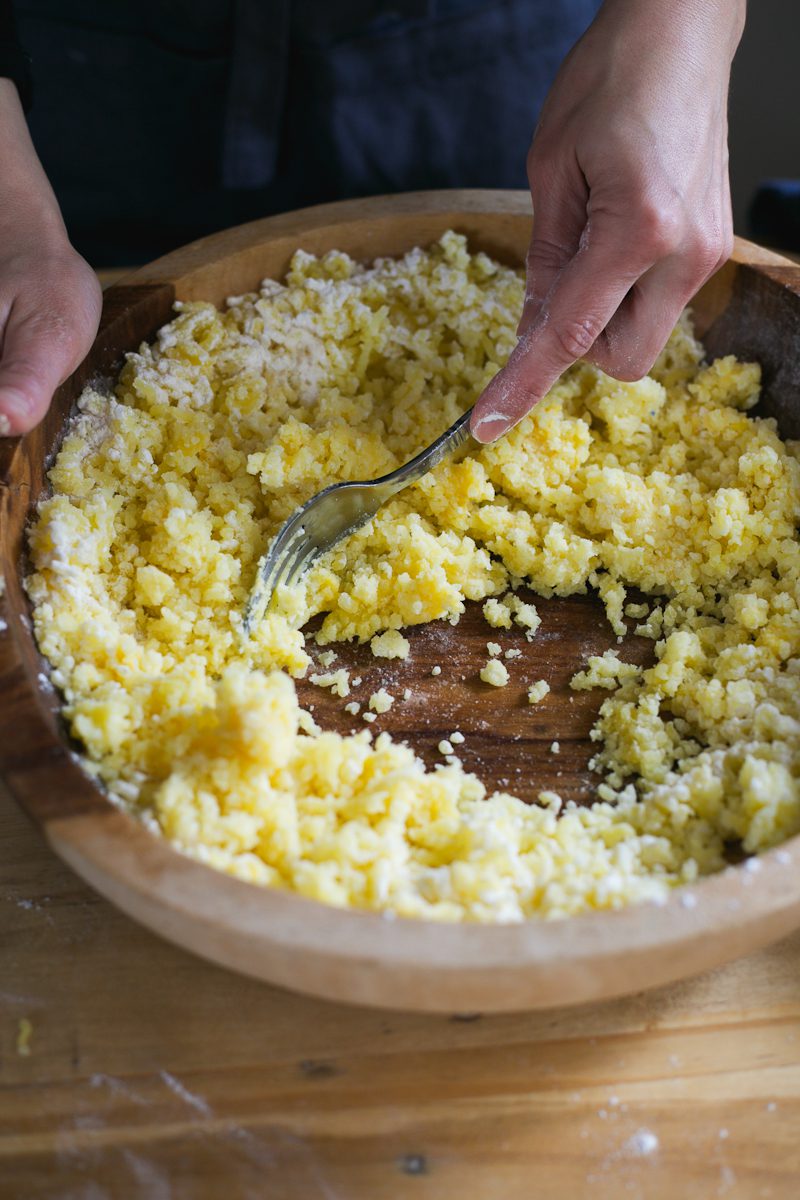
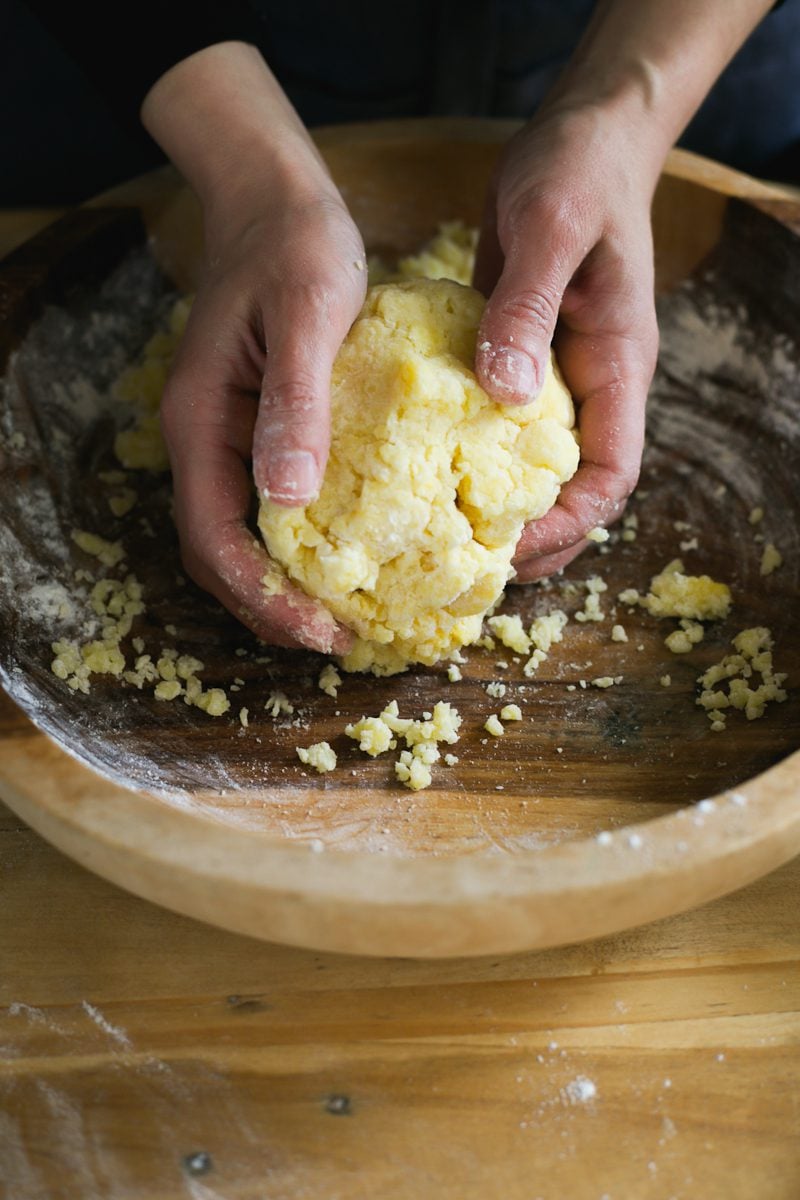
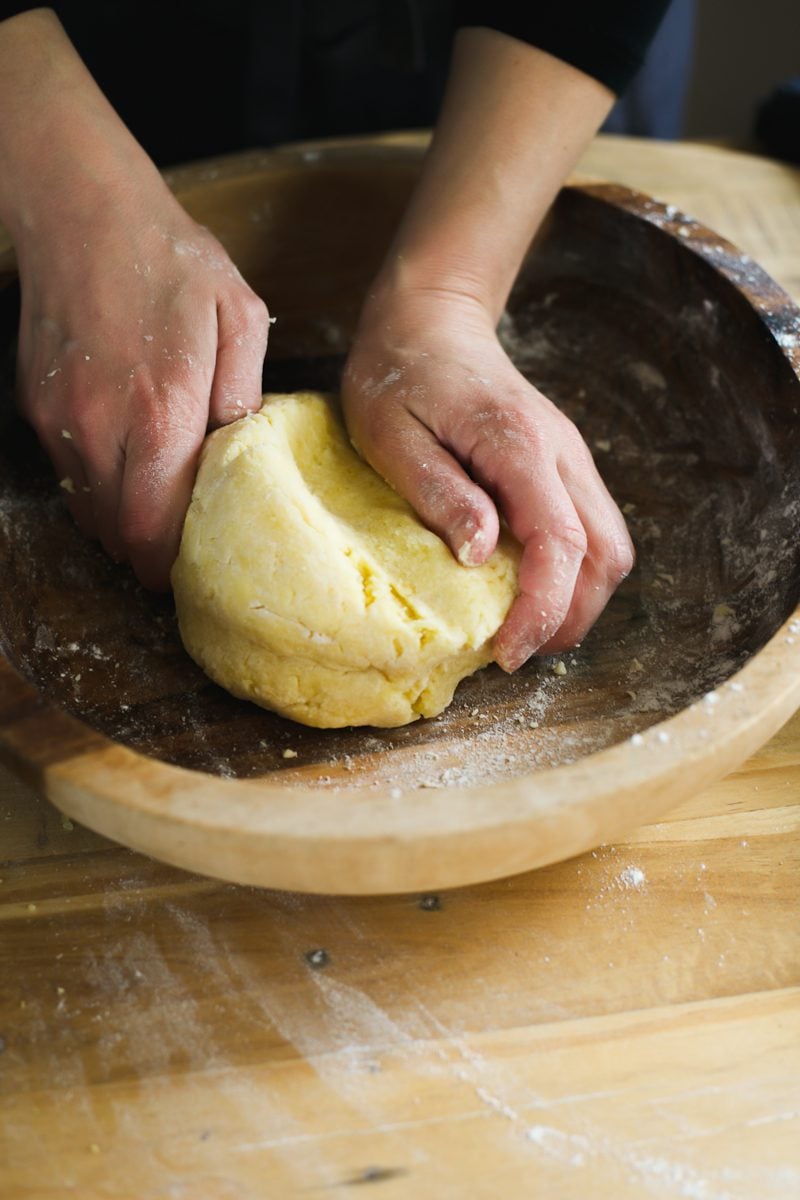
Gently mix a few times with a fork, gradually adding the rest of the flour as you go. Once the dough starts to stick together (but is not yet a ball) stop. You’re going to finish by hand.
Mix the Dough (Cont.)
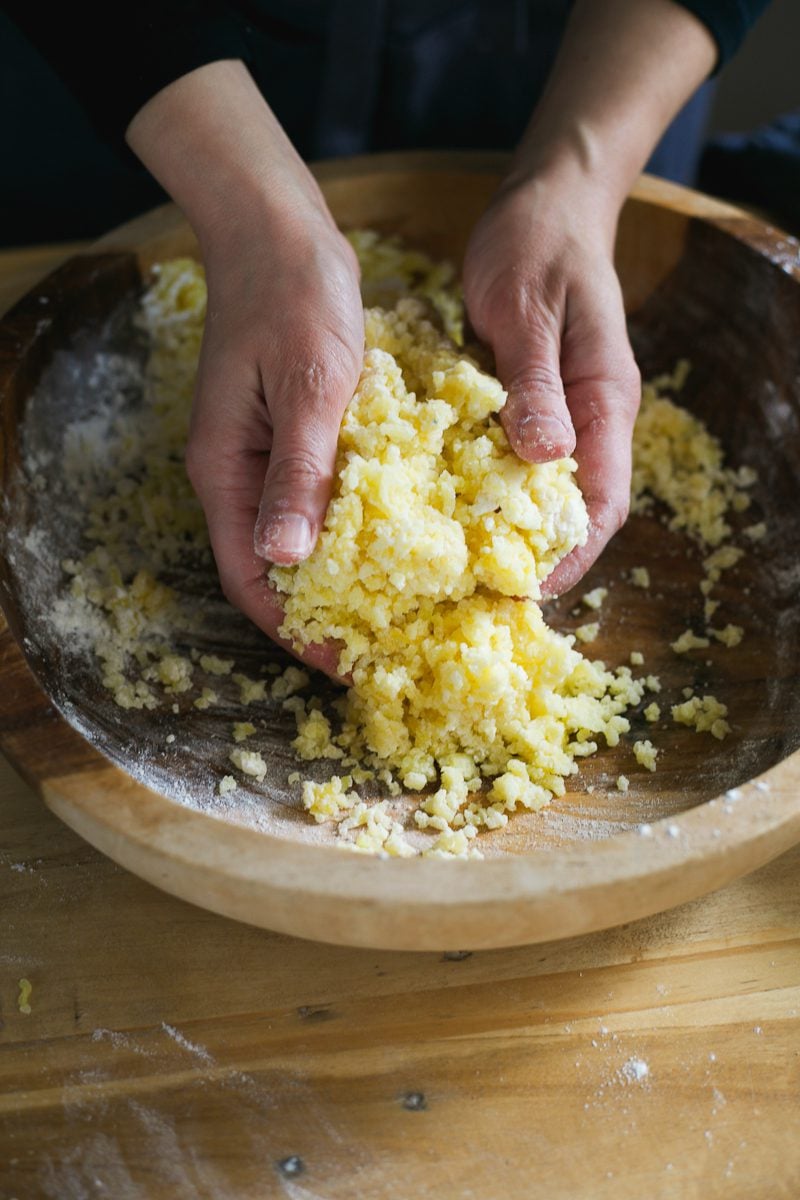
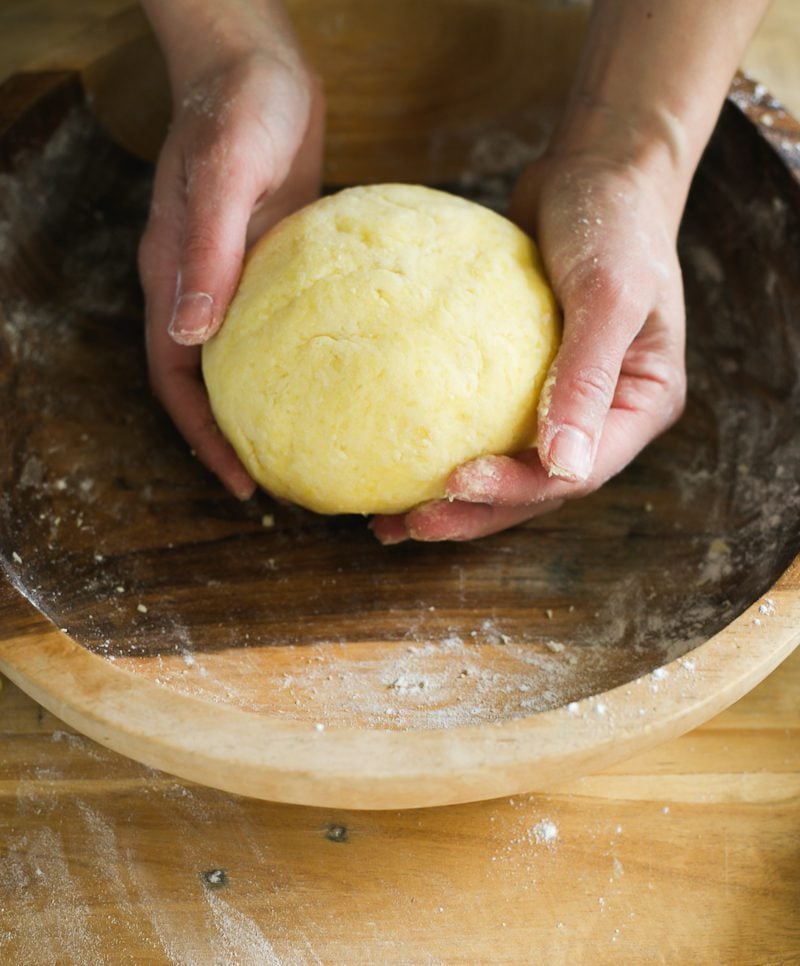
Gently bring the dough together to form a cohesive ball. The texture should feel warm, light, fluffy and smooth, like a giant mashed potato ball. If it’s sticky, add more flour. Cover and let rest for 10 minutes.
Tip: How to avoid dense and chewy gnocchi? Most gnocchi recipes insist chewiness comes from overworked dough, which is only partially true. This is actually difficult to achieve by hand unless you’re intentionally manhandling it, which over develops the gluten (and makes the potatoes gummy.) The chewiness usually comes from adding too much flour if the dough is sticky and/or using whole eggs.
Step 3: Make Gnocchi!
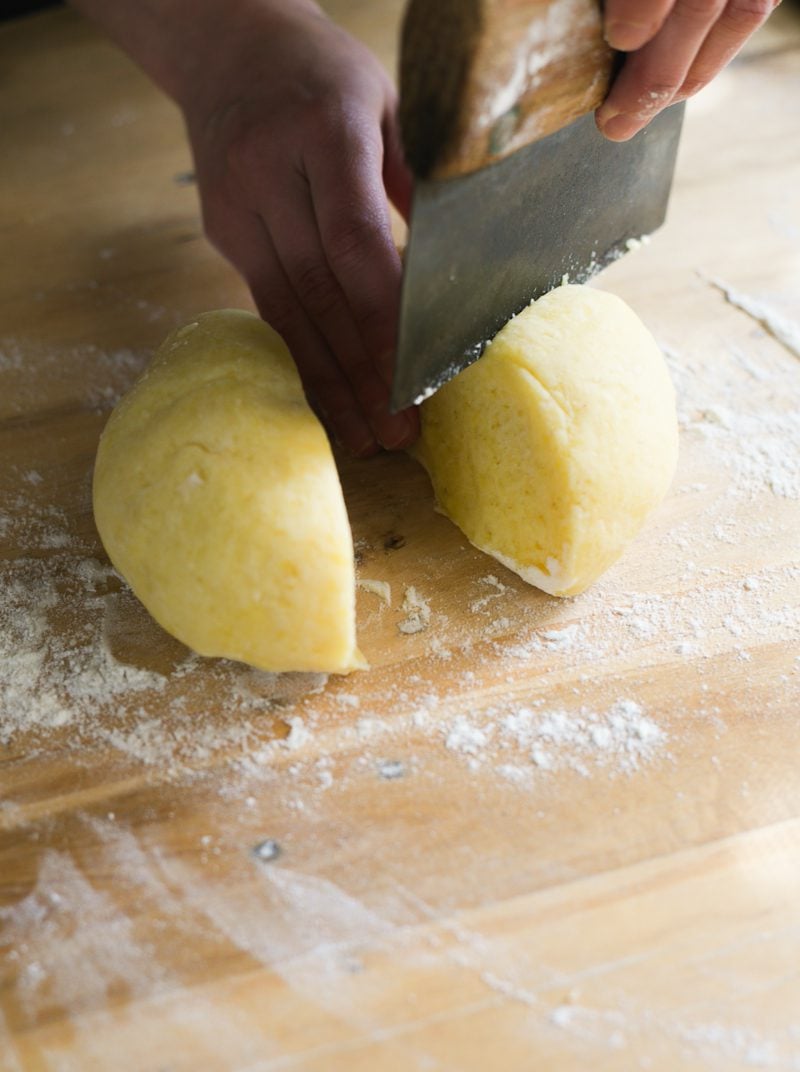
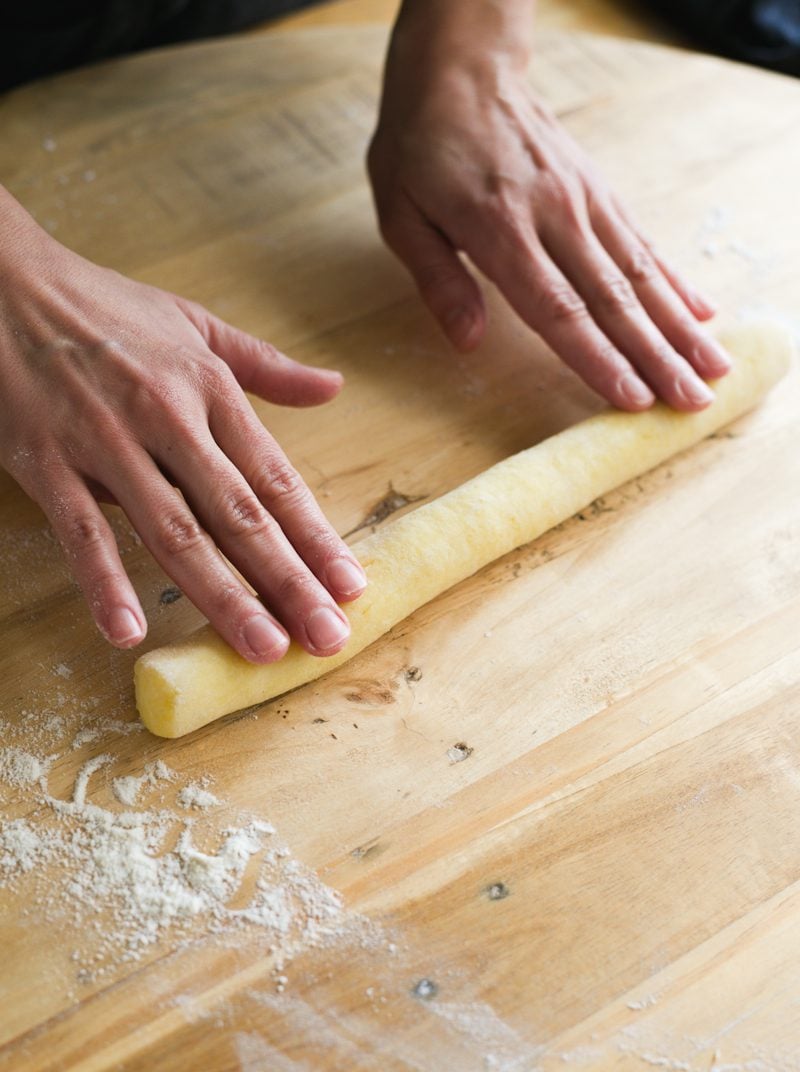
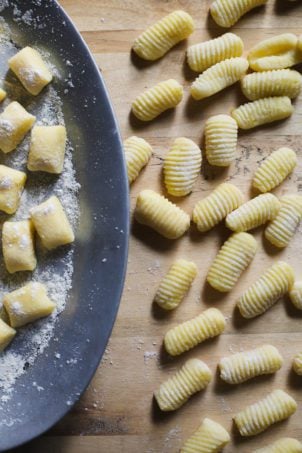
This is the fun part. Cut the dough ball into 4 equal pieces, then roll one piece into a 10-12 inch (25-30 cm) log.
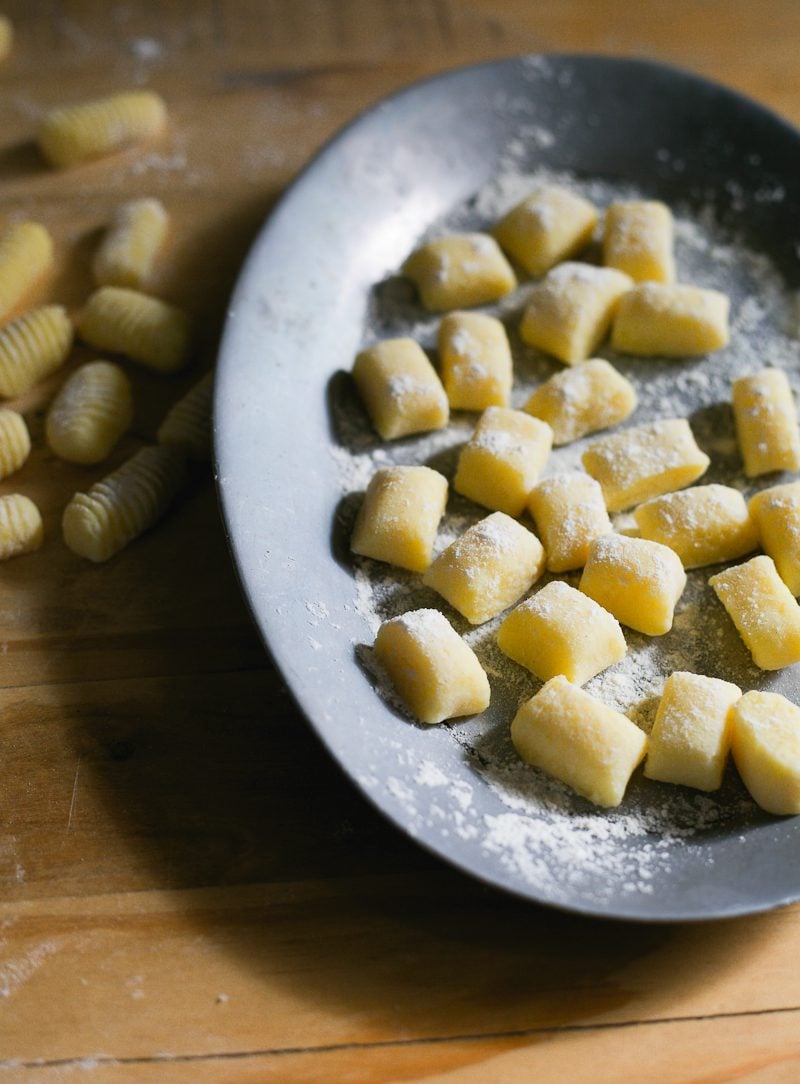
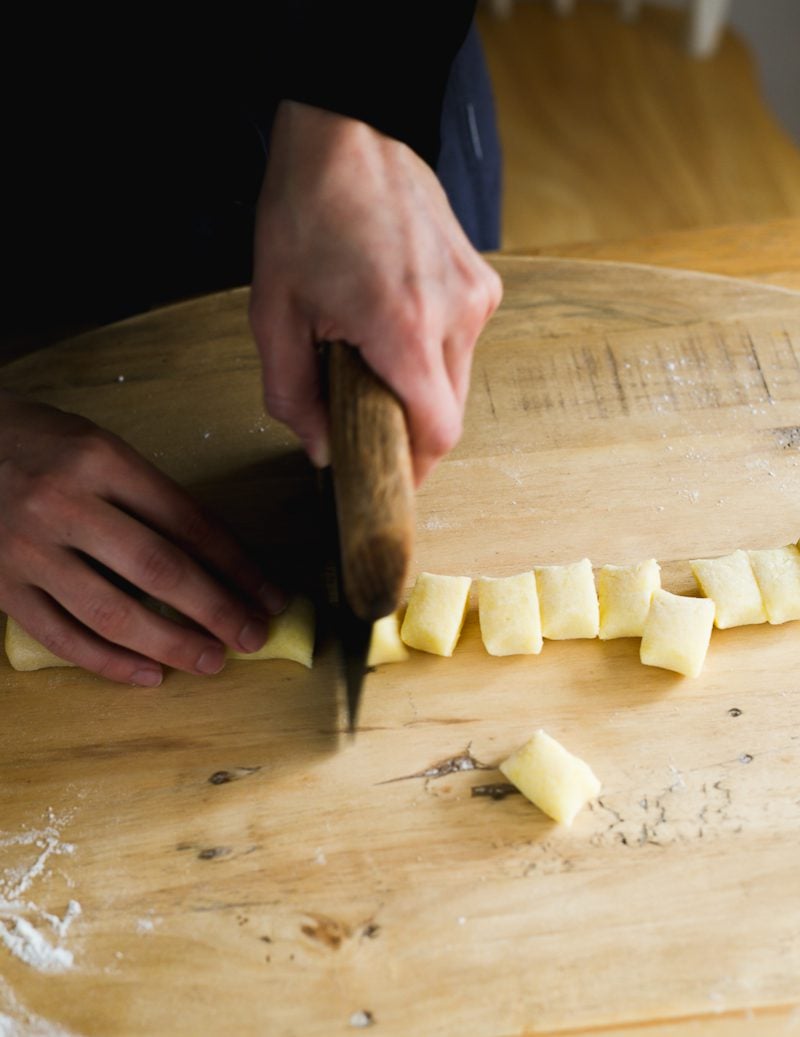
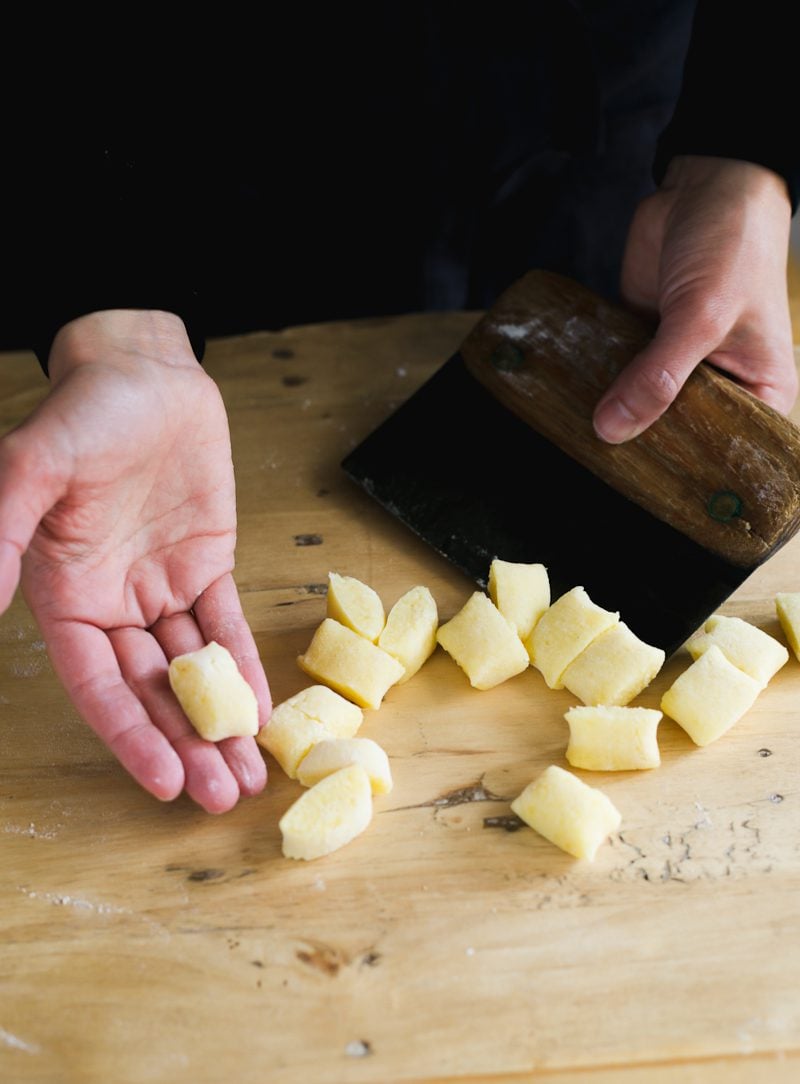
Cut across into 20-22 gnocchi, about 1/2-inch (1.25 cm) to create little pillows. I don’t like making gnocchi bigger than this because they are filling once cooked.
Transfer to a sheet pan dusted in semolina flour to prevent sticking. Repeat with the remaining pieces.
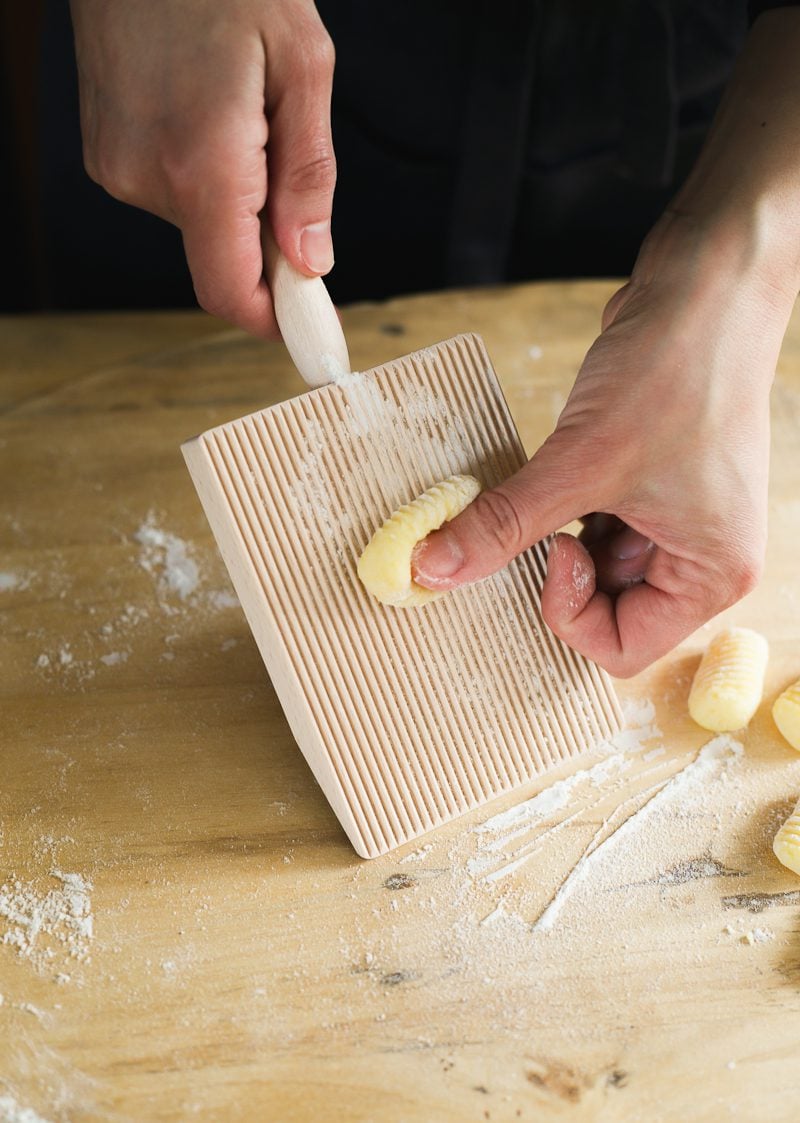
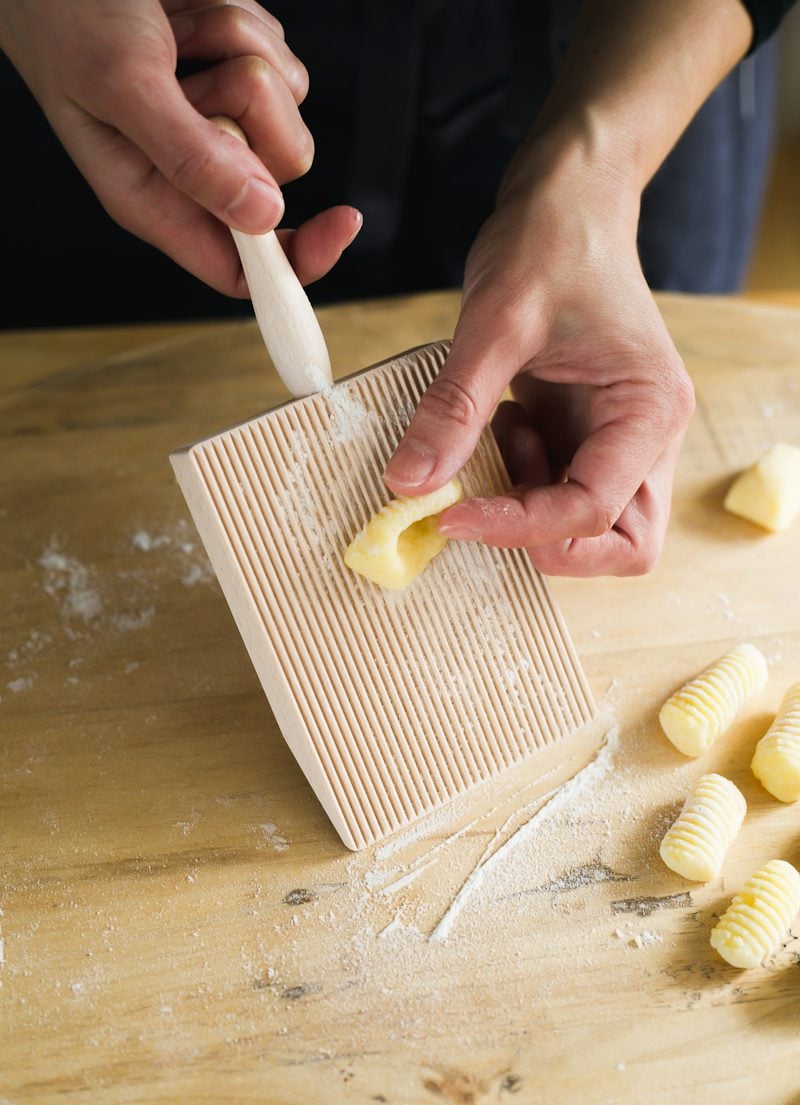
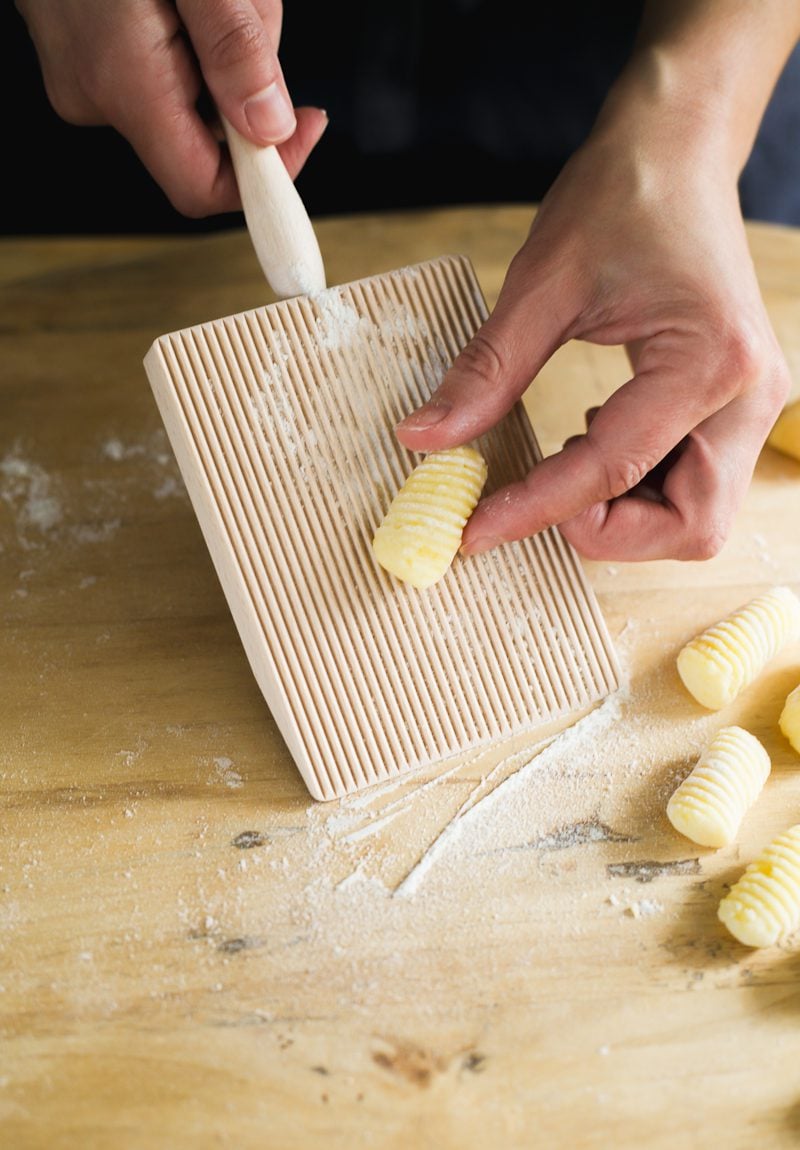
Make Ridges (optional)
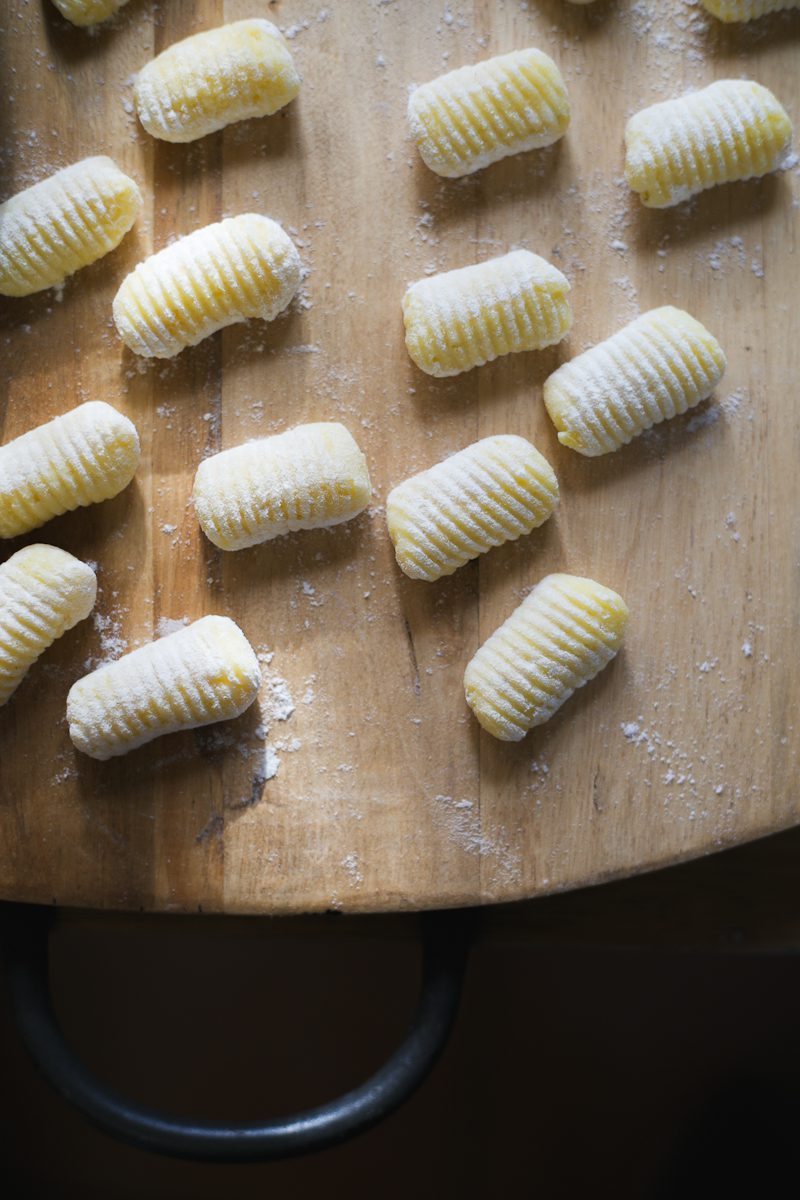
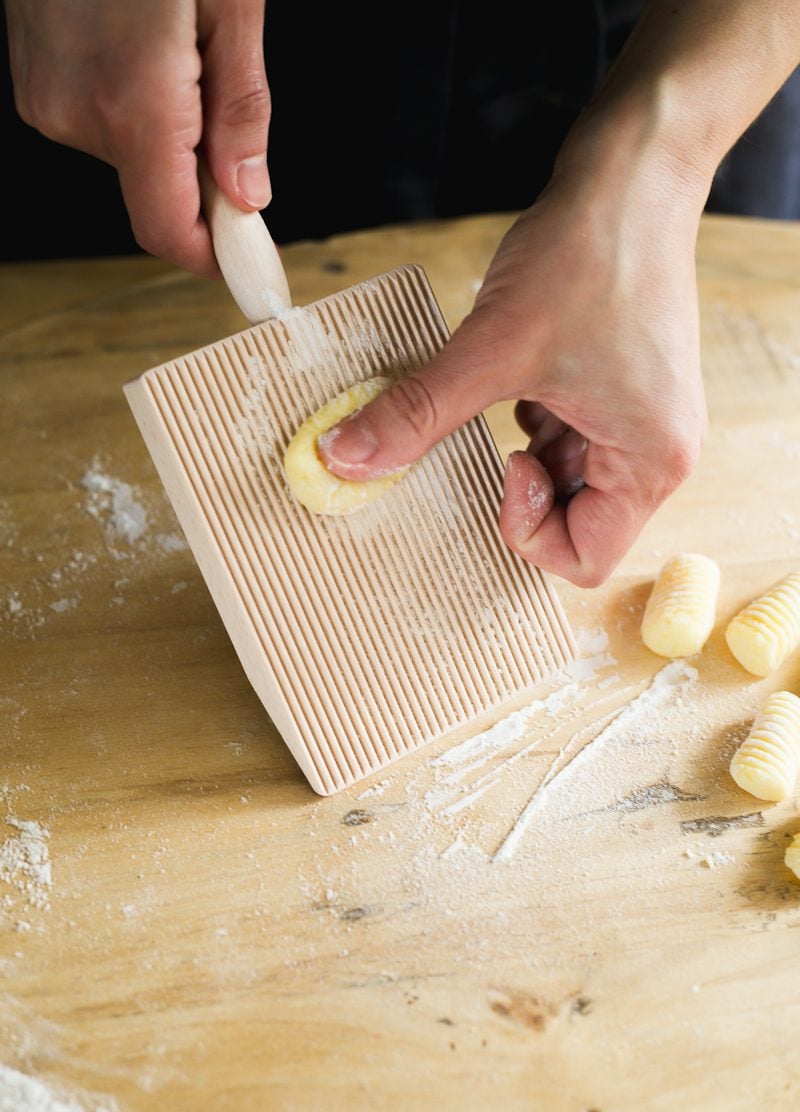
If you have a gnocchi board, roll to create ridges. This creates interesting texture which traps the sauce.
Position one gnocco at the top. Gently press down with your thumb, while pushing it forward to roll over itself. Then flip it over.
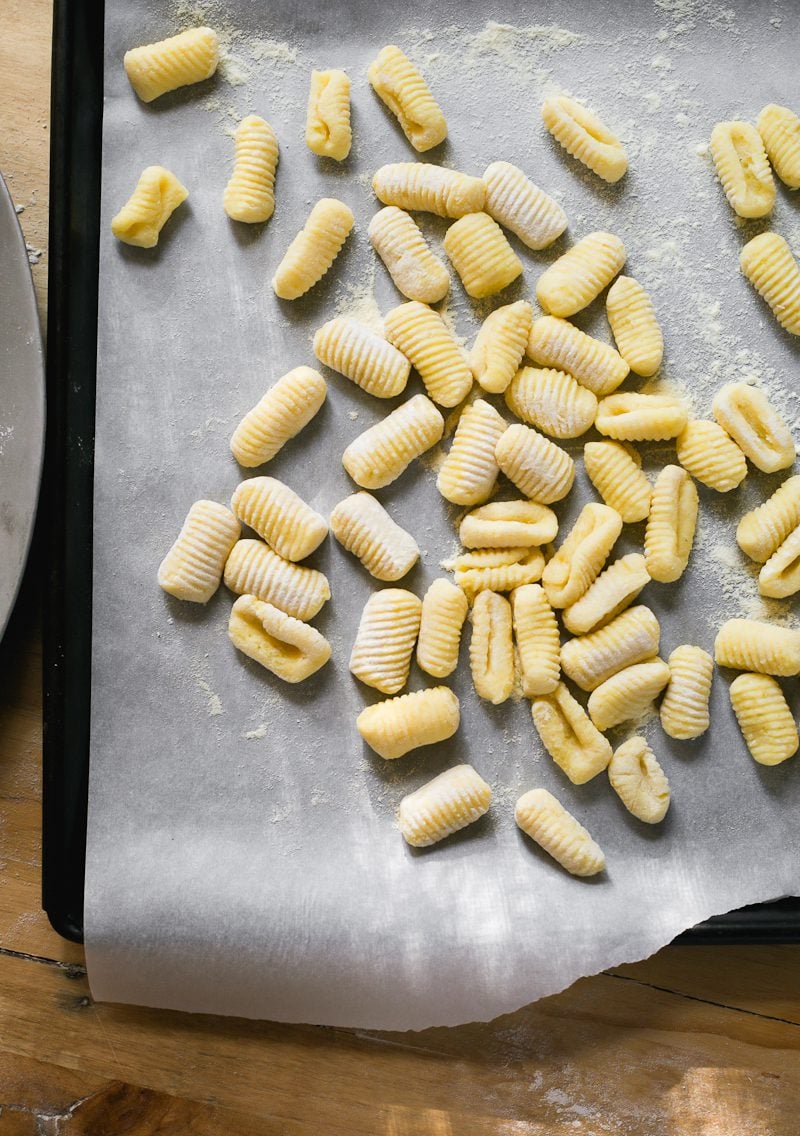
How To Serve Gnocchi
Gnocchi take about 1 minute to cook, tops. So, have your sauce premade, simmering, and ready to go! I usually have frozen sauce on standby for this very reason. My Ragù Bolognese and pomodoro sauce are excellent starting points.
By signing up, you agree to receive emails from The Clever Carrot. Unsubscribe at any time.
Beginner’s Guide to Fresh Homemade Potato Gnocchi
- Prep Time: 45 minutes
- Cook Time: 1 minutes
- Total Time: 46 minutes
- Yield: Serves 4
- Category: Homemade Gnocchi
- Method: Hand-Shaped
- Cuisine: Italian
- Diet: Vegetarian
Description
An easy recipe for light and fluffy homemade potato gnocchi. My secret is Yukon gold potatoes, egg yolk (only) and fine milled Tipo 00 flour for best texture and flavor.
Ingredients
- 450 g (1 lb) Yukon gold (or regular gold) potatoes.
- 1 egg yolk
- 1/4 tsp. fine sea salt
- 85 g Tipo 00 flour (or all purpose flour), plus more as needed
- Semolina or rice flour, for dusting
Tips, Notes & Substitutions:
- For smooth, lump free gnocchi you will need a potato ricer for this recipe. Alternatively, use a food mill of mash the potatoes gently with a fork.
- If you cannot find Yukon gold potatoes, any “gold” variety potato will do. You’re looking for a potato that’s semi waxy, creamy and dense. Floury potatoes, such as Idaho potatoes and Russets retain too much moisture and can be too mealy when cooked.
- Think ahead: if you’re going to cook the gnocchi right away, have your sauce simmering and ready to go. Gnocchi are quick to cook; you’ll transfer the little dumplings via slotted spoon directly into the sauce. Otherwise, see the storage options below.
Instructions
- Boil the potatoes, skin on, until tender about 25 minutes. Pierce with a small knife to check for doneness; if slips out with ease, the potatoes are ready. Note: if your potatoes are old or dry, they will take longer to cook. Drain the potatoes and dry well (moisture and gnocchi do not get a long).
- Once cool enough to handle, but still warm: peel off the skin and then pass through a potato ricer over a large, wide bowl. Allow the steam to evaporate. Tip: The potatoes shouldn’t be hot or cold- warm to the touch is crucial for ingredient incorporation. You won’t need extra flour later on if the dough is sticky.
- Form a well in the center of the potatoes. Add the egg yolk, salt and sprinkle some of the flour on top. Gently mix a few times with a fork to combine, gradually adding the rest of the flour as you go. Once the dough starts to stick together (but is not yet a ball) stop. You’re going to finish by hand.
- With your hands, gently bring the dough together to form a cohesive ball. You’re basically smushing the dough together. You do not need to “work” or knead the dough (this is not pasta or bread dough). The texture should feel soft, warm and smooth- like a giant mashed potato ball. If it’s notably sticky, add a sprinkle of flour. Cover with an upturned bowl and let rest for 10 minutes (do not skip this step- the dough will be easier to roll out).
- Cut the dough ball into 4 equal pieces. Roll one piece into a 10-12 inch (25-30 cm) log. Cut across into 20-22 gnocchi, about 1/2-inch (1.25 cm) in size to create little “pillows.”Transfer to a sheet pan dusted in rice flour or semolina flour to prevent sticking. Repeat with the remaining pieces.
- (Optional Step) If you have a gnocchi board, roll each piece to create ridges. Holding the board on a slight angle, gently press the gnocchi into the board with your thumb. In one forward motion, use your thumb to gently roll the gnocchi down the board. Then flip it over. Repeat to roll the rest of the gnocchi.
How to Cook Gnocchi: Working in batches, drop a few gnocchi into boiling, salted water. This is your test batch. It’s important the water is generously salted, otherwise the gnocchi will taste bland. Cook for 30 seconds to 1 minute (when they float to the top, they’re ready). Transfer via slotted spoon directly into your sauce. Do not use a colander to drain the gnocchi; they are too delicate.
How to Store Gnocchi: Fresh homemade gnocchi can be stored at room temperature, covered, for 30 minutes to 1 hour. They have a tendency to become sticky if held longer than that; make sure your sheet pan is well dusted in semolina flour. Cover with an inverted sheet pan or a clean kitchen towel. Alternatively, cover with plastic wrap and chill for a few hours
How to Freeze Gnocchi: Freeze gnocchi in one single layer on a flour dusted sheet pan. Once frozen, transfer to an airtight container (they shouldn’t stick together). Label, date and freeze up to 3 months. To use: cook straight from frozen in batches.

Comments
Rebecca says
How long would you cook them from frozen?
DeeDee says
Hi, I made this recipe, and it tastes great! I used a slightly gritter flour to dust, and this tastes nice and squishy, especially when dipped and lightly coated in marinara sauce. I could add more salt next time, but that was on me.
Jaynie says
Fantastic recipe!! Follow Emilie’s notes&tips to a T & you WILL get soft pillows! So delicious! Awesome texture, husband approved!
Rose Brethen says
I’m really excited to have found your website. I originally found it because I’m been making sourdough. I’ve taken a couple advance classes. But the more I learn the more I realize I don’t know and I really like the way you break it down and explain things. Then I found out your Italian recipes because I’ve been wanting to tackle Pasta and I have the KitchenAid attachment. You explain things and you help to understand why things are done. My questions regarding semolina. I have the Durham wheat betties, so when I need semolina I grind it. To use it in pasta making do I just grind it as fine as my grinder will go? Do I need to run it through a sieve Before I use it? Thanks for a wonderful website and I’m excited about exploring your recipes.
Chris says
Hi, I’ve been making gnocchi for quite some time. I am 65 this year and Ive learned making gnocchi from my mom, who in turn, learned it from my Nonna.
This is my recipe which normally works unless I overcook the potatoes. I take five pounds of yellow potatoes, four cups of all-purpose flour, and two large eggs (white in) and a bit of salt in the palm of my hand.
Depending on the size of potatoes, I will cut them so that the cook the same as the smaller ones. I then remove them from the stove and into a callander. I then peel the skins and put them thru the strainer into the flour and salt in a large bowl. The potatoes are usually still very warm at this point, so they still might be cooking while I proceed with the rest. Once all have been riced, I add two eggs and mix. It’s extremely tedious and sticky, but eventually manage to make it into a ball. Most times it works out, but not always.
T says
Can I pan fry these instead of boiling? Or should I boil than pan fry? Thanks!
Victoria says
Hello!!
I don’t have a potato ricer, would mashing work or would it be too much?
I have made your scones, sourdough pasta, sourdough pizza and the olive bread and can honestly say they are absolutely delicious and can’t wait to keep making more of your recipes!! YUM.
mikka says
Think this is the 4th time i have made these (first time with this recipe) and the egg yolk (and the resting and light touch with the flour) made these incredibly light and soft. Best effort so far:) As always I panic at the cooking stage but worked perfectly.
I don’t see the rating gadget but it would be a 5 star (or max) if I did
Brigitte Cook says
Can I substitute with sweet potato?
Emilie Raffa says
Great question. I’ve never tried it! If you experiment, please let me know and I’ll update the notes here. My sense is that you might need to add additional flour if the sweet potatoes seem too wet :)
Inez says
Be careful with using a food processor. Ours creamed our potatoes very fast and then we had to add twice as much flour to get it to the right consistency. Ended up tasting a bit floury. I recommend using a cheese grater instead if you don’t have a potato ricer. Otherwise, I really like the recipe. Thank you!
Emilie Raffa says
I don’t recommend using a food processor for gnocchi. You run the risk of overworking the potato starches, which creates an unpleasant gluey texture. This is probably why you had to add more flour to compensate. I always use my potato ricer. However, as you’ve mentioned, a cheese grater will work too!
Aaron says
Amazing recipe. Thank you!!!
Anonymous says
kim says
This wasy first time making gnocchi and they came out perfect! Thank you.
Taz says
I accidentally cooked up two pounds of potatoes. So I doubled my recipe. Even the normal batch made a lot. I just kept them pillows. I didn’t not use a gnocchi board.
Very delicate and light.
Carissa Renard says
Do we have to boil the potatoes whole? Mine aren’t fork tender within 25 minutes so I feel like if you’re cooking all 4 whole it’s more like 50 mins till an hour to make sure they’re cooked all the way
Emilie Raffa says
Yes. With the skin on. Timing will definitely vary depending on the size of the potatoes and freshness. So it’s 100% OK if yours took longer than 25 minutes! You want to make sure they are cooked through.
Carissa says
I just made these and they turned out okay, a little softer than I expected and the dough stayed sticky a lot longer than I thought it would so I had to add a bunch more flour.
I heard that russet potatoes are drier so I might try using those next time for gnocchi as that’s what serious eats recommends
Diane says
I made this after making my first sourdough also from your page- both working out perfectly first time! Excellent and straightforward explanations, delicious end results…so look forward to trying more!
Emilie Raffa says
Diane, this is such wonderful feedback. Thank you so much! :)
Lucia says
These turned out fab! I made a brown butter and sage sauce to accompany it. I didn’t have a potato masher or a rice so I used a mesh sieve and it worked great. They had a good amount of chew without being gummy- also used AP flour
Emilie Raffa says
Fantastic. Thanks for sharing your feedback Lucia :)
Phyllis says
My first attmept at making gnocci. Excellent recipe, well explained. Goncci turned out perfect. And I was told yellow potatoes would not work!!!
Phyllis says
Amanda says
Excited to try your recipe for homemade gnocchi, especially after my recent attempt that failed spectacularly. do you have any advice on how to add ingredients for flavored gnocchi? Like pumpkin, or tomato basil?
Kay says
This gnocchi turned out so amazingly yummy! I tossed it with fresh sage and butter. I can’t wait to eat my leftovers tomorrow.
Emilie Raffa says
Kay, this is so great to hear! I’m thrilled you like this recipe. I love gnocchi. Special, right?
Thais Guimarães says
I made these and indeed, they tasted and felt like little clouds. The best gnocchi I’ve ever had.
Anthony G. says
I just made these tonight and just used Shoprite brand eastern potatoes and immediately drained them when cooked and tossed them on a cloth to fully absorb the water. Everything else i did exactly as the recipe states and came out amazing. I doubled the recipe to make this and it doubles without any issue.
SaraWerra says
I made these with regular potatoes, and they were divine! I froze half the batch. When I cooked the frozen batch they completely fell apart and essentially became boiled mashed potatoes. Any idea why? Not enough handling? Undercooked potatoes? Wrong proportions? May have used too much potato, but otherwise followed the recipe. Trying again today, because they were so good fresh!
Emilie Raffa says
Hi there! Fantastic! So glad you liked them :) Total bummer about the frozen ones… it’s hard to pinpoint the exact cause without seeing them or touching the dough myself. But usually, when gnocchi fall apart, it’s because there is too much moisture in the dough and/or there’s not enough flour to absorb said moisture. Does that make sense? The moisture comes from the water in the boiled potatoes. Here’s what you can do next time: try adding more flour to the dough, cook the gnocchi per usual, leaving a few off to the side to “test freeze.” Cook the frozen ones later on and see if they hold shape. If the additional flour helped, then you know! Alternatively, try baking your potato instead of boiling it. Or, try par-boiling the gnocchi to set the surface before freezing (then cook from frozen). This is called “poaching.” Hope this helps! If you need additional clarification just let me know!
Sara Werra says
poaching! I’ll try that too. I did make another batch, using more flour. The fresh cooked batch was not as perfect as the previous batch, but still yummy! I froze half, and instead of boiling them, I pan fried them before adding to the sauce…awesome.
I appreciate the feedback. I will look for non russett potatoes for the next batch, that may be the problem also. Sometimes I can get Yukons at my little market here in The Bahamas.
Next up though, is checking your sourdough recipes! I’ve got tons of starter.
Kathy says
Oh my goodness. Gnocchi has been my achilles hill for years – I keep trying, they keep coming out badly to “eh.” I made a batch using the back of a fork and they were very good, but I clunked my way through the process. The second time it all made more sense. I bought one of the gnocchi boards and voila! Perfect. Sauteed some garlic in browned butter, added the gnocchi and toasted them a bit, salt and pepper and a sprinkle of Parmesan on top. Amazing. Thank you :-)
Lou Jenkins says
Hello Emilie
Thank you very much, looking forward to giving it a go.
With regard to the potential problem with moisture, would it be better to bake the potatoes rather than boil them?
Thanks again
Regards
Lou
Emilie Raffa says
Lou, this is an excellent question. You are more than welcome to bake the potatoes, in their jackets, to circumvent a potential problem with moisture. This methods works. Just keep in mind, in comparison to boiling, it will take more time, energy and intensify the potato flavor.
ceebee says
So yummy! Another Tuscan treat, Emilie! Once the readers get hooked on the gnocchi they’ll be ready to try an even more deeply rooted Tuscan version of gnocchi made with all ricotta (strained) in place of potatoes. These days many call the ricotta gnocchi “gnudi” (meaning naked in Italian), since they resemble the inside or filling of a single raviolo, but w/o the pasta “clothing”. Hence the term, gnudi. In our house growing up Nonna called them “malfatti,” which means “badly made,” because no two looked alike.
They are pillowy light in texture and mouthfeel. Nonna always made them with chopped spinach mixed in the dumpling batter/dough, plus the ever necessary nutmeg.
The spinach gnudi together with with your lovely Bolognese sauce is a match made in heaven! The meat in the sauce and the ricotta-spinach dumplings play so nicely together It’s like eating a delicate creation of lasagna, pillow after tasty pillow, minus the pasta sheets. Together they pair so well with a chilled Pino Gris which is a bit more robust for this duo, as opposed to the lighter Pino Grigio. Buon appetito! Keep up the fine recipes, Emilie!
Emilie Raffa says
Oh yes! I am very familiar with gnudi. So light, delicate and utterly delicious. I’m very intrigued about your Nonna’s recipe (not written down, I’m sure!). Did she use homemade ricotta? Or strain the store-bought kind? This is going on my list. You are making me hungry. What a lovely comment- thanks for writing.
ceebee says
Yes, Emilie. Nonna somehow found the time to do most everything in cucina, even cheese making. She made mozzarella and then cooked the leftover whey (ri-cotta) to make the ricotta. I have tried this from memory, as she did not have anything written down! My results have been middling so far, and I think a big part of the problem has been my milk source. Nonna used classic “cream-top” milk delivered to the house daily. I don’t know for certain but I think that it may have also been “raw” as in not pasteurized. When I tried making mozzarella, I used regular homogenized supermarket milk. I tried it with both rennet and also with acid (citric) and both times the curds for the initial mozzarella were very weak and fragile. On doing some research, I found that pasteurization is “okay” but the homogenization alters the proteins important for curd stability. I never did go to the 2nd stage of re-cooking to make the ricotta. So, it’s back to the drawing board for me on this.
Lindy R says
Hello Emilie,
Do you think using a fine shredding blade on a food processor would substitute for the ricer?
Emilie Raffa says
Hi Lindy! Great question. My instinct tells me using a food processor would make the potatoes gummy (the mechanical force is too strong). This would lead to tough and dense gnocchi. However, since you would be using the disc attachment and not the actual blade, over processing might not be an issue. I haven’t tried this myself. But if you experiment, please let me know! Alternatively, use a food mill or mash gently with a fork.
Francesca says
I love these tips, especially using the yolk only. A wonderful lesson. I’m aware that American- Italian pronunciation differs somewhat from Italian. I have never heard the ‘yaw’ sound before. N’YOK EE is how I would go.
Emilie Raffa says
Thank you, Francesca! Using egg yolk only works surprisingly well. I love the subtle color it adds, too (and with the leftover egg white, you can make almond cookies). Re: the pronunciation, I’ve heard it both ways (it’s like tomato/tomahto, lol?) I’ve edited to add the alternative pronunciation.