Made with all purpose flour and just a touch of butter, learn how to make soft, tender sourdough sandwich bread with bubbly, active sourdough starter. Recipe adapted from my bestselling book:
Artisan Sourdough Made Simple.
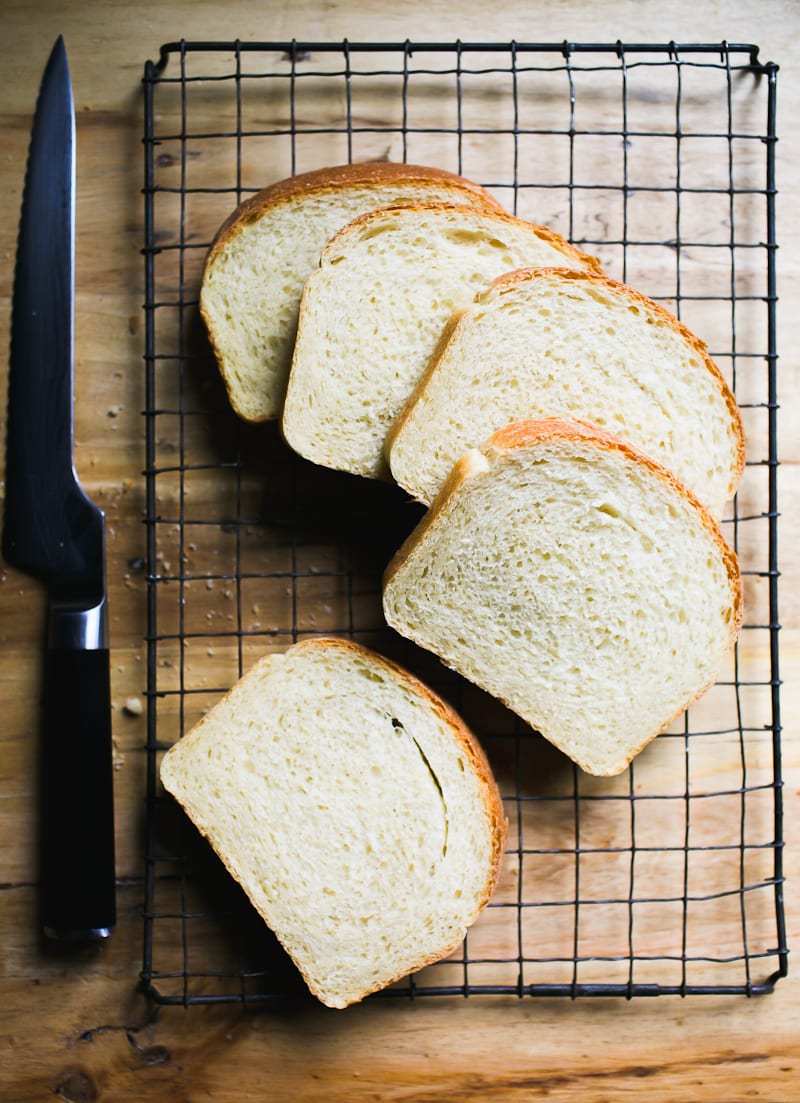
Out of all the sourdough bread recipes I make on repeat (my beginner sourdough bread recipe, sourdough focaccia and sourdough pancakes to name a few), my easy sourdough sandwich bread gets the most requests. It’s soft and buttery, and it makes the whole kitchen smell like magic.
Plus, you made it yourself! No junk or preservatives like grocery store bread. This simple sourdough yields a soft crust, subtle tang, and fluffy crumb that holds up to slicing, toasting and sandwiches (anything really).
Below, you’ll find my step-by-step walkthrough and baking schedule. You’ll also get three solid variations (cinnamon raisin, whole wheat and bread flour) plus more sandwich loaf recipes in my book for inspiration.
Good To Know:
- What most bakers get wrong: the second rise goes for too long. This creates over proofed dough that bakes up flat. Follow my recommended timing and tips to master this step.
- Pan size matters. Want a taller loaf? Use an 8.5×4 inch pan instead of the standard 9×5 inch pan. Both work, but the smaller size will give the dough a nice upward boost.
- Use softened butter. If it’s cold, it won’t blend into the dough.
- Make it vegan. Swap in your favorite plant-based butter. Just check the label. Some brands are very salty.
- Temperature controls time. Warm kitchen? The dough will rise fast. Cold kitchen? Give it more time. Watch the dough and not the clock.
How To Make Sourdough Sandwich Bread {Step-By-Step Recipe}
Step 1: Mix the Dough
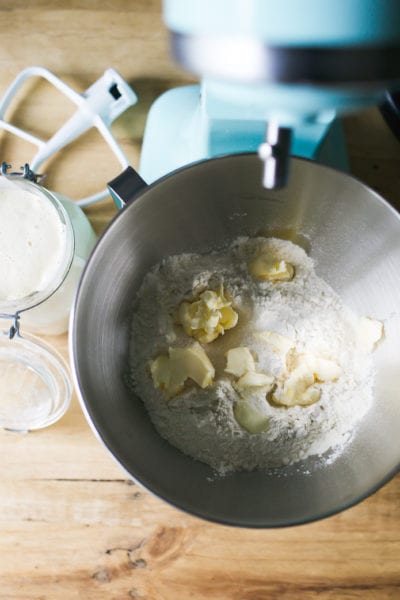
To Start: Add the flour, softened butter, sugar and salt to a bowl. I like using a stand mixer for this recipe. The dough is naturally a bit sticky, so the machine makes it easier to handle. Mix with the paddle attachment until the butter looks like crumbs.
Mix in your bubbly, active sourdough starter and water until everything comes together. Cover and rest for 30 minutes to relax the dough before kneading.
Note: If you need assistance with your sourdough starter, read my companion articles Feeding Sourdough Starter: My Best Tips & Tricks and Troubleshooting Sourdough Starter.
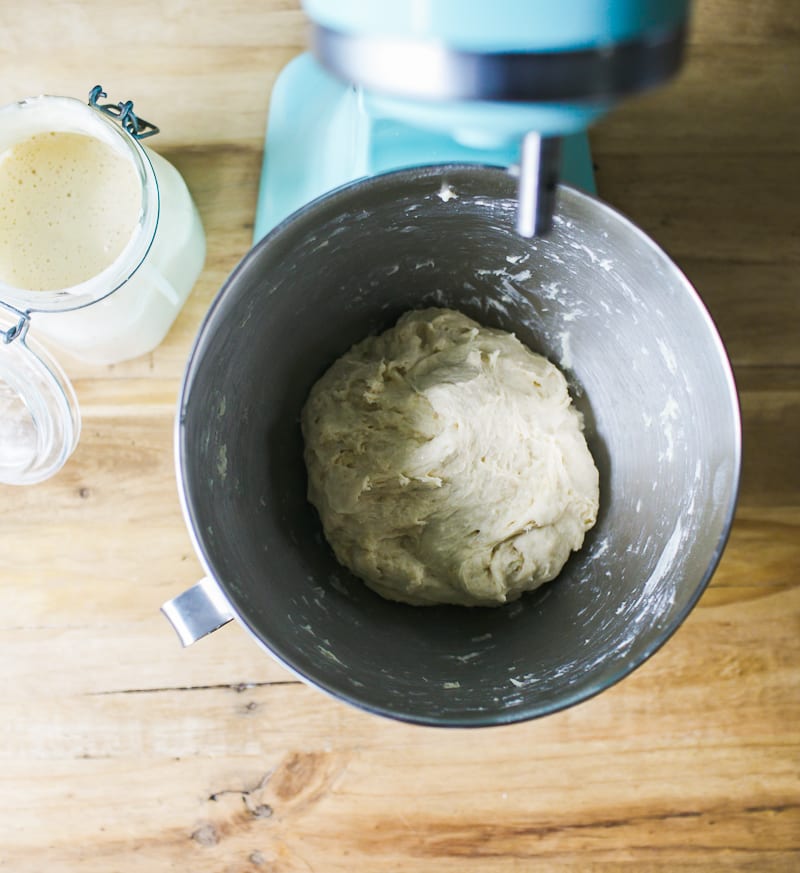
After 30 minutes of resting…
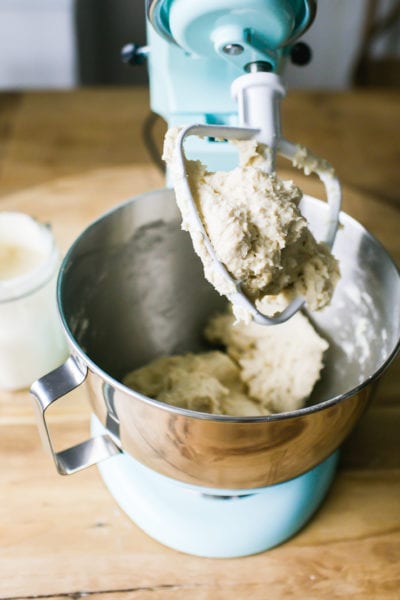
Remove the paddle attachment and switch to the dough hook. Knead until soft and supple, about 6-8 minutes. Note: on this particular day, my dough was stickier than usual so I added a sprinkle of flour to even it out. You can do that too.
No Stand Mixer: Knead the dough by hand on a lightly floured surface until it feels smooth, soft and elastic, about 8-10 minutes. Don’t worry about under/over kneading. If it’s springy (not sticky) you’re good to go.
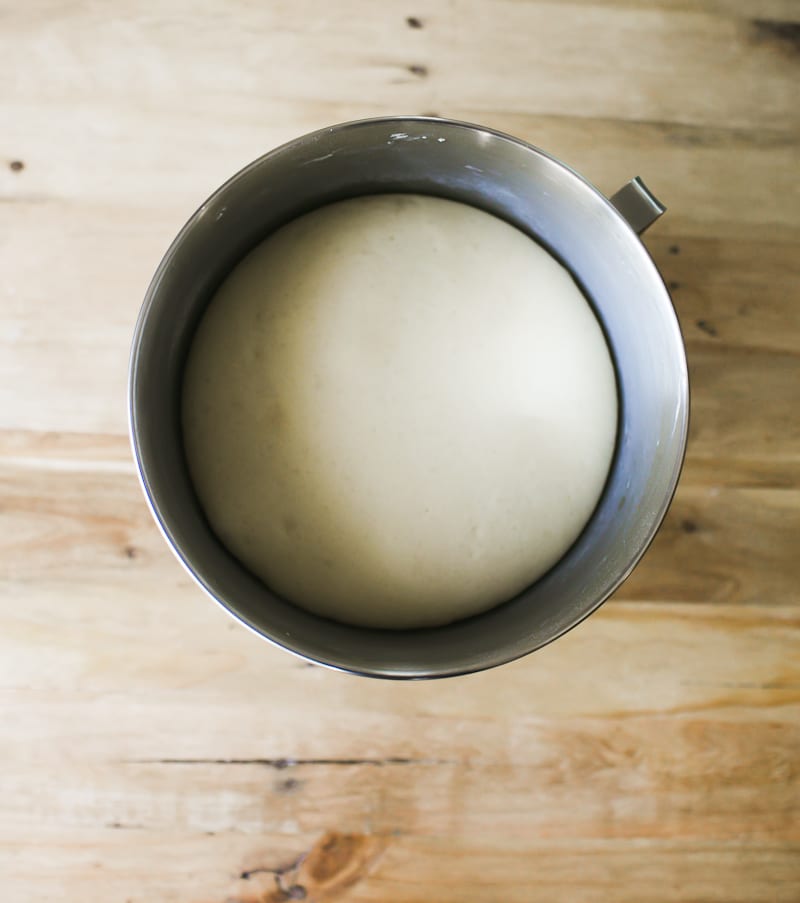
Step 2: Bulk Rise (Overnight)
Cover the bowl with plastic wrap and let the dough rise overnight at room temperature (68 F), about 10-12 hrs. The dough is ready when it’s puffy, airy, and has doubled in size.
Tip: This is an overnight sandwich dough. Alternatively, you can do a same-day bake instead (see my Sample Baking Schedule).

Step 3: Shape the Dough
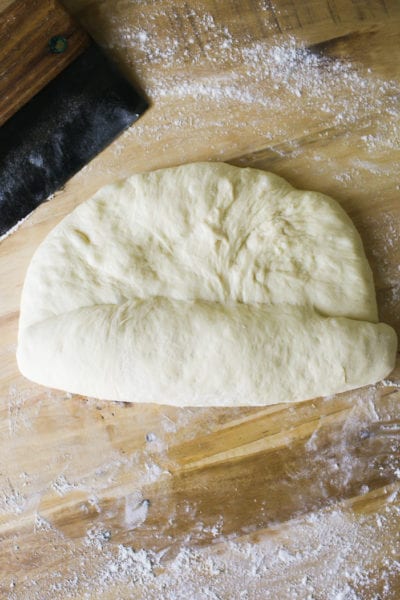
Remove the dough onto a lightly floured surface. Gently flatten to release the air bubbles (you don’t want big holes like ciabatta!).
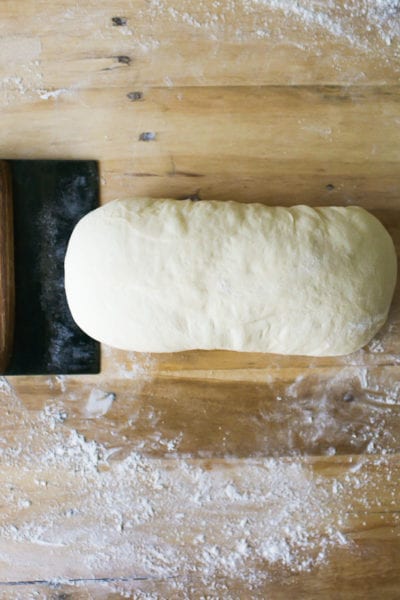
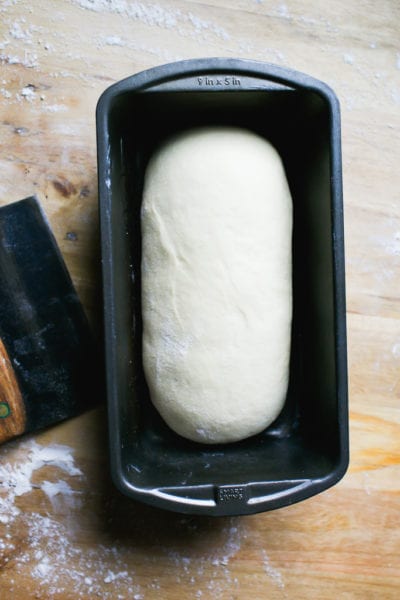
Roll the dough into a log, tucking the ends underneath. Then, with floured hands pull the dough towards you creating surface tension to tighten its shape. Place the dough into a buttered loaf pan, but make sure it’s seam side down.
Step 4: Second Rise
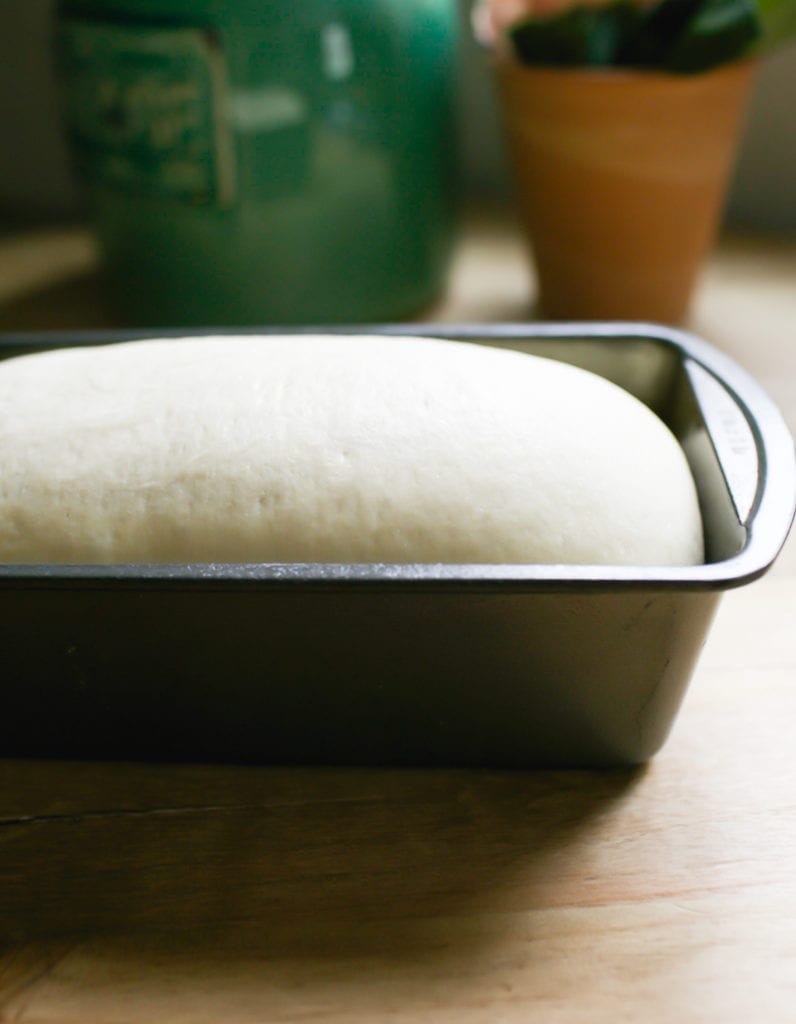
This step is crucial. When done correctly, your loaf will build back additional strength needed for good oven spring. Cover the pan with lightly oiled plastic wrap so the dough doesn’t stick to the top. Let rise until the center domes about 1 inch above the rim of the pan. You’e not going for double in size or sky scraper height; just notably puffy and less dense.
Tip: Cold Kitchen? Your second rise might take longer than expected @ 68 F. Be patient with this step. Plan on 1 1/2 -2+ hours depending on your specific room temperature and starter strength. If you’re short on time, use a proofing box or my DIY warm oven trick to speed things up (see “Helpful Tips” in the recipe card below).
Step 5: Bake The Bread
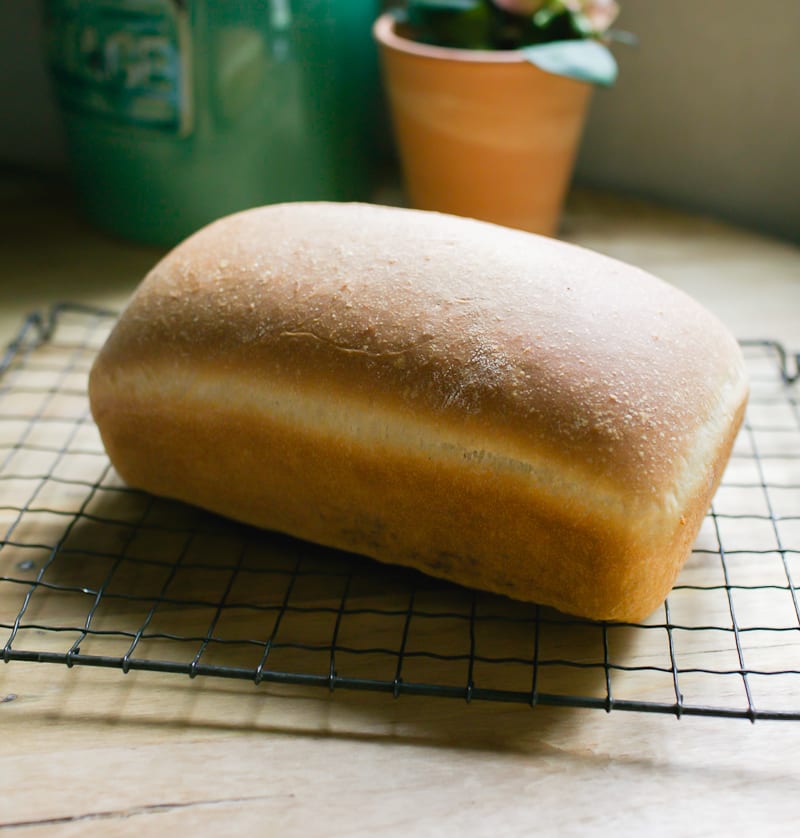
Preheat your oven to 375 F. For better oven spring, preheat to 500 F instead, then lower the temperature to 375 F when the dough goes into the oven. Bake on the center rack for 45-50 minutes or until golden brown.
Cool in the pan, then transfer to a wire rack. Wait an hour before slicing (skipping this step can turn the inside gummy).
Tip: Have an extra loaf pan? Some bakers create a makeshift “lid” by placing a separate, upside loaf pan on top of their pan before baking. This traps steam inside, creating a humid environment for the dough to rise avoiding potential blow-outs or tears, and keeps the crust soft. It’s similar to using a Dutch oven for my sourdough bread recipe.
Slice & Store
You’ll need a good serrated knife (I use this one). For a moderately priced option, try this knife instead. If your bread slices are really uneven, consider this collapsable bread slicer with 3 different thicknesses: thin, medium and thick to guide you along.
What I do at home: If you have a large family, or just eat a lot of bread, I highly suggest doubling this recipe. Bake (2) loaves side by side and freeze whatever you don’t eat. This loaf can be frozen whole, covered tightly in plastic wrap or as individual slices.
Sourdough Sandwich Bread Variations
- Whole Wheat: Replace 20% of all purpose flour with whole wheat or white whole wheat flour. If the dough seems dry (whole grain flours absorb more liquid), add more water as needed to achieve a workable consistency. Do this 1 teaspoon at a time.
- Bread Flour: Do an even swap, adding more liquid if the dough is dry. For example, King Arthur Bread flour is very thirsty so more liquid might be needed. If using Gold Medal bread flour which is not as absorbent, additional adjustments might not be necessary.
- Sourdough Cinnamon Raisin Bread: You’ll find my step-by-step post here. The vanilla-soaked raisins make it a community favorite!
What To Bake Next
In addition to the above variations, a natural next step for sandwiches and breakfast fare would be my easy, NY-style sourdough bagels (they are so incredibly chewy and addictive) and these super soft sourdough english muffins. I’m excited to see what you make next.
Sample Overnight Baking Schedule (68 F)
Feel free to adjust the start times below as needed. It’s flexible. For a same-day bake, start early in the morning and bulk rise at a warmer temperature.
Day 1 (Evening)
- 4:30 PM: Feed sourdough starter (to activate)
- 8:00 PM: Mix dough
- 8:30 PM: Rest 30 minutes, then knead.
- 9:00 PM: Cover and bulk ferment, room temp @ 68 F overnight (10-12 hrs).
Day 2 (Morning)
- 7:00-8:00 AM: Check the dough (should be doubled)
- 8:15 AM: Shape dough
- 8:30 AM: Second rise (1 1/2 – 2+ hours)
- 10:30 AM: Preheat oven
- 10:45 AM: Bake
- 11:30 AM: Cool
By signing up, you agree to receive emails from The Clever Carrot. Unsubscribe at any time.
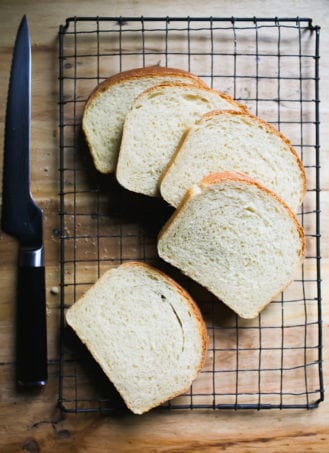
Easy Sourdough Sandwich Bread
- Prep Time: 12 hours
- Cook Time: 50 minutes
- Total Time: 12 hours 50 minutes
- Yield: 1 loaf 1x
- Category: Sourdough Bread
- Method: Oven-Baked
- Cuisine: American
- Diet: Vegetarian
Description
A simple and easy recipe for homemade sourdough sandwich bread. Made with all purpose flour and just a touch of butter. I like to make the dough at night so we can have fresh bread in the morning. This loaf freezes well (whole or sliced). I recommend this loaf pan.
Helpful Tips:
- For best results, weigh your ingredients with a scale instead of using measuring cups. Weight and volume measurements are not equal, only approximate! For example: If your starter is very bubbly, 1/4 cup might only weigh 30 g which is too little for this recipe (you need 50 g). The dough will take forever to rise. Same goes for the flour: 4 cups might weigh over 500 g depending on how tight the flour was packed into the cup. More flour = dry dough.
- This recipe works with Whole Foods 365 Everyday, King Arthur and Trader Joe’s all purpose flour. If using another brand with a lower protein content (i.e. Gold Medal, Pillsbury, Heckers) consider reducing the total water amount by 15 g.
- For a variation of this recipe with more sourdough starter, please choose one of the following adjustments below, keeping the rest of the ingredient quantities the same:
- 100 g starter + 255 g water
- 150 g starter + 250 g water
Additionally, because temperature controls time: you can also increase your surrounding temperature for the bulk or second rise, as needed. Place the dough in a proofing box set to 75-80 F. Or, preheat your home oven to 75-80 F and then shut it off immediately (use an oven thermometer to make sure it’s set to exactly 80 F and not higher!). Place the covered dough inside until it bulks up. Do no use this option overnight- it will be too warm.
Ingredients
- 500 g (4 cups) all purpose flour
- 60 g (4 tbsp.) unsalted butter, softened, cut into cubes
- 12 g (1 tbsp.) sugar
- 9 g fine sea salt
- 50 g (1/4 cup) bubbly, active sourdough starter (100% hydration)**
- 270 g (1 cup + 2 tbsp) warm water
Instructions
Baking Schedule: this is an overnight dough which takes approximately 10-12 hrs to rise @ 68 F. Start the night before, in the evening, and plan to bake the following day. If it’s warmer than 68 F the dough will take less time to rise. Alternatively, start in the morning and bake in the afternoon or evening.
Mix the Dough
In a stand mixer fitted with the paddle attachment, add the flour, butter, sugar and salt. Mix on low speed until combined; the butter should look like crumbs.
Add the starter and warm water. Mix until the flour is fully absorbed (get in there with your hands to finish mixing). The dough will feel slightly sticky and elastic at this stage. Cover with plastic wrap or a damp towel and let rest for 30 minutes. Meanwhile, replenish you starter with fresh flour and water.
After the dough has rested, switch to the dough hook and run the machine on medium-low (#3 on a KitchenAid) for 6-8 minutes. The dough will feel soft and supple and not stick to your hands. If it does, add a dusting of flour.
Note: If you do not have a stand mixer, the dough can be made by hand. After mixing and resting for 30 minutes, knead the dough on a lightly floured surface for 8-10 minutes, or until smooth, soft and elastic. Do not worry about under/over kneading. Relax into the process and focus on the texture, not the time.
Bulk Rise
Cover the bowl with plastic wrap and let rise overnight at room temperature (68 F) until double in size, about 10-12 hrs. Please refer to the Baking Schedule above for additional rise time options.
Shape the Dough
In the morning, coat an 8.5×4 inch loaf pan with butter.
Remove the dough onto a lightly floured work surface. Gently flatten the surface to release any large air bubbles.
Roll the dough into a log tucking the ends underneath. Rest for 5-10 minutes. With floured hands, gently cup the dough and pull it toward you to tighten its shape. Using a bench knife, place the dough into the loaf pan seam side down.
Second Rise
Cover the dough with lightly oiled or buttered plastic wrap. Let rest at room temperature until it has risen to about 1-inch above the rim of the pan (check the height by looking at the domed center portion of the dough). You are not looking for it to double in size. For timing, this can take anywhere from 1 1/2-2 hours (or more!) depending on temperature and the amount of sourdough starter used. Remember, the warmer it is, the faster the dough will rise. Refer to the “helpful tips” at the top of this post.
Preheat your oven to 375 F. Note: For higher oven spring, preheat to 500 F instead. Reduce to 375 F once the dough goes into the oven and bake as directed.
Bake the Dough
Bake the dough on the center rack for about 45-50 minutes, or until golden brown. Cool in the pan for at least 10 minutes, and then transfer to a rack to cool completely. This sandwich loaf will stay fresh for up to 3 days, stored in a plastic bag at room temperature.


Comments
Rachel says
Emilie, my daughter requested bread that can be sliced for sandwiches with the newest excess of sourdough, and I found your recipe online. It was easy to follow and set up! While baking the little one came in and said, “It smells soo good in here!”I just pulled it from the oven, a beautiful golden brown. Thanks for sharing your recipe! <3
Val says
I’ve made this twice. My kitchen is around 78 degrees.
I left it out overnight for 10 hours. But after 4 hours the next day, it doesn’t rise to the top of the pan. I’m concerned about leaving it out so long.
My starter is strong, and other recipes rise fine. Any suggestions?
Emilie Raffa says
Hi Val! At 78 F, your kitchen is very warm, so the dough should rise faster than your indicated times. It’s either your sourdough starter strength (slightly too weak) and/or the size of your pan (the rise above a 9×5-inch pan is less pronounced than a smaller, 8×4-inch). Hope this helps!
Peggy says
If my starter is a little weak, would you recommend I use more in this recipe? Incease to 100gm?
Emilie Raffa says
Hi Peggy! I would work on boosting your starter’s strength first. I can’t fully assess your starter’s health from where I sit, but if it’s thin and sluggish: over the course of a few days, feed it every 8-12 hrs (start in the morning) following a 1:2:2 with bread flour. Make sure it’s kept in a warm spot – starters will not rise quickly without warmth. Use a hot water bath if needed. For reference, adding more “weak” starter to any recipe won’t be useful for best results.
Hannah says
I am one of those annoying reviewers that makes numerous adjustments. I have definitely followed this exactly with great results. But it also seems to work great with minor adjustments, like using 10% rye, using olive oil instead of butter, putting in the fridge overnight, using a bigger pan (9 x 5 instead of 8 x 4), using unfed starter…
Anyway, thank you for this recipe. It has a tighter crumb and is softer, so it makes great toast and sandwiches that don’t slice up your gums. It also doesn’t immediately start to dry out like the rustic, crusty loaves that are idealized.
Kerry Hall says
I don’t like my bread to taste too sweet. Can I reduce the amount of sugar or omit completely? How will this impact my loaf?
Beth says
I’ve never made this recipe, however when making traditional bread, I have always added, honey or sugar to it as the recipe described and I’ve never thought the bread tasted sweet. Give it a try you can always adapt the next one.
Emilie Raffa says
Hi Kerry! Although this bread isn’t sweet, you are more than welcome to omit the sugar altogether. It’s added for a slight depth of flavor. Since there’s only 1 tbsp, there’s no need to reduce it or swap it for another ingredient. Your loaf will taste fine as is!
Elle says
Can you use milk instead of water?
Emilie Raffa says
Hi Elle! You can, but it will change the overall texture and style of the bread (it will be a little more rich). But you can play around too – try doing 50/50 or another another variation if you’d like.
Dar says
Hi Emilie, I see your tips for 2nd proofing: “preheat your home oven to 75-80 F and then shut it off immediately (use an oven thermometer to make sure it’s set to exactly 80 F and not higher!). Place the covered dough inside until it bulks up”. Thanks.
Dar says
Hi Emilie,
I’ve tried this recipe 3x and every time the 2nd proofing (on the kitchen counter) takes more than 2 hours. I love that the first proof is overnight but then I have to wait more than 2 hours for the 2nd proof before baking the bread. What am I doing wrong? Thanks. Darlene
Delanie O. says
I’ve been baking this recipe for the last several weeks and I love it. I’ve tried every variation you have and it always comes out amazing. Thank you for your expertise!
Emilie Raffa says
You’re very welcome, Delanie!
S. says
I tried a few other receipes (that also had good feedback), but it always felt like something was missing. I just baked this one and oh my, I am in love. Thank you so much for sharing this receipe. It turned really well. I love the flavour, the texture. Gotta check your other recipes now :)
Jen Ezzell says
Great recipe and it is very easy! Thank you for sharing your expertise.
Emily Dingle says
Love this recipe!! Bread came out perfectly!
Bekah says
Love this recipe thank you much! Finally made a loaf that isn’t gummy and dense.
Kristine says
Thank you for simplifying sourdough for me. I have made a few of your artisan loaves and they turned out way beyond my expectations for a new bread baker, this recipe is now going to be my go to. It shaped beautifully and the oven spring was perfect. My kitchen here in Ireland was a bit less than the temp in the recipe so I’m going to use the adaptions suggested to use more starter next time to see if it speeds it up but regardless this was worth the wait!
Susan Sentman says
Excellent recipe for sourdough sandwich bread! I have dabbled in sourdough for many years making the typical boule-type artisan bread. It’s good however the crust is usually a bit tough. This wonderful fluffy and soft bread is perfect! Your recipe with the notes and videos make this easy to achieve. One question I had was, can you offer a recommendation for an electric bread slicer?
Thank you Emile!