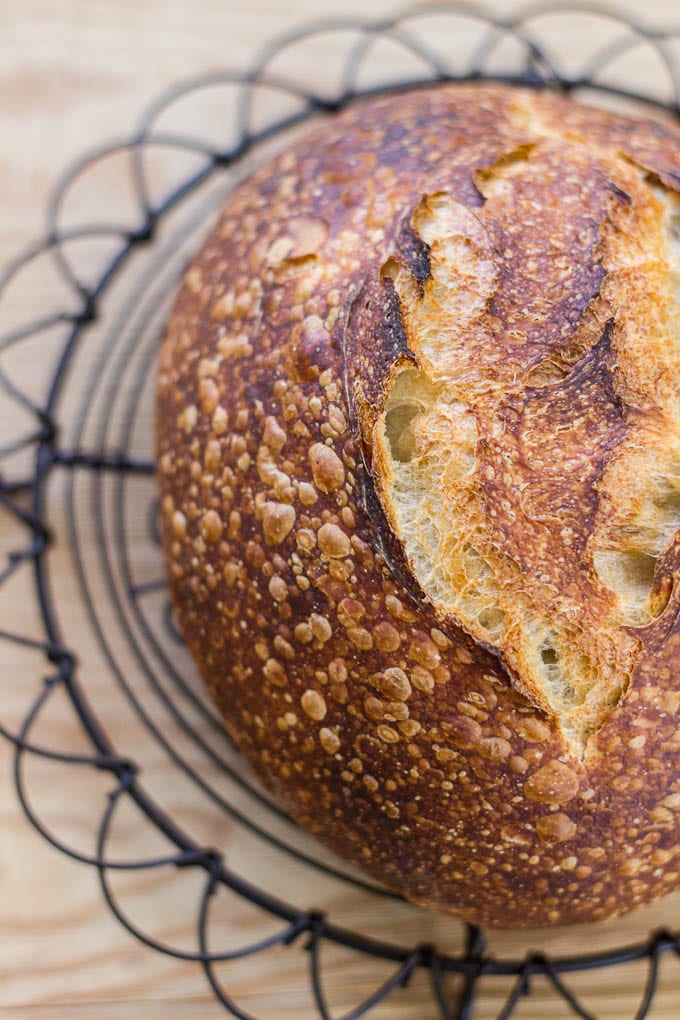
Are you a bread baker?
Do you aspire to be a bread baker?
I did.
Several years ago, my culinary resolution was just that.
I started out with yeast breads, mastering buttery brioche and various sweet doughs. I was really into it. Whoever walked through my door was greeted and welcomed with the aroma of warm, homemade bread. At one point, I boasted my baking skills to my grandfather thinking he’d be proud of my new found self sufficiency. He was from the recession.
But you know what he said?
“Emilie! Don’t you have something better to do with your time?”
Ha! He was right.
I was ready for something new.
Sourdough bread.
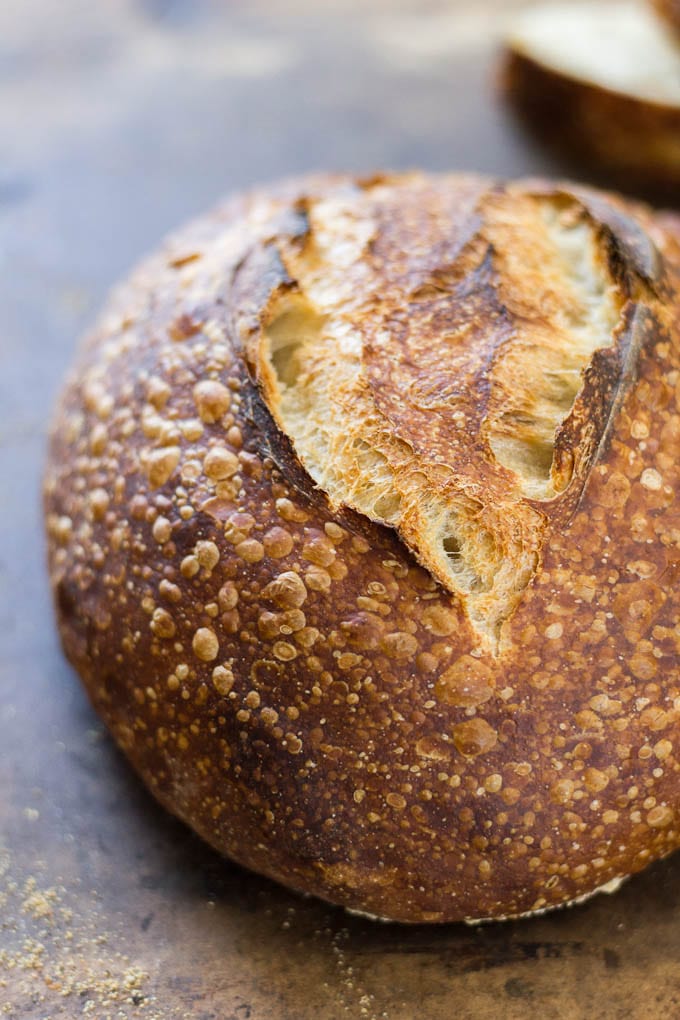
Here’s the deal with sourdough: it tastes absolutely delicious.
Its chewy interior, crispy crust and tangy flavor is highly sought after.
But baking sourdough can be tricky.
Sourdough does not contain fast-acting, commercial yeast. This means it takes considerably longer to rise and can be somewhat unpredictable. There’s a myriad of factors that can hinder your success as well- shaping, spreading, baking, collapsing- I experienced them all.
Long story short…
I failed.
To be honest, I was shocked. I followed the recipe(s) to a tee:
“Begin with an active starter, do a long overnight rise, and bake in the morning. Et voila! Homemade sourdough.”
So, where did I go wrong?
Was it my starter? My oven? Did I need one of those professional steam injectors?
Check it out:
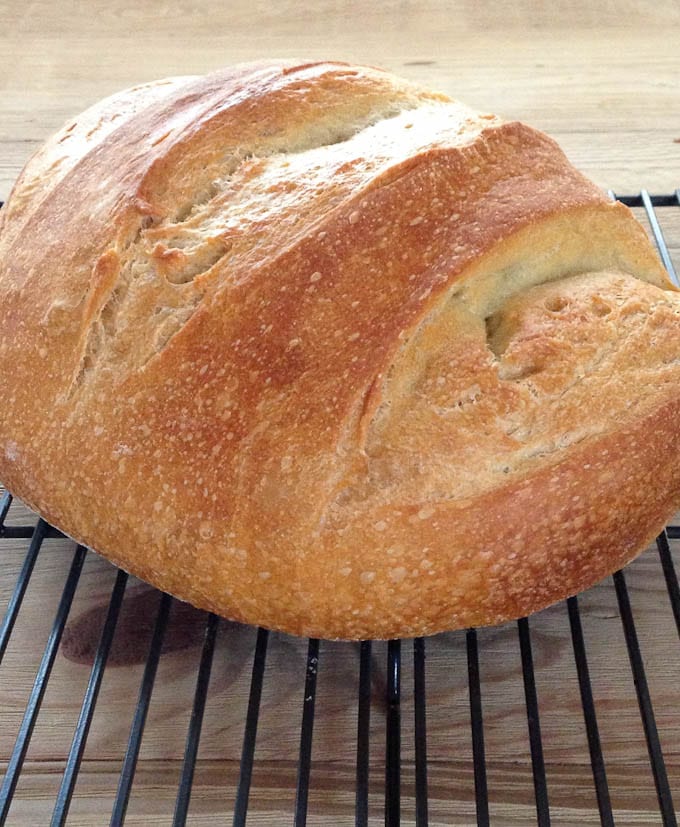
This was my first loaf.
It looks like an underwater sea vessel.
I was so proud.
But I couldn’t stop comparing it to more designer loaves.
I continued to bake everyday until I got it ‘right.’
And what I learned is that sourdough takes motivation and commitment.
It’s like being a first time parent.
You can read tons of guide books, listen to all the advice in the world- but at the end of the day everyone’s situation is different. You need to practice. And improvise. Following technique is only half the battle.
Once I fully embraced this understanding…
I baked a good loaf!
And another one.
And then a better one.
So I wrote a guide.
Because I wished there was a hotline I could call when I was knee deep in flour cursing the baking gods!
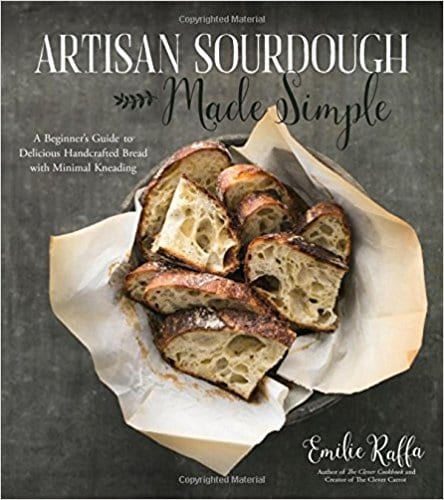
Sourdough Bread: a beginner’s guide marks my journey of bread baking through my own personal experience. It serves as a tutorial for beginners and seasoned bakers alike. I also wanted to create a community where like-minded bakers (and hopefuls) could chat about a common theme.
Take a look at the comments section- there are many of you with the same questions… issues.. ‘aha ‘moments.
People want to learn.
And share.
That was my inspiration.
In 2019, I’ve made some updates to to my original guide based on your questions and feedback.
I’ve included answers to the following:
- How do I know when my starter is ready? When do I do the float test?
- Help! Why is my dough spreading out like a pancake?
- How do I get a good rise?
I’ve also re-structured the guide with bold headers for easy reference.
. . . . . . . . . . . . . .
People always ask, why bother?
And what I hope to convey is that bread baking is not only about the end result, it’s about the process. Making something from nothing. Touching, turning, kneading- that crackling sound when it comes out of the oven. I crave it.
Never in a million years would I think of sourdough as therapeutic.
But it is.
It sparked something.
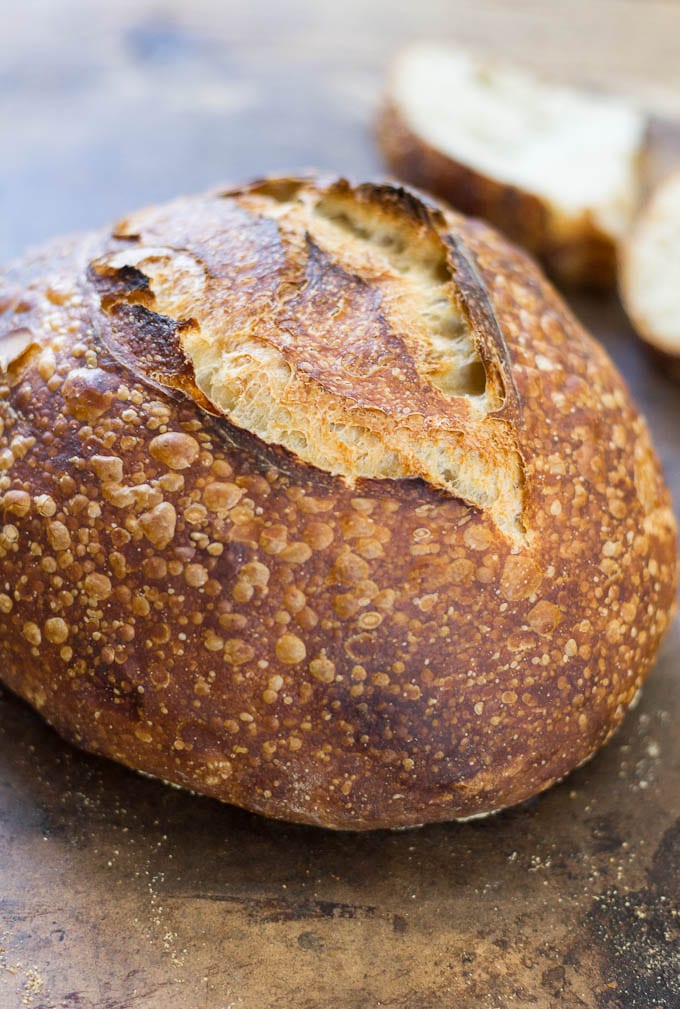

Comments
Emilie says
We make some of the best peanut butter and jelly sandwiches with this bread. The boys love it (I eat the crust, happily). And we also love that Jordan Pond jam :) xoxo
Steve Down says
Hi Emilie
Thanks forthis and your original post. I’ve been making sourdough for a year or more now; its reassuring that I have arrived at something very close to your weekend schedule; but…
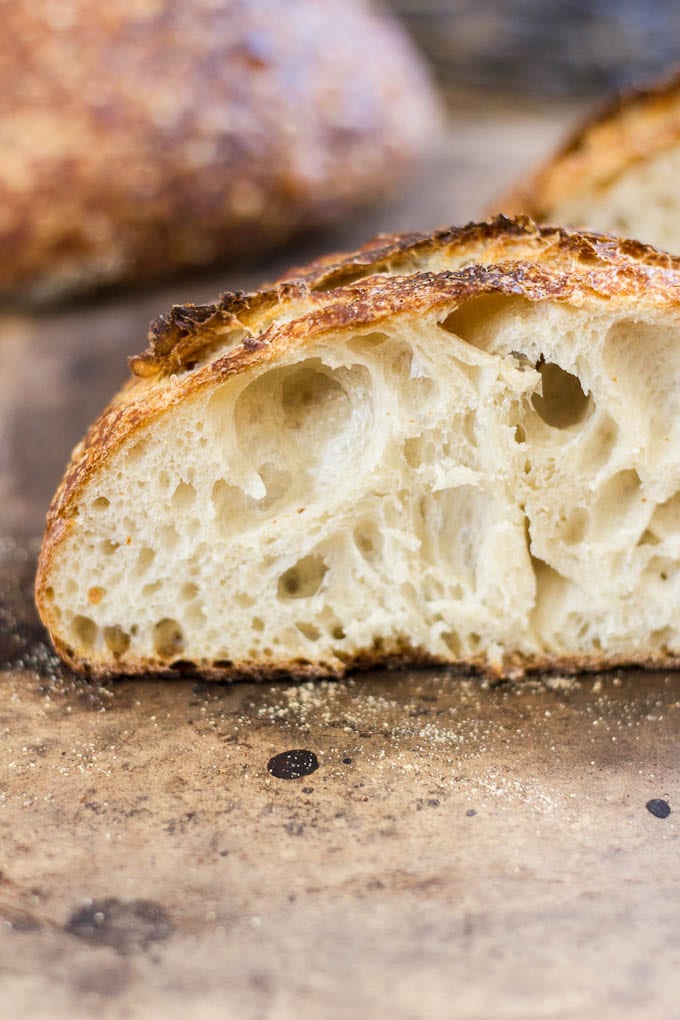
I am trying to achieve something like the very large bubbles in the loaf in the penultimate picture above. Most of my loaves end up with the smaller more regular bubbles in the loaf from your original post.
What is the difference between the two? Is it moisture content, adding oil, exceptionally active starter, higher ambient temperature for proving, more steam, longer proving once shaped?
I’ll have fun experimenting, but it would be good to try and narrow the field before starting. Can you help?
Thanks
Steve
(following yr blog via feedly)
Emilie says
Hi Steve,
In my experience, a long bulk ferment coupled with a high hydration dough will yield a bread similar to the one above.
What method are you currently using for sourdough?
And thanks for following the blog! I hope you enjoy :)
mendip5000 says
60% hydratíon, started with a sponge using 50% of the flour then a long initial rise/fermentation followed by proving in floured banetons for 3hrs. I then bake on preheated heavy steel sheet starting at 230 deg C in an oven with enough water to make steam for the first 20-25 mins. I usually use 800g Canadian flour/480ml water to make 2 loaves.
When you say long bulk ferment, do you think more bulk than that migt help?
Adri says
Emilie,
This post is so beautifully done, so well shot, and such an inspiration. Kudos to you. Your sourdough bread is absolutely beautiful. I love the dark, blistered crust. I have never done much with sourdough baking, but you have inspired me. I have always admired your posts on bread. They are some of the finest ones out there. I am serious here – have you considered writing a book? Give it some thought, amica. You’ve got the gift. Also your Skype prize is THE coolest give away ever. What lovely work.
Emilie says
Thank you, Adri!
I’m glad it’s an inspiration- huge smile on my face :) It took almost a year of researching bread and sourdough for me to take the plunge. I thoroughly enjoyed it, I have to say.
Now, a book? Wouldn’t that be something! I would certainly love to take on a project like that. I’m wondering about the market… I will be thinking about this for the rest of the day. LOL. Thanks. xo
Jane says
Help! I just took a class this weekend on maintaining/feeding the starter – but we didn’t get to baking. The instructor also mentioned using a dutch oven – so I used your recipe. Tried baking it this morning and it burned like crazy! My dutch oven is cast iron – very dark non stick – is that why?
Emilie says
Hi Jane,
Oh no! So sorry to hear about that!
What temperature was your oven set to? Did you preheat your Dutch oven?
I believe the hot oven temperature coupled with the type of Dutch oven (as you mentioned) caused the dough to burn. Cast iron heats up very quickly and traps the temperature.
To remedy this, I would begin by baking at a lower temperature. Perhaps start at 400 F. Use an oven thermometer for to monitor the temperature and to check for accuracy. Also, do not preheat your dutch oven (I coat it generously in cornmeal so that the dough does not stick). Bake in the center of the oven so that the bottom doesn’t burn.
I hope this helps! Let me know how it goes! :)
jacquie says
what a wonderful looking loaf of bread. is it possible to make a whole grain version of sourdough bread? that is what I would like to learn how to do.
Emilie says
Hi Jacquie!
Absolutely! Are you looking for something 100% whole grain, or 50/50?
I’ll be posting some new recipes soon. Be sure to check back! :)
Laura (Tutti Dolci) says
Your sourdough loaves are just perfect, what a great idea to put together a guide!
Emilie says
Thank you Laura! I was so inspired when I first started out, I really wanted to help others in the best way that I could. It’s a process that continually evolves :)
Bea says
Thank you for this post!Just perfect-exactly what I was looking for.Two weeks ago I visited a lovely bakery in Oxford,where I purchased the best bread I’ve eaten in my life.I got so inspired I decided I wanted to learn to bake sourdough bread.I looked for the recipes and found your website!!!And last week I baked my first sourdough bread from your recipe!I was so proud of myself although I knew it needed some improvements.And here comes this post!Thanks xxx Best wishes from freezing cold England!
Emilie says
Hi Bea!
Oh my goodness- how fantastic is that? I’m so glad that you gave it a go! The process of sourdough takes time to master, and when I say ‘master’ I mean getting it to your liking. Everyone has their own preference and style.
The bread featured in my original guide is considered low-hydration, meaning it has small holes. Many of my readers have asked for a bread with larger holes and is most likely similar the the artisan loaf you had at the bakery. If this is something you’re after, I will be posting the recipe next week. The good news, is that the method is the same. Just different measurements :)
Bea says
Can’t wait!
Susan Hodges says
Hi emilie, please give us your recipe for large holes SD bread.
Thanks, susan
Emilie says
See my answers above, Susan! :)
Laney (Ortensia Blu) says
You are inspirational Emilie! And ust looking at the photos, I can smell the aroma of fresh baked bread. Brava for a job well done!
Emilie says
Thank you dear friend! I bet you would excel at this. I will give you some of my starter if you’re interested. No pressure, of course ;) xo
Carol says
I love your bread story. I too am obsessed with baking and desperately want to make great bread. I have been making sourdough for a couple of years now and still have some disasters but mostly successes – I just love those huge holes I get in my bread. I am now on a mission to get a sourdough sweet bun recipe….can you help out with that? PS I love your posts.
Emilie says
Welcome Carol!
It really is an obsession isn’t it? At least it’s a good one. Sometimes, I will wake myself up in the middle of the night to feed my starter. The thought of baking actually puts me back to sleep. How about that?
For a sourdough sweet bun- are you looking for something similar to a hot cross bun, minus the icing? Or more of a sweet, eggy brioche?
Thank you for your sweet words! :)
celia says
Em, this is the BEST prize ever! I couldn’t think of anything better if I was starting SD baking that to have you holding my hand! And your guide was fantastic when you first wrote it in 2013, can’t believe you made it even better! Thanks again for teaching me how to bake in a pot, darling xxx
Emilie says
Hey mama, I’ve learned from the best ;) You know there’s a link back on the original guide, right? xo
Autumn says
WOW this is so timely for me!!! My friend is a chef on yacht charters and back in november he gave me some of his sourdough starter that he claims is over 100 years old. I’ve never made bread before but I love to cook. He told me how to care for it but I slacked off for sure over the holidays. Just this weekend I text him and he told me how to resurrect it by pouring off the blackish water and re feeding it etc. He’s working down on a yacht in St Barths right now so it’s hard when I have questions so this could be a big help :) I’m excited to make my first loaf!
Emilie says
Welcome Autumn! Perfect timing is right! I love when this sort of thin happens. You’d be surprised- when you keep your sourdough in the fridge feeding it at least 1x per week, you will be able to successfully maintain its potency. And your friend is correct- pour off that blackish water from the top before you give it a feed. That liquid is normal, by the way.
Happy Baking! Good luck ;)
Celia Becker @ After Orange County says
Ah, simply beautiful! I have been baking sourdough bread for about 10 years now with a decades old starter that was given to me by a friend. She was kind enough to teach me the ropes too and I can so relate to the trials and tribulations of the process and effort. Great work!
Emilie says
Hi Celia! Yes, I remember you mentioning this a while back. How lucky to have such an old starter. One of my favorite things about sourdough is sharing. My friend (Celia!) shared some of her starter with me from Australia. I use that one, plus one that I made myself. They both yield slightly different results and are fun to play around with. Ah! I do love to bake bread… ;)
Natasa says
How lovely blisters, well done, I would probably burst all of them – for therapeutic purposes :) As you pointed out, sourdough is very therapeutic – I am especially in love with long cold fermentations so I would bake wholegrain rye or einkorn bread.
Emilie says
Haha… very funny ;) I am partial to the long, cold fermentation process as well especially when I can leave my dough overnight to rise on the counter. It’s perfect in the morning. In the summer, I pop it it the fridge.
Next on my list is to bake more with whole grains. Do you have Tartine Book #3?
Natasa says
Whole grains are great, a little bit of (water) challenge if going for the big holes but very tasty :) Yes, I have Tartine Book # 3, however I’ve only baked some of the sweets from the book so far and I only look at the photos of bread before going to sleep :) For the bread, it is definitely an inspiration for someone who is already familiar with sourdough bread and someone who likes bread stories.
Looking forward to your next sourdough bread :)
Karen @ On the Banks of Salt Creek says
I like baking bread but haven’t tried sourdough. Maybe I’ll give it a try. I’m sure your tips will help.
Emilie says
Hi Karen! Definitely give it a try! I was on the fence at first, only because I thought sourdough was too involved. But it’s really not. Most of the time is hands off, if anything. Once you bake a good loaf you’ll be hooked :)