Description
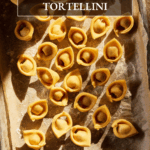
My homemade sourdough tortellini is made by hand with Italian 00 flour, sourdough starter and egg, stuffed with a savory pork filling – the traditional way from Emilia-Romagna. Choose from a same-day option for ferment overnight to deepen the flavor. Serve in brodo or a rich cream sauce. My kids love it with tomato sauce too!
Ingredients
For the Pasta
- 200 g Italian Tipo 00 flour
- 2 whole large eggs (~110 g cracked weight without the shell)
- 20 g sourdough starter (active or good-quality discard) See Note 1
- Fine semolina flour, for dusting
For the Pork Filling
- ~7 g (1/2 tbsp.) butter
- 50 g (1.75 oz) pork loin, cubed
- 50 g (1.75 oz) prosciutto, roughly chopped
- 50 g (1.75 oz) mortadella, roughly chopped
- 75 g (heaping 1/2 cup) ground Parmesan cheese
- 9 g (1/2) egg yolk
- Freshly grated nutmeg
Tools You Will Need:
- Digital scale
- Roller attachment for KA stand mixer or hand-crank pasta machine
- Sheet pan w/ lid
- Food processor (optional)
Instructions
Step 1: Make the Pasta Dough:
- Add the flour to a food processor. Lightly beat the eggs in a small bowl. Pour eggs over the flour, followed by the sourdough starter. Process until the dough comes together. See Note 2
- Remove the dough to a lightly floured wooden surface (use 00 flour).
- Cover with an upturned bowl and let rest for 3-5 minutes. Then, knead by hand for 1-2 minutes (the food processor did most of the kneading for you). If the dough is a bit sticky, add a sprinkle of flour to correct the texture. It should feel smooth, supple, and chalky on the surface when finished.
- Form the dough into a ball, cover tightly with plastic wrap, and rest for 1 hour at room temperature. Alternatively, ferment the dough overnight to deepen the flavor. Make the filling while the dough rests. See Note 3.
Step 2: Make The Pork Filling
- Melt the butter in a small skillet over medium heat. Sauté the cubed pork loin until light golden brown and cooked through.
- To a food processor: Add the pork (with pan drippings), prosciutto and mortadella.
- Add the egg yolk, parmesan cheese and freshly grated nutmeg to taste.
- Process until a smooth paste forms. You will need to stop the machine and scrape down the sides of the bowl at one point. The filling should stick together when pinched with your finger tips (try rolling it into a hazelnut sized ball). Cover and chill until ready to use. The filling can be made 1 day in advance.
Step 3: Roll the Dough into Pasta Sheets:
*Note: if you have chosen to ferment the dough overnight in the fridge, rest at room temperature for at least 30-45 minutes before rolling.
- Cut the dough into quarters (wrap the remaining pieces).
- Working with one dough at a time: roll it into a 6-8 inch oval disc with a regular rolling pin. You want it the approximate width of your pasta machine.
- Send the disc through the roller attachment (or pasta machine) (3x) on #1. Then (2x) on settings (#2-4). Then 1x only, on setting #5. If at any point the dough becomes soft, doughy, or sticky, dust with a bit of fine semolina flour. When finished, the pasta sheet should be thin, but not translucent. Refer to my video in the post for guidance.
Step 4: Cut Pasta Sheets Into Squares
- Lay the pasta sheet on your work surface. Try not to dust your surface with flour; it will be hard to seal the tortellini.
- Trim the edges and cut into 2×2 inch squares with a large knife or pastry wheel.
- Keep the squares covered at all times. You will work in batches.
Step 5: Fill The Tortellini
- Place ~2 g (1/4 tsp. rounded) of the filling into the center of each square. I roll it into little hazelnut sized balls first, then assemble and shape all at once. The goal is to make the tortellini look plump and filled, so if you need to add more filling to achieve this look, go for it. There’s nothing worse than under-filled stuffed pasta.
Step 6: Shape The Tortellini
- Fold diagonally to create a triangle.
- Seal the edges, pushing out any air near the filling. If your dough is dry and doesn’t seal easily, lightly brush the very outer edges with water.
- Push the tip of your thumb into the bottom of the filling to create a little indent, then wrap the corner tip around your index finger to meet the other corner tip. Press gently to seal. This is one movement.
- Set shaped tortellini on a parchment-lined sheet pan dusted with semolina flour and keep covered at all times. They will dry out. if you don’t have a sheet pan w/ lid, use an inverted sheet pan to cover the tortellini. Repeat to roll, cut and shape the rest of the tortellini. See Note 6.
To Store:
Cover and chill the tortellini for up to 6 hours. As mentioned in my blog post, if they’re left in the fridge for too long they might become soggy and/or the flavor can potentially become too sour. Alternatively, freeze directly on the sheet pan. Transfer to an airtight container.
To Cook:
Cook sourdough tortellini in a pot of salted boiling water, about 3 minutes. The exact cook time will vary depending on the thickness of your pasta— remember, it’s homemade! I always recommend doing a test batch first to double check. Transfer cooked tortellini with a slotted spoon or fine mesh strainer into a simmering sauce of your choice.
Notes
- For the sourdough starter: use active, discard, or recently fed & collapsed starter. Feed with all white flour.
- When making the pasta dough: if it doesn’t form into a ball after processing (and it just looks like “doughy crumbs”), stop the machine and push the dough together with your hands. It should stick together nicely.
- The texture of your pasta dough will depend on the consistency of your sourdough starter AND the current ambient temperature. The longer the dough rests, the softer it will get. However, resting the dough is the key to its elasticity and longer pasta sheets which = higher tortellini yield. Keep this in mind and adjust your rest time as needed.
- For the Italian Tipo 00 flour, I use Molino Grassi organic flour. Do not use American 00. The tortellini will be too chewy.
- When filling and shaping your tortellini, it’s like a race against the clock (the dough will dry out). I roll one pasta sheet at a time, pre-shape the filling into little balls, then assemble and shape all at once.
- Your final tortellini yelled will depend on the length of your pasta sheets, which depends on the elasticity of the dough. Don’t worry about this too much. You will have at least 45 pieces.